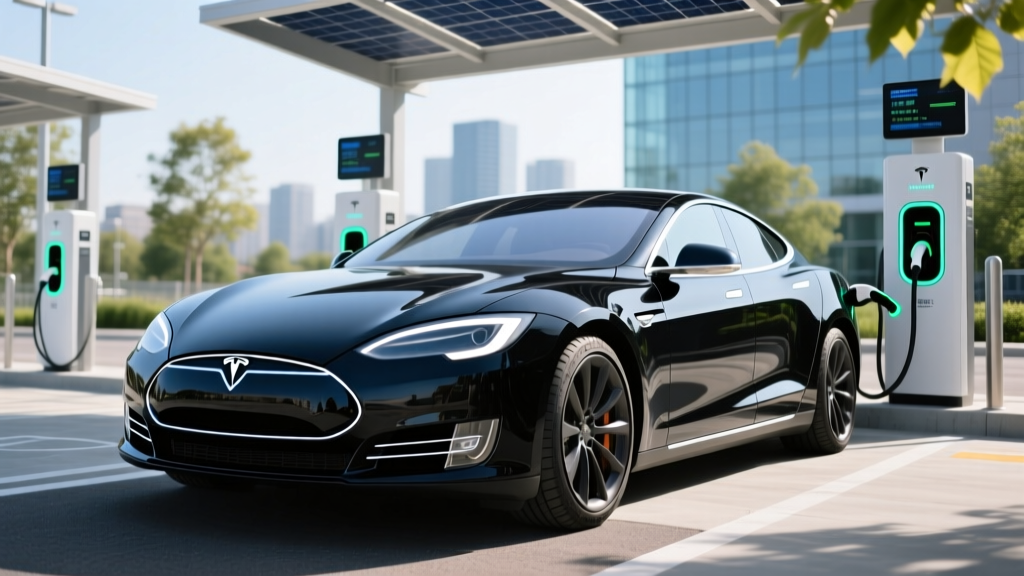
The 2017 Tesla Model S at a Glance in 2026
The 2017 Tesla Model S occupies a unique space in the used EV market. Nearly a decade after its production year, it remains one of the most capable luxury electric sedans available at a steep discount from its original MSRP. For buyers who want Supercharger access, genuine long-range capability, and over-the-air updates that have kept the platform relevant, the 2017 Model S is still a serious contender — provided you understand the aging-battery risks, outdated charging architecture, and total cost of ownership realities.
This profile covers the three main 2017 variants: the 75 (75 kWh, RWD), the 100D (100 kWh, dual-motor AWD), and the performance-flagship P100D (100 kWh, dual-motor AWD). Tesla discontinued the 60 and 60D early in the 2017 model year, and the 90D was phased out mid-year in favor of the 100D.
| Spec | 75 (RWD) | 100D (AWD) | P100D (AWD) |
|---|---|---|---|
| EPA Range | 249 mi | 335 mi | 315 mi |
| Battery (usable) | ~75 kWh (NMC) | ~100 kWh (NMC) | ~100 kWh (NMC) |
| 0-60 mph | 4.3 sec | 4.2 sec | 2.5 sec |
| Horsepower | ~328 hp | ~518 hp | ~762 hp |
| Drivetrain | RWD | Dual-Motor AWD | Dual-Motor AWD |
| EPA Efficiency | 101 MPGe (33 kWh/100mi) | 102 MPGe (33 kWh/100mi) | 98 MPGe (34 kWh/100mi) |
| Peak DC Fast Charge | ~120 kW (CHAdeMO adapter) | ~120 kW (CHAdeMO adapter) | ~120 kW (CHAdeMO adapter) |
| Level 2 Home Charge | ~17 kW (Dual Charger option) / ~11.5 kW standard | ~17 kW (Dual Charger option) / ~11.5 kW standard | ~17 kW (Dual Charger option) / ~11.5 kW standard |
| Original MSRP | ~$69,500 | ~$94,000 | ~$135,000 |
| 2026 Used Price Range | $16,000–$22,000 | $24,000–$34,000 | $32,000–$45,000 |
| Battery Warranty (original) | 8 yr / 125,000 mi | 8 yr / unlimited mi | 8 yr / unlimited mi |
Sources: EPA / fueleconomy.gov, Tesla 2017 press materials.
Real-World Range: What to Actually Expect
EPA sticker: 335 miles
Real-world highway (65–75 mph, moderate climate): ~260–290 miles
Real-world cold weather (below 32°F / 0°C): ~210–250 miles
Mixed city/highway (spring/fall): ~280–310 miles
The 2017 Model S predates Tesla's heat-pump thermal management (introduced with the 2021 refresh). Resistive cabin heating draws directly from the traction battery, which can cut range by 20–30% in freezing conditions. Highway driving at 75+ mph also reduces range significantly due to the sedan's 0.24 Cd drag coefficient still moving a ~4,900 lb vehicle.
For the 75 kWh RWD model, expect roughly 190–210 miles of real-world range in mixed driving — adequate for commuting but tight for road trips without careful planning. The P100D's performance tuning and stickier tires sacrifice about 20 miles versus the 100D on the EPA cycle, and aggressive driving erodes that further.
Battery degradation is the wildcard. A 2017 Model S in 2026 is 9 years old. NMC chemistry in early Tesla packs typically shows 10–18% capacity loss by this age depending on charging habits and climate exposure. A car that originally delivered 335 EPA miles may now show 275–300 miles at 100% state of charge. Always request a battery health reading (accessible through the service menu or third-party tools like TeslaFi) before purchasing.
Charging Speeds and Infrastructure in 2026
The 2017 Model S uses Tesla's proprietary connector (pre-NACS standardization) and charges on Tesla Superchargers natively. For non-Tesla DC fast chargers (Electrify America, EVgo, etc.), you need a Tesla-to-CHAdeMO adapter — CCS adapters for older Teslas are limited and not universally supported.
| Charging Level | Power / Rate | Miles Added | Notes |
|---|---|---|---|
| Level 1 (120V / 12A) | ~1.4 kW | ~3–4 mi/hr | Emergency/trickle only |
| Level 2 (240V / 48A, single charger) | ~11.5 kW | ~29–34 mi/hr | Standard onboard charger |
| Level 2 (240V / 72A, dual charger) | ~17.2 kW | ~44–51 mi/hr | Optional Dual Charger package |
| DC Fast (Tesla Supercharger V2) | Peak ~120 kW | ~170 mi in 30 min | 10–80% in ~40–45 min |
| DC Fast (Supercharger V3/V4) | Capped ~120 kW | Same as V2 | Older architecture cannot use 250 kW peak |
Charging curve reality: The 2017 Model S peaks near 120 kW only when the battery is preconditioned and below ~40% state of charge. Above 60% SoC, the rate tapers progressively — by 80% you're looking at roughly 40–50 kW. A 10–80% session at a V2 Supercharger takes approximately 40–45 minutes. V3 and V4 Superchargers, which deliver up to 250–350 kW to newer vehicles, offer no meaningful speed advantage for this generation because the 2017 pack architecture caps intake around 120 kW.
Home charging setup: A 48-amp Level 2 circuit (60-amp breaker) is ideal. Expect to pay $500–$1,500 for a quality Level 2 EVSE (Tesla Wall Connector or third-party J1772 with Tesla adapter) plus $800–$2,500 for electrician installation depending on panel proximity and whether a panel upgrade to 200A is needed.
Performance and Driving Dynamics
Even by 2026 standards, the 2017 Model S P100D is brutally quick. Its 2.5-second 0-60 mph time still outpaces most production cars, and Ludicrous mode delivers instantaneous torque that no combustion sedan can match off the line. The 100D is no slouch at 4.2 seconds, and even the base 75 hits 60 mph in 4.3 seconds — faster than many sports coupes.
Ride quality benefits from the standard adaptive air suspension, which offers adjustable ride height and firmness. However, 9-year-old air struts are a known maintenance liability; replacement runs $1,500–$2,500 per corner. The steering is precise but light, and the ~4,900 lb curb weight is noticeable during spirited cornering. This is a grand tourer, not a track car.
Driver assistance: The 2017 Model S shipped with Autopilot hardware suite HW2 or HW2.5, supporting Traffic-Aware Cruise Control and Autosteer (lane centering). This is an SAE Level 2 system — the driver must remain fully engaged with hands on the wheel and eyes on the road. Full Self-Driving (FSD) capability was sold as an option but remains a supervised Level 2 feature; it does not make the car autonomous. HW2/2.5 hardware is less capable than the HW3/HW4 found in newer Teslas, and Tesla has progressively limited FSD feature availability on older hardware.
Interior, Cargo, and Daily Practicality
The 2017 Model S interior is spacious but shows its age. The 17-inch center touchscreen remains impressive in size, and Tesla's over-the-air updates have kept the software interface modern. However, the minimalist dashboard design means limited physical controls — everything from glovebox release to mirror adjustment runs through the screen.
- Front legroom: 42.7 inches
- Rear legroom: 35.4 inches
- Trunk (rear): 26.3 cu ft
- Frunk (front trunk): 5.3 cu ft
- Total cargo with rear seats folded: ~58.1 cu ft
- Seating: 5 standard; optional rear-facing third-row jump seats (small children only) were available but rare
Build quality on 2017 models is a documented weak point. Panel gaps, rattling trim, and premature seat-bolster wear are common complaints. The panoramic glass roof (standard on most trims) can develop leaks over time. Inspect weatherstripping and interior fitment carefully on any used example.
Pricing, Tax Credits, and Total Cost of Ownership
| Trim | Original MSRP | 2026 Used Price (est.) | Federal Used EV Credit (§25E) | Effective Price After Credit |
|---|---|---|---|---|
| 75 (RWD) | ~$69,500 | $16,000–$22,000 | Up to $4,000 (30% of sale price, capped at $4,000) | ~$12,000–$18,000 |
| 100D (AWD) | ~$94,000 | $24,000–$34,000 | Up to $4,000 | ~$20,000–$30,000 |
| P100D (AWD) | ~$135,000 | $32,000–$45,000 | Up to $4,000 | ~$28,000–$41,000 |
Federal tax credit clarification: The original §30D new-vehicle credit of up to $7,500 is no longer available for a 2017 purchase. However, the §25E Previously Owned Clean Vehicle Credit applies when buying from a licensed dealer. It provides 30% of the sale price, capped at $4,000. Income limits apply: modified adjusted gross income must not exceed $75,000 (single), $112,500 (head of household), or $150,000 (joint). The vehicle must have an MSRP (original) under $25,000 — wait, no: §25E requires the sale price to be under $25,000. This means most 100D and P100D examples will exceed the cap and will not qualify. Only lower-priced 75 kWh examples selling under $25,000 from a dealer are likely eligible. Verify current rules at IRS.gov §25E and consult a tax professional.
Insurance: Expect $2,000–$3,500/year depending on trim, location, and driving record. The P100D commands significantly higher premiums due to its performance classification.
Maintenance wildcards: While EVs skip oil changes and transmission service, a 2017 Model S may need: air suspension replacement ($6,000–$10,000 for all four corners), drive unit replacement ($4,000–$7,000), touchscreen/MCU repair ($1,500–$3,000), and battery module replacement if degradation is severe ($8,000–$15,000 for partial, $20,000+ for full pack). Budget $3,000–$5,000/year in potential repairs once the original 8-year/125,000-mile (75) or 8-year/unlimited-mile (100D/P100D) battery warranty has expired — which it has for all 2017 models as of 2025.
Pros
- Class-leading range (100D: 335 mi EPA) still competitive in 2026
- Supercharger network access — the most reliable DC fast-charging ecosystem
- Brutal acceleration across all trims; P100D still supercar-quick
- Over-the-air updates keep software current
- Spacious sedan with frunk + trunk cargo flexibility
- Strong depreciation means big value at used prices
Cons
- Battery warranty expired — replacement is a $15,000–$22,000 risk
- DC fast charging capped at ~120 kW; slow vs. modern 250–350 kW EVs
- Air suspension, MCU, and drive unit failures are expensive out of warranty
- No heat pump — cold-weather range loss is significant
- Interior build quality inconsistent; aging materials
- Autopilot HW2/2.5 is outdated; limited FSD feature support going forward
- §25E used credit eligibility restricted to sub-$25,000 sale prices
2017 Model S vs. Key Used EV Competitors
At similar used price points ($20,000–$40,000), the 2017 Model S competes with:
- 2018–2019 Tesla Model 3 Long Range: Newer platform, better efficiency (~130 MPGe), 310 mi EPA, faster charging architecture (up to ~170 kW on V2), more modern HW3 Autopilot. Less cargo space and a firmer ride. Stronger pick for most buyers.
- 2019–2020 Hyundai Kona Electric: 258 mi EPA, far cheaper ($14,000–$19,000 used), excellent efficiency. But slower DC charging (~75 kW), smaller cabin, and no frunk.
- 2017–2018 Chevrolet Bolt EV: 238 mi EPA, bargain pricing ($10,000–$15,000). DC fast charging is painfully slow (~50 kW peak). A budget pick, not a luxury alternative.
- 2019 Audi e-tron: ~204 mi EPA (lower range), but superior build quality, CCS fast charging at 150 kW, and a more refined interior. Higher running costs.
The 2017 Model S wins on raw range, performance, and Supercharger convenience. It loses on charging speed, warranty coverage, and long-term reliability predictability. If you prioritize a modern platform with remaining warranty, a 2019+ Model 3 Long Range is the safer buy. If you need a large luxury sedan with maximum range and accept the repair risk, the 100D is hard to beat at $25,000–$30,000.
Who Should Buy the 2017 Tesla Model S?
Choose the 2017 Model S 100D if:
- You need 300+ miles of EPA range in a luxury sedan and can't spend over $35,000
- You road-trip frequently and value Supercharger network reliability
- You have access to home Level 2 charging and can absorb occasional repair bills
- You want dual-motor AWD for snow/rain without stepping into an SUV
Choose the 2017 Model S 75 if:
- You're a commuter with a sub-100-mile round trip and want the cheapest Supercharger-compatible EV
- You can find one under $20,000 and qualify for the §25E used credit
Look elsewhere if:
- You want predictable ownership costs with warranty coverage
- You need fast DC charging for frequent long-distance driving (look at 2021+ platforms)
- Build quality and interior refinement are top priorities (consider a used Audi e-tron or BMW i4)
Frequently Asked Questions
What is the real-world range of the 2017 Tesla Model S?
The 100D achieves roughly 260–290 miles on the highway and 280–310 miles in mixed city/highway driving in moderate temperatures. In cold weather (below freezing), expect 210–250 miles due to resistive heating and battery chemistry limitations. The 75 kWh model delivers approximately 190–210 miles in real-world mixed use.
How fast does the 2017 Model S charge?
On a Tesla Supercharger, it peaks at roughly 120 kW and charges from 10–80% in approximately 40–45 minutes. At home on a 48-amp Level 2 charger, it adds about 29–34 miles of range per hour (11.5 kW) or up to 44–51 mi/hr with the optional Dual Charger (17.2 kW). It cannot take advantage of newer 250+ kW Supercharger V3/V4 speeds.
Does the 2017 Tesla Model S qualify for any federal tax credit?
Not the §30D new-vehicle credit. It may qualify for the §25E Previously Owned Clean Vehicle Credit (up to $4,000) if purchased from a licensed dealer for under $25,000 and your income falls within IRS limits ($75K single / $150K joint). Most 100D and P100D examples exceed the $25,000 sale-price cap and are ineligible. Always verify at IRS.gov and consult a tax professional.
Is the 2017 Model S battery warranty still active?
No. The original battery warranty was 8 years / 125,000 miles (75 kWh) or 8 years / unlimited miles (100D, P100D). All 2017 models exited battery warranty coverage by the end of 2025 at the latest. Any battery failure or excessive degradation is the owner's financial responsibility.
How much does a replacement battery cost?
A full replacement pack for a 2017 Model S runs approximately $18,000–$24,000 through Tesla Service, including labor. Third-party EV repair shops may offer refurbished packs for $12,000–$16,000. Individual module replacement (if only a few cells are degraded) can cost $4,000–$8,000.
Is the 2017 Model S worth buying in 2026?
It depends on your risk tolerance. At $20,000–$35,000, it offers range, performance, and Supercharger access that few used EVs can match. But with expired warranties and aging components, a single major repair can erase the value proposition. Buy one with a thorough pre-purchase inspection, documented battery health above 85%, and a dedicated repair fund of $5,000+.
Can I use non-Tesla chargers with the 2017 Model S?
Yes, but you'll need adapters. A Tesla-to-J1772 adapter (for Level 2 public chargers) is inexpensive and widely available. For DC fast charging on Electrify America or EVgo networks, you need a Tesla-to-CHAdeMO adapter (~$200–$400). CCS adapter compatibility with 2017 hardware is limited and unreliable — plan your road trips around Superchargers for best results.