The 2017 Tesla Model S 75D occupies a fascinating niche in the used electric-vehicle market. As a dual-motor, all-wheel-drive luxury sedan with a 259-mile EPA range, it remains one of the most capable pre-2020 EVs you can buy secondhand. But nearly a decade after it rolled off the Fremont line, prospective buyers need hard data — not nostalgia — to decide whether this aging flagship still earns its place in a driveway.
In this review, we break down the real-world range, DC fast-charging reality, battery degradation expectations, and whether the 2017 Model S 75D qualifies for the used-EV federal tax credit under current IRS §25E rules. If you're cross-shopping this against a newer Chevrolet Bolt, Hyundai Ioniq 5, or Tesla Model 3, the numbers below will make the decision clearer.
2017 Tesla Model S 75D: Core Specifications at a Glance
| Specification | Value |
|---|---|
| EPA Range | 259 miles |
| Battery Capacity (Usable) | ~72.5 kWh (75 kWh nominal) |
| Battery Chemistry | NMC (Nickel Manganese Cobalt) |
| Drivetrain | Dual-Motor AWD |
| Horsepower | 328 hp (combined) |
| 0–60 mph | 4.2 seconds |
| Top Speed | 140 mph |
| MPGe (Combined) | 104 MPGe |
| Energy Consumption | 32 kWh / 100 mi |
| DC Fast-Charge Peak | ~120 kW (Supercharger V2) |
| Level 2 Charge Rate | 11.5 kW (48A) |
| Cargo Volume | 26.3 cu ft (rear) + 5.3 cu ft (frunk) |
| Original Base MSRP | $74,500 (before incentives) |
| Battery/Powertrain Warranty | 8 years / 150,000 miles |
Real-World Range: What the EPA Sticker Doesn't Tell You
EPA Estimate: 259 miles
Real-World Highway (70 mph, moderate temps): ~215–235 miles
Real-World Cold Weather (below 32°F): ~175–200 miles
Mixed Commute (city/regen-heavy): ~240–255 miles
The 259-mile EPA figure for the 75D was achieved under the agency's standardized test cycle, which includes a mix of city and highway driving with moderate climate-control use. According to fueleconomy.gov, the 2017 Model S 75D rates at 104 MPGe combined, translating to roughly 32 kWh per 100 miles.
In practice, highway driving at sustained speeds of 70–80 mph pushes energy consumption closer to 36–38 kWh/100 mi, dropping effective range to the 215–235-mile band. Cold weather compounds this: NMC batteries lose efficiency in freezing temperatures, and cabin heating (the 2017 model year predates Tesla's heat pump adoption) draws significant power from the pack. Expect a 20–30% range reduction in sub-freezing conditions, especially on highway trips where regenerative braking opportunities are limited.
For daily commuting with stop-and-go traffic, regenerative braking recovers meaningful energy, and many owners report achieving close to the EPA sticker — or occasionally exceeding it — on flat urban routes at moderate speeds.
Battery Chemistry, Degradation, and Longevity
The 2017 Model S 75D uses an NMC (nickel manganese cobalt) lithium-ion battery pack with a nominal capacity of 75 kWh and approximately 72.5 kWh usable. NMC chemistry offers high energy density — critical for fitting 259 miles of range into a sedan platform — but it comes with trade-offs versus the LFP (lithium iron phosphate) chemistry Tesla later adopted in standard-range vehicles.
| Attribute | NMC (2017 Model S 75D) | LFP (Newer Tesla Standard Range) |
|---|---|---|
| Energy Density | Higher — more range per kg | Lower — heavier pack for same range |
| Cycle Life | ~1,000–1,500 full cycles | ~3,000+ full cycles |
| Daily Charge Recommendation | 80–90% for longevity | 100% OK regularly |
| Cold Performance | Better low-temp output | More range loss in extreme cold |
| Degradation Profile | Steeper early loss, then plateaus | More linear, slower overall |
Based on aggregated owner data from TeslaFi and community reports, a 2017 Model S 75D at approximately 80,000–100,000 miles typically shows 8–14% battery degradation. That means a car that originally delivered 259 EPA miles may now display a projected range of 220–238 miles at 100% charge. Degradation is not linear: NMC packs tend to lose capacity more quickly in the first 30,000 miles, then the curve flattens considerably.
The battery and drive unit warranty on the 75D was 8 years / 150,000 miles with no explicit capacity-retention threshold stated in the original warranty (Tesla committed to replacing packs that fell below a "reasonable" capacity, but did not publish a specific percentage). As of 2025, most 2017 examples have exceeded the time-based warranty period, meaning any battery replacement would be out of pocket — typically $12,000–$20,000 through Tesla or independent EV shops.
Charging Speeds: DC Fast, Supercharger, and Home Level 2
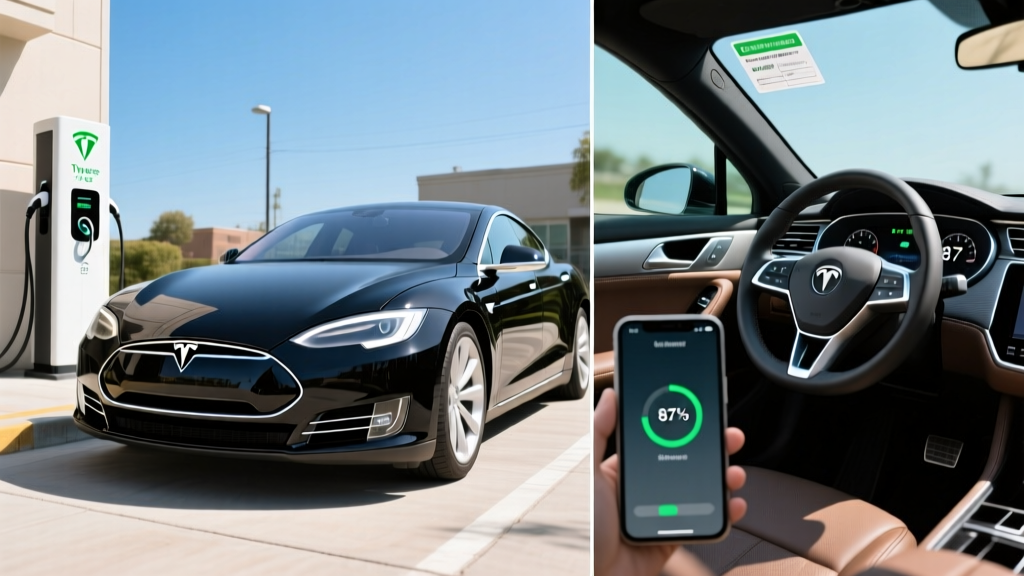
Charging capability is where the 2017 Model S 75D shows its age most clearly. The vehicle uses Tesla's proprietary connector (pre-NACS standardization) and charges on Tesla Supercharger V2 stations at a peak rate of approximately 120 kW. It cannot natively access CCS or CHAdeMO networks without an adapter, and Tesla did not offer a CCS adapter for the Model S until later model years (though aftermarket solutions exist).
| Charging Method | Power (kW) | Miles Added per Hour | Notes |
|---|---|---|---|
| Level 1 (120V household) | ~1.4 kW | ~4–5 mi/hr | Emergency/trickle only |
| Level 2 (240V, 48A) | 11.5 kW | ~34 mi/hr | Full charge in ~7 hours |
| Level 2 (240V, 32A Mobile Connector) | 7.7 kW | ~23 mi/hr | Common home setup |
| DC Fast (Supercharger V2) | Peak 120 kW | ~300 mi/hr at peak | 10–80% in ~40 minutes |
| DC Fast (Supercharger V3, 250 kW) | Limited to ~120 kW | Same as V2 | V3 stalls do not improve 75D speed |
The 10–80% DC fast-charge time sits at approximately 40 minutes on a V2 Supercharger. The charge curve tapers significantly above 60% state of charge (SoC), and the battery management system (BMS) is conservative to protect the NMC cells. On a V3 Supercharger (250 kW capable), the 75D cannot accept more than its ~120 kW peak — the hardware simply doesn't support the higher charge rate that newer Tesla models (Model 3, refreshed Model S) can utilize.
For home charging, a Level 2 wall connector at 48 amps delivers 11.5 kW, adding roughly 34 miles of range per hour. A full charge from near-empty takes approximately 7 hours. Most owners installing a home Level 2 charger will need a 60-amp circuit; installation costs typically run $500–$2,000 depending on panel proximity and local permitting, on top of $400–$500 for the Tesla Wall Connector unit itself.
Performance, Drivetrain, and Efficiency
The 75D's dual-motor all-wheel-drive powertrain produces 328 horsepower and delivers a 0–60 mph time of 4.2 seconds. That's brisk by any sedan standard and was genuinely competitive with sports sedans in 2017. The instant torque delivery from dual electric motors makes the 75D feel quicker in real-world driving than the numbers suggest — particularly in the 0–30 mph range where it outpaces most internal-combustion competitors.
Efficiency, however, is the 75D's weakest metric relative to modern EVs. At 32 kWh/100 mi (104 MPGe combined per the EPA), the Model S consumes significantly more energy per mile than a 2025 Hyundai Ioniq 6 (25 kWh/100 mi, 140 MPGe) or a Tesla Model 3 Long Range (~26 kWh/100 mi). The large, heavy sedan platform and older motor/inverter technology account for the gap. Over 15,000 annual miles at $0.15/kWh, the 75D would cost approximately $720 in electricity — versus about $585 for a Model 3 Long Range.
Interior, Cargo, and Technology
The 2017 Model S interior was a step forward for EVs but has aged noticeably. The 17-inch center touchscreen dominated the dashboard and controlled nearly every vehicle function, including climate, navigation, media, and vehicle settings. The instrument cluster was a small digital display behind the steering wheel. Hardware-wise, this generation ran on Tesla's MCU1 (Media Control Unit 1), which is noticeably slower than the MCU2/AMD Ryzen chips in newer Teslas. Many 2017 examples received MCU2 upgrades (either through Tesla's paid upgrade program or warranty replacements), which dramatically improves responsiveness — always confirm which MCU a used example has.
Cargo capacity is a genuine strength: 26.3 cubic feet behind the rear seats, plus a 5.3-cubic-foot front trunk (frunk). With the rear seats folded, the Model S swallows over 58 cubic feet — competitive with midsize SUVs. Rear legroom measures 35.4 inches, adequate for adults on longer trips. The liftback hatch design makes loading bulky items far easier than a traditional sedan trunk.
Driver assistance in the 2017 model year depended on hardware version. Cars built after October 2016 shipped with Hardware 2.0 (HW2), which supported basic Autopilot features (Traffic-Aware Cruise Control and Autosteer) but was not capable of the full FSD (Full Self-Driving) feature set that later hardware iterations enabled. Many HW2 cars were subsequently upgraded to HW3 by Tesla. This is SAE Level 2 driver assistance — the driver must remain fully engaged and is responsible for the vehicle at all times. It is not autonomous driving.
Used Pricing, Tax Credits, and Total Cost
The 2017 Tesla Model S 75D originally carried a base MSRP of $74,500 before any incentives. Well-equipped examples with Enhanced Autopilot, premium interior, and the SmartAir suspension pushed as-tested prices past $85,000.
In the 2026 used market, a 2017 Model S 75D with 60,000–100,000 miles typically sells for $18,000–$28,000, depending on condition, mileage, service history, and battery state of health. Examples with confirmed low degradation and MCU2/HW3 upgrades command a premium.
Under current IRS rules, the used clean vehicle credit provides up to $4,000 (or 30% of the sale price, whichever is lower) for qualified used EVs. Key requirements:
• Sale price cap: Vehicle must sell for $25,000 or less
• Buyer income cap: AGI ≤ $75,000 (single) / $150,000 (joint)
• Dealer requirement: Must purchase from a licensed dealer (private sales excluded)
• Vehicle age: Must be at least 2 model years old (2017 qualifies)
• One-time use: Buyer cannot have claimed this credit in the prior 3 years
A 2017 Model S 75D priced at $24,500 from a qualifying dealer could yield a $4,000 credit, bringing the effective cost to ~$20,500. Check current eligibility at irs.gov — rules are subject to legislative change.
Note: the 2017 Model S 75D does not qualify for the new-vehicle §30D credit (it is no longer sold new). The used-EV credit under §25E is the relevant incentive, and it has distinct rules, lower dollar caps, and income limitations that differ substantially from the new-vehicle credit.
2017 Model S 75D vs. Key Used-EV Competitors
| Attribute | 2017 Tesla Model S 75D | 2018 Tesla Model 3 LR AWD | 2020 Hyundai Kona Electric | 2019 Chevrolet Bolt EV |
|---|---|---|---|---|
| Used Price Range | $18,000–$28,000 | $17,000–$24,000 | $14,000–$19,000 | $12,000–$17,000 |
| EPA Range | 259 mi | 310 mi | 258 mi | 238 mi |
| Battery (Usable kWh) | ~72.5 kWh | ~75 kWh | 64 kWh | 60 kWh |
| Peak DC Charge kW | 120 kW | ~170 kW | ~77 kW | ~55 kW |
| 0–60 mph | 4.2 sec | 4.5 sec | 7.6 sec | 6.5 sec |
| Efficiency (kWh/100mi) | 32 | 26 | 28 | 28 |
| Cargo (cu ft) | 26.3 + 5.3 frunk | 15 + 2.4 frunk | 19.2 | 16.9 |
| Used-EV Credit Eligible? | Yes (if ≤$25K, income caps) | Yes (if ≤$25K, income caps) | Yes (if ≤$25K, income caps) | Yes (if ≤$25K, income caps) |
The Model S 75D wins decisively on cargo space, ride comfort, and performance. The Model 3 Long Range AWD offers more range, faster charging, better efficiency, and a newer platform at a similar or lower price. The Kona Electric and Bolt are more affordable but sacrifice performance, charging speed, and interior space. The right choice depends entirely on your priorities.
Biggest Pros and Cons
- Spacious liftback cargo area (26.3 cu ft) + frunk
- Dual-motor AWD with 4.2-second 0–60
- Access to Tesla Supercharger network (reliability leader)
- Premium ride quality with available air suspension
- Strong used-EV tax credit eligibility (up to $4,000)
- Over-the-air updates still supported
- Slow DC charging by 2026 standards (120 kW peak, ~40 min 10–80%)
- Poor efficiency (32 kWh/100 mi) vs. modern EVs
- Battery warranty likely expired (8yr/150K mi)
- MCU1 hardware is sluggish unless upgraded to MCU2
- No heat pump — cold-weather range loss is significant
- Potentially costly out-of-warranty battery replacement ($12K–$20K)
- Older Autopilot hardware (HW2) limits driver-assist capability
Who Should Buy the 2017 Tesla Model S 75D?
• Budget-conscious luxury seekers who want a large, fast, premium sedan with Supercharger access for under $25K (after credit)
• Families needing cargo space — the liftback design and flat load floor make it far more practical than a Model 3 for strollers, gear, and groceries
• Dual-car households where the 75D serves as a commuter/weekend car and a second vehicle covers long road trips
Look Elsewhere If:
• You regularly drive more than 200 miles one-way in cold weather — the real-world range and charging speed will frustrate
• You want the latest driver-assist features — HW2/HW3 on this platform is limited vs. current Tesla AI hardware
• You cannot absorb a potential $12K–$20K battery replacement cost if the pack degrades beyond acceptable levels
Frequently Asked Questions
What is the real-world range of the 2017 Tesla Model S 75D?
The EPA rates it at 259 miles, but real-world highway driving at 70+ mph typically yields 215–235 miles. In freezing weather, expect 175–200 miles due to NMC battery chemistry limitations and resistive cabin heating. City driving with regenerative braking can approach or match the EPA figure.
How fast does the 2017 Model S 75D charge?
On a Tesla Supercharger V2, it peaks at approximately 120 kW, taking about 40 minutes from 10–80% SoC. On V3 Superchargers, the 75D is hardware-limited to the same ~120 kW. At home on a 240V/48A Level 2 charger, it adds about 34 miles per hour, with a full charge taking roughly 7 hours. The charge curve tapers noticeably above 60% SoC.
Does the 2017 Model S 75D qualify for a federal tax credit?
Not the new-vehicle §30D credit — it's discontinued. However, it can qualify for the used clean vehicle credit (§25E) worth up to $4,000, provided the sale price is $25,000 or less, you buy from a licensed dealer, and your adjusted gross income falls within IRS caps ($75K single / $150K joint). Verify current rules at irs.gov before purchasing, as incentive programs are subject to legislative change.
Is the 2017 Model S 75D worth buying versus a newer used Model 3?
It depends on your priorities. The Model S offers more cargo space, a smoother ride, and a more premium cabin. The Model 3 Long Range AWD (2018–2020) delivers better range (310 mi EPA), faster DC charging (~170 kW peak), superior efficiency, and newer hardware — often at a comparable price. If space and comfort matter most, the 75D wins. If range, charging speed, and long-term battery health are priorities, the Model 3 is the stronger pick.
What should I check before buying a used 2017 Model S 75D?
Prioritize these items: (1) Battery state of health — request a TeslaFi or Tessie log showing typical range at 100% SoC; (2) MCU version — confirm whether it has the upgraded MCU2; (3) Autopilot hardware — HW2 vs. HW3 matters for feature support; (4) Air suspension — if equipped, check for leaks or compressor issues (a common failure point); (5) Service history — confirm whether the drive unit or battery has been replaced under warranty; (6) Title status — avoid salvage or rebuilt titles, which void any remaining Tesla support.
How much does it cost to replace the battery in a 2017 Model S 75D?
Out-of-warranty battery replacement through Tesla typically costs $12,000–$20,000 depending on pack availability and labor. Independent EV repair shops may offer refurbished packs for $8,000–$14,000. Given that the 8-year/150,000-mile battery warranty has expired for all 2017 examples, factor this potential expense into your total cost of ownership.