Quick Verdict: The EV That Changed the Market, Now a Used-Car Bargain
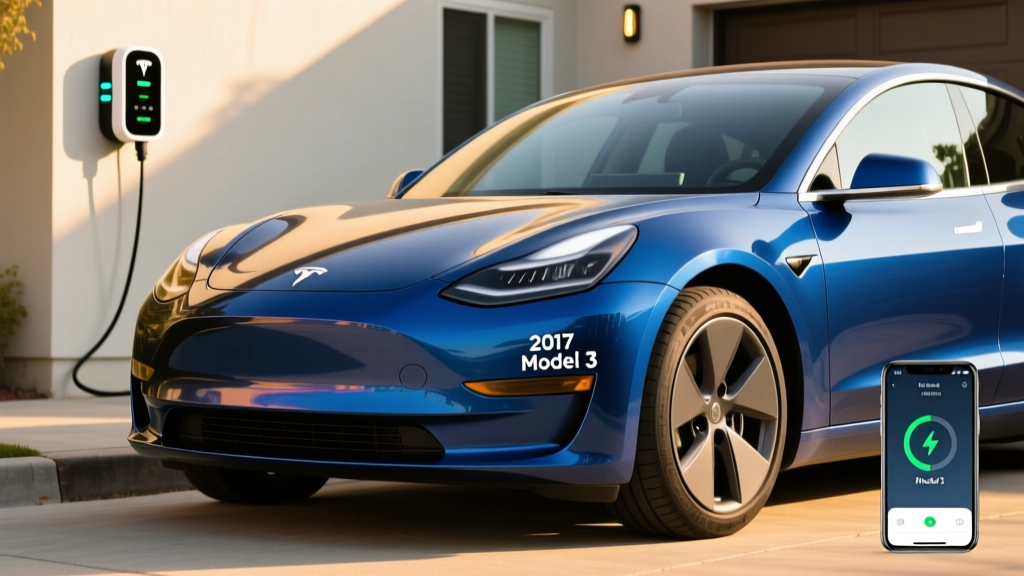
The 2017 Tesla Model 3 was the first mass-market electric sedan to pair 300+ miles of EPA range with a sub-$50,000 price, and it remains a benchmark for used-EV shoppers in 2026. Early Long Range examples are now hitting 100,000–150,000 miles, and battery health on these NMC packs has proven surprisingly robust, with most retaining 85–92% State of Health (SoH) according to fleet data and owner telemetry. If you're evaluating a 2017 Model 3 today, the value proposition is strong — but you need to know exactly what to check, what the real-world range looks like after nearly a decade, and how charging speeds compare to today's 800-volt competitors.
Real-World Range vs. EPA Sticker
EPA Estimated: 310 miles (Long Range RWD, 2017) | 220 miles (Standard Range, late 2017)
Real-World Expectation: Expect 240–270 miles on a highway road trip at 70 mph in moderate temperatures. In cold weather (below 30°F), plan for 190–220 miles from a full charge due to cabin heating demands and reduced battery chemistry efficiency. City driving with regenerative braking can push closer to the 290–310 EPA figure.
2017 Tesla Model 3 Specifications at a Glance
| Spec | Long Range RWD (2017) | Standard Range (Late 2017) |
|---|---|---|
| EPA Range | 310 miles | 220 miles |
| Battery Capacity (Usable) | ~75 kWh (NMC) | ~50 kWh (NMC) |
| Battery Chemistry | Nickel Manganese Cobalt (NMC) | Nickel Manganese Cobalt (NMC) |
| Max DC Fast Charge | ~170 kW peak | ~120 kW peak |
| 10–80% DC Charge Time | ~30 minutes | ~35 minutes |
| Level 2 Home Charging | 11.5 kW (44 mi/hr) | 7.2 kW (30 mi/hr) |
| 0–60 mph | 5.1 seconds | 5.6 seconds |
| Horsepower | 271 hp | 258 hp |
| Drivetrain | Rear-Wheel Drive | Rear-Wheel Drive |
| MPGe (Combined) | 130 MPGe | 126 MPGe |
| Efficiency | 26 kWh/100 mi | 27 kWh/100 mi |
| Cargo Volume | 15 cu ft (trunk) + 4.2 cu ft (frunk) | 15 cu ft (trunk) + 4.2 cu ft (frunk) |
| Rear Legroom | 35.2 inches | 35.2 inches |
| Battery Warranty (Original) | 8 years / 120,000 miles (70% min SoH) | 8 years / 100,000 miles (70% min SoH) |
| Original MSRP | $49,000 (before incentives) | $35,000 (limited availability) |
Sources: EPA fueleconomy.gov, Tesla 2017 press materials.
Battery Health & Degradation: What 100K+ Miles Looks Like
The 2017 Model 3 was Tesla's first vehicle to use the 2170 cylindrical cells (manufactured at Gigafactory 1 with Panasonic), and these NMC cells have aged well. Data aggregated from TeslaFi and owner forums shows a typical degradation curve of about 5–7% loss in the first 50,000 miles, then a slow linear decline. A 2017 Long Range with 120,000 miles might show 87–91% SoH — translating to roughly 265–280 miles of range at full charge.
The original battery warranty guaranteed 70% capacity retention for 8 years or 120,000 miles (Long Range) / 100,000 miles (Standard Range). For 2017 models, the 8-year window closed in 2025, meaning these vehicles are now out of battery warranty unless an extended service plan was purchased. This is critical for used buyers: a battery replacement on a Model 3 Long Range runs approximately $12,000–$16,000 at a Tesla Service Center, though third-party refurbishment options are emerging at lower cost.
What to Check Before Buying
- State of Health (SoH): Request a battery health report from Tesla Service or use the car's built-in energy graph to compare projected range at 100% SoC against the original 310-mile figure.
- Charge consistency: Look for even cell voltage distribution. Significant cell imbalance can indicate module-level issues.
- Supercharger history: Frequent DC fast charging accelerates degradation slightly. Cars charged primarily on Level 2 at home tend to show better SoH.
- Thermal management: The 2017 Model 3 has active liquid cooling/heating for the battery pack. Verify the coolant system has been serviced per Tesla's maintenance schedule.
Charging Speed: DC Fast, Level 2, and the CCS Adapter Reality
The 2017 Model 3 shipped with a proprietary Tesla connector (now called NACS — North American Charging Standard). On Tesla Superchargers, the Long Range variant peaks at approximately 170 kW, though sustained charging above 140 kW only holds from roughly 10% to 35% SoC before tapering. The full 10–80% session takes about 30 minutes.
| Charging Level | Power (kW) | Miles Added per Hour | Connector |
|---|---|---|---|
| Level 1 (120V household) | 1.4 kW | ~5 mi/hr | J1772 adapter (included) |
| Level 2 (240V home, 48A) | 11.5 kW | ~44 mi/hr | NACS (Tesla Wall Connector) or J1772 w/ adapter |
| Level 2 (240V public, 40A) | 9.6 kW | ~37 mi/hr | J1772 (adapter included with vehicle) |
| DC Fast (Tesla Supercharger V3) | 170 kW peak | ~750 mi/hr (peak) | NACS |
| DC Fast (CCS via adapter) | ~150 kW peak | ~650 mi/hr (peak) | CCS1 (requires Tesla CCS adapter, ~$250) |
CCS adapter note: Tesla sells a CCS Combo 1 adapter that lets 2017+ Model 3 vehicles charge at Electrify America, EVgo, and other CCS networks. Software support for CCS charging was added via OTA update in 2023. This adapter is essential for road trips outside the Supercharger network.
Charging curve reality: The 170 kW peak is not sustained. Expect the charge rate to taper to ~100 kW around 50% SoC, then further to ~45 kW above 80%. Tesla's navigation system automatically preconditions the battery when routing to a Supercharger, which is critical for achieving peak speeds — without preconditioning, a cold battery may peak at only 80–100 kW.
Performance, Efficiency, and Daily Drivability
The 2017 Long Range RWD produces 271 horsepower and 317 lb-ft of torque from a single rear-mounted permanent-magnet reluctance motor. The 0–60 mph time of 5.1 seconds remains brisk by any sedan standard, and the instant torque delivery makes it feel quicker in city driving than the number suggests.
Efficiency is a Model 3 strong suit. At 26 kWh per 100 miles (130 MPGe combined), it ranks among the most efficient EVs ever sold in the U.S., per EPA data. For comparison, the 2024 Hyundai Ioniq 6 Long Range achieves 27 kWh/100 mi. This efficiency translates directly to lower charging costs — at the U.S. average electricity rate of $0.16/kWh, a full 75 kWh charge costs roughly $12, or about $0.046 per mile driven.
The heat pump was not standard on 2017 models (it arrived with the 2021 refresh). Instead, the 2017 Model 3 uses a resistive PTC heater for cabin warmth, which draws significantly more energy in cold weather. Expect 20–30% range reduction in sustained sub-freezing temperatures, compared to 10–15% for heat-pump-equipped EVs.
Interior, Tech, and Driver Assistance
The 2017 Model 3 interior is minimalist by design — a single 15-inch center touchscreen handles navigation, climate, media, and vehicle settings. There is no instrument cluster; speed and drive status appear in the top-left corner of the main screen. Rear passengers get a small dedicated HVAC vent but no rear screen (that arrived in 2021).
Autopilot and FSD (Supervised)
The 2017 Model 3 shipped with Hardware 3.0 (HW3), which Tesla has since deemed end-of-life for the latest Full Self-Driving (Supervised) neural networks. Vehicles with HW3 can still run basic Autopilot (lane centering + adaptive cruise control) and can receive limited FSD (Supervised) features, but performance is noticeably behind HW4-equipped models from 2023+.
⚠️ Driver-Assist Limitation
Tesla Autopilot and FSD (Supervised) are SAE Level 2 driver-assistance systems. The driver must keep hands on the steering wheel and eyes on the road at all times. These systems do NOT make the vehicle autonomous. FSD (Supervised) handles some intersections and traffic lights but requires constant supervision and can make errors.
Notable drawbacks of the 2017 interior:
- No physical buttons for climate or mirrors (all screen-controlled)
- Rear seat cushion is relatively flat and short — not ideal for adults on long trips
- Build quality on early-production 2017 examples is inconsistent (panel gaps, paint imperfections, rattles)
- No head-up display or traditional gauge cluster
- Limited rear visibility; the optional backup camera was standard but the small trunk opening limits utility
Pricing in 2026: Used Market and Tax Credit Eligibility
| Item | Amount |
|---|---|
| Original MSRP (Long Range, 2017) | $49,000 |
| 2026 Used Market Price (Long Range, 80K–120K mi) | $16,000–$22,000 |
| Federal Used EV Tax Credit (§25E) | Up to $4,000 (30% of sale price, max $4,000) |
| Estimated Price After §25E Credit | $12,000–$18,000 |
Critical tax credit details for used EVs: The 2017 Model 3 does NOT qualify for the new-vehicle §30D credit (up to $7,500) because that credit applies only to new purchases. However, it may qualify for the §25E Previously Owned Clean Vehicle Credit, which provides 30% of the sale price up to $4,000. Per IRS rules, eligibility requires:
- Sale price of $25,000 or less (most 2017 Model 3s qualify)
- Buyer income below $75,000 (single) / $112,500 (head of household) / $150,000 (joint)
- Vehicle purchased from a licensed dealer (private-party sales do not qualify)
- Vehicle must be at least 2 model years old (2017 qualifies in 2026)
- Buyer has not claimed the used-EV credit in the prior 3 years
- Point-of-sale transfer is available through participating dealers
The §25E credit can be applied at the point of sale through a registered dealer, reducing your out-of-pocket cost immediately. Always confirm eligibility with your tax professional, as IRS rules are subject to change.
Pros and Cons: The Honest Assessment
✅ Pros
- Excellent efficiency (26 kWh/100 mi) — lowest cost-per-mile in its class
- Access to the Tesla Supercharger network — the most reliable DC fast-charging infrastructure in the U.S.
- Strong battery longevity data — most 2017 packs retain 85–92% SoH at 100K+ miles
- Over-the-air updates continue to add features (CCS support, UI improvements)
- Spacious frunk + trunk (19.2 cu ft total) for a compact sedan
- Low used pricing after §25E credit — under $18K for a 310-mile EV
❌ Cons
- No heat pump — significant cold-weather range loss (20–30%)
- HW3 Autopilot hardware is aging; limited FSD capability vs. newer Teslas
- Early-production build quality issues (panel gaps, paint, interior rattles)
- Battery warranty has expired (8-year window closed in 2025)
- DC fast charging peaks at 170 kW — slower than modern 800V competitors (Hyundai Ioniq 5/6, Porsche Taycan)
- Rear seat comfort is mediocre for long trips
Who Should Buy a 2017 Tesla Model 3 in 2026?
Best for: Budget-conscious commuters who want access to the Supercharger network, tech-savvy buyers comfortable with a screen-only interface, and drivers in mild-to-moderate climates where the lack of a heat pump won't matter.
Not ideal for: Cold-climate drivers (consider a 2021+ Model 3 with a heat pump), families who need rear-seat comfort for long trips, or buyers who want the latest driver-assist hardware.
Key competitors to cross-shop:
- 2017–2018 Chevrolet Bolt EV: Similar used pricing, 238-mile range, CCS charging, but no DC fast-charging network comparable to Superchargers.
- 2018 Nissan Leaf Plus: 226-mile range, CHAdeMO charging (declining infrastructure), less efficient.
- 2019 Tesla Model 3 Standard Range Plus: Better build quality, 240-mile EPA range, similar pricing.
Frequently Asked Questions
What is the real-world range of a 2017 Tesla Model 3 Long Range?
The EPA rates it at 310 miles, but expect 240–270 miles on highway road trips and 190–220 miles in sustained cold weather (below 30°F). A well-maintained example with 85–90% SoH should deliver 265–280 miles in mixed driving at full charge.
How fast does the 2017 Model 3 charge at home and on DC fast chargers?
At home on a 240V Level 2 charger (48 amps), it adds roughly 44 miles of range per hour — a full charge takes about 7 hours. On a Tesla Supercharger V3, it peaks at ~170 kW and charges from 10–80% in approximately 30 minutes, with preconditioning.
Does the 2017 Tesla Model 3 qualify for any federal tax credit?
Not the new-vehicle §30D credit (that's only for new purchases). However, it may qualify for the §25E used-EV credit of up to $4,000 if purchased from a dealer for $25,000 or less, and the buyer meets income requirements. Consult the IRS §25E page and a tax professional for your specific situation.
Is the 2017 Model 3 battery warranty still active?
No. The original 8-year/120,000-mile battery warranty for the Long Range variant expired in 2025 (8 years from the 2017 model year). Unless the owner purchased an extended service plan, battery replacements are now out-of-pocket — typically $12,000–$16,000 at a Tesla Service Center.
Can a 2017 Model 3 charge at non-Tesla charging stations?
Yes, with the Tesla CCS adapter (~$250), the 2017 Model 3 can charge at Electrify America, EVgo, and other CCS-equipped networks. Tesla added CCS software support via OTA update in 2023. The included J1772 adapter works for Level 2 public charging.
Is the 2017 Model 3 worth buying vs. a newer used EV?
If your budget is under $20,000 and you value Supercharger access, the 2017 Long Range is hard to beat — 310 miles of EPA range, proven battery longevity, and excellent efficiency. However, if you live in a cold climate or want modern driver-assist hardware, a 2021+ Model 3 (with heat pump and HW4) or a used Hyundai Ioniq 5 may serve you better.