Quick Verdict: Is the 2017 Mercedes-Benz B-Class Electric Worth It?
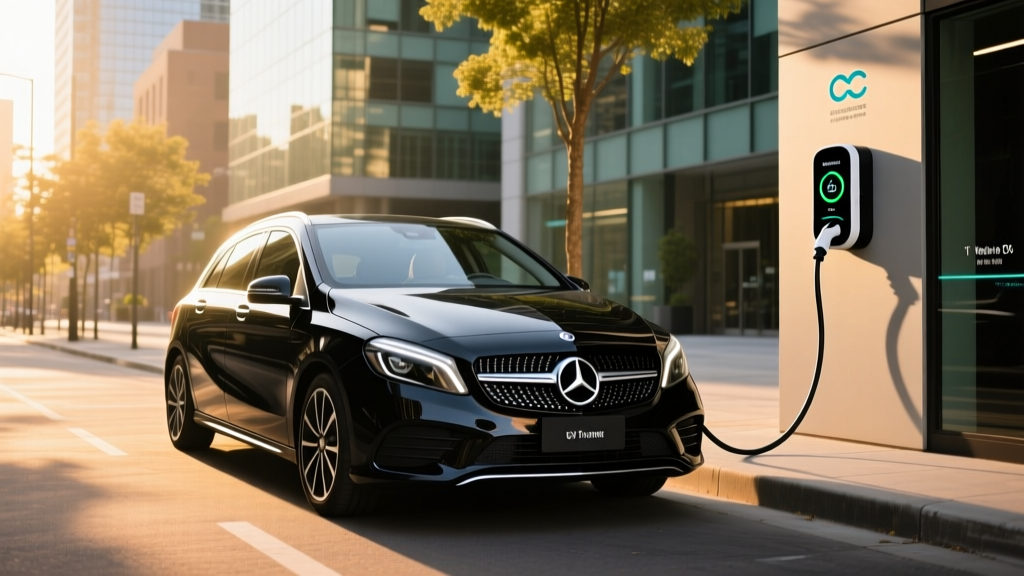
The 2017 Mercedes-Benz B-Class Electric Drive (B250e) is a used-EV bargain for city commuters who can charge at home. With an EPA-rated 87 miles of range from a 28 kWh usable battery (36 kWh gross), 177 hp, and 0–60 mph in 7.8 seconds, it's a premium-feeling compact hatchback that costs roughly $10,000–$14,000 on the used market in 2026. However, it lacks DC fast charging entirely — Level 2 at 7.2 kW is your only option — and real-world highway or cold-weather range drops to 60–70 miles. It qualifies for the up-to-$4,000 used EV tax credit (IRS §25E) if you meet income and dealer requirements.
Range, Battery, and Charging: The Numbers That Matter
The 2017 B250e was built on a Tesla-supplied powertrain — a fact that surprises many buyers. Mercedes partnered with Tesla for the battery and motor in this generation, resulting in a liquid-cooled 36 kWh lithium-ion NMC pack (28 kWh usable, with a generous buffer to protect longevity).
Real-World Range Expectations
EPA sticker: 87 miles | Combined MPGe: 84 MPGe
Real-world city (mild weather): ~80–90 miles — the EPA estimate is fairly accurate for stop-and-go driving with regen braking.
Real-world highway (70 mph): ~65–75 miles — aerodynamic drag and the lack of a heat pump eat into range at sustained speed.
Cold weather (below 32°F): ~55–65 miles — NMC chemistry without a heat pump suffers 20–30% range loss in freezing temps. Cabin heating draws heavily from the pack.
Source: EPA Fuel Economy
| Spec | Value |
|---|---|
| Battery (gross / usable) | 36 kWh / 28 kWh (NMC) |
| EPA Range | 87 miles |
| MPGe (city / hwy / combined) | 85 / 82 / 84 MPGe |
| Motor Output | 177 hp / 251 lb-ft torque |
| 0–60 mph | 7.8 seconds |
| Level 2 Charging (max) | 7.2 kW (J1772 connector) |
| Level 2 Time (0–100%) | ~3.5–4 hours |
| DC Fast Charging | Not available |
| Level 1 (120V) Charging | ~1.4 kW (~5 mi/hr) |
| Battery Warranty (original) | 8 years / 100,000 miles |
| Original MSRP | ~$59,900 (before incentives) |
| Used Price (2026 est.) | $10,000–$14,000 |
Charging Reality: No DC Fast Charging
This is the single biggest ownership limitation. The B250e has no DC fast-charge port — no CCS, no CHAdeMO, nothing. You are limited to:
- Level 1 (120V outlet): ~1.4 kW, adding roughly 5 miles per hour. A full charge takes 20+ hours. Only viable as emergency trickle charging.
- Level 2 (240V, J1772): 7.2 kW peak, adding roughly 25 miles per hour. A full 0–100% charge takes about 3.5–4 hours. This is how 95% of owners will charge.
Without DC fast charging, road trips beyond ~70 miles one-way are impractical. This car is a dedicated commuter and city runabout. Plan accordingly.
Cost Breakdown: Buying, Charging, and Maintaining a B250e
One of the strongest arguments for the B250e in 2026 is its total cost of ownership as a second car or commuter vehicle. Here's a realistic five-year breakdown assuming 10,000 miles per year, home Level 2 charging at $0.14/kWh (national average), and a purchase price of $12,000.
| Cost Category | B250e (Electric) | Gas Hatchback (30 MPG) |
|---|---|---|
| Purchase Price | $12,000 | $14,000 |
| Used EV Tax Credit (§25E) | −$4,000 (if eligible) | $0 |
| Net Purchase | $8,000 | $14,000 |
| Fuel/Energy (5 yrs, 50k mi) | $2,330 (50,000 mi ÷ 3.5 mi/kWh × $0.14) | $5,830 (50,000 mi ÷ 30 mpg × $3.50/gal) |
| Maintenance (5 yrs) | ~$1,500 (tires, cabin filter, brake fluid) | ~$3,500 (oil, filters, brakes, belts) |
| Insurance (5 yrs est.) | ~$7,500 | ~$6,500 |
| Home Charger Install (L2) | $500–$1,200 (one-time) | $0 |
| Total 5-Year Cost | ~$19,830–$20,530 | ~$29,830 |
| Cost Per Mile | ~$0.40 | ~$0.60 |
Key takeaway: Over five years, the B250e saves roughly $9,000–$10,000 compared to a similar gas hatchback, driven primarily by the used EV tax credit and dramatically lower fuel and maintenance costs. Insurance runs slightly higher due to EV-specific repair costs, but the gap has narrowed by 2026.
Home Charging Installation: What to Budget
Since the B250e relies entirely on Level 2 charging, a home setup is essentially mandatory. Budget expectations:
- Level 2 charger (J1772, 32A/40A): $300–$600 (ChargePoint Home Flex, Emporia Level 2, or similar)
- Electrician (240V/50A circuit): $300–$800 if your panel has capacity and the run is short
- Panel upgrade (if needed): $1,500–$3,000 — older homes with 100A service may need this
- Permit: $50–$150 depending on locality
Always hire a licensed electrician for the final install. A NEMA 14-50 outlet gives you flexibility to use any portable or wall-mount Level 2 unit.
Used EV Tax Credit: Can You Get $4,000 Back?
The 2017 B250e is eligible for the IRS §25E Previously-Owned Clean Vehicle Credit, which provides up to $4,000 (or 30% of the sale price, whichever is less). For a $12,000 car, that's the full $4,000. But eligibility has strict requirements:
- Sale price cap: Vehicle must sell for $25,000 or less — the B250e easily qualifies.
- Buyer income limits (2026): AGI must not exceed $75,000 (single), $112,500 (head of household), or $150,000 (joint).
- Dealer requirement: Must be purchased from a licensed dealer (not a private party) and reported to the IRS at point of sale.
- Vehicle age: Must be at least two model years old — a 2017 model easily qualifies.
- One credit per buyer: You can only claim §25E once every three years.
- First transfer: The credit applies to the first qualified sale since August 16, 2022, though subsequent dealer sales may also qualify — confirm with your dealer and the IRS.
Consult a tax professional before relying on this credit. Rules are subject to change, and the point-of-sale transfer mechanism requires a registered dealer.
Who Should (and Shouldn't) Buy the B250e in 2026
Decision Framework
Buy the 2017 B250e if:
- Your daily commute is under 50 miles round-trip
- You have access to home Level 2 charging (garage or driveway with 240V)
- You want a premium-brand commuter at a steep discount (under $10k after credit)
- This is a second car — you have a gas or long-range EV for road trips
- You live in a mild climate (Southern or coastal states) where cold-weather range loss is minimal
- You value the Tesla-derived powertrain smoothness and Mercedes build quality
Look elsewhere if:
- You need more than 80 miles of reliable daily range
- You rely exclusively on public charging (no DC fast charge means hours at public L2 stations)
- You live in a cold climate (Upper Midwest, Northeast winters) where range drops 25–30%
- You take regular road trips longer than 70 miles one-way
- You want modern driver-assist tech — the B250e has basic cruise control and collision warning, but nothing close to current ADAS suites
Common Misconceptions About the B250e
| Myth | Fact |
|---|---|
| "It has a Tesla battery, so it charges at Superchargers." | False. The B250e uses Tesla-supplied cells and motor but charges only via J1772 Level 2. It cannot connect to any DC fast-charging network. |
| "87 miles of range is unusable." | The average American drives 37 miles per day (FHWA data). For a dedicated commuter with home charging, 87 miles covers most daily needs — but only if you charge nightly. |
| "The battery will need expensive replacement." | The original 8yr/100,000-mile battery warranty has expired for most 2017 models. However, the Tesla-sourced NMC pack with its large 8 kWh buffer (28 kWh usable out of 36 kWh gross) tends to age well. Expect 10–15% degradation at 60,000–80,000 miles. A full replacement, if ever needed, runs roughly $8,000–$12,000, but most packs outlast the car's economic life. |
| "It qualifies for the $7,500 new EV tax credit." | Wrong credit. The §30D new-vehicle credit no longer applies. The §25E used EV credit (up to $4,000) is the relevant one for a 2017 purchase in 2026. |
| "It's a compliance car, so parts are impossible to find." | Mercedes-Benz still services the B250e through its dealer network. The Tesla-derived powertrain is generally reliable, and the rest of the car shares components with the W246 B-Class platform. Body and interior parts are available. |
Maintenance and Long-Term Ownership Realities
EV maintenance is simpler than gas cars, but the B250e has some specific considerations:
What You'll Actually Pay For
- Tires: EVs are heavier (the B250e weighs ~3,900 lbs) and deliver instant torque. Expect tire replacement every 25,000–35,000 miles at $600–$900 per set.
- Cabin air filter: Every 15,000–20,000 miles, ~$50–$80.
- Brake fluid flush: Every 2 years, ~$100–$150. Brake pads last 80,000+ miles thanks to regenerative braking.
- Coolant service: The liquid-cooled battery and motor require periodic coolant checks. Every 3–4 years, ~$150–$250.
- 12V auxiliary battery: Like any car, the 12V battery dies every 3–5 years (~$200–$300 replacement). This is separate from the traction battery.
What You Won't Pay For
No oil changes, no spark plugs, no timing belt, no transmission fluid, no exhaust system repairs. The single-speed reduction gear is essentially maintenance-free.
Battery Health Monitoring
Before buying, ask the seller or dealer for a State of Health (SoH) reading from the vehicle's diagnostic system. A healthy 2017 B250e at 50,000–70,000 miles should show 85–92% SoH. Anything below 80% warrants a price reduction or a walk-away. You can also check range: if the car shows 87 miles at 100% charge in moderate weather, the pack is in good shape.
How the B250e Compares to Alternatives
In the 2026 used-EV market around $10,000–$15,000, the B250e competes with several other short-range EVs:
| Vehicle | EPA Range | DC Fast Charge? | Battery kWh | Est. Used Price |
|---|---|---|---|---|
| 2017 Mercedes B250e | 87 mi | No | 28 usable (NMC) | $10k–$14k |
| 2018 Nissan Leaf (40 kWh) | 151 mi | Yes (CHAdeMO, 50 kW) | 40 (NMC) | $11k–$15k |
| 2017 VW e-Golf | 125 mi | Yes (CCS, 50 kW) | 35.8 (NMC) | $12k–$16k |
| 2017 BMW i3 (94 Ah) | 114 mi | Yes (CCS, 50 kW) | 33.2 (NMC) | $13k–$17k |
| 2017 Fiat 500e | 84 mi | No | 24 (NMC) | $8k–$11k |
The B250e's advantage is Mercedes build quality, a smooth Tesla-derived drivetrain, and a luxurious interior that outclasses everything on this list. Its disadvantage is clear: the shortest range (tied with the Fiat) and no DC fast charging. If road-trip flexibility matters at all, the e-Golf or Leaf are stronger choices. If premium feel and city-only driving are your priorities, the B250e wins.
Frequently Asked Questions
Does the 2017 B250e come with a warranty in 2026?
The original 4-year/50,000-mile bumper-to-bumper warranty has expired. The 8-year/100,000-mile battery warranty may still have residual coverage depending on the vehicle's in-service date and mileage — check the VIN with a Mercedes dealer. Any remaining coverage transfers to subsequent owners.
Can I install a DC fast-charge adapter on the B250e?
No. The vehicle was not engineered with DC fast-charge hardware. There is no adapter, retrofit, or software update that adds this capability. The car's onboard electronics and battery management system simply don't support it.
How does cold weather affect the B250e?
Expect a 20–30% range reduction below freezing. The NMC battery loses efficiency in cold temperatures, and the B250e uses resistive cabin heating (no heat pump), which draws 3–5 kW from the pack. In Minneapolis in January, your 87-mile range becomes roughly 55–65 miles. Preconditioning while plugged in helps preserve range by warming the cabin and battery before you drive.
Is the Tesla powertrain in the B250e reliable?
Generally, yes. The motor and inverter are Tesla-designed and have proven durable. The main concern is battery degradation over time, but the large 8 kWh buffer (only 28 kWh of the 36 kWh pack is usable) was specifically designed to preserve range as cells age. Most owners report 85–90% State of Health at 60,000 miles.
What's the best way to charge a B250e at home?
Install a 240V NEMA 14-50 outlet on a 50A circuit and use a quality Level 2 charger like the ChargePoint Home Flex or Emporia Vue. Set the charger to 32A (7.2 kW) to match the car's maximum acceptance rate. A full charge takes about 3.5 hours, so plugging in when you get home means a full battery by bedtime.
Is the B250e a good first EV?
It can be — but only if your lifestyle fits its constraints. If you have home charging, a short commute, and a second vehicle for longer trips, it's an excellent, affordable entry into EV ownership. If this will be your only car and you ever need to drive more than 70 miles in a day, look at a used Leaf, e-Golf, or ideally a longer-range option like a used Chevy Bolt (238 miles EPA) instead.