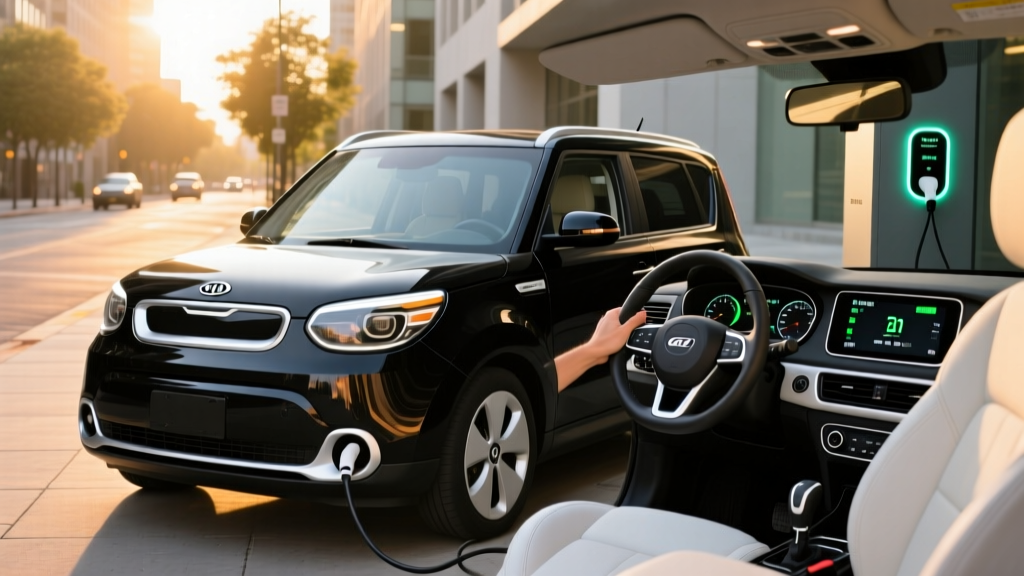
If you have been searching for a 2017 Kia EV on the used market, you are almost certainly looking at the Kia Soul EV. It was the only battery-electric vehicle Kia offered in the United States for the 2017 model year, and it remains one of the most recognizable early-generation EVs on American roads. Boxy, practical, and surprisingly spacious, the Soul EV was a compelling urban commuter when new — but how does it hold up as a used EV purchase in 2026?
This profile breaks down the real-world range, charging behavior, battery health considerations, and ownership economics you need to evaluate before buying a used 2017 Kia Soul EV. We will also address federal tax credit eligibility for used EVs under current IRS rules.
2017 Kia Soul EV: Quick Specs at a Glance
| Spec | Value |
|---|---|
| EPA Range | 111 miles |
| Battery (usable) | 27 kWh (NMC lithium-ion) |
| Motor Output | 109 hp / 210 lb-ft torque |
| 0–60 mph | ~11.2 seconds |
| Drivetrain | FWD (single motor) |
| EPA Efficiency | 108 MPGe combined (31 kWh/100 mi) |
| DC Fast Charge (max) | ~50 kW (CHAdeMO) |
| Level 2 Charge Rate | 6.6 kW |
| Cargo Volume (rear seats up) | 23.8 cu ft |
| Cargo Volume (rear seats folded) | 49.5 cu ft |
| Original Base MSRP | ~$33,950 (before incentives) |
| Original Battery Warranty | 10 yr / 100,000 mi |
The 2017 Soul EV came in two trims: the base EV and the EV+ (sometimes badged EV EX). The EV+ added leather upholstery, heated and ventilated front seats, a larger 8-inch infotainment screen with navigation, and a premium audio system. Both trims shared the same powertrain and battery.
Real-World Range: What to Expect From the 2017 Kia Soul EV
EPA Sticker: 111 miles
Real-World City/Commuting: 95–110 miles (mild weather, regenerative braking maximized)
Real-World Highway (65–70 mph): 75–90 miles
Cold Weather (below 32°F): 60–80 miles (up to 35–40% loss due to cabin heating and reduced battery efficiency)
The 2017 Soul EV's 27 kWh usable battery (gross capacity is approximately 30 kWh, with a protective buffer) was modest even in 2017. In practice, this car is a dedicated city commuter and errand runner. According to EPA data at fueleconomy.gov, the combined rating of 108 MPGe is competitive with other small EVs of its era, like the Nissan Leaf and Fiat 500e.
Two factors compress range significantly on the Soul EV. First, highway driving above 65 mph pushes the boxy aerodynamic profile hard — expect a 15–20% reduction versus the EPA figure on interstate trips. Second, the Soul EV uses resistive cabin heating rather than a heat pump. In sub-freezing temperatures, battery energy diverted to cabin warmth can slash range by a third or more. If you live in a cold climate, plan your daily driving around a 65–75 mile effective radius in winter.
Battery degradation is also a factor on any 8-to-9-year-old EV. Expect a used 2017 Soul EV to have lost roughly 8–15% of original capacity depending on climate history and charging habits. A car that originally delivered 100 real-world miles might now deliver 85–92. Always request a battery state-of-health (SoH) reading from a Kia dealer or use an OBD2 scanner with EV-compatible software before purchasing.
Charging Speed: DC Fast, Level 2, and Level 1
Charging the 2017 Soul EV reflects its era. It uses the CHAdeMO DC fast-charging connector — not the CCS1 standard that most non-Tesla automakers later adopted, and not the NACS (Tesla) connector that has become the North American standard through 2025–2026.
| Charging Level | Connector | Power (kW) | Time / Rate |
|---|---|---|---|
| Level 1 (120V household) | J1772 | ~1.2 kW | ~22–26 hours (0–100%) |
| Level 2 (240V home/public) | J1772 | 6.6 kW | ~4.5 hours (0–100%); ~18 mi/hr |
| DC Fast Charge | CHAdeMO | ~50 kW peak | ~30–35 min (10–80%) |
A few practical notes for used buyers:
- CHAdeMO availability is shrinking. As Electrify America, EVgo, and other networks have standardized on CCS1 and now NACS, CHAdeMO stalls are being phased out at many stations. Check your local charging infrastructure before committing to this car.
- The 50 kW DC fast-charge rate is a peak, not a sustained average. The Soul EV's charge curve tapers significantly above 80% state of charge (SoC). A 10–80% session takes roughly 30–35 minutes, but topping from 80–100% on DC can add another 20+ minutes. Plan to charge to 80% and move on.
- Level 2 at 6.6 kW is adequate for overnight home charging. A full charge in about 4.5 hours means you can easily replenish the battery each night on a standard Level 2 home station. Installation of a 240V / 40A circuit typically costs $500–$1,500 depending on panel proximity and local permitting, according to industry electrician estimates.
Performance and Driving Impressions
The 2017 Soul EV is not a performance vehicle. Its 109-horsepower electric motor and 210 lb-ft of torque move the ~3,300-pound curb weight adequately around town, but the 0–60 mph time of approximately 11.2 seconds puts it well behind modern EVs. Highway merging requires planning, and the single-speed reduction gear means power delivery is smooth but limited at higher speeds.
Where the Soul EV shines is low-speed urban drivability. Instant torque from a stop makes it feel punchy at traffic-light launches up to about 35 mph. Regenerative braking is adjustable via steering-wheel paddles, allowing you to dial in anything from mild coasting to near one-pedal driving. The ride is compliant, the turning radius is tight, and visibility from the upright greenhouse is excellent.
The front-wheel-drive layout means no AWD option — a consideration if you deal with heavy snow. Winter tires are strongly recommended in cold climates, and the range penalty from winter driving (see above) compounds the traction challenge.
Interior Space, Tech, and Daily Practicality
The Soul's boxy shape is its secret weapon. With 23.8 cubic feet of cargo space behind the rear seats and 49.5 cubic feet with them folded, it out-hauls most compact crossovers. The rear seat offers generous headroom (39.3 inches) and respectable legroom (35.4 inches), making it viable for adults on shorter trips.
One compromise: the Soul EV's battery pack sits beneath the floor, which slightly raises the seating position and eliminates the spare tire (a tire-inflation kit is included). There is no front trunk (frunk).
Tech in the 2017 model is functional but dated by 2026 standards:
- Infotainment: 8-inch touchscreen with navigation (EV+), Bluetooth, USB, and UVO connected services (note: UVO remote services have been sunset for many older models — verify with Kia)
- Driver Assists: Rearview camera (standard), blind-spot detection and rear cross-traffic alert (standard on EV+). No adaptive cruise control, no lane-keeping assist, no automatic emergency braking — this is an SAE Level 0 vehicle for automation.
- Unique feature: The Soul EV includes a charge-scheduling function that lets you set charging windows to take advantage of off-peak electricity rates, and a cabin-preconditioning timer that warms or cools the car while still plugged in — preserving range for your commute.
Pricing and Used-EV Tax Credit (2026)
The 2017 Kia Soul EV originally started around $33,950 (base EV trim) and approximately $35,850 for the EV+. After the original $7,500 federal credit available at the time, effective prices were roughly $26,000–$28,000.
On the used market in 2026, expect to pay between $9,000 and $15,000 depending on mileage, condition, battery health, and trim. Lower-mileage EV+ examples in good condition command the higher end of that range.
Under the IRS Used Clean Vehicle Credit, you may qualify for up to $4,000 or 30% of the sale price (whichever is less) when purchasing a qualifying used EV from a licensed dealer. Key requirements:
- Sale price must be $25,000 or less
- Buyer income caps: $75,000 (single), $112,500 (head of household), $150,000 (joint)
- Vehicle must be at least 2 model years old (the 2017 qualifies)
- Must purchase from a licensed dealer (private-party sales do not qualify)
- Credit is non-refundable — you must have sufficient tax liability
- The same vehicle can only generate the used credit once every 3 years
Pros and Cons of the 2017 Kia Soul EV
Pros
- Spacious, practical cargo area for its footprint
- Low used pricing (under $15K in most markets)
- Strong city efficiency (108 MPGe combined)
- Comfortable ride and excellent visibility
- Remaining battery warranty may still apply (10yr/100K mi)
- Preconditioning timer preserves range
Cons
- Limited range (111 mi EPA; 75–90 mi highway)
- CHAdeMO connector — shrinking public network support
- Slow DC fast charging by 2026 standards (~50 kW)
- No advanced driver-assist features (AEB, LKA, ACC)
- Resistive heater — severe cold-weather range loss
- No AWD option
- Dated infotainment with limited smartphone integration
Who Should Buy the 2017 Kia Soul EV?
- Need a budget-friendly second car for commuting, school runs, and errands under 50 miles round-trip
- Have reliable home Level 2 charging and don't depend on public DC fast chargers
- Value cargo space and upright seating in a compact footprint
- Live in a mild climate (minimal cold-weather range loss)
- Need highway range above 150 miles for regular road trips
- Rely on public charging networks (CHAdeMO access is declining)
- Want modern ADAS features like automatic emergency braking or lane-keeping
- Regularly drive in sub-freezing temperatures with no home charging
How It Compares to Key Used-EV Competitors
| Vehicle | EPA Range | Battery | DC Fast Connector | Approx. Used Price |
|---|---|---|---|---|
| 2017 Kia Soul EV | 111 mi | 27 kWh (NMC) | CHAdeMO (~50 kW) | $9,000–$15,000 |
| 2017 Nissan Leaf (30 kWh) | 107 mi | 30 kWh (NMC) | CHAdeMO (~50 kW) | $8,000–$13,000 |
| 2017 VW e-Golf | 125 mi | 35.8 kWh (NMC) | CCS1 (~50 kW) | $10,000–$16,000 |
| 2017 Fiat 500e | 84 mi | 24 kWh (NMC) | None (L2 only) | $6,000–$10,000 |
| 2017 Chevrolet Bolt EV | 238 mi | 60 kWh (NMC) | CCS1 (~55 kW) | $12,000–$18,000 |
The 2017 Chevrolet Bolt EV stands out as the clear range leader in this cohort at 238 miles EPA, and its CCS1 connector has better long-term network support. If your budget allows the higher end of the used market, the Bolt is the more versatile choice. The VW e-Golf is a solid middle ground with slightly better range and CCS1 compatibility. The Soul EV's advantages are interior volume and overall practicality — nothing else in this price range offers nearly 50 cubic feet of cargo space with the seats folded.
Battery Warranty and Longevity
Kia originally provided a 10-year / 100,000-mile battery warranty on the Soul EV, covering defects and capacity loss below a specified threshold (typically around 70% state of health). For a 2017 model, that warranty extends through model year 2027 or until the odometer reaches 100,000 miles — whichever comes first.
This means a low-mileage 2017 Soul EV purchased in 2026 may still carry several months of factory battery coverage. However, warranty transferability to second or third owners varies — contact Kia customer service with the VIN to confirm remaining coverage before purchasing. According to NHTSA records, the Soul EV has not been subject to major battery-related recalls, but always check the VIN at nhtsa.gov/recalls.
For long-term ownership budgeting, a full battery replacement on the Soul EV would cost an estimated $6,000–$10,000 (parts and labor) in 2026 — though most batteries from this era are lasting well beyond 100,000 miles with gradual degradation rather than sudden failure.
Frequently Asked Questions
What is the real-world range of the 2017 Kia Soul EV?
In mild weather with mixed city driving, expect 95–110 miles. Highway driving at 65–70 mph drops that to 75–90 miles. In freezing temperatures with cabin heat, plan for as little as 60–80 miles. Battery age and degradation will further reduce these figures by roughly 8–15% on a typical used example.
How fast does the 2017 Kia Soul EV charge?
On DC fast charge (CHAdeMO), it peaks at approximately 50 kW, taking about 30–35 minutes from 10–80% SoC. On a Level 2 home charger (240V), the onboard charger accepts up to 6.6 kW, fully recharging the battery in roughly 4.5 hours. Level 1 (120V) is impractically slow at over 22 hours for a full charge.
Does the 2017 Kia Soul EV qualify for any federal tax credit?
It does not qualify for the new-vehicle §30D credit (that applied only at original purchase). However, it may qualify for the §25E Used Clean Vehicle Credit of up to $4,000 if purchased from a licensed dealer for $25,000 or less, and if the buyer meets IRS income caps ($75K single / $150K joint). Verify current-year rules at irs.gov and consult a tax professional.
Is the 2017 Kia Soul EV worth buying vs. a used Chevrolet Bolt EV?
If range and charging-network access are priorities, the 2017 Bolt EV (238 miles EPA, CCS1 connector) is the better buy — though it typically costs $2,000–$5,000 more on the used market. The Soul EV wins on interior space, visibility, and lower entry price. Choose the Soul if your daily driving stays under 70 miles and you charge primarily at home.
Will CHAdeMO charging still be available in the future?
CHAdeMO infrastructure is declining as networks transition to CCS1 and NACS. Some Electrify America and EVgo stations still maintain CHAdeMO connectors, but new installations rarely include them. If you rely on public DC fast charging, verify that CHAdeMO stations exist along your regular routes before purchasing.
Can I install a home charger for the 2017 Soul EV?
Yes. Any Level 2 home charger with a J1772 connector will work. A 240V / 30–40A circuit is sufficient to deliver the car's maximum 6.6 kW acceptance rate. Budget $500–$1,500 for professional installation (electrician labor, permits, and wiring), with higher costs if your electrical panel needs an upgrade to support a dedicated 240V circuit. Consult a licensed electrician for a site-specific quote.