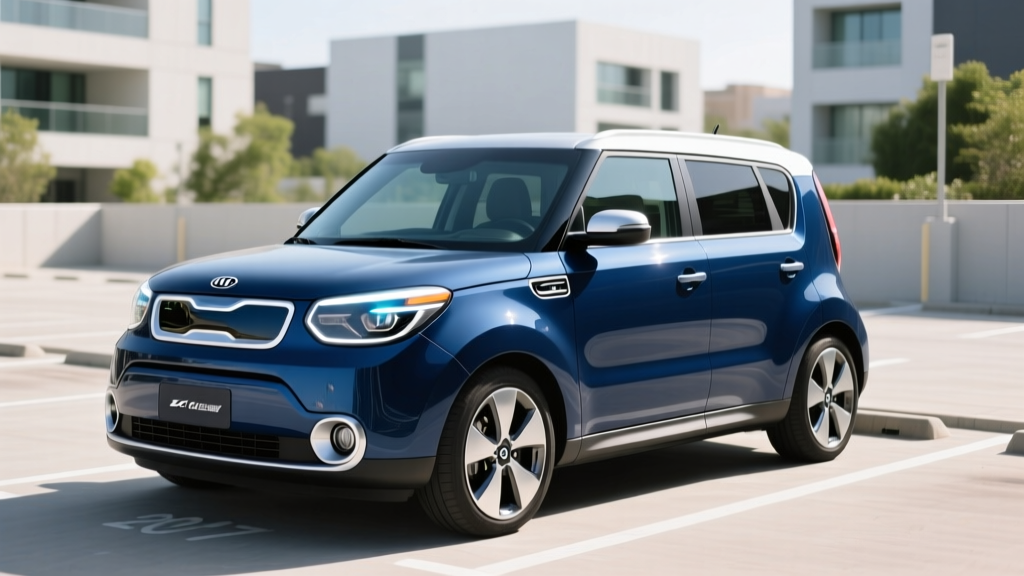
The short answer: The 2017 Kia Soul EV is one of the most affordable used electric vehicles on the market in 2026, with examples selling for roughly $8,000–$13,000 depending on mileage and battery health. Its 93-mile EPA range (111 MPGe combined) suits city commuting and errands, but highway trips, cold weather, and battery degradation will shrink that to 60–75 miles in real-world conditions. It's a smart second car or urban daily driver for buyers with home Level 2 charging — but a poor fit for anyone needing long-distance flexibility.
2017 Kia Soul EV at a Glance: Key Specs
The 2017 model year was a turning point for the Soul EV. Kia upgraded the battery from the original 27 kWh (usable ~24 kWh) pack to a slightly revised version with improved thermal management, though the EPA-rated range stayed at 93 miles for the EV+ trim and 111 miles for the newly introduced EV+ (with a more efficient heat pump system). Here are the core numbers you need:
| Specification | 2017 Kia Soul EV (Base / EV+) |
|---|---|
| EPA Range | 93 miles (Base) / 111 miles (EV+ with heat pump) |
| Battery Capacity | 30 kWh gross / ~27 kWh usable (NMC chemistry) |
| Motor Output | 109 hp / 210 lb-ft torque |
| 0–60 mph | ~11.2 seconds |
| DC Fast Charge (CHAdeMO) | Peak ~50 kW, 10–80% in ~33 minutes |
| Level 2 Charge (J1772) | 6.6 kW onboard charger, ~4.5 hours (0–100%) |
| Level 1 Charge (120V) | ~1.4 kW, ~24+ hours (0–100%) |
| EPA Efficiency | 93 MPGe combined (Base) / 111 MPGe (EV+) |
| Cargo Volume | 24.4 cu ft (rear seats up) / 49.5 cu ft (folded) |
| Original MSRP | $33,900 (Base) / $35,800 (EV+) |
| Used Price Range (2026) | $8,000 – $13,000 |
| Battery Warranty (Original) | 10 years / 100,000 miles (capacity above ~70%) |
The battery uses NMC (nickel manganese cobalt) chemistry, which offers decent energy density for the era but is more sensitive to sustained high State of Charge (SoC) and extreme temperatures than modern LFP (lithium iron phosphate) packs. More on degradation below.
Real-World Range: What You'll Actually Get
EPA Sticker: 93 miles (Base) / 111 miles (EV+)
Real-World Expectation (2026, with degradation):
- City driving, mild weather (60–80°F): 70–90 miles
- Highway driving (70 mph): 55–70 miles
- Cold weather (below 30°F, cabin heat on): 45–60 miles
Let's be direct: the 2017 Soul EV's range was modest when new, and after 8–9 years of battery aging, it will be reduced further. Expect roughly 10–20% capacity loss depending on how the vehicle was charged and stored. A car that spent its life in Arizona with frequent DC fast charging and regular 100% SoC parking will show more degradation than a garage-kept Pacific Northwest example charged primarily on Level 2 to 80%.
The EV+ trim's heat pump is a meaningful advantage in cold climates. Unlike the Base trim's resistive cabin heater — which can draw 3–5 kW and slash range by 30–40% — the heat pump pulls heat from the outside air and the powertrain, reducing heating energy consumption by roughly half. If you live where winters dip below freezing, the EV+ trim is strongly preferred.
Charging: Connectors, Speeds, and Daily Reality
The 2017 Soul EV uses the CHAdeMO connector for DC fast charging and the standard J1772 connector for Level 1 and Level 2 AC charging. This is important context for 2026 buyers:
| Connector | 2017 Soul EV | 2026 Network Availability |
|---|---|---|
| CHAdeMO (DC fast) | Yes — native | Declining. Electrify America has removed most CHAdeMO stalls. Some EVgo and independent stations remain. |
| J1772 (Level 2) | Yes — native | Universal. Every public Level 2 station supports J1772. |
| CCS1 (DC fast) | No | Industry standard. Requires adapter (limited aftermarket options). |
| NACS (Tesla) | No | Tesla Superchargers and newer stations. Requires adapter (not widely available for CHAdeMO vehicles). |
The CHAdeMO situation is the 2017 Soul EV's biggest practical limitation in 2026. While you can still find CHAdeMO chargers at some EVgo stations and legacy locations, the industry has moved decisively to CCS1 and NACS. For road trips, you'll need to plan carefully using apps like PlugShare and A Better Routeplanner, filtering specifically for CHAdeMO availability.
At 50 kW peak DC charge rate, the Soul EV adds roughly 3–4 miles of range per minute of charging in the 10–80% SoC window. The charge curve tapers noticeably above 80%, so plan to charge to 80% and go rather than wait for a full charge at a public station. A full 10–80% session takes about 33 minutes under ideal conditions — longer if the battery is cold (the 2017 Soul EV lacks active battery preconditioning for fast charging).
For daily use, a home Level 2 charger (240V, 30–40 amp circuit) is the practical backbone. At 6.6 kW, you'll replenish a depleted battery in roughly 4.5 hours — easily overnight. A basic Level 2 home station (ChargePoint Home Flex, Emporia Level 2, or similar) costs $300–$600 for the unit plus $500–$1,500 for professional installation depending on your electrical panel's capacity and proximity to the parking spot, according to typical electrician pricing data.
Cost Breakdown: Purchase, Charging, and Ownership
The financial case for a used 2017 Soul EV hinges on low purchase price and cheap home charging. Here's how the numbers stack up against a comparable used gas car:
| Cost Category | 2017 Kia Soul EV (Used) | 2017 Kia Soul Gas (1.6L, Used) |
|---|---|---|
| Purchase Price | $8,000 – $13,000 | $10,000 – $15,000 |
| Fuel/Energy (12,000 mi/yr) | $360 – $540/yr (at $0.10–$0.15/kWh) | $1,320 – $1,680/yr (at $3.30–$4.20/gal, 27 MPG) |
| Annual Maintenance | $200 – $400 (no oil, fewer brakes) | $600 – $1,000 (oil, filters, brakes) |
| Insurance (avg.) | $1,100 – $1,500/yr | $1,000 – $1,400/yr |
| Estimated 5-Year Total Cost | $14,500 – $26,000 | $20,000 – $31,000 |
The fuel savings are substantial: at national average electricity rates of $0.13/kWh and the Soul EV's efficiency of roughly 30 kWh/100 miles, you'll spend about $3.90 per 100 miles on electricity versus $12–$16 per 100 miles on gasoline. Over 12,000 miles annually, that's roughly $900–$1,200 in annual fuel savings.
Federal tax credit note: The §30D federal tax credit for new EVs does not apply to a 2017 model. However, the used EV tax credit (IRS §25E) may apply: up to $4,000 or 30% of the sale price (whichever is lower) for qualifying used EVs sold by a dealer for $25,000 or less, subject to buyer income caps ($75,000 single / $150,000 joint). The 2017 Soul EV qualifies on price — verify your income eligibility and the dealer's reporting on the IRS used EV credit page.
Battery Health: What to Check Before You Buy
Battery degradation is the single most important factor in a used 2017 Soul EV purchase. Here's what to evaluate:
- State of Health (SoH): Use the car's built-in battery diagnostic (accessible through the dashboard menu or via an OBD-II scanner with an app like Soul EV Spy or EVNotify). A healthy 8–9 year old pack should show 80–90% SoH. Below 75%, expect noticeably reduced range and consider negotiating price accordingly.
- Original warranty remaining: Kia's 10-year/100,000-mile battery warranty covers capacity below approximately 70% SoH. A 2017 model's warranty expires in 2027, so you may have 1–2 years of coverage left — but only if mileage is under 100,000. Confirm the in-service date and current odometer reading.
- Charging history: Ask the previous owner about charging habits. Frequent DC fast charging, regular charging to 100%, and prolonged storage at high SoC in hot climates accelerate NMC degradation.
- Replacement cost: If the battery fails out of warranty, a replacement pack for the 2017 Soul EV runs approximately $8,000–$12,000 including labor at a Kia dealership — a figure that can exceed the car's value. Third-party refurbishment options are emerging but limited for this model.
| Myth | Fact |
|---|---|
| "The battery will need replacing soon." | NMC packs typically lose 1–2% capacity per year under normal use. At 8–9 years old, expect 80–90% SoH — still functional for city driving. |
| "93 miles of range is useless." | The average American drives ~37 miles per day (FHWA data). For a second car or city commuter, 70+ real-world miles covers most daily needs. |
| "CHAdeMO is completely dead." | Declining, but not gone. EVgo and some regional networks still maintain CHAdeMO connectors. Plan routes ahead and you can still road-trip — with patience. |
| "Used EVs are money pits." | Maintenance costs are typically lower than gas cars (no oil changes, fewer brake replacements due to regen). The risk is concentrated in battery replacement — mitigate it by checking SoH before purchase. |
Decision Framework: Is the 2017 Soul EV Right for You?
Choose the 2017 Soul EV if:
- You have reliable home Level 2 charging (garage or driveway with a 240V outlet)
- Your daily round-trip commute is under 50 miles
- You want a second car for errands, school runs, and local driving
- You live in a mild-to-moderate climate (or can get the EV+ trim with heat pump)
- You want to spend under $13,000 on an EV and may qualify for the $4,000 used EV credit
- You value the Soul's practical boxy cargo space (24.4 cu ft behind rear seats)
Look elsewhere if:
- You need to regularly drive more than 80 miles between charges
- You rely exclusively on public DC fast charging (CHAdeMO availability is limited)
- You live in a region with harsh winters and the available car is the Base trim without a heat pump
- The battery SoH reads below 75% and no warranty remains
- You want modern driver-assistance features — the 2017 Soul EV has basic stability control but lacks adaptive cruise, lane-keeping, or automatic emergency braking (these are SAE Level 0 — no driver automation)
How It Compares: Soul EV vs. Alternatives
In the used EV market around $10,000–$15,000, the 2017 Soul EV competes with several alternatives:
| Attribute | 2017 Kia Soul EV | 2017 Nissan Leaf (30 kWh) | 2017 VW e-Golf |
|---|---|---|---|
| EPA Range | 93–111 mi | 107 mi | 125 mi |
| Battery | 30 kWh (NMC) | 30 kWh (NMC) | 35.8 kWh (NMC) |
| DC Fast Connector | CHAdeMO | CHAdeMO | CCS1 |
| Peak DC Charge | ~50 kW | ~50 kW | ~50 kW |
| Cargo Space | 24.4 cu ft | 23.6 cu ft | 22.8 cu ft |
| Heat Pump | EV+ trim only | No (resistive) | Yes (standard) |
| Used Price (2026) | $8K–$13K | $7K–$11K | $10K–$15K |
The e-Golf's CCS1 connector gives it a meaningful long-term charging advantage, and its slightly larger battery yields better range. The Leaf is cheaper but shares the CHAdeMO limitation and uses passive air-cooled battery thermal management (which accelerates degradation in hot climates). The Soul EV's standout advantage is cargo practicality — that boxy shape delivers genuinely useful space that the others can't match.
Frequently Asked Questions
Can I charge a 2017 Soul EV at a Tesla Supercharger?
Not natively. The 2017 Soul EV uses CHAdeMO for DC fast charging, and there is no widely available, certified CHAdeMO-to-NACS adapter as of 2026. You can use Tesla's J1772-compatible Level 2 destination chargers with the standard J1772 adapter that comes with the car, but not Supercharger stalls.
Is the 2017 Soul EV eligible for any tax credits in 2026?
Not the new-vehicle §30D credit. However, the IRS §25E used clean vehicle credit offers up to $4,000 (or 30% of the sale price, whichever is less) if you buy from a licensed dealer for $25,000 or less and your modified adjusted gross income is within limits ($75,000 single / $112,500 head of household / $150,000 joint). Check current rules at irs.gov before purchasing.
What happens if the battery degrades below 70%?
If the car is still within its 10-year/100,000-mile battery warranty period (check the original in-service date), Kia is obligated to repair or replace the battery to bring it above the ~70% capacity threshold. After warranty expiration, you're responsible for the $8,000–$12,000 replacement cost. This is why checking SoH and remaining warranty coverage is critical before purchase.
How does the 2017 Soul EV compare to a gas Soul in maintenance costs?
Significantly cheaper to maintain. You eliminate oil changes ($40–$80 each, 2–3 times per year), transmission fluid service, spark plugs, and exhaust system repairs. Regenerative braking reduces brake pad wear — many EV owners report original brake pads lasting 80,000+ miles. Expect annual maintenance of $200–$400 versus $600–$1,000 for the gas version.
Is the 2017 Soul EV safe?
The 2017 Soul (gas version, structurally similar) earned a Top Safety Pick from IIHS with acceptable ratings in most crash tests. The EV version carries the same structural safety profile with the battery pack mounted low in the floor, contributing to a low center of gravity. However, it lacks modern active safety features — no automatic emergency braking, lane departure warning, or blind spot monitoring were standard. Check individual vehicle NHTSA ratings by VIN.