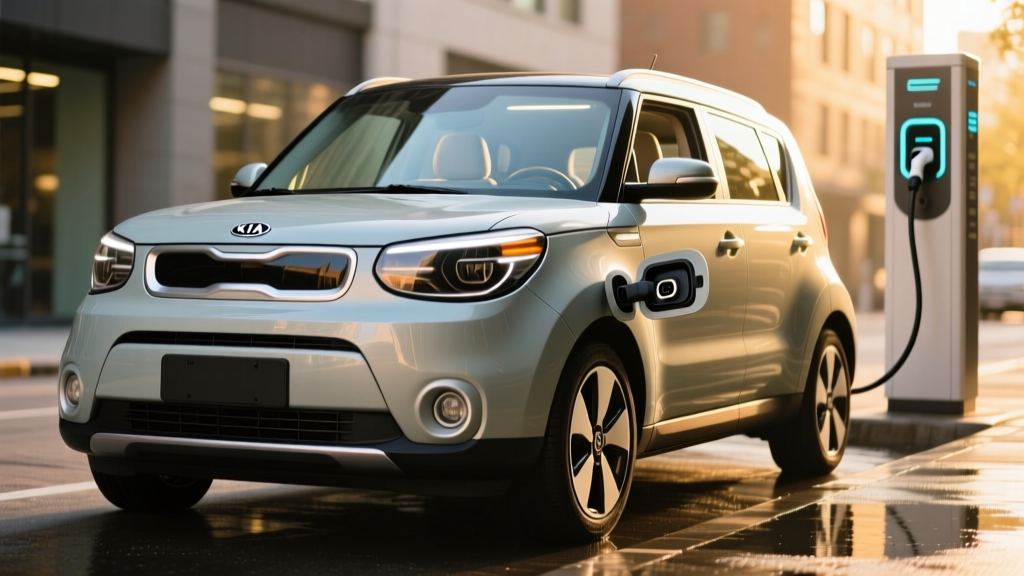
The 2017 Kia Soul EV occupies a unique space in the used electric vehicle market. Discontinued after the 2019 model year and replaced by the far more capable Niro EV and EV6, the first-generation Soul EV was a compliance-era battery electric vehicle built on a converted gas-car platform. With just 111 miles of EPA-estimated range and a modest 27 kWh usable battery, it was never designed for road trips. But for urban commuters who can charge at home and want a quirky, practical hatchback at a bargain used price, the 2017 Soul EV still has a narrow but real use case in 2026.
This review covers the 2017 model year specifically — the version with the upgraded (relative to 2015-2016) 30 kWh battery pack. If you're cross-shopping this against a used Nissan Leaf, Chevy Bolt EV, or early Hyundai Ioniq Electric, the data below will help you decide whether the Soul EV's trade-offs make sense for your daily driving.
2017 Kia Soul EV: Core Specifications at a Glance
| Specification | Value |
|---|---|
| EPA Range | 111 miles |
| Battery (Total / Usable) | 30 kWh total / ~27 kWh usable |
| Battery Chemistry | NMC (Nickel Manganese Cobalt) |
| Motor Output | 109 hp / 210 lb-ft torque |
| Drivetrain | FWD (single motor, front-wheel drive) |
| 0-60 mph | ~11.2 seconds |
| EPA Efficiency | 108 MPGe combined (31 kWh/100 mi) |
| DC Fast Charge (Max) | ~50 kW (CHAdeMO connector) |
| Level 2 Charge Rate | 6.6 kW (J1772 connector) |
| Cargo Volume (rear seats up / down) | 23.8 cu ft / 49.5 cu ft |
| Original MSRP (base +!) | ~$34,500 (before incentives) |
| Battery/Powertrain Warranty | 10 years / 100,000 miles (original) |
Sources: EPA / fueleconomy.gov, Kia Motors America press materials (2017 model year).
Range and Efficiency: The 111-Mile Reality Check
Real-World Expectation: 85–100 miles on mixed highway driving; 70–85 miles in sustained cold weather (below 40°F) with cabin heat; up to 110 miles in mild city driving with regenerative braking engaged.
The 2017 Soul EV's 111-mile EPA rating was competitive when the car launched but is severely limiting by 2026 standards. For context, the current Kia Niro EV delivers 239 miles EPA, and even the budget-oriented used Chevy Bolt EV offers 238 miles.
The Soul EV's efficiency of 108 MPGe combined (31 kWh per 100 miles) is respectable for its era — the boxy shape creates highway drag, but around town the car's regenerative braking system recovers energy effectively. The three driving modes (Eco, Normal, Sport) and the B-mode regenerative braking setting on the gear selector let you maximize range in stop-and-go traffic.
Cold-weather impact is significant. The 2017 Soul EV uses a resistive PTC heater rather than the heat pump found in modern EVs like the Ioniq 5 or Tesla Model Y. Resistive heating draws heavily from the 27 kWh usable battery — expect a 20–30% range reduction in freezing temperatures. If your winter commute is 40 miles round-trip, you'll want to keep the car plugged in and use the scheduled preconditioning feature to warm the cabin while still connected to grid power.
Charging: CHAdeMO Limits and Level 2 Practicality
The 2017 Soul EV supports three charging levels, but its DC fast-charging hardware reflects its compliance-car origins. Here's what you'll encounter at home and on the road:
| Level | Connector | Power (kW) | Speed | Notes |
|---|---|---|---|---|
| Level 1 (120V) | J1772 | ~1.2 kW | ~4 miles/hour | Included cord; ~23 hours for full charge |
| Level 2 (240V) | J1772 | 6.6 kW | ~22 miles/hour | ~4.5 hours for full charge |
| DC Fast Charge | CHAdeMO | ~50 kW peak | ~80% in ~33 min | Tapers sharply above 80%; CHAdeMO networks shrinking |
The CHAdeMO problem is real and growing. In 2026, the North American charging landscape has consolidated heavily around CCS1 and NACS (Tesla's connector, now adopted by Ford, GM, Rivian, and others). Electrify America, the largest non-Tesla DC fast-charging network, has phased out CHAdeMO connectors at many newer stations. While ChargePoint and EVgo still maintain some CHAdeMO stalls, the long-term availability of compatible public fast chargers is a genuine concern for Soul EV owners who rely on road-trip charging.
For home charging, the 6.6 kW onboard charger is adequate. A Level 2 home station (240V, 30-amp circuit) will replenish the battery from empty to full in roughly 4.5 hours. Since most owners will arrive home with 30–50% state of charge remaining, overnight top-ups are easily completed in 2–3 hours. The small battery is actually an advantage here — you don't need a 48-amp charger or a panel upgrade to support daily charging needs.
Charging curve reality: The ~50 kW DC fast-charge peak is only sustained from roughly 10–55% state of charge. Above 55%, the charge rate tapers progressively, dropping below 25 kW past 80%. This means the published "80% in 33 minutes" figure is optimistic — expect closer to 40 minutes in real-world conditions if the battery isn't preconditioned.
Performance and Driving Experience
The 2017 Soul EV's 109-horsepower electric motor and 210 lb-ft of torque deliver adequate but unexciting acceleration. The 0-60 mph time of approximately 11.2 seconds places it well behind modern EVs (the current EV6 Light does it in ~7.3 seconds) but on par with the gas-powered Soul of the same era.
Where the electric Soul shines is low-speed responsiveness. The instant torque delivery makes it feel punchy around town, pulling away from stoplights with more urgency than the horsepower figure suggests. The single-speed reduction gear eliminates shift lag, and the low center of gravity from the floor-mounted battery pack keeps body roll manageable despite the tall hatchback profile.
The front-wheel-drive layout means no all-weather traction advantage over the gas Soul. In snow and rain, the car's stability control and the weight of the battery pack (the EV is roughly 400 lbs heavier than the gas version) provide decent grip, but winter tires are recommended for cold-climate owners.
Interior, Cargo, and Daily Practicality
The Soul's signature boxy design translates into genuinely useful interior space. With 23.8 cubic feet of cargo room behind the rear seats and 49.5 cubic feet with the rear seats folded, the Soul EV offers more practical volume than most compact crossovers of its era. The tall roofline accommodates bulky items like bicycles or furniture that wouldn't fit in a sedan or low-roof hatchback.
Front legroom measures 40.9 inches and rear legroom is 37.6 inches — generous for a subcompact. Headroom is excellent front and rear thanks to the upright greenhouse.
However, the EV conversion exacts a penalty: the battery pack sits beneath the cargo floor, raising the load floor by roughly 2 inches compared to the gas Soul and eliminating the spare tire well. There is no frunk (front trunk), as the electric motor and power electronics occupy the engine bay.
Infotainment and Technology
The 2017 model features an 8-inch touchscreen with navigation, UVO3 connectivity (Kia's telematics platform), Apple CarPlay, Android Auto, and a dedicated EV information display showing real-time energy flow, battery state of charge, and nearby charging stations. A heat pump–equipped HVAC system is not included — again, this car uses resistive cabin heating.
Standard driver-assist features include a rearview camera, but the 2017 Soul EV predates Kia's broader ADAS rollout. You will not find adaptive cruise control, lane-keeping assist, or automatic emergency braking on this model year. These features became available on later Kia EVs.
Used Pricing and the Federal Tax Credit Question
As a discontinued model, the 2017 Kia Soul EV is only available on the used market in 2026. Original MSRP was approximately $34,500 for the base EV trim and $36,500 for the EV+ (later called EV EXX) trim with leather seats, LED headlights, and additional features.
Used prices vary widely by mileage, battery health, and regional demand. Expect to find 2017 Soul EVs priced between $8,000 and $14,000 in 2026, with lower-mileage, well-maintained examples at the top of that range.
Does the 2017 Soul EV Qualify for the Federal Tax Credit?
Under current IRS §30D rules, the used clean vehicle credit (up to $4,000) may apply to a 2017 Soul EV purchase if several conditions are met:
- Vehicle price cap: The sale price must be $25,000 or less (easily satisfied by Soul EV used pricing).
- Buyer income limits: Adjusted gross income must not exceed $75,000 (single), $112,500 (head of household), or $150,000 (married filing jointly).
- Dealer requirement: The vehicle must be purchased from a licensed dealer who reports the sale to the IRS (private-party sales do not qualify).
- Model year rule: The vehicle must be at least two model years old (satisfied).
- Battery capacity: The battery must have at least 7 kWh capacity (the 30 kWh pack satisfies this).
- First-time transfer: The credit applies only once per vehicle after August 16, 2022 — if a previous owner already claimed the used credit on this specific VIN, it's ineligible.
Important caveat: The $4,000 used-EV credit is 30% of the sale price, capped at $4,000. At a $10,000 purchase price, the credit would be $3,000 (30% of $10,000). At $14,000, the credit would be the full $4,000. Consult a tax professional to confirm your eligibility, and verify with the dealer that the specific VIN hasn't previously had the credit claimed.
- ✅ Sale price ≤ $25,000
- ✅ Battery ≥ 7 kWh (30 kWh pack)
- ✅ At least 2 model years old
- ⚠️ Buyer AGI within limits ($75k/$112.5k/$150k)
- ⚠️ Purchased from licensed dealer (not private party)
- ⚠️ VIN not previously claimed for used credit
- ⚠️ Credit = 30% of sale price, max $4,000
Warranty and Battery Longevity
Kia's original battery and powertrain warranty for the 2017 Soul EV was 10 years / 100,000 miles, covering defects and capacity loss below a specified threshold (typically 70% of original capacity). This warranty is tied to the vehicle's VIN and is transferable to subsequent owners.
For a 2017 model in 2026, the 10-year warranty window has just closed or is closing depending on the exact in-service date. If you're buying one with under 100,000 miles and the original in-service date was late in 2017, some residual coverage may remain — but verify with a Kia dealer using the VIN before purchase.
Battery degradation reality: The NMC (nickel manganese cobalt) cells in the Soul EV have shown moderate degradation in owner reports. Typical capacity loss after 7–8 years and 60,000–80,000 miles is in the 10–18% range, meaning a car that originally delivered 111 EPA miles might now provide 90–100 miles on a full charge. Cold weather compounds this further. Always request a battery state-of-health (SoH) reading from a Kia dealer or use an OBD-II reader with an EV-compatible app before purchasing.
If the battery falls below 70% capacity outside of warranty, replacement costs are estimated at $8,000–$12,000 through Kia, which can exceed the vehicle's value — a critical factor in the buy/no-buy decision.
2017 Soul EV vs. Key Used-EV Competitors
| Attribute | 2017 Kia Soul EV | 2017 Nissan Leaf (30 kWh) | 2017 Chevy Bolt EV | 2017 VW e-Golf |
|---|---|---|---|---|
| EPA Range | 111 mi | 107 mi | 238 mi | 125 mi |
| Battery (Usable) | ~27 kWh | ~28 kWh | ~57 kWh | ~21.2 kWh |
| DC Fast Connector | CHAdeMO | CHAdeMO | CCS1 | CCS1 |
| Max DC Charge | ~50 kW | ~50 kW | ~55 kW | ~50 kW |
| Level 2 Rate | 6.6 kW | 6.6 kW | 7.2 kW | 7.2 kW |
| 0-60 mph | ~11.2 s | ~11.5 s | ~6.5 s | ~9.6 s |
| Horsepower | 109 hp | 107 hp | 200 hp | 134 hp |
| Cargo (seats up) | 23.8 cu ft | 24.0 cu ft | 16.9 cu ft | 22.8 cu ft |
| Est. Used Price (2026) | $8k–$14k | $7k–$12k | $12k–$18k | $9k–$14k |
The Chevy Bolt EV is the clear winner on range and performance, offering more than double the Soul EV's EPA miles and significantly quicker acceleration. Its CCS1 connector is also better supported in 2026's charging infrastructure. However, the Bolt's cargo space is tighter, and used prices run higher.
The Nissan Leaf is the closest analog — similar range, same CHAdeMO connector problem, and comparable cargo space. The Leaf's passive battery cooling system (no active liquid cooling) makes it more susceptible to degradation in hot climates, an area where the Soul EV's liquid-cooled pack has an advantage.
The VW e-Golf offers a more refined driving experience but even less range than the Soul EV. It uses CCS1, which is a charging-infrastructure advantage.
Pros, Cons, and Who Should Buy the 2017 Soul EV
- Spacious, practical boxy cargo area (23.8 cu ft)
- Liquid-cooled battery pack (better longevity than passive-cooled Leaf)
- Low used-market price ($8k–$14k)
- Potential $3,000–$4,000 used-EV tax credit
- Standard Apple CarPlay / Android Auto
- Adequate Level 2 home charging for daily needs
- Comfortable ride and good visibility
- 111-mile EPA range is severely limiting
- CHAdeMO DC connector — shrinking public network support
- No modern driver-assist features (no AEB, no LKA)
- Resistive cabin heater drains battery in cold weather
- Slow acceleration (11.2s 0-60)
- Original 10-year warranty expiring or expired
- Battery replacement cost can exceed vehicle value
- No frunk, raised cargo floor due to battery
Who This EV Suits Best
The 2017 Kia Soul EV is a niche pick for budget-conscious urban commuters who meet these criteria:
- Your round-trip commute is under 60 miles, even in winter
- You have reliable home Level 2 charging (garage or driveway)
- You rarely need to drive more than 100 miles in a single day
- You value cargo space and upright seating over performance and range
- You want the lowest possible entry price into EV ownership
- You live in a mild climate where cold-weather range loss is manageable
If you need road-trip capability, live in a cold climate with a long commute, or depend on public DC fast charging, look at a used Chevy Bolt EV (238 miles, CCS1) or a newer Kia Niro EV instead.
Frequently Asked Questions
What is the real-world range of the 2017 Kia Soul EV?
Expect 85–100 miles in mixed driving, up to 110 miles in city conditions with regen engaged, and as little as 70–85 miles in sustained cold weather with cabin heat. The EPA sticker says 111 miles, but that's an optimistic laboratory figure — plan your daily driving around a conservative 90-mile usable range.
How fast does the 2017 Soul EV charge at home and on DC fast chargers?
At home on a Level 2 (240V) station, the 6.6 kW onboard charger adds about 22 miles of range per hour, fully replenishing the battery in roughly 4.5 hours. On a CHAdeMO DC fast charger, it peaks at approximately 50 kW and can reach 80% in about 33 minutes under ideal conditions — though real-world charging times are closer to 40 minutes due to taper above 55% state of charge.
Does the 2017 Kia Soul EV qualify for the federal EV tax credit?
It may qualify for the IRS §30D used clean vehicle credit of up to $4,000 (30% of sale price, capped at $4,000). Eligibility depends on buyer income limits ($75k single / $150k joint), purchase through a licensed dealer, a sale price under $25,000, and the VIN not having previously been claimed for the used credit. Always verify with a tax professional and the selling dealer. The original $7,500 new-vehicle credit is no longer applicable.
Is the 2017 Soul EV worth buying vs. a used Chevy Bolt EV or Nissan Leaf?
It depends on your priorities. The Chevy Bolt EV offers more than double the range (238 mi) and a CCS1 connector with better charging-network support, but costs $2,000–$5,000 more on the used market. The Nissan Leaf is similarly priced and ranged but uses passive air cooling for its battery, making it more degradation-prone in hot climates. The Soul EV's advantage is its combination of low price, spacious cargo area, and liquid-cooled battery — but only if 111 miles of range is sufficient for your needs.
What is the biggest risk of buying a 2017 Soul EV in 2026?
Two primary risks: (1) Battery degradation reducing an already-short range to 80–90 usable miles, with replacement costs of $8,000–$12,000 that can exceed the car's value. (2) The CHAdeMO DC fast-charging connector is being phased out across major charging networks, limiting your ability to take longer trips. Always get a battery state-of-health check before purchase and confirm that CHAdeMO chargers exist along any routes you plan to drive.
Can I install a home charger for the 2017 Soul EV?
Yes. Any standard Level 2 home charging station with a J1772 connector will work. A 30-amp, 240V circuit is sufficient for the 6.6 kW onboard charger. Installation costs typically range from $500–$1,500 if your electrical panel has capacity, or $1,500–$3,000+ if a panel upgrade is needed. Consult a licensed electrician for a site-specific quote.