Quick Verdict: A Bargain-Basement Commuter EV
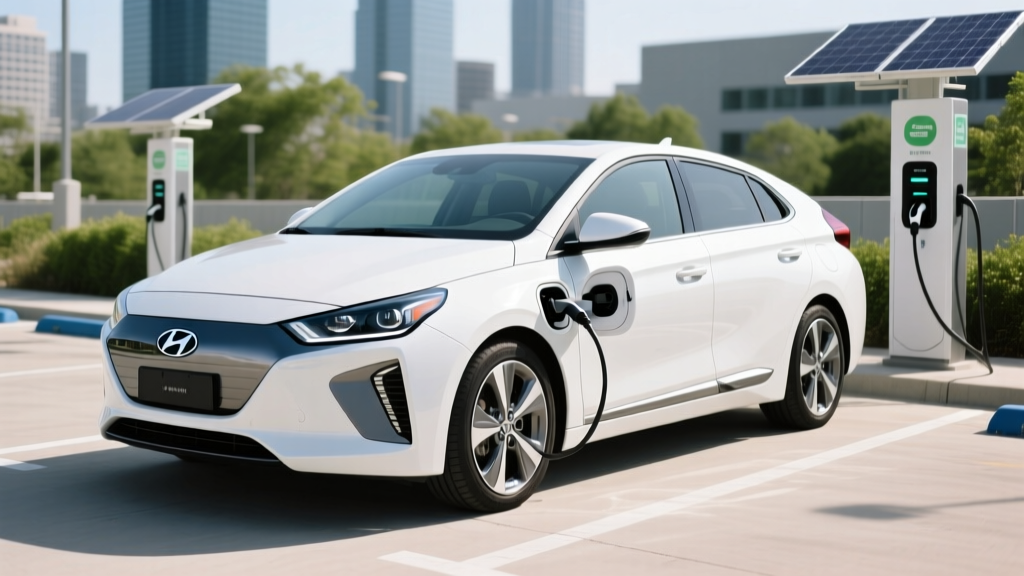
The 2017 Hyundai Ioniq Electric was never designed to be a road-trip machine. With a modest 28 kWh battery and an EPA-estimated 124 miles of range, this first-generation all-electric Ioniq was built for one job: efficient daily commuting at a low price. In 2026, it has found a second life on the used-EV market, where prices routinely fall between $8,000 and $13,000 depending on mileage and condition — and where it may qualify for the federal used-EV tax credit of up to $4,000 under IRS §25E.
If your commute is under 50 miles round-trip, you have access to home Level 2 charging, and you value efficiency over performance, the 2017 Ioniq Electric remains one of the most cost-effective ways to go electric. But if you need highway range, fast DC charging, or modern driver-assist tech, look elsewhere.
Range & Efficiency: 124 Miles EPA, Less in the Cold
EPA Estimated: 124 miles
Real-World Highway (65-75 mph): ~95–110 miles
Real-World City/Commuting: ~115–130 miles (regen-friendly driving)
Cold Weather (below 32°F): ~80–100 miles (20–35% loss typical for NMC packs without heat pump)
The 2017 Ioniq Electric's efficiency is genuinely impressive — even by 2026 standards. The EPA rates it at 136 MPGe combined (150 MPGe city / 122 MPGe highway), which translates to just 25 kWh per 100 miles. That makes it one of the most energy-efficient EVs ever sold in the U.S., rivaling the Tesla Model 3 and outperforming nearly every other EV in its era.
The 28 kWh lithium-ion battery (approximately 28 kWh total / ~26.5 kWh usable) uses NMC (nickel-manganese-cobalt) cell chemistry. This chemistry offers good energy density but is more susceptible to cold-weather range loss than LFP. The 2017 Ioniq Electric lacks a heat pump — it uses resistive cabin heating — which means winter range drops are significant. Expect to lose 20–35% of rated range in freezing temperatures, bringing practical winter range down to roughly 80–100 miles.
For context, the competing 2017 Nissan Leaf (30 kWh battery) was rated at 107 miles EPA, and the 2017 Volkswagen e-Golf at 125 miles. The Ioniq Electric beat both on efficiency, though its smaller battery limited total range.
Charging Speed: Adequate at Home, Painful on the Road
| Level | Power / Voltage | Time (10–80%) | Miles Added per Hour |
|---|---|---|---|
| Level 1 (120V) | ~1.2 kW | ~14–16 hours (full) | ~5 mi/hr |
| Level 2 (240V) | 6.6 kW (onboard charger) | ~3 hours (full) | ~26 mi/hr |
| DC Fast Charge (CCS) | ~50 kW peak | ~30–35 min (10–80%) | N/A (session-based) |
Home charging is where the 2017 Ioniq Electric performs best. Its 6.6 kW onboard charger is generous for a small-battery EV — a full charge from empty takes roughly 4 hours on a 240V Level 2 circuit, and a typical overnight session (plugging in at 30% SoC) tops the battery off in about 2.5 hours. On a standard 120V outlet (Level 1), expect roughly 5 miles of range per hour of charging — workable only for emergency top-offs or very low-mileage drivers.
DC fast charging is the Ioniq Electric's Achilles' heel. The 2017 model uses a CCS (Combo 1) connector and peaks at approximately 50 kW. On a 50 kW station, a 10–80% session takes roughly 30–35 minutes. However, the charge curve tapers sharply above 80%, and the small battery means you're adding relatively few miles even at peak rate. On a road trip, you'll be stopping every 80–100 miles and spending 30+ minutes at each charger — making this EV impractical for anything beyond local driving.
One important note: the 2017 Ioniq Electric uses CCS1, not the Tesla NACS connector. Adapters (such as the Tesla-to-CCS adapter) are available if you need access to the Supercharger network, but compatibility should be verified with your specific adapter model.
Performance & Drivetrain
| Specification | Value |
|---|---|
| Motor | Single front-mounted electric motor |
| Horsepower | 118 hp (88 kW) |
| Torque | 218 lb-ft |
| Drivetrain | FWD (front-wheel drive) |
| 0–60 mph | ~9.9 seconds |
| Top Speed | ~100 mph (electronically limited) |
| Battery (Total / Usable) | 28 kWh / ~26.5 kWh |
| Battery Chemistry | NMC (nickel-manganese-cobalt) |
| EPA Range | 124 miles |
| MPGe (City/Hwy/Combined) | 150 / 122 / 136 MPGe |
| Energy Consumption | 25 kWh/100 mi |
| Curb Weight | ~3,325 lbs |
The 2017 Ioniq Electric is not quick. A 0–60 mph time of roughly 9.9 seconds puts it firmly in economy-car territory, and the single-speed reduction gear with front-wheel drive means there's no drama off the line. That said, the instant 218 lb-ft of torque makes it feel peppy around town — it pulls away from stoplights with more confidence than the horsepower figure suggests. Highway merging is adequate but requires planning; this is not an EV you'll use to overtake aggressively at 70 mph.
Regenerative braking is adjustable via steering-wheel paddles (three levels), allowing mild coasting to strong one-pedal-style deceleration. It's not true one-pedal driving — the car won't come to a complete stop on regen alone — but level 3 provides strong enough braking for most city situations.
Interior, Cargo & Technology
The 2017 Ioniq Electric is a compact liftback, and its interior reflects its economy positioning. Materials are hard-plastic-heavy but well assembled. The seating position is comfortable, and visibility is good thanks to the hatchback design.
Passenger space:
- Front headroom: 39.1 in / legroom: 42.3 in
- Rear headroom: 37.4 in / legroom: 35.7 in
- Seating for five (rear middle seat is tight)
Cargo volume:
- Behind rear seats: 19.9 cu ft
- Rear seats folded: 55.0 cu ft
The 19.9 cu ft cargo area is generous for the compact class — more than a Honda Civic hatchback and significantly more than the Nissan Leaf (23.6 cu ft with seats folded was less versatile). The liftback design makes loading bulky items easy.
Infotainment and tech (2017 spec):
- 7-inch touchscreen with Apple CarPlay and Android Auto
- Bluetooth, USB port, satellite radio
- Available Infinity premium audio (8 speakers)
- Rearview camera (standard)
- Available navigation with 8-inch display (Limited trim)
Driver-assist features:
- Automatic emergency braking with pedestrian detection (standard)
- Lane departure warning (standard)
- Lane keep assist (standard)
- Blind-spot detection with rear cross-traffic alert (standard on Limited, optional on SEL)
- Adaptive cruise control (Limited trim only)
- Smart cruise control with stop-and-go (Limited trim)
By 2026 standards, this tech suite is basic. There's no center console wireless charging, no over-the-air updates, no advanced semi-autonomous driving features. The adaptive cruise control on the Limited trim is rudimentary — it works but lacks lane-centering integration. Per IIHS testing, the 2017 Ioniq earned a Top Safety Pick+ rating, which speaks well for its crashworthiness.
Original Pricing, Used Market Value & Tax Credits
| Item | Amount |
|---|---|
| Original MSRP (SEL) | $29,500 |
| Original MSRP (Limited) | $33,000 |
| Typical Used Price (2026) | $8,000 – $13,000 |
| Federal Used-EV Tax Credit (§25E) | Up to $4,000 (30% of sale price) |
| Effective Price After Credit | As low as ~$4,000 – $9,000 |
The 2017 Ioniq Electric is no longer eligible for the new-vehicle federal tax credit (§30D), since it has been out of production for years. However, it may qualify for the IRS §25E Previously Owned Clean Vehicle Credit, which provides up to $4,000 or 30% of the sale price (whichever is less) for qualifying used EVs.
Key §25E eligibility requirements (per IRS guidelines):
- Sale price cap: $25,000 or less
- Buyer income limits: AGI ≤ $75,000 (single), $112,500 (head of household), $150,000 (joint)
- Vehicle age: Model year must be at least two years older than the calendar year of purchase (2017 qualifies for 2026 purchases)
- Dealer sale: Must be purchased from a licensed dealer (private-party sales do not qualify)
- First transfer: The credit can only be claimed once per vehicle after August 16, 2022 — verify the vehicle hasn't already been used for a §25E claim
- Personal use: Vehicle must be for personal use, primarily in the U.S.
At a $10,000 used price, the credit would be $3,000 (30% of sale price), bringing your effective cost to $7,000. At $13,000, the credit maxes at $3,900. This makes the 2017 Ioniq Electric one of the cheapest ways to get into a reliable, efficient EV in 2026 — especially for a second car or a teen driver's first vehicle.
Important: Tax credit rules are subject to change. Consult a tax professional and verify current IRS §25E requirements before purchasing.
Warranty & Battery Longevity
Hyundai's warranty coverage was a strong selling point for the 2017 Ioniq Electric when new:
- Battery warranty: 8 years / 100,000 miles (whichever comes first), covering capacity loss below 70% of original
- Powertrain warranty: 10 years / 100,000 miles (original owner); 5 years / 60,000 miles (second owner)
- New-vehicle limited warranty: 5 years / 60,000 miles
- Roadside assistance: 5 years / unlimited miles
By 2026, a 2017 model is approaching or has passed the 8-year mark on the battery warranty. If you're buying used, check whether the original battery warranty is still active (based on the vehicle's in-service date and mileage). Hyundai's 70% capacity retention threshold is standard for the era, but it means a degraded battery could still hold 19–20 kWh — roughly 85–90 miles of range — and still be considered "within spec" by the manufacturer.
Real-world degradation data from owner forums and fueleconomy.gov suggests the 28 kWh NMC pack in the 2017 Ioniq Electric has held up reasonably well, with most owners reporting 5–12% capacity loss over 7–8 years of typical use. High-mileage examples (80,000+ miles) or vehicles frequently DC fast-charged in hot climates may show more degradation. Always request a battery health report or use an OBD-II scanner with EV-compatible software (such as Car Scanner or EV-BatMon) to check State of Health (SoH) before purchasing.
Pros, Cons & Who Should Buy
Pros
- Class-leading efficiency (136 MPGe / 25 kWh/100 mi)
- Very low used-EV pricing ($8K–$13K)
- Federal used-EV credit up to $4,000
- Strong IIHS Top Safety Pick+ rating
- Practical liftback cargo area (19.9 cu ft)
- 6.6 kW Level 2 charging is fast for its battery size
- Low running costs (~$0.04–$0.06/mile on home electricity)
Cons
- Only 124 miles EPA range (under 100 in winter)
- DC fast charging limited to ~50 kW (CCS)
- 0–60 in ~9.9 seconds — slow by EV standards
- No heat pump — significant winter range loss
- Dated infotainment; no wireless CarPlay/Android Auto
- Battery warranty may be expiring on 2017 models
- Small battery means frequent stops on road trips
Who This EV Suits Best
Buy it if: You have a short commute (under 50 miles round-trip), access to home Level 2 charging, and need an ultra-affordable second car or city runabout. It's ideal for a household that already has a longer-range vehicle for road trips, or for a budget-conscious buyer who can claim the §25E used-EV credit.
Pass if: You need more than 100 miles of reliable daily range, live in a cold climate without a garage, regularly drive highways at 70+ mph, or want modern driver-assist features. In those cases, consider a used Chevrolet Bolt EV (238-mile range), a used Tesla Model 3 (220+ miles), or a newer Hyundai Kona Electric (258 miles).
Frequently Asked Questions
What is the real-world range of the 2017 Hyundai Ioniq Electric?
The EPA rates it at 124 miles, but real-world driving typically yields 115–130 miles in mild city conditions and 95–110 miles on the highway at 65–75 mph. In freezing weather, expect 80–100 miles due to resistive cabin heating and NMC battery chemistry limitations.
How fast does it charge at home and on DC fast chargers?
On a 240V Level 2 home charger, the 6.6 kW onboard charger fills the battery from empty in roughly 4 hours (about 26 miles of range per hour). On a DC fast charger (CCS connector), it peaks at approximately 50 kW, taking about 30–35 minutes for a 10–80% charge.
Does the 2017 Ioniq Electric qualify for the federal EV tax credit?
Not the new-vehicle §30D credit, but it may qualify for the IRS §25E used-EV credit of up to $4,000 (30% of sale price, capped at $4,000). Eligibility depends on the sale price being under $25,000, your income falling below IRS thresholds, purchase from a licensed dealer, and the vehicle not having been previously claimed for this credit.
Is the 2017 Ioniq Electric worth buying vs competitors?
It's worth buying if you prioritize efficiency and ultra-low cost over range. The used Chevrolet Bolt EV (238-mile EPA range) is a better all-around used EV but typically costs $12,000–$18,000. The used Nissan Leaf (30 kWh, 107-mile range) is cheaper but less efficient and uses a CHAdeMO connector with limited future charging-network support. The Ioniq Electric wins on pure efficiency and value when its range fits your needs.
How long will the battery last?
Most 2017 Ioniq Electric batteries show 5–12% degradation after 7–8 years. The original 8-year/100,000-mile battery warranty covers capacity loss below 70%, but many vehicles are now at or past the warranty window. Always check State of Health (SoH) before purchasing a used example.
Can I use Tesla Superchargers with the 2017 Ioniq Electric?
Not natively. The 2017 Ioniq Electric uses a CCS1 connector. Tesla's Supercharger network is transitioning to NACS, and CCS-to-NACS adapters exist, but compatibility and reliability vary. For dependable public charging, rely on CCS-equipped networks like Electrify America, EVgo, and ChargePoint.