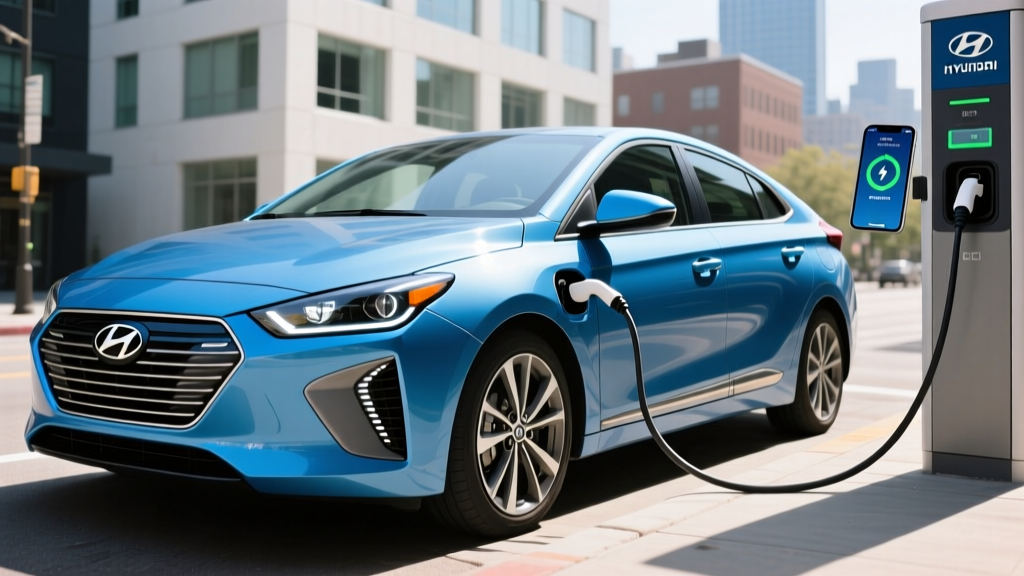
The Original Efficiency King: 2017 Hyundai Ioniq Blue in 2026
When Hyundai launched the Ioniq lineup for the 2017 model year, it did something no other automaker had attempted: offering a single nameplate as a hybrid, plug-in hybrid, and fully electric vehicle. The 2017 Hyundai Ioniq Blue specifically refers to the hybrid variant's base trim — and it arrived with an EPA-estimated 58 MPG combined that still ranks among the most efficient non-plug-in vehicles ever sold in the United States.
Nearly a decade later, the 2017 Ioniq Blue remains a compelling used-car proposition for budget-conscious commuters who want hybrid efficiency without the complexity or cost of a plug-in or full EV. But how does it hold up in 2026 against newer hybrids and cheaper used EVs? This guide covers everything a prospective used buyer needs to know.
2017 Hyundai Ioniq Blue: Core Specifications
| Spec | Value |
|---|---|
| Powertrain | 1.6L 4-cyl GDI + electric motor (HEV) |
| Combined Horsepower | 139 hp (engine 104 hp + motor 43 hp) |
| Transmission | 6-speed dual-clutch automatic (DCT) |
| Drivetrain | Front-wheel drive (FWD) |
| 0–60 mph | ~9.5 seconds |
| Hybrid Battery | 1.56 kWh lithium-ion polymer (LiPB chemistry) |
| EPA Fuel Economy | 57 city / 59 highway / 58 combined MPG |
| Fuel Tank | 11.9 gallons |
| Total Driving Range | ~690 miles (EPA est.) |
| Cargo Volume | 26.5 cu ft (rear seats up) / 55.0 cu ft (folded) |
| Rear Legroom | 35.6 inches |
| Curb Weight | ~3,131 lbs |
| Original MSRP (Blue trim) | $22,200 |
Source: EPA / fueleconomy.gov
Real-World Fuel Economy: Does 58 MPG Hold Up?
EPA estimates 57 city / 59 highway / 58 combined. In mixed real-world driving, most owners report 52–56 MPG combined. Highway cruising at 70+ mph typically yields 50–54 MPG. In cold weather (below 35°F), expect a 5–10% drop to roughly 48–53 MPG due to reduced battery efficiency and increased engine idling for cabin heat.
The 2017 Ioniq Blue's EPA numbers were extraordinary at launch and remain competitive today. The secret to its efficiency lies in several engineering choices:
- Dedicated hybrid platform: Unlike competitors adapted from gas-car architectures, the Ioniq was designed from the ground up as a hybrid, with optimized aerodynamics (0.24 Cd drag coefficient) and weight distribution.
- Lithium-ion polymer battery: Hyundai's LiPB chemistry offered better energy density and charge/discharge efficiency than the nickel-metal hydride packs still used in the 2017 Toyota Prius Eco.
- 6-speed DCT: Rather than a CVT, the dual-clutch transmission provides more natural shift feel and reduces the "rubber-band" effect that plagues many hybrids, while still optimizing gear selection for efficiency.
- Blue trim weight savings: The base Blue trim shed weight by forgoing power seats, leather, and larger wheels (15-inch alloys with low-rolling-resistance tires vs. 17-inch on higher trims).
In real-world use, the city MPG figure often exceeds the highway number — a hallmark of strong hybrid systems that recapture braking energy in stop-and-go traffic. Commuters with heavy urban traffic will see numbers closer to or even slightly above the EPA city estimate. Highway-heavy drivers should budget for 50–54 MPG.
Hybrid Battery Longevity and Warranty
The 2017 Ioniq Blue uses a 1.56 kWh lithium-ion polymer (LiPB) traction battery positioned under the rear seats. This is a small pack by modern PHEV or BEV standards, but for a conventional hybrid it only needs to buffer energy from regenerative braking and assist the gas engine during acceleration — not provide standalone electric driving range.
Warranty coverage (original):
- Hybrid battery: 10 years / 100,000 miles (8 years / 100,000 miles in states not following California emissions standards)
- Hybrid system components (motor, inverter, etc.): 10 years / 100,000 miles
- Powertrain (engine, transmission): 10 years / 100,000 miles
- Bumper-to-bumper: 5 years / 60,000 miles
For a 2017 model in 2026, the 10-year/100,000-mile hybrid battery warranty is expiring or has expired for most original owners, depending on purchase date and mileage. Used buyers should verify remaining warranty coverage with a Hyundai dealer using the VIN. Hyundai's hybrid batteries have shown strong longevity in fleet data, with most Ioniq hybrids retaining well over 90% battery capacity at 100,000 miles. A replacement hybrid battery pack, if needed out of warranty, typically runs $2,000–$3,500 installed — far less than a full EV battery replacement.
Driving Experience and Performance
The 2017 Ioniq Blue was never designed to be quick. With 139 combined horsepower and a 0–60 mph time of approximately 9.5 seconds, it prioritizes efficiency over acceleration. That said, the electric motor's instant torque provides responsive low-speed acceleration that makes city driving feel peppier than the 0–60 number suggests.
The 6-speed dual-clutch transmission is a standout feature. Where the Toyota Prius's CVT drones under hard acceleration, the Ioniq's DCT shifts decisively and provides engine braking feel that enthusiasts appreciate. Handling is competent if not sporty — the low center of gravity from the under-floor battery pack helps, but the low-rolling-resistance tires prioritize efficiency over grip.
Driver assistance features on the Blue trim:
- Lane Departure Warning (LDW)
- Automatic Emergency Braking (AEB) with pedestrian detection
- Blind Spot Detection (BSD) with Rear Cross-Traffic Alert
- Smart Cruise Control (adaptive cruise) — not available on Blue trim; requires SEL or higher
These are SAE Level 1 driver-assist features — they provide warnings and intervention in specific scenarios but do not automate steering or sustained speed control. The driver remains fully responsible at all times.
Interior, Cargo, and Daily Practicality
The Ioniq's hatchback body style is one of its most practical attributes. With 26.5 cubic feet behind the rear seats and 55.0 cubic feet with the 60/40 split rear seats folded, it out-cargoes most compact sedans and rivals small crossovers.
| Dimension | Measurement |
|---|---|
| Front headroom | 39.1 in |
| Front legroom | 43.3 in |
| Rear headroom | 37.4 in |
| Rear legroom | 35.6 in |
| Cargo (seats up) | 26.5 cu ft |
| Cargo (seats folded) | 55.0 cu ft |
The Blue trim's interior is functional but basic: cloth seats, a 5-inch touchscreen with rear camera, Bluetooth, and a 6-speaker audio system. Apple CarPlay and Android Auto were standard, which keeps the infotainment relevant in 2026. The cabin is well-insulated for a sub-$25,000 vehicle, with minimal road noise at highway speeds.
One compromise: the hybrid battery's placement under the rear seat slightly raises the floor height, creating a small step in the cargo area when seats are folded. It's not a deal-breaker but is noticeable when loading flat items.
2017 Ioniq Blue vs. Key Competitors
| Spec | 2017 Ioniq Blue | 2017 Prius Eco | 2017 Prius Prime |
|---|---|---|---|
| Type | HEV | HEV | PHEV |
| EPA Combined MPG | 58 | 56 | 54 (gas) / 133 MPGe (elec) |
| Electric-Only Range | N/A | N/A | 25 mi |
| Combined HP | 139 | 121 | 121 |
| 0–60 mph | ~9.5s | ~10.0s | ~10.2s |
| Cargo (seats up) | 26.5 cu ft | 24.6 cu ft | 19.8 cu ft |
| Original MSRP | $22,200 | $23,500 | $27,100 |
The Ioniq Blue beats the Prius Eco on combined MPG, horsepower, and cargo volume while undercutting it on price. Against the Prius Prime PHEV, the Ioniq sacrifices electric-only driving but wins on cargo space (the Prime's larger battery eats into the trunk), total range, and cost. For drivers without home charging access, the Ioniq Blue's conventional hybrid setup eliminates plug-in complexity entirely.
Used Market Pricing and Total Cost of Ownership
As of early 2026, the 2017 Hyundai Ioniq Blue trades on the used market for approximately $11,000–$15,500, depending on mileage, condition, and region. Examples under 60,000 miles command the higher end of that range.
The 2017 Ioniq Blue is a conventional hybrid (HEV), not a plug-in vehicle. It does not qualify for the federal §30D New Clean Vehicle Credit (which requires plug-in capability with at least 7 kWh of battery). The used EV credit (up to $4,000 under §25E) also applies only to plug-in EVs and fuel cell vehicles — not conventional hybrids. No federal tax incentives are available for this model. Some states may offer minor incentives; check your local regulations.
Estimated 5-year ownership cost (buying used in 2026):
| Category | Est. Annual Cost | 5-Year Total |
|---|---|---|
| Purchase price (avg.) | — | $13,500 |
| Fuel (12,000 mi/yr @ 55 MPG, $3.40/gal) | $742 | $3,710 |
| Insurance (avg.) | $1,100 | $5,500 |
| Maintenance (hybrid — reduced brake wear, no plugs) | $450 | $2,250 |
| Total 5-Year Cost | ~$24,960 |
At roughly $742 per year in fuel costs, the Ioniq Blue saves its owners $500–$800 annually versus a comparable non-hybrid compact sedan getting 30–32 MPG combined. Over five years, that's $2,500–$4,000 in fuel savings — a meaningful return on a used-car purchase.
Pros and Cons
✓ Pros
- Best-in-class 58 MPG combined (real-world 52–56)
- ~690-mile total range — fewer fill-ups than any competitor
- Strong cargo volume (26.5 cu ft) for the class
- 6-speed DCT feels more natural than a CVT
- Low used-car pricing ($11K–$15.5K)
- Proven Hyundai hybrid reliability track record
- Apple CarPlay / Android Auto standard
✗ Cons
- Modest 139 hp — slow for highway merging (9.5s 0–60)
- No electric-only driving capability
- No federal tax credit eligibility (HEV, not plug-in)
- Base Blue trim lacks adaptive cruise and premium features
- Hybrid battery warranty expiring on most 2017 examples
- Discontinued — limited dealer support for specific hybrid parts
- Rear seat headroom tight for taller passengers (37.4 in)
Who Should Buy the 2017 Hyundai Ioniq Blue?
- Choose the Ioniq Blue if: You're a high-mileage commuter (15,000+ mi/yr) who drives mostly city or mixed routes, lacks access to home or workplace charging, and wants the lowest possible fuel cost without plug-in complexity. Ideal as a second car or budget daily driver.
- Look elsewhere if: You want electric-only driving for short commutes (consider a used Prius Prime or Ioniq PHEV), you need more than 139 hp for mountain driving or frequent highway merging, or you want to claim a federal tax credit (requires a plug-in vehicle).
The 2017 Hyundai Ioniq Blue occupies a specific niche: maximum fuel efficiency for drivers who can't or don't want to plug in. Its 690-mile range, strong cargo practicality, and sub-$15,000 used pricing make it one of the smartest budget commuter vehicles available in 2026. If your priority is reducing fuel spend without the lifestyle changes that come with EV ownership, the Ioniq Blue delivers.
Frequently Asked Questions
What is the real-world fuel economy of the 2017 Hyundai Ioniq Blue?
Most owners report 52–56 MPG combined in mixed driving. City-heavy routes can push toward 57–59 MPG thanks to regenerative braking. Highway driving at 70+ mph typically drops to 50–54 MPG. Cold weather reduces efficiency by 5–10%.
Does the 2017 Ioniq Blue qualify for any federal tax credit?
No. The Ioniq Blue is a conventional hybrid (HEV), not a plug-in vehicle. The IRS §30D New Clean Vehicle Credit and the §25E Used EV Credit both require plug-in capability with minimum battery capacity. No federal tax incentives apply to this model. See IRS.gov for current credit rules.
How long will the hybrid battery last?
Hyundai's LiPB hybrid batteries have demonstrated strong longevity, with most retaining over 90% capacity at 100,000 miles. The original 10-year/100,000-mile warranty is expiring on 2017 models. Replacement cost, if needed, runs $2,000–$3,500 installed — far less than a full EV battery.
Is the 2017 Ioniq Blue better than a used Prius?
On pure MPG and cargo space, the Ioniq Blue edges out the 2017 Prius Eco (58 vs. 56 combined MPG, 26.5 vs. 24.6 cu ft cargo). The Prius offers slightly better rear headroom and Toyota's longer hybrid track record. Both are excellent used hybrid choices; the Ioniq tends to be cheaper on the used market.
Can the Ioniq Blue drive on electric power alone?
Only at very low speeds (under ~25 mph) for short distances, such as in a parking lot. The 1.56 kWh battery is too small for sustained electric-only driving. For meaningful EV-mode capability, consider the Ioniq Plug-in Hybrid (29 mi electric range) or the Ioniq Electric (124 mi EPA range, fully electric).