Quick Verdict: The 2017 Honda Clarity Electric in 2026
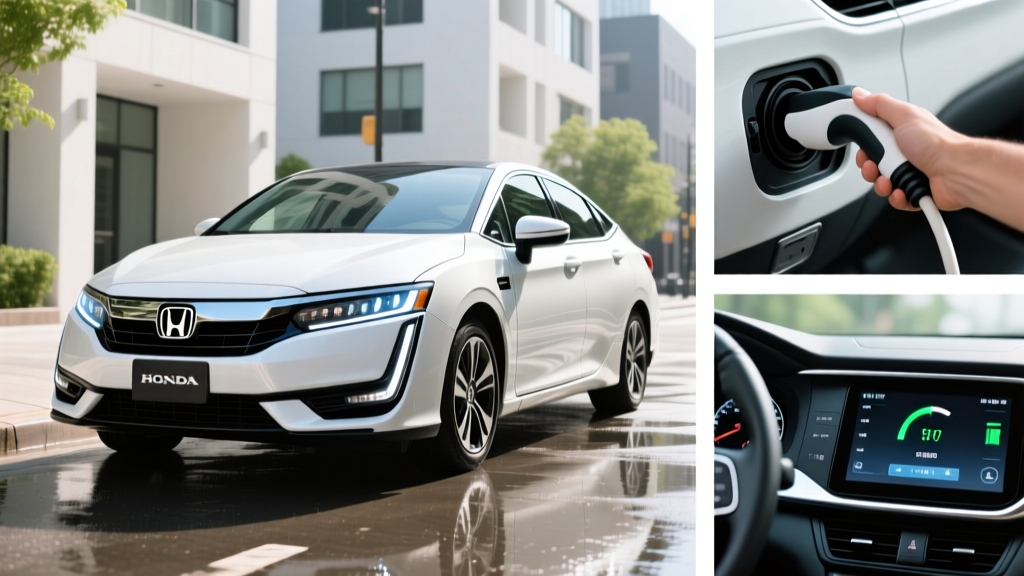
The 2017 Honda Clarity Electric is a short-range commuter EV with an EPA-estimated 89 miles of range and a 25.5 kWh battery. In the 2026 used market, it typically sells for $8,000–$12,500 depending on mileage and condition. It makes sense only as a dedicated city commuter for drivers with reliable home charging, short round trips, and access to a second vehicle for longer drives. It does not qualify for the federal §30D used-EV tax credit because its original MSRP and battery sourcing predate current eligibility rules. If your daily driving exceeds 70 miles round-trip or you lack Level 2 home charging, skip it and look at a used Chevrolet Bolt EV or Nissan Leaf instead.
Range, Battery, and Efficiency: The Hard Numbers
The 2017 Clarity Electric was sold exclusively in California and Oregon as a compliance car. Honda equipped it with a 25.5 kWh lithium-ion battery (NMC chemistry) and a 120 kW (161 hp) electric motor driving the front wheels. The EPA rated it at 89 miles of combined range and 114 MPGe (29 kWh/100 miles), per fueleconomy.gov.
Real-World Range Expectations
EPA sticker: 89 miles
Mild weather, city driving: ~85–95 miles (regen-friendly stop-and-go helps)
Highway at 70 mph: ~65–75 miles (aerodynamic drag dominates at speed)
Cold weather (below 40°F): ~55–65 miles (cabin heating and battery resistance cut range 25–35%)
The Clarity Electric lacks a heat pump, relying on resistive cabin heating that draws heavily from the small battery. In winter climates, plan for a real range closer to 60 miles.
| Spec | Value |
|---|---|
| EPA Range | 89 miles |
| Battery Capacity | 25.5 kWh (NMC) |
| Motor Output | 120 kW / 161 hp / 221 lb-ft torque |
| 0–60 mph | ~8.1 seconds |
| EPA Efficiency | 114 MPGe (29 kWh/100 mi) |
| DC Fast Charge (CCS) | ~50 kW peak, 0–80% in ~30 min |
| Level 2 Charge (240V, 32A) | ~6.6 kW, full charge in ~3.5 hours |
| Level 1 Charge (120V, 12A) | ~1.4 kW, full charge in ~17 hours |
| Original MSRP | $36,620 (before incentives, single trim) |
| 2026 Used Price Range | $8,000–$12,500 |
| Battery Warranty (original) | 8 years / 100,000 miles |
Charging Realities: What Owners Actually Experience
Charging a 25.5 kWh battery is fast by absolute terms but limited by the car's hardware. The Clarity Electric supports CCS1 DC fast charging at a peak of roughly 50 kW. On a 50 kW station, a 10–80% charge takes about 25–30 minutes. However, 50 kW is a modest rate by 2026 standards — most modern EVs accept 150–250 kW. The Clarity will not keep up on long road trips even if you plan stops carefully.
Level 2 home charging is where this car lives. At 6.6 kW (240V/32A), a full charge from empty takes about 3.5 hours. That means even if you plug in when you get home at 6 PM, you'll have a full battery by 9:30 PM — more than enough for a morning commute. Level 1 (standard 120V outlet) adds roughly 5–6 miles per hour of charging, so a full charge from near-empty takes 17+ hours. Level 1 is viable only if you drive fewer than 30 miles per day and can leave the car plugged in overnight consistently.
| Level | Power (kW) | Miles Added/Hour | Full Charge Time |
|---|---|---|---|
| Level 1 (120V) | ~1.4 kW | ~5 mi/hr | ~17 hours |
| Level 2 (240V, 32A) | ~6.6 kW | ~23 mi/hr | ~3.5 hours |
| DC Fast (CCS, 50 kW) | ~50 kW peak | ~150 mi/hr (to 80%) | ~30 min (0–80%) |
If you don't have access to Level 2 charging at home or work, the Clarity Electric's small battery becomes a liability. Level 1 alone cannot replenish 89 miles overnight in many scenarios.
Cost Breakdown: Purchase, Charging, and Maintenance
The financial case for the Clarity Electric rests on its low used price and minimal running costs. Here's how the numbers work in 2026.
| Cost Category | 2017 Clarity Electric | 2017 Gas Sedan (30 MPG) |
|---|---|---|
| Purchase Price (2026 used) | $10,000 | $12,000 |
| Annual Fuel/Energy (8,000 mi) | $350 (at $0.13/kWh avg) | $930 (at $3.50/gal, 30 MPG) |
| Annual Maintenance | $300–$450 | $700–$1,000 |
| Annual Insurance (avg) | $1,200–$1,500 | $1,100–$1,400 |
| 5-Year Total Energy/Fuel | ~$1,750 | ~$4,650 |
The Clarity saves roughly $580 per year on energy and $300–$550 on maintenance (no oil changes, fewer brake replacements due to regenerative braking, no transmission fluid). Over five years, total savings versus a gas sedan can reach $4,000–$5,500 in fuel and maintenance alone.
Federal tax credit note: The §30D used-EV credit (up to $4,000 or 30% of sale price, whichever is less) requires the vehicle's original MSRP to have been $25,000 or less when new and the battery to meet critical-mineral and component sourcing rules established in 2023. The Clarity Electric's original MSRP of $36,620 disqualifies it. Check current eligibility on IRS.gov before assuming any credit applies.
Clarity Electric vs. Clarity Plug-In Hybrid: Which Was the Better Buy?
Honda sold three Clarity variants in 2017–2021: the all-electric (BEV), a plug-in hybrid (PHEV), and a hydrogen fuel-cell version. The PHEV outsold the BEV by a wide margin, and the reasons are clear in the data.
| Attribute | Clarity Electric (BEV) | Clarity Plug-In Hybrid (PHEV) |
|---|---|---|
| Electric-Only Range | 89 miles | 47 miles |
| Total Range (with gas) | 89 miles (no gas tank) | ~340 miles combined |
| Battery Size | 25.5 kWh | 17.0 kWh |
| Gas Tank | None | 7.0 gallons |
| Combined MPGe / MPG | 114 MPGe | 110 MPGe (elec) / 42 MPG (gas) |
| DC Fast Charging | Yes (CCS, ~50 kW) | No (Level 2 only) |
| Road-Trip Capable? | No | Yes |
| Availability (2017) | CA and OR only | 50-state |
| 2026 Used Price Range | $8,000–$12,500 | $11,000–$16,000 |
The PHEV gives you 47 electric miles for daily commuting plus a gas engine for road trips. If you need one car to do everything, the PHEV is the pragmatic choice. The BEV only makes sense as a second car or for a driver who never exceeds 70 miles in a day and has another vehicle available.
Common Misconceptions About the 2017 Clarity Electric
| Myth | Fact |
|---|---|
| "It qualifies for a federal used-EV tax credit." | No. The original MSRP of $36,620 exceeds the $25,000 cap for the §30D used-vehicle credit. |
| "89 miles is enough for anyone's commute." | The average one-way US commute is ~16 miles, but cold weather, highway speeds, and battery degradation reduce real range to 55–75 miles. Drivers with 40+ mile one-way commutes should not rely on this car year-round. |
| "The battery will need expensive replacement soon." | Honda warranted the battery for 8 years/100,000 miles. As of 2026, most examples are 8–9 years old. NMC batteries typically lose 10–20% capacity over 8 years. Expect ~70–80 miles of real range on a degraded pack — still viable for short commutes. A replacement, if needed, runs $5,000–$8,000 from a dealer. |
| "I can charge it at any public station." | It uses CCS1 for DC fast charging and J1772 for Level 2, so it's compatible with most public networks. However, many newer 150–350 kW chargers will only deliver ~50 kW to the Clarity because that's all the car's onboard hardware can accept. |
| "It's a good first EV for anyone." | Only if you have home Level 2 charging, drive fewer than 70 miles daily, and have a second car for trips. Apartment dwellers without charging access should look at longer-range EVs or PHEVs. |
Battery Health and Longevity: What to Check Before Buying
The Clarity Electric's 25.5 kWh NMC battery is now 8–9 years old in most examples. Battery degradation for NMC chemistry typically runs 1.5–2.5% per year under normal use, meaning a 2017 model may have lost 12–22% of its original capacity by 2026. That translates to roughly 70–78 miles of real-world range from a pack that started at 89 EPA miles.
Before buying, request a battery health report. Some Honda dealers can pull a State of Health (SoH) reading. Alternatively, fully charge the car and observe the displayed range estimate — if it shows significantly fewer than 80 miles at 100% SoC, the battery has degraded more than average. Also check whether the original 8-year/100,000-mile battery warranty is still active (it expires in 2025 for a 2017 model-year car, so most are now out of warranty).
If the battery fails outside warranty, replacement costs $5,000–$8,000 at a dealer. Given the car's $8,000–$12,500 used value, a battery replacement can total the vehicle economically. Factor this risk into your purchase decision.
Decision Framework: Should You Buy a Used 2017 Clarity Electric?
Buy the 2017 Clarity Electric IF:
- Your daily round-trip commute is under 60 miles, even accounting for cold-weather range loss.
- You have reliable Level 2 (240V) home charging or guaranteed workplace charging.
- You own or have access to a second vehicle for road trips and longer drives.
- You live in a mild climate (Southern California, Pacific Northwest coastal areas) where extreme cold won't slash range by 30%.
- You want the lowest possible used-EV entry price and can find one under $10,000.
Skip the 2017 Clarity Electric IF:
- Your daily driving regularly exceeds 70 miles.
- You rely solely on Level 1 (120V) charging or have no home charging at all.
- You live in a region with harsh winters (below 30°F for extended periods).
- This would be your only vehicle — you need a car that can handle unexpected long trips.
- You want a vehicle with modern ADAS features, over-the-air updates, or access to the Tesla Supercharger network.
Consider These Alternatives Instead:
- Used Chevrolet Bolt EV (2017–2022): 238–259 miles EPA range, similar used price ($10,000–$16,000), far more versatile.
- Used Nissan Leaf (2018+): 149–226 miles depending on battery size, widely available, CHAdeMO charging (check local availability).
- Used Clarity Plug-In Hybrid: 47 electric miles + gas engine for unlimited range; better all-around choice for single-car households.
Frequently Asked Questions
Is the 2017 Honda Clarity Electric still a good car in 2026?
It's a good car for a very specific use case: a short-commute second vehicle with home Level 2 charging. Its 89-mile EPA range (less in real-world conditions) limits it to city and suburban driving. It's comfortable, well-built, and cheap to run, but it cannot serve as a primary vehicle for most households.
How much does it cost to charge the Clarity Electric at home?
A full charge from empty to 100% uses about 25.5 kWh. At the US average residential electricity rate of ~$0.16/kWh (EIA 2025 data), that's roughly $4.08 per full charge, or about $0.046 per mile. Compare that to a 30 MPG gas sedan at $3.50/gallon: $0.117 per mile. The Clarity costs less than half per mile to "fuel."
Can I take the 2017 Clarity Electric on a road trip?
Technically yes, but it's impractical. With 89 miles of range (less at highway speeds), you'd need a DC fast-charge stop every 60–70 miles, each taking 25–30 minutes. A 300-mile trip would require 4–5 charging stops and add 2+ hours to your travel time. This car was designed for commuting, not touring.
What happens if the battery degrades significantly?
NMC battery degradation is gradual — expect 10–20% capacity loss over 8–9 years. If the battery drops below 70% State of Health, you'll see real-world range fall to 55–65 miles. The original 8-year/100,000-mile warranty has expired for most 2017 models. Out-of-pocket replacement costs $5,000–$8,000, which may exceed the car's value.
Does the Clarity Electric support Apple CarPlay and Android Auto?
Yes. The 2017 Clarity Electric came with an 8-inch touchscreen supporting both Apple CarPlay and Android Auto, along with Honda Sensing (adaptive cruise control, lane-keeping assist, forward collision warning). These were solid features for 2017, though the interface feels dated by 2026 standards.
Why was the Clarity Electric only sold in California and Oregon?
The Clarity Electric was a compliance car — Honda built it in limited numbers to meet California Air Resources Board (CARB) zero-emission vehicle credit requirements. Honda focused on the much more broadly capable Clarity Plug-In Hybrid for national sales. This limited availability means used examples are concentrated in those two states.
Sources: EPA fuel-economy data via fueleconomy.gov; IRS used clean vehicle credit rules at irs.gov; Honda Clarity specifications from Honda Newsroom archives.