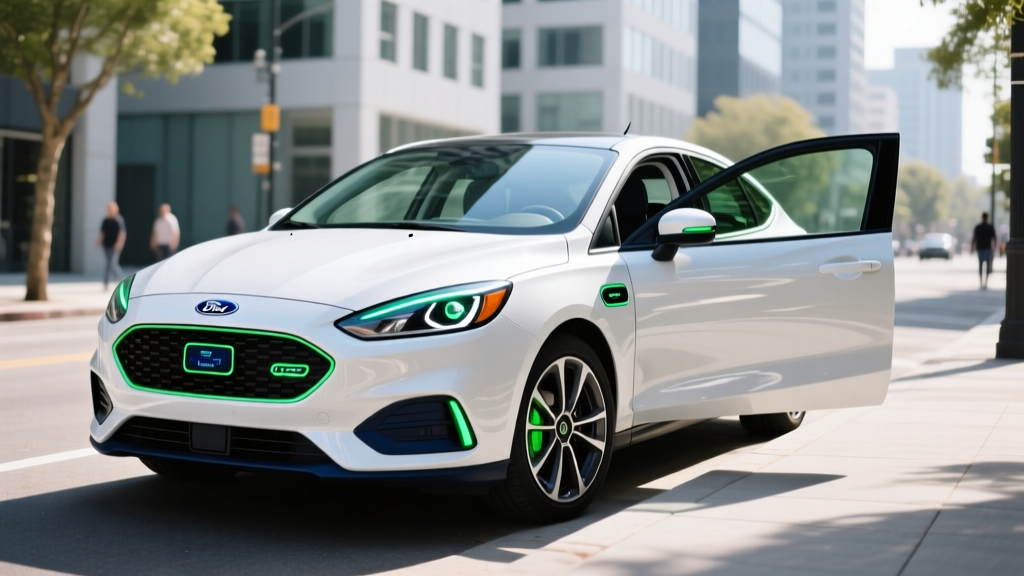
Quick Verdict: Who Should Buy the 2017 Ford Focus Electric?
The short answer: The 2017 Ford Focus Electric is a viable budget commuter EV in 2026 — but only if you can charge at home, drive under 70 miles round-trip daily, and find one priced below $10,000. Its upgraded 33.5 kWh battery delivers an EPA-estimated 115 miles of range, making it a meaningful improvement over the 2012–2016 model's 76-mile version. However, its 50 kW DC fast-charge ceiling and CCS1 connector mean longer road-trip stops, and cold weather can slash range to 75–85 miles. It's a city runabout, not a highway cruiser.
Ford discontinued the Focus Electric after the 2018 model year, so every example on the market is used. In 2026, most 2017 models are hitting 80,000–120,000 miles, and battery degradation becomes a central concern. This guide gives you the exact numbers — range, charging, costs, and comparisons — you need to decide whether this aging EV is a smart buy or a money pit.
2017 Ford Focus Electric: Key Specs at a Glance
| Spec | Value |
|---|---|
| EPA Range | 115 miles |
| Battery Capacity (usable) | 33.5 kWh (liquid-cooled, NMC lithium-ion) |
| Motor Output | 107 kW (143 hp) / 184 lb-ft torque |
| 0–60 mph | ~9.5 seconds |
| EPA Efficiency | 107 MPGe combined (31 kWh/100 mi) |
| Level 2 AC Charging (6.6 kW onboard) | ~5 hours (0–100%) |
| DC Fast Charge (CCS1) | 50 kW peak; 10–80% in ~55 min |
| Connector | J1772 (AC) / CCS1 (DC) |
| Original MSRP (2017) | $29,120 (before incentives) |
| Typical 2026 Used Price | $6,500–$11,000 |
| Battery Warranty (original) | 8 yr / 100,000 mi (expired on most by 2025) |
The 2017 model year was significant because Ford finally upgraded the battery from 23 kWh to 33.5 kWh, lifting EPA range from 76 to 115 miles. That made it competitive with the Nissan Leaf (107 mi for the 30 kWh version) and the VW e-Golf (125 mi). However, rivals like the Chevrolet Bolt EV launched that same year with 238 miles of range — a gap that only looks wider in 2026.
Real-World Range: What to Actually Expect
EPA Sticker: 115 miles
Real-World Highway (70 mph, moderate temps): ~90–100 miles
Real-World City/Mixed (55 mph avg, 65°F): ~105–115 miles
Cold Weather (below 32°F, heater on): ~75–85 miles
Hot Weather (above 95°F, A/C on): ~95–105 miles
The Focus Electric's liquid-cooled battery thermal management gives it an edge over the air-cooled Nissan Leaf of the same era, which suffered more from heat-related degradation and fast-charge throttling. That said, a 33.5 kWh pack in 2026 is small by any standard. After 7–9 years of use, expect 10–20% capacity loss depending on charging habits and climate. A Focus Electric that originally delivered 115 miles may now deliver 92–104 miles on a full charge in ideal conditions.
Before buying, ask the seller for a battery health reading. Some OBD-II scanners (like LeafSpy equivalents for Ford, such as FORScan with an ELM327 adapter) can read the battery's State of Health (SoH). A pack below 80% SoH is a negotiation point — replacement costs $5,000–$8,000 from third-party suppliers, and Ford's original 8-year/100,000-mile battery warranty has expired on virtually all 2017 models.
Charging Speeds and Connector Reality
| Charging Level | Power | Time (0–100%) | Miles Added per Hour |
|---|---|---|---|
| Level 1 (120V household) | ~1.4 kW | ~24 hours | ~3–4 mi/hr |
| Level 2 (240V, 32A) | 6.6 kW | ~5 hours | ~22 mi/hr |
| DC Fast (CCS1, 50 kW station) | 50 kW peak | ~55 min (10–80%) | ~60 mi in 30 min |
The 6.6 kW onboard charger is adequate for overnight home charging — plug in after an 80-mile commute and you'll wake up full. But the 50 kW DC fast-charge limit is the Focus Electric's biggest road-trip weakness. Modern EVs like the Hyundai Ioniq 5 or Tesla Model 3 peak at 150–250 kW and add 150+ miles in 15 minutes. In the Focus Electric, a 30-minute fast-charge stop adds roughly 55–65 miles — enough to keep moving, but you'll be stopping often on any trip over 150 miles.
The CCS1 connector is still supported at Electrify America and many EVgo stations in 2026, but the industry's shift toward NACS (Tesla's connector) means CCS1 infrastructure may receive less investment over time. Ford's newer EVs (F-150 Lightning, Mustang Mach-E) have transitioned to NACS with adapters, but the Focus Electric has no official NACS adapter from Ford. Third-party CCS1-to-NACS adapters exist but cost $200–$400 and add a point of failure.
Cost Breakdown: Buying and Owning in 2026
Here's where the used Focus Electric can shine — or sting — depending on your situation.
| Cost Factor | 2017 Focus Electric (Used) | 2020 Toyota Corolla (Gas, Used) |
|---|---|---|
| Purchase Price | $6,500–$11,000 | $14,000–$18,000 |
| Fuel/Energy (annual, 12,000 mi) | $450–$650 (home charging at $0.14/kWh) | $1,400–$1,700 (gas at $3.30/gal, 33 MPG) |
| Annual Maintenance | $200–$400 (tires, cabin filter, brake fluid) | $600–$900 (oil, filters, brakes, spark plugs) |
| Insurance (annual avg) | $900–$1,300 | $1,000–$1,400 |
| 5-Year Total Operating Cost | $3,250–$6,250 | $10,000–$15,000 |
| Home Charger Install (Level 2) | $500–$1,500 (one-time) | N/A |
| Potential Battery Replacement | $5,000–$8,000 (if needed) | N/A |
The operating savings are real: roughly $1,000–$1,500 per year less than a comparable gas compact. Over five years, that's $5,000–$7,500 in savings. But the battery risk is the wild card. If the pack degrades below usable capacity and needs replacement, the $5,000–$8,000 cost can erase most of those savings — and may exceed the car's value.
Used EV tax credit: Under IRS §25E, you may qualify for up to $4,000 (30% of sale price) on a used EV purchased from a dealer for $25,000 or less. Income caps apply ($75,000 single / $150,000 joint). The 2017 Focus Electric qualifies as a previously credit-eligible vehicle. This can bring a $9,000 purchase down to $5,000 or less — a major deal sweetener. Consult a tax professional to confirm eligibility.
EV vs Gas vs Hybrid: How Does It Compare?
| Factor | 2017 Focus Electric | 2017 Focus Gas (2.0L) | 2017 Toyota Prius (Hybrid) |
|---|---|---|---|
| EPA Range / Tank | 115 mi | ~370 mi | ~590 mi |
| Fuel Cost per Mile | ~$0.04 | ~$0.11 | ~$0.06 |
| 0–60 mph | ~9.5 sec | ~8.2 sec | ~9.8 sec |
| Cargo Space | 14.5 cu ft (battery intrudes) | 23.3 cu ft | 21.6 cu ft |
| Refuel/Recharge Time | 5 hr (L2) / 55 min (DC) | 3 minutes | 3 minutes |
| Used Price (2026) | $6,500–$11,000 | $7,000–$10,000 | $11,000–$15,000 |
The Focus Electric is the cheapest to fuel but the least versatile. The gas Focus offers more cargo space (the EV's battery pack eats into the trunk), vastly more range, and near-identical used pricing. The Prius splits the difference — excellent MPG, no range anxiety, no charging infrastructure needed, but higher purchase price.
If you drive under 70 miles daily, charge at home, and rarely take long road trips, the Focus Electric's per-mile cost advantage is undeniable. If your life involves frequent 200+ mile trips, rural driving, or apartment living without charging access, the Prius or even the gas Focus is the more rational choice.
Common Misconceptions About the Focus Electric
| Myth | Fact |
|---|---|
| "It has the same range as the older 2012–2016 models." | The 2017 model jumped from 76 to 115 miles EPA thanks to the 33.5 kWh pack — a 51% increase. |
| "I can fast-charge it at Tesla Superchargers." | No. It uses CCS1. Tesla Superchargers require NACS. Some third-party adapters exist, but they're not officially supported and add risk. |
| "The battery will need replacing soon." | Liquid-cooled NMC packs from this era typically retain 80–88% SoH at 8–9 years. Degradation is real but not catastrophic. Always check SoH before buying. |
| "It qualifies for the $7,500 federal tax credit." | The new-vehicle §30D credit no longer applies. But the used-EV §25E credit (up to $4,000) may apply if purchased from a dealer under $25,000, subject to income caps. |
| "Maintenance is free on an EV." | Lower, not zero. You still need tire rotations, brake fluid flushes, cabin air filters, and eventually tires (EVs wear tires faster due to instant torque and weight). |
Decision Framework: Should You Buy One?
Buy the 2017 Focus Electric if:
- You have Level 2 home charging (or can install it)
- Your daily round-trip commute is under 70 miles
- You want the lowest per-mile operating cost possible
- You find one under $9,000 with verified battery SoH above 82%
- You rarely drive more than 120 miles in a single day
- You qualify for the §25E used-EV credit (up to $4,000)
Skip it and consider alternatives if:
- You live in an apartment or lack home charging access
- You regularly drive in sub-freezing winters (range drops to 75–85 mi)
- You need cargo space — the battery intrudes significantly into the trunk
- You take road trips longer than 150 miles more than a few times a year
- The battery SoH reads below 80% — walk away or negotiate hard
- You'd be better served by a used 2019+ Chevrolet Bolt EV (238 mi range, similar used prices starting ~$11,000)
What First-Time EV Buyers Should Know
If the 2017 Focus Electric is your entry point into EV ownership, here's what to prepare for:
- Home charging is non-negotiable for this car. With 115 miles of range and slow DC fast charging, relying on public infrastructure is frustrating and expensive. Budget $500–$1,500 for a Level 2 home charger installation (240V, 32-amp circuit). A licensed electrician should assess your panel capacity first — a 200-amp panel is usually sufficient, but older homes with 100-amp service may need a $1,500–$3,000 panel upgrade.
- Learn the charge curve. The Focus Electric peaks at 50 kW only between roughly 10–40% State of Charge (SoC). Above 60%, charging slows significantly. Above 80%, it trickles. Plan DC fast-charge stops to stay in the 10–80% window and never wait for a "full tank" on the road.
- Precondition the battery. If your Focus Electric supports scheduled departure times, use them. Warming the battery before a fast-charge session (especially in cold weather) improves charge acceptance and speed.
- Regenerative braking is mild. Unlike newer EVs with aggressive one-pedal driving, the Focus Electric's regen is modest. You'll still use the friction brakes regularly — plan on brake fluid flushes every 2 years.
- Tires wear faster. The instant torque and 3,600+ lb curb weight eat through tires. Budget for a set of all-season or low-rolling-resistance tires ($500–$800 installed) every 30,000–40,000 miles.
Frequently Asked Questions
What is the real-world range of a 2017 Ford Focus Electric in 2026?
Expect 90–105 miles in mixed driving with a healthy battery. In cold weather (below 32°F), plan for 75–85 miles. Battery degradation of 10–20% over 7–9 years is typical for liquid-cooled NMC packs.
Can I charge the 2017 Focus Electric at Tesla Superchargers?
Not natively. It uses a CCS1 DC fast-charge connector. Some third-party CCS1-to-NACS adapters exist ($200–$400), but they are not officially supported by Ford or Tesla and may void insurance coverage in case of charging-related damage.
Does the 2017 Focus Electric qualify for any tax credit in 2026?
Not the new-vehicle §30D credit. However, the IRS §25E used clean vehicle credit offers up to $4,000 (30% of the sale price) on qualifying used EVs purchased from a dealer for $25,000 or less, subject to buyer income limits ($75,000 single / $150,000 joint). Confirm eligibility with a tax professional.
How much does it cost to charge a Focus Electric at home?
At the US average residential rate of ~$0.14/kWh (EIA data), a full 33.5 kWh charge costs about $4.70 — enough for 115 miles of driving. That's roughly $0.04 per mile, compared to $0.11 per mile for a 30 MPG gas car at $3.30/gallon.
Is the 2017 Focus Electric reliable?
The electric powertrain itself is simple and generally reliable. The main risk is battery degradation over time. The rest of the car is a standard Focus chassis — Ford's Focus line had average reliability ratings, with common complaints including transmission issues on gas models (irrelevant for the EV) and interior build quality. Check for recalls on NHTSA.gov using the VIN.
Should I buy a 2017 Focus Electric or a used Chevy Bolt EV?
If budget allows, the Bolt EV is the stronger used buy. The 2017–2019 Bolt offers 238 miles EPA range (more than double the Focus), 150 kW DC fast charging (with the proper CCS1 station), and a larger 60 kWh battery. Used Bolt prices in 2026 start around $11,000–$14,000 — more than the Focus, but the range and charging advantages justify the premium for most buyers.