Quick Verdict: Is the 2017 Ford Focus Electric Hatchback Worth It?
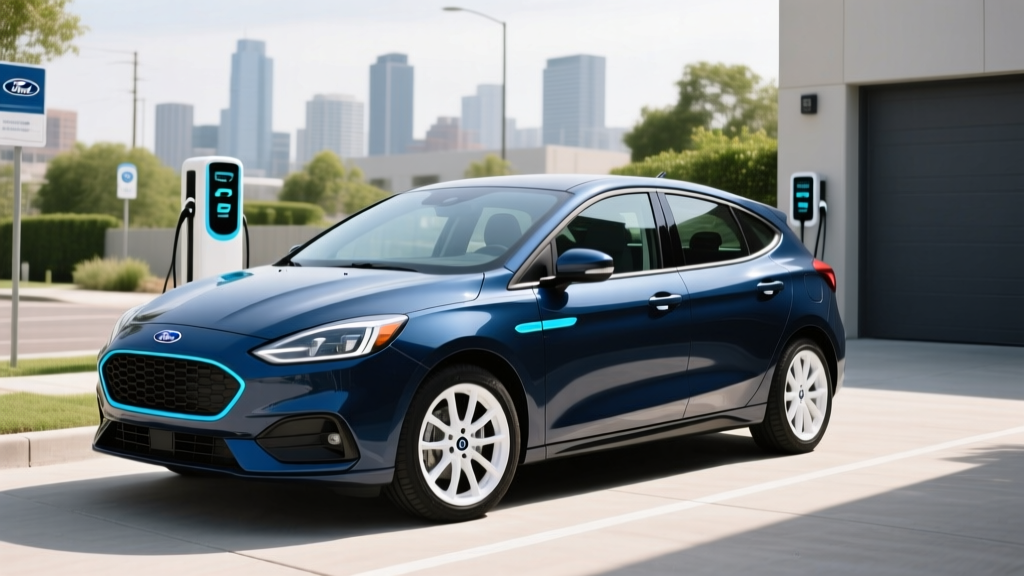
The 2017 Ford Focus Electric hatchback is a budget-friendly used EV best suited for city commuters with home charging access. With an EPA range of 115 miles, a 33.5 kWh usable battery, and DC fast charging at just 50 kW, it won't replace a modern long-range EV — but at used prices between $8,000 and $13,000 in 2026, it remains one of the cheapest ways to get into a battery-electric vehicle. If your daily round trip stays under 60 miles and you can charge overnight on Level 2, this hatchback delivers real savings. If you need highway range, fast road-trip charging, or live in a cold climate without a garage, look elsewhere.
What the 2017 Ford Focus Electric Hatchback Actually Offers
The 2017 model year was significant for the Focus Electric because Ford upgraded the battery pack from the previous 23 kWh to 33.5 kWh usable (liquid-cooled, lithium-ion NMC chemistry). That bump pushed the EPA-rated range from 76 miles to 115 miles — still modest by today's standards, but enough to handle most daily commuting. The car produces 143 horsepower and 184 lb-ft of torque from its single-speed electric drivetrain, yielding a 0-60 mph time of approximately 9.3 seconds. For a compact hatchback, that's peppy around town, where electric torque delivery shines.
| Specification | 2017 Ford Focus Electric |
|---|---|
| EPA Range | 115 miles |
| Battery (usable) | 33.5 kWh, NMC chemistry, liquid-cooled |
| Efficiency | 107 MPGe combined (31 kWh/100 mi) |
| Motor Output | 143 hp / 184 lb-ft |
| 0-60 mph | ~9.3 seconds |
| DC Fast Charge (peak) | 50 kW (CCS1) |
| Level 2 Charge Rate | 6.6 kW onboard charger |
| 10-80% DC Charge | ~30-35 minutes (50 kW peak) |
| Level 2 Full Charge (0-100%) | ~5.5 hours |
| Cargo Volume | 14.5 cu ft (reduced by battery packaging) |
| Original MSRP (2017) | $29,120 (before incentives) |
| Typical Used Price (2026) | $8,000–$13,000 |
Source: EPA / fueleconomy.gov
Real-World Range: What 115 EPA Miles Actually Means
Real-World Range Expectations
EPA sticker: 115 miles
Typical mixed driving (55-70°F): 95–110 miles
Highway-heavy at 70+ mph: 80–95 miles
Cold weather (below 32°F, cabin heat on): 65–85 miles
The 2017 Focus Electric's liquid-cooled battery is a genuine advantage over the passively air-cooled Nissan Leaf of the same era, which suffered rapid degradation in hot climates. Liquid thermal management keeps the pack within optimal temperature windows, slowing capacity loss over time. That said, any 8-to-9-year-old NMC pack will have experienced some degradation. Expect a well-maintained 2017 Focus Electric to retain roughly 80-90% of original capacity in 2026, depending on charging habits and climate exposure.
Before purchasing, request a battery State of Health (SoH) reading. A Ford dealer with the proper diagnostic tool can pull this, or an OBD2 reader paired with an app like Torque Pro can estimate it. Any pack showing below 75% SoH should significantly reduce what you're willing to pay, as replacement costs range from $6,000 to $10,000 for the battery alone.
The Focus Electric lacks a heat pump — it uses resistive cabin heating, which draws heavily from the battery in winter. If you live in the northern US or mountain states, plan for 30-40% range loss on cold days. Preconditioning the cabin while still plugged in (via the FordPass app or timer settings) mitigates this significantly and is essential ownership practice.
Charging Reality: Speeds, Connectors, and Home Setup
The 2017 Focus Electric uses a CCS1 connector for DC fast charging and a standard J1772 inlet for Level 1 and Level 2 AC charging. Ford equipped it with a 6.6 kW onboard charger, which is competitive for its era and means a full Level 2 charge from empty takes about 5.5 hours.
| Charging Level | Power | Connector | Miles Added Per Hour | Full Charge Time |
|---|---|---|---|---|
| Level 1 (120V household) | ~1.4 kW | J1772 | ~4-5 mi/hr | ~24 hours |
| Level 2 (240V home/public) | 6.6 kW | J1772 | ~22 mi/hr | ~5.5 hours |
| DC Fast Charge | 50 kW peak | CCS1 | ~150 mi/hr (peak) | ~30-35 min (10-80%) |
The 50 kW DC fast-charging capability is the car's most significant road-trip limitation. Modern EVs charge at 150-350 kW, making the Focus Electric's peak rate feel painfully slow on interstates. A 10-80% session takes roughly 30-35 minutes at a compatible 50 kW station — but many newer Electrify America or EVgo stalls deliver far more power than this car can accept, meaning you're waiting while the charger is underutilized.
Home charging is essentially mandatory for this vehicle. Relying solely on public Level 2 or DC fast charging with a 115-mile range is impractical for most people. A basic Level 2 home installation (240V, 32-40 amp circuit) typically costs $500-$2,000 depending on your electrical panel's proximity to the garage. Factor in a quality Level 2 EVSE ($300-$600 for units like the ChargePoint Home Flex or Emporia Vue), and your total home charging setup should land between $800 and $2,500.
Used EV Costs vs. a Comparable Gas Hatchback
To understand whether the 2017 Ford Focus Electric hatchback makes financial sense, let's compare five-year ownership costs against a similarly priced used gas car — a 2017 Ford Focus SE gasoline hatchback (which averages about 30 MPG combined).
| Cost Category (5 Years / 75,000 Miles) | 2017 Focus Electric (Used) | 2017 Focus SE Gas (Used) |
|---|---|---|
| Purchase Price (avg) | $10,500 | $9,500 |
| Fuel / Electricity | $2,800 (home charging at $0.14/kWh) | $8,750 (gas at $3.50/gal, 30 MPG) |
| Maintenance | $1,200 (tires, cabin filter, brake fluid) | $3,500 (oil, filters, plugs, belts, brakes) |
| Insurance (avg) | $7,500 | $6,800 |
| Estimated Battery Replacement Reserve | $1,500 (prorated risk) | $0 |
| Total 5-Year Cost | $23,500 | $29,550 |
| Cost Per Mile | $0.31 | $0.39 |
The Focus Electric saves roughly $6,000 over five years, primarily through dramatically lower fuel and maintenance costs. Electric motors don't need oil changes, spark plugs, timing belts, or exhaust repairs. Regenerative braking significantly extends brake pad life — many EV owners go 80,000+ miles on original pads.
However, two caveats: insurance can run 5-15% higher on EVs due to specialized repair requirements and higher total-loss write-offs. And if the traction battery needs replacement out of warranty, that's a $6,000-$10,000 hit that could erase all savings. Ford's original battery warranty was 8 years/100,000 miles — meaning most 2017 models are now out of warranty or approaching expiration in 2025-2026.
Note: The federal §30D new EV tax credit does not apply to used EV purchases at this price point in the same way. However, the Used Clean Vehicle Credit (§25E) allows eligible buyers to claim 30% of the sale price, up to $4,000, on used EVs purchased from a dealer for $25,000 or less. With income caps (modified AGI of $75,000 single / $150,000 joint) and dealer reporting requirements, this can bring a $10,500 Focus Electric down to roughly $7,500 after credit. Verify current eligibility rules at IRS.gov §25E.
Common Misconceptions About Older Used EVs
| Myth | Fact |
|---|---|
| "The battery will be dead by now." | Liquid-cooled NMC packs from this era typically retain 80-90% capacity at 8-9 years if not repeatedly DC fast-charged to 100%. Get a SoH check before buying. |
| "115 miles of range is useless." | The average American drives 37 miles per day (FHWA data). For single-car commuters or second-car duty, 115 miles with overnight home charging is more than sufficient. |
| "It charges too slowly to be practical." | If you charge at home overnight (5.5 hours on Level 2), charging speed is irrelevant for daily use. DC fast charging matters only for road trips — and this car isn't a road-trip vehicle. |
| "Used EVs have no warranty protection." | Ford's powertrain warranty was 8yr/100k mi. Some 2017 models may still carry remaining coverage. Additionally, many states enforce battery capacity retention warranties beyond the federal minimum. |
| "Maintenance-free means zero costs." | You'll still need tires (EVs are heavier and can wear tires faster), cabin air filters, brake fluid flushes, wiper blades, and eventually suspension components. Budget $200-$300/year. |
Who Should Buy the 2017 Ford Focus Electric Hatchback?
Decision Framework: Is This Car Right for You?
Buy it if:
- Your daily round-trip commute is under 60 miles
- You have access to Level 2 home charging (garage or driveway with 240V outlet)
- You live in a moderate climate (rarely below 20°F)
- You want the lowest possible entry price into EV ownership
- This will be a second car or dedicated commuter, not your only vehicle
- You qualify for the §25E used EV credit (income under $75k single / $150k joint)
Skip it if:
- You regularly drive more than 80 miles one-way
- You live in an apartment or lack home/workplace charging access
- Winter temperatures routinely drop below freezing where you live
- You need a primary family vehicle for road trips
- You want modern ADAS features (the 2017 Focus Electric lacks adaptive cruise, lane-keeping, and automatic emergency braking)
- Cargo space matters — the battery pack intrudes into the hatch area, reducing usability
Pre-Purchase Checklist for a Used 2017 Focus Electric
- Battery State of Health: Insist on a SoH reading. Below 80%? Negotiate hard or walk away.
- Charging Port Condition: Inspect the J1772 and CCS1 inlets for corrosion, burn marks, or loose pins.
- Level 2 Charging Test: Bring a portable EVSE or visit a public Level 2 station during the test drive. Confirm the car accepts a full 6.6 kW.
- DC Fast Charge Test: If possible, test at a CCS1 DC station. Verify the car initiates a session and pulls close to 50 kW.
- 12V Battery: Like all EVs, the Focus Electric has a conventional 12V battery that powers electronics. These often fail at 4-5 years. Confirm it's been replaced or test it.
- Tire Wear: Check for uneven wear — EVs are heavier and torque-heavy, accelerating tire wear.
- Service Records: Look for evidence of cabin filter changes, brake fluid flushes, and any warranty battery service.
- OBD2 Scan: A basic scan tool can reveal stored fault codes related to the inverter, charger, or battery management system.
Ownership Practicalities in 2026
One underappreciated challenge of owning a discontinued EV model: parts availability. Ford ended the Focus Electric after the 2018 model year and exited the compact car segment in the US entirely. While mechanical parts (suspension, brakes, interior) overlap with the gas Focus and remain available, EV-specific components — the onboard charger, DC-DC converter, electric AC compressor, or battery modules — may require salvage yards, eBay, or specialty EV recyclers if they fail.
Ford dealers can still service the vehicle, but technician familiarity with a low-volume, discontinued EV varies wildly. Independent EV shops are an option in metro areas but are not ubiquitous. Factor this into your ownership calculus: if something EV-specific breaks, you may face longer wait times and higher diagnostic costs than with a mainstream current-production EV.
On the positive side, the Focus Electric's simplicity is an asset. There's no transmission to fail, no cooling system complexity rivaling a modern 800V architecture, and the liquid-cooled battery management system is well-proven. Many owners report minimal issues beyond normal wear items over 100,000+ miles.
Registration fees for EVs are higher in some states (to offset lost gas tax revenue). Check your state's DMV — annual EV registration surcharges range from $50 (Colorado) to $225 (Ohio). These fees narrow the cost advantage slightly but rarely erase it.
How It Compares to Other Used EVs in This Price Range
The 2017 Focus Electric doesn't exist in a vacuum. At $8,000-$13,000, you're cross-shopping several other used EVs:
- 2017-2018 Nissan Leaf (30 kWh / 107 mi EPA): Similar range, but air-cooled battery means worse hot-climate longevity. The Leaf has more cargo space and a larger dealer network. CHAdeMO DC charging is becoming less supported than CCS1.
- 2017 Chevrolet Bolt EV (60 kWh / 238 mi EPA): Dramatically more range but typically $14,000-$18,000 used. If you can stretch the budget, the Bolt is a far more capable daily driver.
- 2017 BMW i3 (94 Ah / 114 mi EPA): Similar range, more premium interior, but tighter rear seating and quirky styling. Parts can be pricier. Available with optional range-extender gas engine.
- 2017 Volkswagen e-Golf (35.8 kWh / 125 mi EPA): Slightly more range, refined ride, CCS1 charging. Smaller dealer EV support network post-Dieselgate restructuring.
Among these, the Focus Electric's advantages are its liquid-cooled battery (better than Leaf), low purchase price (cheaper than Bolt), conventional hatchback practicality (more usable than i3), and CCS1 connector standardization. Its main disadvantage is that 115-mile range sits at the lower end of this group, and 50 kW DC charging is the slowest.
Frequently Asked Questions
Can I take the 2017 Ford Focus Electric on a road trip?
Technically yes, but it requires patience and planning. With 50 kW DC fast charging and 115 miles of range, you'll stop every 70-90 miles for 30+ minutes. A 300-mile trip that takes 5 hours in a gas car could take 8-9 hours in the Focus Electric. It's doable for occasional use but not enjoyable as a primary road-trip vehicle.
Does the 2017 Focus Electric qualify for any tax credits in 2026?
Not the new-vehicle §30D credit. However, the §25E Used Clean Vehicle Credit may apply: 30% of the purchase price, up to $4,000, for qualified buyers purchasing from a licensed dealer for $25,000 or less. Income caps apply ($75,000 single / $112,500 head of household / $150,000 joint). The dealer must report the sale to the IRS at the time of purchase. Confirm eligibility with your tax professional and review current rules at IRS.gov.
How long will the battery last?
Ford's liquid-cooled NMC pack in the Focus Electric has proven reasonably durable. Based on owner reports and industry degradation data for similar packs, expect 80-90% capacity retention at 8-9 years / 80,000-100,000 miles with normal use. Avoid habitual DC fast charging and routinely charging to 100% to maximize longevity. A replacement pack, if needed, costs $6,000-$10,000 installed.
What happens if I can only charge on a standard 120V outlet?
Level 1 charging adds roughly 4-5 miles per hour. A full charge from empty would take about 24 hours. If your daily driving is under 30 miles and the car can sit plugged in for 8-10 hours overnight, Level 1 is workable but slow and inefficient. We strongly recommend installing a 240V Level 2 circuit for any EV ownership.
Is the 2017 Focus Electric safe?
The 2017 Ford Focus (overall platform) earned a Good rating from IIHS in moderate overlap front and side crash tests. However, it lacks modern ADAS features — no automatic emergency braking, no lane-keeping assist, no adaptive cruise control. NHTSA gave it 4 stars overall. It's safe by 2017 compact-car standards but would not match a 2024+ vehicle's active safety suite. Review details at NHTSA.gov.
Should I buy an extended warranty?
For the battery and powertrain specifically, third-party EV warranties exist but vary widely in coverage and cost ($1,500-$3,000). Given the car's low purchase price, many buyers prefer to self-insure by setting aside $2,000-$3,000 as a battery repair reserve. Evaluate any warranty's specific exclusions — many don't cover gradual capacity loss, only sudden failure.