Quick Verdict: The 2017 Bolt EV in 2026
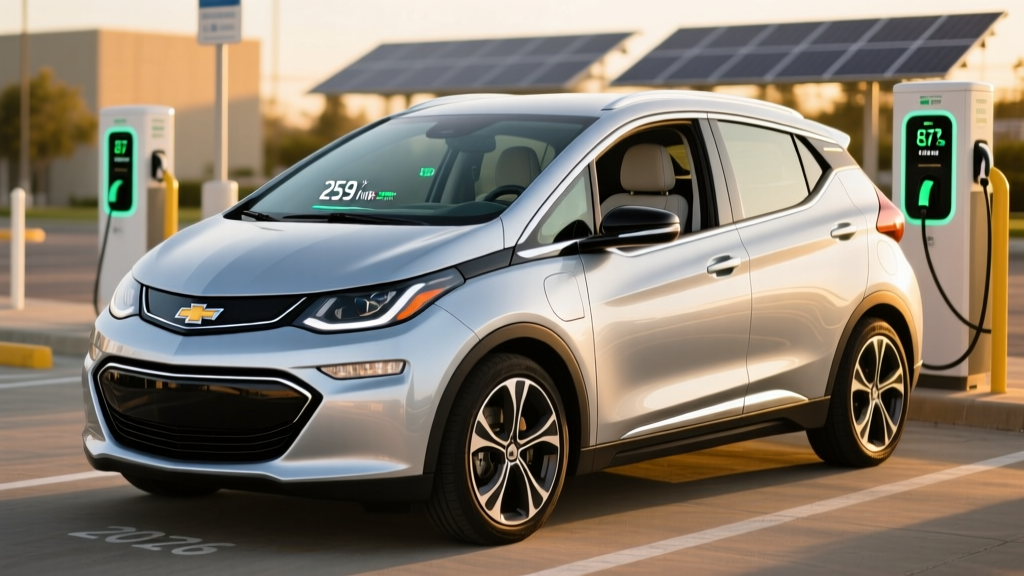
The 2017 Chevrolet Bolt EV was a watershed moment for affordable long-range electric vehicles. With a 238-mile EPA-estimated range and a practical hatchback body, it undercut the Tesla Model 3 on price by a wide margin and gave mainstream buyers their first taste of 200+ mile electrification. In 2026, the original Bolt EV is firmly a used-market proposition — production ended in late 2023 — but it remains one of the most value-dense used EVs available, especially when paired with the federal used-EV tax credit (IRS §25E).
This review examines what 2017 Bolt EV ownership looks like nearly a decade after launch: real-world range expectations, charging speeds that lag behind modern rivals, battery longevity data, and the economics of buying one today.
| Spec | 2017 Chevrolet Bolt EV |
|---|---|
| EPA Range | 238 miles |
| Battery (Usable) | 57 kWh (60 kWh gross), NMC (LG Chem) |
| Max DC Fast Charge | 55 kW (CCS1) |
| 10–80% DC Charge | ~45 minutes (est.) |
| Level 2 Charge Rate | 7.2 kW (25 mi/hr) |
| Motor Output | 200 hp / 266 lb-ft torque |
| 0–60 mph | 6.5 seconds |
| Drivetrain | FWD (single motor) |
| Efficiency | 119 MPGe combined (28 kWh/100 mi) |
| Cargo Volume | 16.9 cu ft (rear seats up) / 56.6 cu ft (folded) |
| Original MSRP | $37,495 (LT) / $44,095 (Premier) |
| Battery Warranty (Original) | 8 yr / 100,000 mi |
Range and Efficiency: 238 Miles on Paper, Less in Practice
The 2017 Bolt EV's 238-mile EPA estimate was class-leading when it debuted, beating the original Nissan Leaf (107 miles) and BMW i3 (114 miles) by a wide margin. According to fueleconomy.gov, the Bolt EV achieves 119 MPGe combined, with 128 MPGe city and 110 MPGe highway.
- City/commuter driving (mild weather): 240–260 miles — regenerative braking and low-speed efficiency can push the Bolt past its EPA sticker in stop-and-go traffic.
- Highway driving (70 mph, 70°F): ~190–210 miles — the Bolt's boxy shape and lack of a heat pump hurt efficiency at sustained speed.
- Cold weather (30°F, mixed driving): ~150–180 miles — expect 25–35% range loss in freezing temperatures, consistent with NMC batteries lacking active thermal preconditioning for cabin/battery.
- Aged battery (2026, 80,000+ miles): ~175–210 miles mixed — typical degradation of 8–15% over 7–9 years depending on charging habits and climate.
The Bolt EV's efficiency of 28 kWh per 100 miles is respectable but trails modern platforms. For context, the Hyundai Ioniq 5 achieves roughly 25 kWh/100 mi, and the newer Tesla Model 3 RWD sits around 24 kWh/100 mi. The Bolt's taller, hatchback profile creates more aerodynamic drag, which matters disproportionately at highway speed.
Charging: The Bolt's Biggest 2026 Limitation
If there's one area where the 2017 Bolt EV shows its age most clearly, it's charging speed. General Motors equipped the first-generation Bolt with a 55 kW peak DC fast-charge rate — modest even in 2017, and decidedly slow by 2026 standards where 150–250 kW is common.
| Charging Level | Power | Speed | Time Estimate |
|---|---|---|---|
| Level 1 (120V, 12A) | 1.4 kW | ~4 mi/hr | ~60 hours (full charge) |
| Level 2 (240V, 32A) | 7.2 kW | ~25 mi/hr | ~9.5 hours (full charge) |
| DC Fast (CCS1) | 55 kW peak | ~160 mi/hr (peak) | 10–80% in ~45 min; 10–90% in ~60 min |
Understanding the charge curve: The 55 kW figure is a peak, not a sustained rate. The Bolt's charge curve tapers significantly above 50% state of charge (SoC). In practice, you'll see 45–55 kW from roughly 10–40% SoC, dropping to 38–40 kW through the 50s, and falling to 20–25 kW above 70%. This taper is why the 10–80% time stretches to approximately 45 minutes — far slower than modern EVs achieving 10–80% in 18–25 minutes.
Connector note: The 2017 Bolt EV uses a CCS1 (Combo) connector. As the industry shifts toward NACS (Tesla's connector, now the SAE J3400 standard), CCS1 remains supported at Electrify America, EVgo, and most non-Tesla networks. Adapters are available for Tesla Supercharger access (J3400-to-CCS1), though compatibility varies by station and adapter brand.
For home Level 2 charging, the onboard 7.2 kW charger is adequate. A full overnight charge takes about 9.5 hours, which suits most commuters who plug in upon returning home. If you're installing a home Level 2 charger, expect to budget $500–$1,500 for a 240V/40A circuit and hardwired EVSE installation, depending on your electrical panel's capacity and proximity to the parking spot.
Performance and Driving Dynamics
The 2017 Bolt EV's single front-mounted permanent-magnet motor produces 200 horsepower and 266 lb-ft of torque. That torque is available instantly from zero RPM, which makes the Bolt feel punchier than its 6.5-second 0–60 mph time suggests. Around town, the Bolt is genuinely quick — 0–30 mph sprints feel effortless, and the one-pedal driving mode (with strong regenerative braking) makes stop-and-go traffic a one-foot affair.
The Bolt rides on a dedicated BEV platform (GM's BEV2), with the 57 kWh battery pack mounted low in the floor. This gives it a low center of gravity and surprisingly flat cornering for a subcompact hatchback. However, the suspension tuning leans firm, and road noise is noticeable at highway speed — an area where competitors like the Volkswagen ID.4 and Hyundai Ioniq 5 are significantly more refined.
Drivetrain: Front-wheel drive only. There is no AWD option, which may deter buyers in heavy-snow regions, though the instant torque and standard traction control handle light winter duty reasonably well with proper winter tires.
Interior, Tech, and Cargo
The 2017 Bolt EV offers a surprisingly practical interior for its subcompact footprint. The 10.2-inch infotainment touchscreen (running Chevrolet MyLink) supports Apple CarPlay and Android Auto — a significant plus in 2026, as it allows seamless navigation, music, and messaging without relying on the aging native software. A 4G LTE Wi-Fi hotspot was available as an option.
Driver assistance: The Bolt LT and Premier trims offered a suite of active-safety features under the "Driver Confidence" packages, including:
- Forward collision alert with automatic emergency braking
- Lane keep assist with lane departure warning
- Rear cross-traffic alert
- Blind-spot monitoring (Premier standard, LT optional)
- Surround-view camera (Premier)
These are SAE Level 0–1 systems — basic driver aids, not hands-free or semi-autonomous features. There is no adaptive cruise control on the 2017 Bolt, which is a notable omission for highway commuters.
Cargo and passenger space:
- Cargo (rear seats up): 16.9 cu ft — competitive with a Honda Fit
- Cargo (rear seats folded): 56.6 cu ft — enough for bulky items like furniture or bicycles
- Front legroom: 42.8 inches
- Rear legroom: 35.6 inches — adequate for adults on shorter trips, tight for taller passengers
- Seating: 5-passenger capacity
Notable drawbacks: The rear seat is relatively upright and firm. DC fast-charge port placement on the driver-side front fender is less convenient than rear-quarter placement for pull-through charging stalls. The interior materials are hard-plastic-heavy, consistent with the Bolt's economy-car origins.
Pricing, Used Market, and Tax Credits in 2026
The 2017 Bolt EV originally started at $37,495 for the LT trim and $44,095 for the Premier — before any incentives. In 2026, used 2017 Bolt EVs typically trade between $9,000 and $15,000 depending on mileage, condition, and battery health.
Federal used-EV tax credit (IRS §25E): This is where the 2017 Bolt becomes compelling. Under current IRS rules for the used clean vehicle credit, eligible buyers can claim up to $4,000 or 30% of the sale price (whichever is less) on a qualifying used EV. Key requirements per irs.gov:
| Requirement | §25E Rule |
|---|---|
| Sale price cap | ≤ $25,000 |
| Buyer income cap | $75,000 single / $112,500 HOH / $150,000 MFJ |
| Vehicle age | At least 2 model years old (2017 qualifies) |
| Battery capacity | ≥ 7 kWh (Bolt's 60 kWh qualifies) |
| Dealer requirement | Sold by licensed dealer (private sales excluded) |
| Prior credit history | Vehicle must not have been transferred under §25E after 2022 |
| Max credit | $4,000 or 30% of sale price (whichever is less) |
At a typical used price of $12,000, the credit would be $3,600 (30% × $12,000), bringing the effective cost to approximately $8,400. At $15,000, the full $4,000 cap applies, netting an effective cost of $11,000. This makes the 2017 Bolt EV one of the cheapest paths to 200+ mile EV ownership in 2026.
Important: The §25E credit is non-refundable — you must have tax liability to benefit. Point-of-sale transfer (dealer applies credit at purchase) is available for §25E as of 2024. Consult a tax professional for your specific situation, as rules can change and eligibility depends on individual circumstances.
Battery Health, Warranty, and Degradation
The 2017 Bolt EV uses a 60 kWh gross / 57 kWh usable NMC (nickel-manganese-cobalt) battery pack manufactured by LG Chem. This is a liquid-cooled pack, which was a significant advantage over the passively cooled Nissan Leaf of the same era — active thermal management reduces degradation from heat exposure.
Original warranty: GM backed the Bolt's battery with an 8-year/100,000-mile warranty covering defects and capacity loss below 60% of original capacity. For a 2017 model, this warranty expired in 2025 by time (8 years from the in-service date). Any 2017 Bolt you consider in 2026 will be out of battery warranty unless an extended third-party warranty was purchased.
Real-world degradation data: Community data from Bolt forums and fleet tracking suggests typical degradation of 8–15% over 7–9 years / 60,000–100,000 miles. A 2017 Bolt with 80,000 miles might show a "full charge" range of 200–215 miles versus the original 238. Key degradation accelerators include:
- Frequent DC fast charging (daily 55 kW sessions)
- Regularly charging to 100% and leaving the car at full SoC
- Hot-climate storage without climate-controlled garage
- High-mileage use (ride-share, delivery driving)
Before buying: Request a battery health report via the myChevrolet app or a dealer OBD-II scan showing State of Health (SoH) percentage. An SoH above 85% is desirable; below 75% warrants caution and a price discount. Out-of-warranty battery replacement for the Bolt EV has historically cost $14,000–$16,000 — a figure that could exceed the car's value, making pre-purchase battery assessment essential.
Battery recall note: In 2021–2022, GM recalled certain 2017–2019 Bolt EVs due to a fire risk from defective battery cells (manufacturing defect causing short circuits). Most affected vehicles received replacement battery modules under the recall. Verify via NHTSA VIN lookup (nhtsa.gov/recalls) that any 2017 Bolt you consider has had its recall service completed.
Pros and Cons
- 238-mile EPA range remains practical for daily commuting and moderate road trips
- Extremely affordable on the used market, especially after §25E credit
- Spacious hatchback cargo area (56.6 cu ft) for the footprint
- Apple CarPlay / Android Auto keeps infotainment relevant
- Liquid-cooled battery manages heat better than contemporaries
- Peppy 200 hp motor with instant torque makes city driving fun
- Low cost of ownership: minimal maintenance, cheap home charging
- 55 kW DC fast charging is painfully slow for road trips vs. modern 150+ kW EVs
- Original battery warranty has expired on all 2017 models
- No adaptive cruise control or advanced driver-assist suite
- Firm ride and noticeable road noise at highway speed
- FWD only — no AWD option for snow-belt buyers
- CCS1 connector may require adapter for Tesla Supercharger access
- Interior materials feel economy-grade
Who Should Buy the 2017 Bolt EV in 2026?
- You're a budget-conscious commuter with home Level 2 charging access
- Your daily round-trip is under 80 miles, with occasional 150-mile excursions
- You want a used EV under $12,000 (after credit) with real range, not a 70-mile compliance car
- You value hatchback cargo utility over luxury or tech prestige
- You rarely take road trips requiring DC fast charging
- You road-trip frequently — the 55 kW charge rate adds 45+ minutes per stop vs. 18–20 minutes in a modern 250 kW EV
- You need AWD for winter driving (consider a used Tesla Model Y or Ford Mustang Mach-E)
- You want current-generation driver-assist features like adaptive cruise or hands-free highway driving
- Battery warranty remaining is a priority (look at 2022+ models still under warranty)
Frequently Asked Questions
What is the real-world range of the 2017 Chevy Bolt EV?
The EPA rates it at 238 miles, but expect roughly 190–210 miles on the highway in mild weather, 240+ miles in city driving with regenerative braking, and 150–180 miles in freezing temperatures. A 2017 model with battery degradation may deliver 175–215 miles mixed depending on State of Health.
How fast does the 2017 Bolt EV charge?
DC fast charging peaks at 55 kW, delivering a 10–80% charge in approximately 45 minutes. Home Level 2 charging at 7.2 kW takes about 9.5 hours for a full charge, adding roughly 25 miles of range per hour. Level 1 (120V) trickle charging adds about 4 miles per hour.
Does the 2017 Bolt EV qualify for any federal tax credit?
It does not qualify for the new-vehicle §30D credit (production ended, and it wouldn't meet current battery-sourcing rules). However, it can qualify for the used-EV credit under IRS §25E: up to $4,000 or 30% of the sale price when purchased from a dealer for under $25,000, subject to buyer income caps ($75K single / $150K married filing jointly). See irs.gov for current rules.
Is the 2017 Bolt EV worth buying vs. competitors?
Against used competitors in its price range — the 2017–2018 Nissan Leaf (151-mile range, passively cooled battery), the 2017 BMW i3 (114-mile range), or the 2017 Volkswagen e-Golf (125-mile range) — the Bolt EV offers substantially more range and a liquid-cooled battery. Its main drawback is slow DC charging. If road-trip charging speed matters, a used 2018+ Tesla Model 3 (220–310 miles, 150+ kW charging) is superior but typically costs $5,000–$10,000 more.
What are the biggest concerns buying a 2017 Bolt EV in 2026?
Three primary concerns: (1) Battery health — the original 8-year warranty has expired, so check SoH before purchasing; (2) the battery recall — verify recall service was completed via NHTSA VIN lookup; (3) slow DC charging — if you'll rely on public fast chargers for road trips, the 55 kW rate will test your patience compared to modern EVs.
Can I charge a 2017 Bolt EV at Tesla Superchargers?
Not natively. The Bolt uses a CCS1 connector, while Tesla Superchargers use NACS (J3400). However, third-party CCS1-to-NACS adapters (such as those from Lectron or A2Z) may provide access to select Supercharger stalls that have enabled "Magic Dock" or open-network compatibility. Verify adapter compatibility and station support before relying on this for travel.
What does it cost to charge a Bolt EV at home?
At the US average residential electricity rate of approximately $0.16/kWh, fully charging the 57 kWh usable battery costs about $9.12. That translates to roughly $0.045 per mile — compared to $0.12–$0.15 per mile for a 30 MPG gas car at $3.50/gallon. Annual fuel savings versus a comparable gas car can reach $800–$1,200 for a 12,000-mile/year driver.