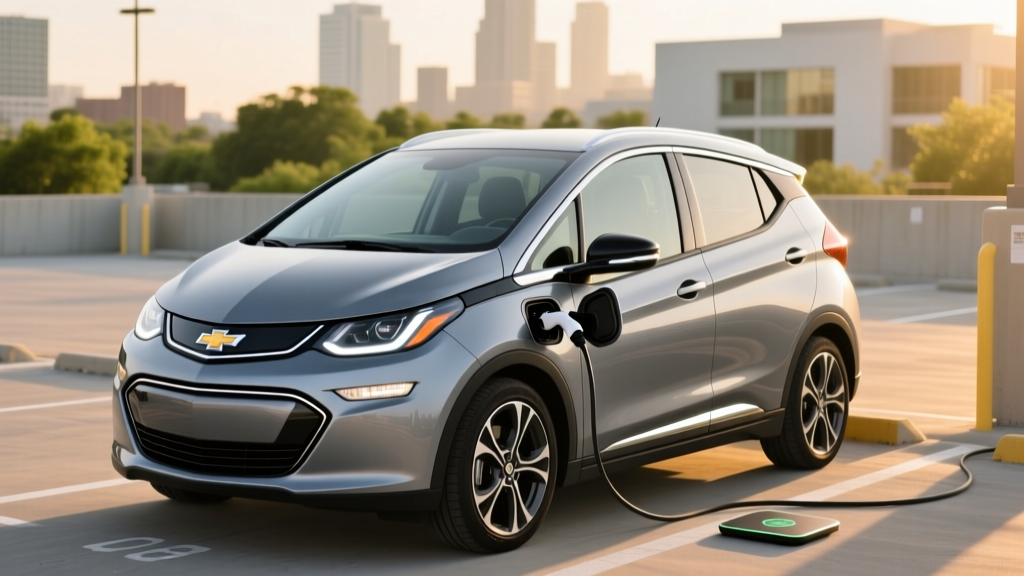
The 2017 Chevrolet Bolt EV was a watershed moment for affordable electric vehicles. When it launched, it offered over 200 miles of EPA-estimated range at a price point that undercut the Tesla Model 3 to market by a full year. Nearly a decade later, the original Bolt EV remains one of the most popular used EVs on the market — and for good reason. But buying a 2017 Bolt EV in 2026 requires a clear-eyed look at its aging charging hardware, real-world range, battery health considerations, and whether it still stacks up against newer competition.
This review covers everything a used-EV buyer needs to know: exact range figures, DC fast-charging limitations, battery degradation expectations, used pricing, federal tax credit eligibility under current IRS §30D rules, and how the first-generation Bolt EV compares to the alternatives on the used lot today.
2017 Chevy Bolt EV: Core Specifications at a Glance
| Specification | Value |
|---|---|
| EPA Range | 238 miles |
| Battery Capacity (Usable) | 60 kWh (NMC lithium-ion, LG Chem) |
| EPA Efficiency | 119 MPGe combined (28 kWh/100 mi) |
| Motor Output | 200 hp (150 kW), 266 lb-ft torque |
| Drivetrain | Front-wheel drive (FWD), single-speed |
| 0–60 mph | 6.5 seconds |
| Max DC Fast Charge Rate | 55 kW (CCS1) |
| 10–80% DC Fast Charge Time | ~55 minutes |
| Level 2 Charging Rate | 7.2 kW (25 mi/hr) |
| Cargo Volume (rear seats up / folded) | 16.9 / 56.6 cu ft |
| Original MSRP (LT / Premier) | $37,495 / $43,995 |
| Battery/Powertrain Warranty | 8 years / 100,000 miles |
| Original Federal Tax Credit | $7,500 (fully phased out for new purchases post-2019) |
Real-World Range: What the 238-Mile EPA Sticker Actually Means
Real-World Expectation: 200–220 miles mixed driving; ~170–190 miles sustained highway at 70+ mph; ~150–175 miles in freezing temperatures (below 32°F)
The 2017 Bolt EV's 238-mile EPA figure was genuinely impressive for its era, and it still holds up as adequate for daily commuting and moderate road trips. According to fueleconomy.gov, the Bolt EV achieves 119 MPGe combined, which translates to roughly 28 kWh consumed per 100 miles driven.
However, the real-world range story depends heavily on how and where you drive. The Bolt EV uses a conventional resistance heater rather than a heat pump, which means cold-weather range loss is significant. Owners in northern climates consistently report 25–35% range reduction when temperatures drop below freezing, bringing effective range down to approximately 150–175 miles in winter conditions.
Highway driving also penalizes the Bolt EV more than some competitors. Its upright hatchback shape and relatively narrow tires create more drag at sustained speeds. Expect roughly 200–220 miles in mixed suburban/city driving, but closer to 170–190 miles on long interstate runs at 70–75 mph.
One more critical factor for 2026 buyers: battery degradation. A 2017 Bolt EV is now 9 years old. Most NMC batteries of this vintage retain roughly 85–92% of original capacity depending on climate exposure, charging habits, and mileage. A Bolt EV with 88% state of health (SoH) would see its effective range drop to approximately 200–210 miles in ideal conditions. Always request a battery health report or use an OBD-II reader with an app like Torque Pro to check SoH before purchasing.
Charging Speed: The Bolt EV's Biggest Weakness in 2026
| Charging Level | Power (kW) | Speed (mi/hr added) | Notes |
|---|---|---|---|
| Level 1 (120V outlet) | ~1.4 kW | ~4 mi/hr | Emergency / overnight trickle |
| Level 2 (240V, 32A) | 7.2 kW | ~25 mi/hr | Full charge in ~9 hours |
| DC Fast Charge (CCS1) | 55 kW peak | ~150 mi/hr (peak) | 10–80% in ~55 min; tapers sharply above 60% |
This is where the 2017 Bolt EV shows its age most clearly. Its 55 kW peak DC fast-charging rate was competitive in 2017, but it falls far short of modern standards. For context, a 2024 Hyundai Ioniq 5 peaks at 240 kW and charges 10–80% in roughly 18 minutes. The Bolt EV takes approximately 55 minutes to cover the same range — and that's under ideal conditions with a preconditioned battery.
The Bolt EV's charge curve is notably aggressive in its taper. It sustains near-peak rates only up to about 55–60% state of charge, after which power drops substantially. Charging from 80–100% on DC fast charge is painfully slow, often dropping below 20 kW. This makes the Bolt EV a poor choice for frequent long-distance road trippers who need quick top-ups.
Level 2 home charging at 7.2 kW is perfectly adequate for overnight replenishment. A typical daily commute of 40–60 miles can be replaced in 2–3 hours on a home Level 2 charger, which is all most owners need.
For home charging setup, expect to spend $500–$1,500 on a quality Level 2 station (such as a ChargePoint Home Flex or Emporia Level 2) plus $300–$1,200 for electrician installation depending on your panel capacity and run distance. A 200-amp electrical panel is generally sufficient; older homes with 100-amp service may need a panel upgrade, which adds $1,500–$3,000.
Performance and Driving Dynamics
The Bolt EV's 200-horsepower electric motor delivers 266 lb-ft of instant torque to the front wheels, producing a respectable 6.5-second 0–60 mph time. That puts it in the same ballpark as a Honda Civic Si for acceleration, and the one-pedal driving mode with aggressive regenerative braking makes city driving genuinely enjoyable.
Ride quality is firm but composed. The heavy battery pack sits low in the chassis, giving the Bolt EV a planted feel through corners that belies its economy-car origins. Steering is light and numb — this is not a driver's car, but it's competent and confidence-inspiring for daily commuting.
Notable driving drawbacks include the absence of adaptive cruise control on the 2017 model year and a Lane Keep Assist system that is more annoying than helpful. The Bolt EV lacks any form of SAE Level 2 driver-assistance comparable to Tesla Autopilot or GM's own Super Cruise (which wasn't available on the Bolt EV regardless). You're driving this car yourself at all times.
Interior, Cargo, and Technology
The 2017 Bolt EV's interior is where cost-cutting is most evident. Hard plastics dominate the dashboard and door panels, and the seats — while comfortable enough for short trips — lack the bolstering for long-distance support. The Premier trim adds leather-appointed seats, a Bose premium audio system, and heated front seats plus a heated steering wheel, which is valuable for cold-climate range preservation (using seat heaters instead of cabin heat saves energy).
Cargo space is a genuine strength: 16.9 cubic feet behind the rear seats and 56.6 cubic feet with the 60/40 split rear seats folded. That's competitive with compact crossovers and far more practical than a Tesla Model 3's trunk. Rear-seat legroom measures 36.5 inches, which is adequate for adults on shorter trips.
The 10.2-inch touchscreen infotainment system supports Apple CarPlay and Android Auto, and it remains responsive by today's standards. The 8-inch digital driver display provides a configurable view of range, efficiency, and navigation. One standout feature: the Bolt EV includes a DC fast-charge port as standard equipment on all trims, unlike the Nissan Leaf of the same era which relegated CHAdeMO to an expensive option package.
Used Pricing and Federal Tax Credit Eligibility in 2026
The 2017 Bolt EV originally started at $37,495 for the LT trim and $43,995 for the Premier — before the $7,500 federal tax credit that most original buyers received. That credit has since been fully utilized by GM (the original 200,000-vehicle manufacturer cap was hit in 2019), meaning no federal new-vehicle tax credit applies.
However, used buyers may qualify for the Used Clean Vehicle Credit under IRS §25E, which provides up to $4,000 (or 30% of the sale price, whichever is less) for qualifying used EVs. Here's what you need to know:
- Vehicle price cap: Sale price must be $25,000 or less (the Bolt EV typically qualifies)
- Vehicle age: Must be at least 2 model years old (2017 qualifies)
- Buyer income limits: AGI must not exceed $75,000 (single), $112,500 (head of household), or $150,000 (joint)
- Dealer requirement: Must be purchased from a licensed dealer (private-party sales do not qualify)
- One-time use: Each buyer can only claim this credit once every 3 years
- Point-of-sale transfer: Available — you can apply the credit as a down-payment reduction at purchase
| Trim | Typical Used Price | After $4,000 Used Credit |
|---|---|---|
| LT (base) | $11,000–$14,500 | $7,000–$10,500 |
| Premier (loaded) | $13,500–$17,000 | $9,500–$13,000 |
At these prices, the 2017 Bolt EV represents one of the best value-per-mile-of-range propositions on the used EV market. Compare this to a used Tesla Model 3 from the same era, which typically commands $16,000–$22,000 for a Standard Range variant with roughly 220 miles of original range.
Battery Health, Warranty, and the Recall Factor
The 2017 Bolt EV uses a 60 kWh (usable) NMC (nickel-manganese-cobalt) battery pack manufactured by LG Chem. The original battery warranty covers 8 years or 100,000 miles against defects and capacity loss below 60% — meaning that for most 2017 models, the battery warranty has now expired or is expiring in 2025–2026 based on the 8-year timeline.
This is a critical consideration. GM issued a major recall for 2017–2019 Bolt EVs due to a fire risk related to battery cell manufacturing defects. The recall involved a software remedy that limited maximum charge to 90% and, in many cases, a full battery pack replacement. Before purchasing any 2017 Bolt EV, confirm that the recall remedy has been performed. Vehicles that received a full battery replacement under the recall effectively got a new battery, which is a significant positive for used buyers. You can check recall status at NHTSA.gov using the VIN.
Real-world battery degradation data from Bolt EV owners suggests typical capacity retention of 85–92% at 80,000–100,000 miles, depending on climate. Vehicles in hot climates (Arizona, Texas, Southern California) tend to show more degradation than those in moderate or cool climates. A replacement battery pack, if needed out of warranty, can cost $14,000–$18,000 installed — a substantial portion of the vehicle's total value.
Pros and Cons of the 2017 Chevy Bolt EV in 2026
Pros
- Excellent used value: $11K–$17K for 238 miles of EPA range
- Strong efficiency: 119 MPGe / 28 kWh per 100 miles
- Practical hatchback cargo space (56.6 cu ft max)
- Peppy 200-hp motor with instant torque
- One-pedal driving with strong regen
- Apple CarPlay and Android Auto standard
- CCS1 DC fast charging standard on all trims
- Eligible for up to $4,000 used-EV tax credit
- Many units received new battery packs under recall
Cons
- Slow DC fast charging (55 kW peak, ~55 min 10–80%)
- No heat pump — severe cold-weather range loss (25–35%)
- Cheap interior materials throughout
- Original battery warranty expired or expiring
- No adaptive cruise control available
- Lane Keep Assist is intrusive and imprecise
- Narrow rear seat for three adults
- Recall history requires verification before purchase
Who Should Buy the 2017 Chevy Bolt EV?
The 2017 Bolt EV is best suited as a daily commuter and city/suburban runabout for buyers who have access to Level 2 home charging and don't frequently drive more than 150 miles in a single day. It excels as a second vehicle in a two-car household, a first EV for budget-conscious buyers, or an affordable entry point into electric driving for apartment dwellers who can install a Level 2 charger.
It is not ideal for frequent road-trippers (the 55 kW charging rate makes long trips frustrating), families who need three-across rear seating, or buyers in extreme cold climates who cannot tolerate 30%+ range loss in winter.
If you're cross-shopping, the main competitors in the used market include the 2018–2019 Nissan Leaf Plus (226 mi range, but CHAdeMO and passive battery cooling), the 2018–2019 Hyundai Kona Electric (258 mi range, faster charging, but more expensive used), and the Tesla Model 3 Standard Range (faster charging and Supercharger access, but higher used prices).
Frequently Asked Questions
What is the real-world range of the 2017 Chevy Bolt EV?
Expect 200–220 miles in mixed driving, 170–190 miles on sustained highway trips, and 150–175 miles in freezing weather. Battery degradation on a 9-year-old pack may reduce these figures by 8–15% depending on the vehicle's history.
How fast does the 2017 Bolt EV charge?
On DC fast charge, it peaks at 55 kW and takes approximately 55 minutes from 10–80%. On a home Level 2 charger at 7.2 kW, it adds about 25 miles of range per hour, fully recharging overnight in roughly 9 hours.
Does the 2017 Chevy Bolt EV qualify for any tax credit in 2026?
It does not qualify for the new-vehicle §30D credit. However, used buyers purchasing from a licensed dealer for $25,000 or less may qualify for the §25E Used Clean Vehicle Credit of up to $4,000, subject to buyer income limits ($75K single / $150K joint). Consult a tax professional or see IRS guidelines for eligibility.
Is the 2017 Bolt EV worth buying over a used Tesla Model 3?
It depends on priorities. The Bolt EV is significantly cheaper ($11K–$17K vs $16K–$22K) and offers more cargo versatility as a hatchback. The Model 3 charges much faster, has Supercharger network access, and offers better driver-assist technology. For budget-first buyers who charge at home, the Bolt EV is the stronger value.
How do I check if the battery recall was performed?
Enter the vehicle's VIN at NHTSA.gov/recalls to check open recall status. Also ask the seller for documentation that the recall remedy (software update or battery replacement) was completed at a GM dealer.
What connector does the 2017 Bolt EV use?
The 2017 Bolt EV uses CCS1 for DC fast charging and J1772 for Level 1 and Level 2 AC charging. It does not natively support NACS (Tesla's connector), but CCS-to-NACS adapters are available for accessing Tesla Supercharger stations that support non-Tesla vehicles.