Quick Verdict: The 2017 Bolt EV Premier in 2026
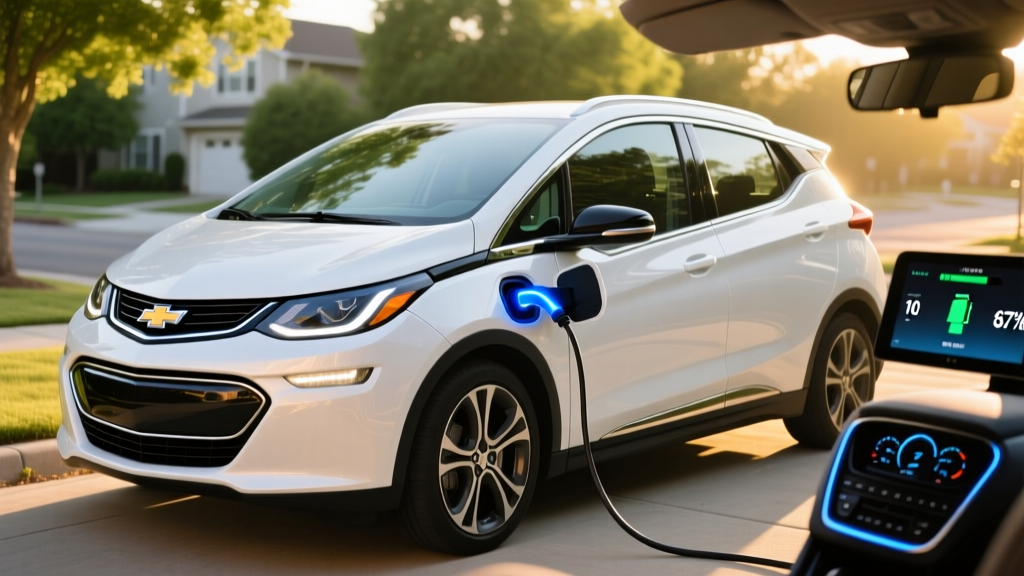
The 2017 Chevrolet Bolt EV Premier remains one of the most compelling used electric vehicles on the market. With an EPA-estimated 238 miles of range, a spacious hatchback body, and a punchy 200-horsepower motor, it delivers practicality that still holds up nearly a decade after its debut. As a used-EV purchase in 2026, it undercuts most new EVs on price while offering range that rivals vehicles costing twice as much. However, its DC fast-charging speed shows its age, and prospective buyers must carefully evaluate battery health and recall history before signing.
| Spec | Value |
|---|---|
| EPA Range | 238 miles |
| Battery (usable) | ~57 kWh of 60 kWh total (NMC) |
| Motor / Drivetrain | 200 hp / 266 lb-ft, FWD |
| 0–60 mph | ~6.5 seconds |
| DC Fast Charge (max) | 55 kW (CCS) |
| 10–80% DCFC Time | ~55–60 minutes |
| Level 2 Charge Rate | 7.2 kW (~25 mi/hr) |
| MPGe (combined) | 119 MPGe |
| Cargo Volume | 16.9 cu ft (rear seats up) / 56.6 cu ft (folded) |
| Battery Warranty (original) | 8 yr / 100,000 mi |
| Original MSRP (Premier) | $43,900 (before incentives) |
| Typical Used Price (2026) | $10,000–$16,000 |
Range and Efficiency: Real-World Expectations
EPA Estimate: 238 miles
Real-World Expectation: In mixed city/highway driving at moderate temperatures, expect 210–230 miles. Sustained highway speeds above 70 mph reduce this to roughly 180–200 miles. In freezing weather (below 32°F), range can drop 25–35%, yielding as little as 155–180 miles per charge.
The Bolt EV's 119 MPGe combined rating (112 city / 128 highway per fueleconomy.gov) was class-leading in 2017 and remains competitive today. The secret is its combination of a relatively light 3,563-lb curb weight and an efficient permanent-magnet motor. Around town, regenerative braking — accessible via the steering-wheel paddle or one-pedal "L" mode — recaptures significant energy and extends range.
However, the Bolt EV lacks a heat pump, relying instead on resistive cabin heating. This is the primary reason for its steep cold-weather range penalty. Owners in northern climates should plan for winter range of roughly 160–180 miles and precondition the battery while plugged in whenever possible to mitigate losses.
The Bolt's efficiency translates to roughly 28–30 kWh per 100 miles in mixed driving. At the 2026 national average electricity rate of ~$0.17/kWh, that's about $4.80–$5.10 per 100 miles — roughly one-third the cost of a 30-MPG gasoline car at $3.20/gallon.
Battery Chemistry, Capacity, and Longevity
The 2017 Bolt EV uses a 60 kWh (gross) NMC (nickel-manganese-cobalt) lithium-ion battery pack supplied by LG Chem. Usable capacity is approximately 57 kWh, with the buffer protecting the cells from deep discharge and overcharge extremes.
NMC chemistry offers higher energy density than LFP (lithium iron phosphate), which is how GM packed 238 miles into a compact hatchback. The trade-off: NMC cells are more sensitive to sustained high states of charge and extreme heat, meaning long-term degradation management matters more than with LFP packs.
Degradation reality: Data from owner communities and fleet analyses suggest 2017 Bolt EV batteries retain roughly 85–92% of original capacity after 80,000–100,000 miles, depending on climate and charging habits. A 2017 model in 2026 will likely show 85–95% State of Health (SoH) depending on mileage and history. Before purchasing, request a battery health readout from a Chevy dealer or use an OBD-II scanner with EV-capable software (such as Torque Pro with the appropriate PID set) to check actual capacity.
Recall note — critical: GM issued a major recall for 2017–2019 Bolt EVs related to battery cell manufacturing defects that posed a fire risk. GM replaced affected battery modules (and in some cases full packs) under recall at no cost to owners. Before buying any used 2017 Bolt, verify via the NHTSA recall lookup that all recall repairs have been completed. A post-recall Bolt may actually have newer replacement modules, which is a net positive for battery health.
Battery warranty: GM's original battery and powertrain warranty covers 8 years / 100,000 miles (whichever comes first) against defects and capacity loss below 60% of original. For a 2017 model, this warranty expires in 2025 — meaning most 2017 Bolts are now out of battery warranty unless the recall replacement reset certain coverage terms. Confirm warranty status with a Chevy dealer using the VIN.
Charging: DC Fast, Level 2, and Home Setup
Charging is where the 2017 Bolt EV shows its age most clearly. GM equipped it with a 55 kW peak DC fast-charging rate via the CCS1 connector — respectable in 2017 but slow by 2026 standards when rivals accept 150–350 kW.
| Level | Power | Speed (approx.) | Notes |
|---|---|---|---|
| Level 1 (120V) | 1.2 kW | ~4 mi/hr | Emergency/trickle only |
| Level 2 (240V) | 7.2 kW | ~25 mi/hr | Full charge in ~9 hrs |
| DC Fast (CCS) | 55 kW peak | ~160 mi/hr (peak) | 10–80% in ~55–60 min |
The charging curve reality: The Bolt's 55 kW peak only holds briefly at low states of charge. The curve tapers progressively — expect roughly 38–45 kW average from 10–80%, which is why a 10–80% session takes close to an hour. Above 80%, charging slows dramatically to protect the NMC cells; a session from 80–100% can add another 40+ minutes. This makes the Bolt best suited for drivers who charge primarily at home and only use DC fast charging occasionally.
Home Level 2 charging: The onboard 7.2 kW charger is adequate for overnight replenishment. A full charge from near-empty takes about 9 hours. For home installation, you'll need a 240V circuit rated at 40 amps (to support a 32-amp continuous EVSE load). Expect home charger installation costs between $500–$2,000 depending on panel proximity and local permitting, plus $300–$600 for a quality Level 2 EVSE unit.
Connector note: The 2017 Bolt uses the CCS1 (Combo) DC fast-charge connector and a J1772 inlet for Level 1/2. As the industry shifts to NACS (Tesla's connector), CCS remains widely supported at Electrify America, EVgo, and ChargePoint stations — though buyers should monitor network transitions in their area.
Performance and Driving Dynamics
The Bolt EV's single front-mounted permanent-magnet motor produces 200 horsepower and 266 lb-ft of torque, routing all power to the front wheels. The 0–60 mph time of approximately 6.5 seconds feels quicker in practice thanks to instant electric torque delivery — around-town acceleration is genuinely punchy, and highway merging is effortless.
Ride quality is compliant, with a low center of gravity from the under-floor battery pack providing confident cornering. The steering is light and numb by enthusiast standards, but perfectly suited to commuting. Noise isolation is adequate, though wind and road noise become noticeable above 65 mph.
Regenerative braking: The Bolt offers two regen modes. In "D" (Drive), regen is mild and the car coasts naturally. Pull the steering-wheel-mounted "Regen on Demand" paddle for stronger deceleration. Shift into "L" (Low) for aggressive regen that enables near one-pedal driving in most conditions — though the car does not come to a complete stop without brake application.
Interior, Tech, and Driver Assistance
The Premier trim is the higher of two 2017 Bolt trims (LT being the base), adding leather-appointed seating, a Bose premium audio system, heated front and rear seats, a heated steering wheel, and a surround-view camera system.
Infotainment: The 8-inch touchscreen runs Chevrolet's MyLink system with Apple CarPlay and Android Auto — both wired. The interface is straightforward and responsive, though the screen resolution looks dated compared to 2026-era displays. A 4G LTE Wi-Fi hotspot was available via OnStar subscription.
Driver assistance: The Premier trim includes a suite of safety features branded as "Driver Confidence II":
- Forward Collision Alert with Automatic Emergency Braking
- Lane Keep Assist with Lane Departure Warning
- Lane Change Alert with Side Blind Zone Alert
- Rear Cross Traffic Alert
- Following Distance Indicator
- Intelligent Headlamps (auto high-beam)
These are SAE Level 0–1 driver-assistance features — they warn and intervene in emergencies but do not provide sustained steering or speed control. The 2017 Bolt does not offer adaptive cruise control or any hands-free driving system. For comparison, GM's Super Cruise (Level 2 hands-free) was not available on the Bolt EV in any model year.
Cargo and passenger space: The hatchback design yields 16.9 cu ft behind the rear seats and 56.6 cu ft with the 60/40 split rear seats folded. Rear legroom is 36.5 inches — adequate for adults on shorter trips. The flat load floor (thanks to the under-floor battery) makes the cargo area genuinely useful for groceries, luggage, or bulky items.
Pricing, Tax Credits, and Used-Buying Economics
| Item | Amount |
|---|---|
| Original MSRP (Premier, 2017) | $43,900 |
| Original MSRP (LT, 2017) | $37,495 |
| Typical Used Price (2026, 60k–90k mi) | $10,000–$16,000 |
| Federal Used EV Credit (§25E) | Up to $4,000 (30% of sale price, max $4,000) |
| Effective Price After Credit (example) | ~$8,000–$12,000 |
Tax credit details: The 2017 Bolt EV does not qualify for the new-vehicle §30D federal tax credit (up to $7,500) because it is a used purchase. However, it can qualify for the §25E Used Clean Vehicle Credit, which provides 30% of the sale price up to a maximum of $4,000. Key eligibility requirements per the IRS:
- The vehicle must be purchased from a licensed dealer (private-party sales do not qualify)
- Sale price must be $25,000 or less (easily met for used Bolts)
- Buyer income caps: $75,000 single / $112,500 head of household / $150,000 joint (modified AGI)
- The credit can be transferred to the dealer at point of sale as an upfront discount (as of 2024+)
- The vehicle must be at least two model years old (met)
Total cost of ownership: At $12,000 after credit, the Bolt EV is one of the cheapest ways to access 200+ miles of electric range. Insurance averages $1,200–$1,600/year depending on state and driving record. Maintenance is minimal — no oil changes, minimal brake wear thanks to regen, and tire rotations every 5,000–7,500 miles. Electricity costs roughly $500–$700/year for 12,000 miles of driving at average rates.
Who Should Buy the 2017 Bolt EV Premier?
Pros
- 238-mile EPA range still competitive with 2026 entry-level EVs
- Exceptional value as a used purchase ($10k–$16k before credits)
- Punchy 200 hp motor and instant torque
- Spacious hatchback cargo area (56.6 cu ft max)
- Premier trim adds premium features (Bose audio, heated seats, leather)
- Low running costs (electricity, minimal maintenance)
- Eligible for up to $4,000 federal used-EV credit
Cons
- 55 kW DC fast charging is slow for road trips (~60 min 10–80%)
- No heat pump — significant cold-weather range loss (25–35%)
- No adaptive cruise control or advanced Level 2 driver assist
- Battery recall history must be verified before purchase
- Battery warranty (8yr/100k mi) likely expired for most 2017 examples
- Dated infotainment screen resolution and wired-only CarPlay/Android Auto
- CCS connector may face long-term network transition challenges
Best for: Budget-conscious commuters, second-car households, and apartment dwellers with workplace charging access who want maximum range per dollar. The Bolt excels as a daily driver covering 40–80 miles round-trip with overnight home charging.
Not ideal for: Frequent road-trippers (slow DCFC makes 300+ mile journeys tedious), those in extreme cold climates without garage parking, or buyers who prioritize the latest driver-assist technology.
2017 Bolt EV Premier vs. Key Used-EV Competitors
In the $10,000–$18,000 used EV market, the Bolt's main rivals include:
| Vehicle | EPA Range | DCFC Speed | 0–60 | Used Price (2026) |
|---|---|---|---|---|
| 2017–2018 Chevy Bolt EV | 238 mi | 55 kW | 6.5 sec | $10,000–$16,000 |
| 2018–2019 Nissan Leaf (60 kWh) | 226 mi | ~50 kW (CHAdeMO) | ~7.3 sec | $11,000–$17,000 |
| 2019 Hyundai Kona Electric | 258 mi | 75 kW | 6.4 sec | $14,000–$20,000 |
| 2017–2018 Tesla Model 3 (SR+) | 240 mi | ~150 kW | 5.3 sec | $15,000–$22,000 |
The Bolt wins on pure value — it offers the best range-per-dollar ratio in this segment. The Kona Electric edges ahead on range and DCFC speed but costs more. The Tesla Model 3 offers superior charging speed and Supercharger network access but at a significant price premium. The Nissan Leaf's CHAdeMO connector is increasingly orphaned as networks standardize on CCS/NACS.
Frequently Asked Questions
What is the real-world range of the 2017 Chevy Bolt EV Premier?
Expect 210–230 miles in moderate mixed driving, 180–200 miles at sustained highway speeds, and 155–180 miles in freezing temperatures. Actual range depends on driving style, terrain, and climate-control usage.
How fast does the 2017 Bolt EV charge?
On a DC fast charger, it peaks at 55 kW, with a 10–80% session taking roughly 55–60 minutes. On a 7.2 kW Level 2 home charger, it adds about 25 miles per hour, reaching a full charge in approximately 9 hours from near-empty.
Does the 2017 Bolt EV qualify for any federal tax credit?
Not the new-vehicle §30D credit, but it can qualify for the §25E Used Clean Vehicle Credit — up to $4,000 (30% of sale price) if purchased from a licensed dealer for $25,000 or less, subject to buyer income limits. Consult a tax professional or the IRS for your specific eligibility.
Is the 2017 Bolt EV worth buying in 2026?
Yes, if your priorities are low purchase price, strong daily-driving range, and practical cargo space — and you primarily charge at home. It's less suited to frequent long road trips due to its 55 kW DCFC limitation. Always verify recall completion and battery health before purchasing.
What should I check before buying a used 2017 Bolt EV?
Verify (1) all battery-related recalls have been completed via the NHTSA VIN lookup, (2) battery State of Health via a dealer scan or OBD-II tool, (3) service records for tire rotations and cabin air filter changes, and (4) whether the original battery warranty remains active based on the vehicle's in-service date and mileage.
How long will the 2017 Bolt EV battery last?
NMC batteries in the Bolt typically retain 85–92% capacity at 80,000–100,000 miles based on owner data. With proper care (avoiding frequent 100% charges, minimizing DCFC in extreme heat, preconditioning in cold), many Bolt packs should remain functional well past 150,000 miles. Full battery replacement (if ever needed) costs approximately $14,000–$16,000 as of 2026.