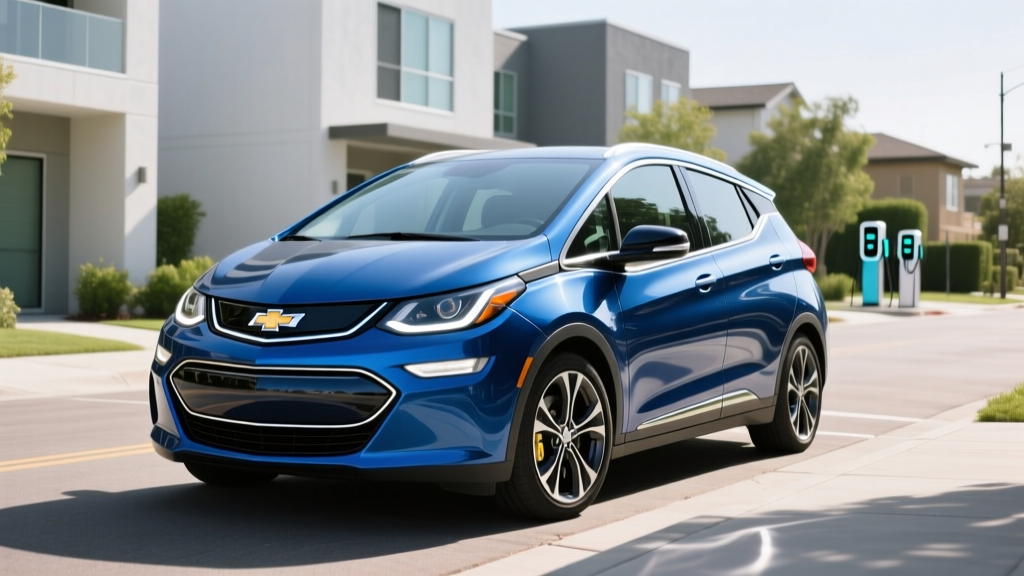
The 2017 Chevrolet Bolt EV was a watershed moment for affordable long-range electric vehicles. When it launched, no other EV under $40,000 could match its 238-mile EPA range. Nearly a decade later, the Bolt EV is out of production (Chevrolet ended the Bolt EV and EUV lines after the 2023 model year), but it remains one of the most sought-after used electric vehicles on the market. With the federal used EV tax credit potentially knocking up to $4,000 off the price, a well-maintained 2017 Bolt EV can be an exceptional commuter car for under $12,000 out of pocket.
This review covers everything you need to know before buying a used 2017 Bolt EV in 2026 — real-world range expectations, charging realities, battery health considerations, and whether it still holds up against newer budget EVs.
Quick Verdict: The 2017 Bolt EV in 2026
Who it's for: Budget-conscious commuters, apartment dwellers with workplace charging access, and second-car households needing a zero-emission daily driver with real highway range.
Who should skip it: Road-trippers who need fast DC charging, families needing all-wheel drive or three rows, and anyone without access to any form of Level 2 charging.
Bottom line: At $10,000–$15,000 on the used market (before the up-to-$4,000 used EV credit), the 2017 Bolt EV offers the best range-per-dollar ratio of any used EV available in 2026. Its biggest weakness — slow DC fast charging — only matters if you regularly drive more than 200 miles in a single day.
Range and Efficiency: EPA Sticker vs. Real-World Miles
| Specification | 2017 Chevrolet Bolt EV |
|---|---|
| EPA Range | 238 miles |
| Battery Capacity (Usable) | 57 kWh (60 kWh gross) |
| Battery Chemistry | NMC (Nickel Manganese Cobalt) by LG Chem |
| EPA Efficiency | 119 MPGe combined (28 kWh/100 mi) |
| Drivetrain | Front-wheel drive (FWD) |
| 0–60 mph | 6.5 seconds |
| Horsepower / Torque | 200 hp / 266 lb-ft |
Real-World Range Expectations
EPA sticker: 238 miles
Real-world city/suburban driving (55°F–80°F): Expect 220–240 miles. The Bolt EV's efficiency is excellent, and city driving with regenerative braking often meets or slightly exceeds the EPA estimate.
Highway driving (70–80 mph): Expect 185–210 miles. The Bolt's boxy hatchback shape creates more aerodynamic drag than a sedan, and highway speeds hit efficiency hard. In EPA testing data on fueleconomy.gov, the Bolt's highway MPGe drops to 109, compared to 128 in the city.
Cold weather (below 32°F): Expect 155–185 miles. The 2017 Bolt EV lacks a heat pump — it uses resistive cabin heating, which draws heavily from the battery. Battery chemistry also becomes less efficient in cold temperatures. Plan for 20–35% range loss in freezing conditions.
Worst-case scenario (highway + cold + hilly terrain): As low as 140–160 miles. If your daily round-trip commute exceeds 130 miles in winter, the 2017 Bolt EV will require mid-day charging.
Charging: The Bolt EV's Biggest Compromise
Charging speed is the single biggest limitation of the 2017 Bolt EV and the most common complaint from owners who attempt road trips. Understanding the charge curve — how charging speed tapers as the battery fills — is critical to setting expectations.
| Charging Level | Power / Rate | Time (10%–80%) | Miles Added Per Hour |
|---|---|---|---|
| Level 1 (120V household outlet) | ~1.2 kW | ~50+ hours (full charge) | ~4 miles/hour |
| Level 2 (240V, 32A home charger) | 7.2 kW | ~9 hours (full charge) | ~25 miles/hour |
| Level 2 (240V, 40A charger) | 7.7 kW (vehicle-limited) | ~8.5 hours (full charge) | ~27 miles/hour |
| DC Fast Charging (CCS) | 50 kW peak | ~60–70 minutes (10%–80%) | N/A (session-based) |
The 50 kW DC Fast-Charging Problem
The 2017 Bolt EV maxes out at approximately 50 kW on DC fast chargers — and that peak rate only holds between roughly 10% and 50% State of Charge (SoC). Above 50%, the charge curve tapers aggressively:
- 10%–50% SoC: ~45–50 kW (adds roughly 100 miles in 30 minutes)
- 50%–70% SoC: ~30–38 kW (tapering)
- 70%–80% SoC: ~20–24 kW
- 80%–100% SoC: Drops below 15 kW — charging above 80% on a DC fast charger is painfully slow and generally not worth the wait
Compare this to a 2025 Hyundai Ioniq 5, which peaks at 240 kW and charges 10%–80% in about 18 minutes. The Bolt EV's 50 kW cap means a 10%–80% session takes roughly 60–70 minutes — more than three times as long. For daily commuting with overnight Level 2 home charging, this is irrelevant. For a 400-mile road trip, it adds 2–3 extra hours of charging stops.
Home Level 2 Charging
The Bolt EV's onboard charger accepts up to 7.2 kW (32 amps at 240V). A standard Level 2 home charger — like a ChargePoint Home Flex or Emporia Vue — paired with a NEMA 14-50 outlet or hardwired 40-amp circuit will fully replenish the battery overnight in about 9 hours. This is perfectly adequate for daily use. Most Bolt EV owners report plugging in each evening and waking up to a full battery every morning.
Connector note: The 2017 Bolt EV uses a CCS1 (Combined Charging System) connector for DC fast charging and a J1772 connector for Level 1/Level 2 AC charging. In 2026, with many networks transitioning to NACS (Tesla's North American Charging Standard), CCS-to-NACS adapters are available and some networks still support CCS natively. Check your local charging infrastructure before purchasing.
Battery Health, Degradation, and Warranty
Battery longevity is the top concern for any used EV buyer, and the 2017 Bolt EV has a complicated history here.
Degradation Data
The 2017 Bolt EV's 60 kWh LG Chem NMC battery pack has shown moderate but generally acceptable degradation over its lifespan. Based on owner-reported data aggregated by EV tracking communities:
- Year 1–3 (0–36,000 miles): ~3–5% capacity loss
- Year 4–6 (36,000–72,000 miles): ~5–9% total capacity loss
- Year 7–9 (72,000–108,000 miles): ~8–14% total capacity loss
A 2017 Bolt EV with 80,000 miles and 12% degradation would have an effective range of roughly 210 miles — still highly usable for commuting. However, individual results vary based on climate (hot climates accelerate degradation), charging habits (frequent DC fast charging and regularly charging to 100% increase wear), and whether the vehicle was affected by the battery recall.
The Battery Recall (Critical for Used Buyers)
In 2021–2022, General Motors issued a massive recall for Bolt EVs (model years 2017–2022) due to a manufacturing defect in certain LG Chem battery cells that could cause fires. GM replaced defective battery modules in affected vehicles. Before purchasing any used 2017 Bolt EV, verify with the VIN on NHTSA's recall database that all recall repairs have been completed. A Bolt EV that has had its recall remediation should have a battery in better-than-expected condition, since GM replaced modules with newer, higher-quality cells.
Battery Warranty
GM's battery warranty for the 2017 Bolt EV covers 8 years or 100,000 miles (whichever comes first), guaranteeing the battery will retain at least 60% of its original capacity. In 2026, most 2017 Bolt EVs are at or approaching the end of this warranty window. If you're buying one with under 100,000 miles, check how much warranty time remains. For vehicles already past the 8-year mark, any battery replacement would be out of pocket — estimated at $14,000–$18,000 for a full pack replacement through a GM dealer, though third-party options and individual module replacements can reduce this cost.
Performance, Interior, and Daily Usability
Performance
The 2017 Bolt EV's 200-horsepower, single-motor front-wheel-drive powertrain delivers a surprisingly fun driving experience. The 0–60 mph time of 6.5 seconds was quick for an affordable EV in 2017 and remains adequate today. Instant torque (266 lb-ft from zero RPM) makes the Bolt feel punchy in city driving and confident when merging onto highways. The low center of gravity from the under-floor battery pack keeps body roll in check during cornering. It's not a sports car, but it's genuinely engaging for a compact hatchback.
Interior and Cargo
| Dimension | Measurement |
|---|---|
| Front Headroom | 40.0 inches |
| Front Legroom | 42.8 inches |
| Rear Headroom | 37.7 inches |
| Rear Legroom | 35.6 inches |
| Cargo Volume (behind rear seats) | 16.9 cu ft |
| Cargo Volume (rear seats folded) | 56.6 cu ft |
| Curb Weight | 3,563 lbs |
The interior is where the Bolt EV shows its 2017 budget origins. Hard plastics dominate the dashboard and door panels, and the seats are flat and unsupportive on longer drives. However, the cabin is spacious for a subcompact — four adults fit comfortably, and the 16.9 cu ft of cargo space (56.6 with seats folded) is generous for the class, rivaling some compact SUVs.
Tech and Driver Assistance
The 2017 Bolt EV came equipped with:
- Infotainment: 8-inch touchscreen with Apple CarPlay and Android Auto (wired), Chevrolet MyLink, 4G LTE Wi-Fi hotspot
- Driver assists (Premier trim): Forward collision alert, automatic emergency braking, lane keep assist, lane departure warning, rear cross-traffic alert, blind-spot monitoring
- Notable omissions: No adaptive cruise control, no center-console armrest on base LT trim, no heat pump, no over-the-air software updates, no one-pedal driving mode in the original software (added via a later update for some model years)
The infotainment system is functional but dated by 2026 standards. Wireless CarPlay/Android Auto is not supported — you'll need a cable. The instrument cluster is a configurable digital display that shows range, energy flow, and efficiency data clearly.
Pricing and Tax Credits in 2026
| Item | Details |
|---|---|
| Original MSRP (2017 LT trim) | $36,620 (before incentives) |
| Original MSRP (2017 Premier trim) | $43,400 (before incentives) |
| Typical Used Price (2026, 50K–80K miles) | $10,000–$15,000 |
| Federal Used EV Tax Credit (§25E) | Up to $4,000 (30% of sale price, capped at $4,000) |
| Effective Price After Credit (example) | ~$7,000–$11,000 |
Used EV Tax Credit Eligibility (§25E)
The 2017 Chevrolet Bolt EV is not eligible for the new-vehicle §30D tax credit (the Bolt EV was discontinued after 2023, and the §30D credit has MSRP caps, income limits, and battery-sourcing requirements that would need to be verified for any new vehicle). However, it may qualify for the §25E used clean vehicle credit, which provides up to $4,000 (30% of the sale price) when purchasing from a licensed dealer. Key eligibility requirements for §25E include:
- Sale price cap: Vehicle must sell for $25,000 or less (easily met for a used Bolt EV)
- Buyer income limits: Adjusted gross income must not exceed $75,000 (single), $112,500 (head of household), or $150,000 (joint filers)
- Dealer sale required: Private-party sales do not qualify
- Vehicle age: Must be at least 2 model years old (the 2017 qualifies)
- First transfer since Aug. 16, 2022: The credit can only be claimed once per vehicle after that date — verify with the dealer that no one else has claimed the credit on this specific VIN
- Point-of-sale transfer: As of 2024, the credit can be transferred to the dealer at the point of sale, reducing your purchase price directly
Important: Tax credit eligibility depends on your individual financial situation. Consult a tax professional or review current IRS guidance on the §25E credit before relying on the credit in your purchase decision. Rules may change annually.
Pros and Cons: The 2017 Bolt EV Honest Assessment
Pros
- 238-mile EPA range remains excellent for the price — few used EVs under $15,000 offer this much range
- Low used pricing combined with the up-to-$4,000 §25E credit makes this one of the cheapest ways into a long-range EV
- Spacious interior for a subcompact hatchback — usable rear seats and 56.6 cu ft of cargo with seats folded
- Fun to drive — 200 hp and instant torque make it quick off the line and easy to merge with traffic
- Efficient — 119 MPGe combined means low per-mile electricity costs (~$0.04–$0.06/mile depending on local rates)
- Recall-remediated batteries (if completed) are in better-than-average condition with newer replacement cells
- Simple, proven platform — fewer complex systems than newer EVs means fewer things to break
Cons
- 50 kW DC fast charging is painfully slow for road trips — 10%–80% takes 60–70 minutes
- No heat pump — cold-weather range loss is significant (20–35% below freezing)
- Battery warranty expiring — most 2017 models are at or past the 8-year/100,000-mile coverage window
- Dated interior — hard plastics, flat seats, no wireless CarPlay, small infotainment screen by 2026 standards
- No adaptive cruise control — only basic forward collision warning and automatic emergency braking
- CCS1 connector — as the industry shifts to NACS, CCS charging availability may decrease over time
- FWD only — no all-wheel-drive option for snow-belt climates
- Recall risk — must verify VIN to confirm remediation was completed; unremediated vehicles are a fire risk
2017 Bolt EV vs. Key Used EV Competitors
| Spec | 2017 Chevy Bolt EV | 2017 Nissan Leaf (30 kWh) | 2018 Tesla Model 3 (Standard Range) |
|---|---|---|---|
| EPA Range | 238 mi | 107 mi | 220 mi |
| Battery | 60 kWh (NMC) | 30 kWh (NMC) | 50 kWh (NCA) |
| DC Fast Charge | 50 kW (CCS) | 50 kW (CHAdeMO) | ~170 kW (NACS/Supercharger) |
| 0–60 mph | 6.5 sec | ~10.0 sec | 5.6 sec |
| Used Price (2026) | $10K–$15K | $7K–$10K | $14K–$19K |
| §25E Credit Eligible | Yes (if criteria met) | Yes (if criteria met) | Yes (if ≤$25K sale price) |
vs. Nissan Leaf: The Bolt EV destroys the 2017 Leaf on range (238 vs. 107 miles). The Leaf's passive air-cooled battery also degrades faster in hot climates. The only Leaf advantage is a slightly lower used price. If range matters at all, the Bolt EV is the clear winner.
vs. Tesla Model 3: The Model 3 offers faster DC charging (~170 kW vs. 50 kW), access to the Supercharger network, a more modern interior, and over-the-air updates. But it costs $4,000–$6,000 more on the used market and may not qualify for the §25E credit if the sale price exceeds $25,000. For pure commuter use where DC charging speed doesn't matter, the Bolt EV delivers similar range at a significantly lower price.
Who Should Buy the 2017 Chevrolet Bolt EV?
Choose the 2017 Bolt EV if:
- Your daily commute is under 100 miles round-trip and you can charge at home overnight on Level 2
- You want the most EV range per dollar on the used market
- You rarely take road trips over 200 miles in a single day
- You qualify for the §25E used EV credit and want to maximize savings
- You need a practical hatchback with decent cargo space for groceries, gear, or a small family
Look elsewhere if:
- You regularly drive 300+ miles in a day and need fast DC charging
- You live in a very cold climate and need minimal winter range loss (look for an EV with a heat pump)
- You need all-wheel drive for snowy conditions
- You want the latest ADAS features like adaptive cruise control or lane-centering assist
- You want guaranteed battery warranty coverage (consider a newer used EV still within its 8-year window)
Frequently Asked Questions
What is the real-world range of the 2017 Chevrolet Bolt EV?
The EPA rates the 2017 Bolt EV at 238 miles. In real-world city and suburban driving at moderate temperatures, expect 220–240 miles. Highway driving at 70–80 mph drops this to roughly 185–210 miles. In freezing weather, range can fall to 155–185 miles due to the lack of a heat pump and cold impacts on battery chemistry.
How fast does the 2017 Bolt EV charge at home and on DC fast chargers?
At home on a Level 2 (240V) charger, the Bolt EV charges at up to 7.2 kW, adding about 25 miles of range per hour and fully charging in roughly 9 hours. On a DC fast charger, it peaks at 50 kW — a 10%–80% charge takes approximately 60–70 minutes. This is the Bolt's most significant weakness for road-trip use.
How much does a used 2017 Bolt EV cost after tax credits?
Used 2017 Bolt EVs typically sell for $10,000–$15,000 depending on mileage, condition, and trim. If purchased from a licensed dealer and you meet §25E income requirements, the used EV credit can reduce your effective price by up to $4,000 — potentially bringing your net cost to $7,000–$11,000. The credit can be transferred to the dealer at the point of sale.
Does the 2017 Bolt EV qualify for the federal EV tax credit?
The 2017 Bolt EV is no longer sold new, so the §30D new-vehicle credit does not apply. However, it may qualify for the §25E used clean vehicle credit (up to $4,000) if purchased from a dealer for $25,000 or less, the buyer meets income caps ($75K single / $150K joint), and the credit hasn't been previously claimed on that VIN after August 16, 2022. Always verify eligibility with the IRS or a tax professional.
Is the 2017 Bolt EV worth buying vs. newer used EVs?
For pure commuter use with home charging, the 2017 Bolt EV is one of the best value propositions in the used EV market. Its 238-mile EPA range is competitive with EVs costing $5,000–$10,000 more. The trade-offs are slow DC charging, a dated interior, and an expiring battery warranty. If road trips and modern tech are priorities, a used Tesla Model 3 or Hyundai Kona Electric may be worth the premium.
What should I check before buying a used 2017 Bolt EV?
Three critical checks: (1) Run the VIN through NHTSA's recall database to confirm the battery fire recall has been remediated. (2) Ask the dealer or seller for a battery health report showing current capacity vs. original — anything above 85% is good for a 2017 model. (3) Verify the remaining battery warranty — the 8-year/100,000-mile coverage started from the original sale date, so a 2017 model's warranty expired in 2025 or upon reaching 100,000 miles.
Can I use Tesla Superchargers with a 2017 Bolt EV?
The 2017 Bolt EV uses a CCS1 connector, not Tesla's NACS. As of 2026, some Tesla Supercharger stations have been retrofitted with CCS cables or Magic Dock adapters that support non-Tesla vehicles, but availability varies by location. You can also purchase a third-party CCS-to-NACS adapter to access more Supercharger stations. Check the Tesla app or PlugShare for station compatibility before planning a trip.
Sources: EPA Fueleconomy.gov — 2017 Chevrolet Bolt EV, NHTSA Recall Database, IRS §25E Used Clean Vehicle Credit.