Quick Verdict: The Original Affordable Long-Range EV
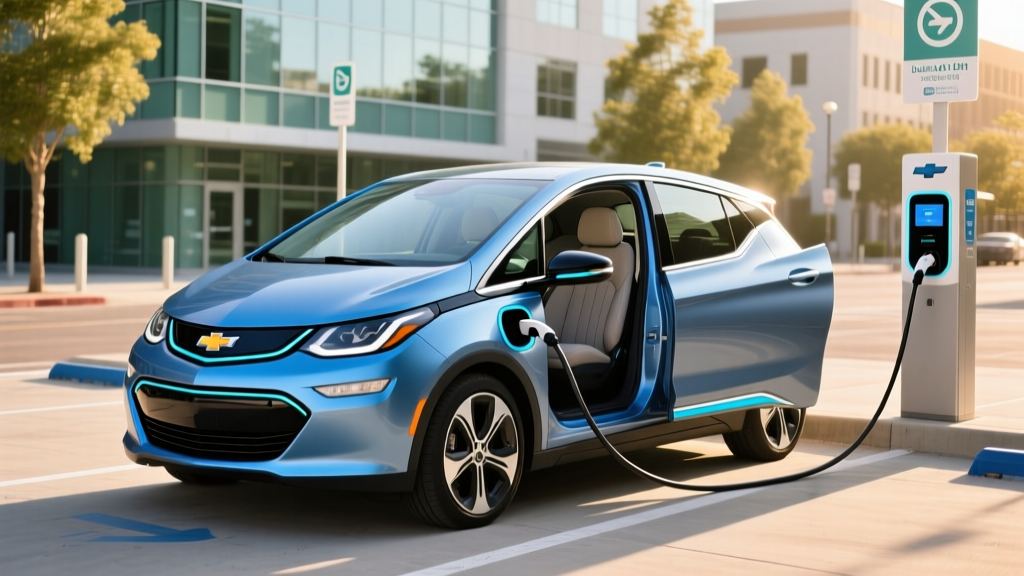
When the 2017 Chevrolet Bolt EV Premier launched, it did something no other non-Tesla EV had done: deliver over 200 miles of EPA-rated range at a sub-$40,000 price point. Nearly a decade later, the Bolt EV (discontinued after the 2023 model year) remains one of the most popular used EVs on the market. The Premier trim — the higher of two trims — added leather seats, a 360-degree camera, and premium audio over the base LT.
In 2026, a well-maintained 2017 Bolt EV Premier represents an excellent entry point into EV ownership for commuters and urban drivers. But its DC fast-charging limitations, aging battery chemistry, and the complexity of used-EV tax credit eligibility demand a clear-eyed look before you buy.
| Spec | 2017 Bolt EV Premier |
|---|---|
| EPA Range | 238 miles |
| Battery (usable) | 60 kWh (NMC) |
| Motor | 200 hp / 266 lb-ft, FWD |
| 0-60 mph | 6.5 seconds |
| DC Fast Charge (max) | 55 kW (CCS) |
| Level 2 Charge Rate | 7.2 kW |
| MPGe (combined) | 119 MPGe |
| Original MSRP (Premier) | $43,995 (before incentives) |
| Battery Warranty | 8 yr / 100,000 mi |
Range & Efficiency: EPA vs. Real World
EPA Rated Range: 238 miles
Real-World Expectation: 200–220 miles (mixed driving), ~180–195 miles (highway-heavy at 70+ mph), ~150–175 miles (cold weather below 30°F)
The 2017 Bolt EV's 238-mile EPA rating was class-leading when it debuted. In practice, the Bolt's efficiency shines in city and suburban driving, where regenerative braking recaptures energy at every stop. According to fueleconomy.gov, the Bolt EV achieves 119 MPGe combined (131 city / 109 highway).
The split between city and highway MPGe tells you everything: this is an urban-commuter-optimized EV. At sustained 75 mph highway speeds, expect efficiency to drop to roughly 3.5–3.8 kWh/mile, reducing effective range to around 190 miles. In winter conditions — particularly below 30°F — the Bolt EV lacks a heat pump, relying on resistive cabin heating that can consume 3–5 kW on its own. Cold-weather range loss of 25–35% is typical, meaning a 238-mile sticker could translate to as little as 155–175 miles on a frigid January commute.
One ownership advantage: the 60 kWh NMC (nickel-manganese-cobalt) battery pack has proven reasonably durable. GM's battery management system includes active liquid cooling and heating, which helps preserve long-term State of Health (SoH). Most 2017 Bolt EVs tested at 80,000+ miles show degradation in the 8–12% range — meaning a healthy example should still deliver 210+ miles of real-world mixed range.
Charging: The Bolt's Biggest Compromise
| Charging Level | Power | Speed | Time (10–80%) |
|---|---|---|---|
| Level 1 (120V) | ~1.2 kW | ~4 miles/hour | N/A (overnight partial) |
| Level 2 (240V) | 7.2 kW | ~25 miles/hour | ~9 hours (full charge) |
| DC Fast Charge (CCS) | 55 kW peak | ~90 miles in 30 min | ~70 minutes (10–80%) |
Here's where the 2017 Bolt EV shows its age. The 55 kW peak DC fast-charging rate was acceptable in 2017, when 50 kW CHAdeMO and CCS stations were the norm. In 2026, with 150–350 kW chargers widely available, the Bolt's charge curve feels painfully slow on road trips.
The charge curve tapers significantly above 60% State of Charge (SoC). You'll see close to 55 kW from roughly 10–50%, but by 70% the rate drops to ~35 kW, and above 85% it falls below 15 kW. A 10–80% session takes approximately 70 minutes — roughly double what a modern Hyundai Ioniq 5 or Tesla Model Y achieves.
For home charging, the 7.2 kW onboard charger is a bright spot. On a properly installed Level 2 station (240V, 32A circuit), you'll add about 25 miles of range per hour, meaning a full overnight charge is easily achievable. Most Bolt EV owners report that home Level 2 charging covers 95% of their needs.
Connector note: The 2017 Bolt EV uses the CCS1 connector for DC fast charging and J1772 for Level 2. With GM having transitioned to NACS (Tesla's connector) for new vehicles starting in 2025, CCS infrastructure remains widely available but is no longer the industry's growth focus. Adapters exist for Tesla Supercharger access, though compatibility with older CCS vehicles varies by station.
Performance & Driving Dynamics
The Bolt EV's single front-mounted motor produces 200 horsepower and 266 lb-ft of torque — all available instantly from 0 RPM. The 0–60 mph sprint takes 6.5 seconds, which feels brisk in daily driving. The low center of gravity (battery pack under the floor) keeps body roll manageable, and the 2,300-lb battery gives the compact hatchback a planted, substantial feel.
Regenerative braking is adjustable: the gear selector's "L" mode increases regen significantly, and a steering-wheel paddle lets you engage maximum regen on demand — enabling near one-pedal driving in stop-and-go traffic. It's not as seamless as Tesla's or Nissan's one-pedal implementations, but it's effective once you build the muscle memory.
The Bolt EV is front-wheel drive only. There is no AWD or dual-motor option. For most commuters, FWD with traction control and the car's low weight distribution is perfectly adequate, but it's a limitation in heavy snow or on steep, slippery grades.
Interior, Tech & Cargo
The Premier trim elevates the Bolt's interior with perforated leather seating, heated front and rear seats, a heated steering wheel, a Bose premium audio system, and a 360-degree surround-view camera. The 10.2-inch touchscreen infotainment system supports Apple CarPlay and Android Auto — a must-have feature that still works well in 2026.
Driver-assistance features on the Premier include:
- Forward Collision Alert with automatic emergency braking
- Lane Keep Assist with lane departure warning
- Rear cross-traffic alert
- Blind-spot monitoring
- Adaptive cruise control (available as an option package)
These are SAE Level 0–1 features — basic driver assists, not semi-autonomous systems. You remain fully responsible for steering, braking, and awareness at all times.
Cargo space: 16.9 cubic feet behind the rear seats, expanding to 56.6 cubic feet with the rear seats folded. That's competitive with a Honda Fit and far more practical than a Tesla Model 3's trunk. Rear-seat legroom is 36.5 inches — adequate for adults on shorter trips but tight for long journeys.
Pros
- 238-mile EPA range remains practical for commuting
- Strong value on the used market ($10,000–$16,000 typical)
- Spacious hatchback cargo area (56.6 cu ft max)
- Proven, liquid-cooled battery with manageable degradation
- 7.2 kW Level 2 home charging is solid for overnight
- Peppy 200 hp motor, fun in city driving
Cons
- 55 kW DC fast charging is painfully slow for road trips
- No heat pump — significant cold-weather range loss
- CCS connector may face long-term infrastructure headwinds
- Battery warranty nearing expiration on 2017 models
- Infotainment feels dated compared to 2025+ EVs
- No AWD option
Pricing & Federal Tax Credit Eligibility
The 2017 Bolt EV Premier originally carried an MSRP of $43,995 (before the $7,500 federal credit and any state incentives that were available at the time). In 2026, used examples typically trade between $10,000 and $16,000 depending on mileage, condition, and battery health.
Under the IRS §25E used clean vehicle credit (sometimes confused with §30D, which applies to new vehicles), you may qualify for up to $4,000 or 30% of the sale price (whichever is lower) on a used Bolt EV purchased from a licensed dealer. Key requirements include:
- Sale price must be $25,000 or less (most 2017 Bolt EVs qualify)
- Buyer income caps: $75,000 single / $112,500 head of household / $150,000 joint filers
- Vehicle must be at least two model years old (2017 qualifies)
- Must purchase from a licensed dealer (private-party sales do not qualify)
- The credit can be transferred to the dealer at point of sale, reducing your purchase price directly
- You can only claim the used-vehicle credit once every three years
On a $14,000 used Bolt EV Premier, 30% equals $4,200, but the cap is $4,000 — so you'd receive the full $4,000 credit, bringing your effective cost to around $10,000. That's extraordinary value for a 238-mile EV. Consult a tax professional to confirm your eligibility, as rules are subject to change.
Battery Longevity & Warranty
GM warranted the 2017 Bolt EV's battery pack for 8 years or 100,000 miles against defects and excessive capacity loss (defined as dropping below 60% of original capacity). For a 2017 model, that warranty window closes in 2025 — meaning most 2017 Bolt EVs on the road in 2026 are either just out of warranty or have minimal coverage remaining.
This is the single biggest risk factor when buying a 2017 Bolt EV. A replacement battery pack costs approximately $14,000–$16,000 (parts and labor), though full replacements remain rare. More commonly, individual module replacements or BMS repairs address specific issues at lower cost.
Before purchasing, request a battery health diagnostic from a GM dealer or use an OBD-II scanner with EV-compatible software (such as Torque Pro with the appropriate PID set) to check current State of Health. A pack showing 88%+ SoH at 60,000–80,000 miles is a good sign. Anything below 82% warrants caution and negotiation leverage.
Who Should Buy the 2017 Bolt EV Premier?
Choose the 2017 Bolt EV Premier if:
- You commute 30–80 miles round trip and can charge at home
- Your budget is $10,000–$16,000 and you want maximum range per dollar
- You primarily drive in urban/suburban environments
- You value hatchback cargo practicality
- You rarely take road trips exceeding 180 miles one-way
Look elsewhere if:
- You frequently road-trip and need fast DC charging (consider a used Tesla Model 3 or Hyundai Kona Electric)
- You live in a cold climate and need winter range reliability (look for an EV with a heat pump)
- You need AWD for snow or mountain driving
- You want current-generation infotainment and ADAS features
Frequently Asked Questions
What is the real-world range of the 2017 Chevrolet Bolt EV?
Expect 200–220 miles in mixed driving, 180–195 miles on the highway, and as low as 150–175 miles in cold weather below 30°F. The 238-mile EPA rating assumes ideal conditions with moderate temperatures and a mix of city/highway driving.
How fast does the 2017 Bolt EV charge?
On DC fast charging (CCS), it peaks at 55 kW, taking about 70 minutes for a 10–80% charge. At home on Level 2 (7.2 kW), a full charge takes roughly 9 hours. Level 1 (standard 120V outlet) adds about 4 miles per hour — suitable only for emergency trickle charging.
Does a used 2017 Bolt EV qualify for a federal tax credit?
It may qualify for the IRS §25E used clean vehicle credit of up to $4,000, provided the sale price is $25,000 or less, you buy from a licensed dealer, and your income falls within the caps ($75K single / $150K joint). The §30D new-vehicle credit does not apply to used purchases. Always verify current rules at irs.gov and consult a tax professional.
Is the 2017 Bolt EV worth buying vs. competitors?
Against used alternatives like the 2017 Nissan Leaf (107-mile range, no liquid cooling), the Bolt EV wins decisively on range and battery management. The 2018 Tesla Model 3 Long Range offers more range and faster charging but typically costs $8,000–$12,000 more on the used market. For budget-conscious buyers prioritizing range and practicality, the Bolt EV Premier is hard to beat at its current used prices.
What's the biggest concern buying a 2017 Bolt EV in 2026?
Battery warranty expiration. GM's 8-year/100,000-mile battery warranty has lapsed for most 2017 models. A full battery replacement costs $14,000–$16,000. Always get a pre-purchase battery health check and budget for potential out-of-warranty repairs. The slow 55 kW DC charging is the second major limitation if you plan to road-trip.
Can I charge a 2017 Bolt EV at Tesla Superchargers?
Not natively. The 2017 Bolt EV uses CCS1 for DC fast charging. GM now provides NACS adapters for newer Bolt EV models, but adapter compatibility and Supercharger network access for older CCS vehicles remains inconsistent. Check Tesla's current non-Tesla Supercharger map and adapter availability before relying on this for travel.