Quick Verdict: A Quirky City EV That Still Charms
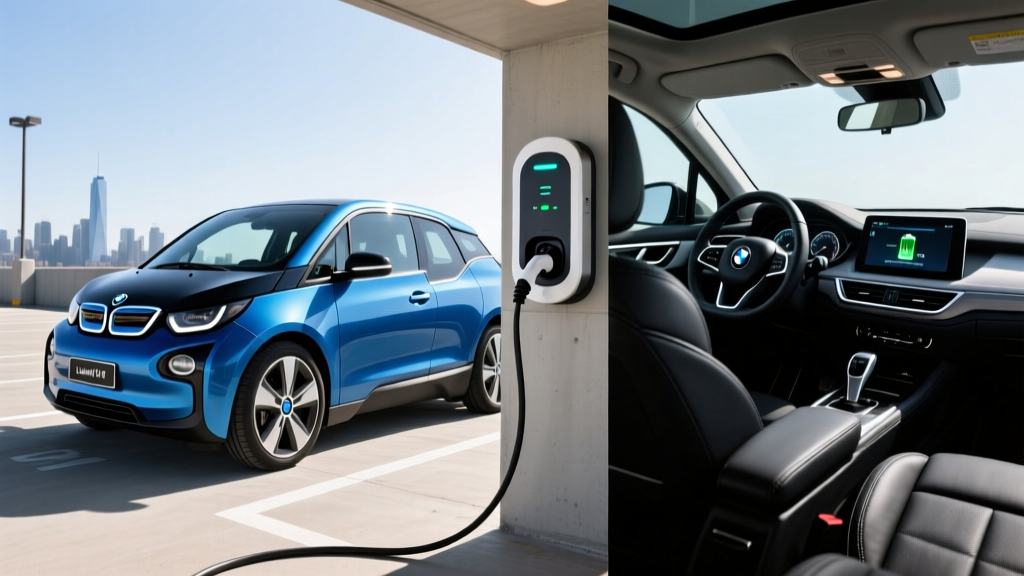
The 2017 BMW i3 occupies a strange space in the used EV market. It's a carbon-fiber-reinforced plastic (CFRP) pod with rear-hinged coach doors, a 94 Ah battery, and a driving personality that feels more like a golf cart engineered in Munich than a typical commuter car. For urban drivers who prioritize agility, build quality, and low running costs over long-distance capability, this early premium EV still delivers — especially when you factor in the used-EV federal tax credit that can knock up to $4,000 off the purchase price.
But the 2017 i3's 114-mile EPA range (for the BEV version) and modest 50 kW DC fast-charging speed mean it's strictly a city and suburban runabout. If your commute exceeds 40 miles each way or you regularly drive in freezing temperatures, you'll need to plan carefully or consider the Range Extender (REx) variant.
| Spec | i3 BEV (94 Ah) | i3 REx (94 Ah) |
|---|---|---|
| EPA Range (electric) | 114 miles | 97 miles + ~83 mi gas |
| Battery Usable Capacity | 27.2 kWh (33.2 kWh gross) | 27.2 kWh (33.2 kWh gross) |
| Battery Chemistry | NMC (Samsung SDI cells) | NMC (Samsung SDI cells) |
| Motor Output | 170 hp / 184 lb-ft | 170 hp / 184 lb-ft |
| 0-60 mph | 7.2 seconds | 8.1 seconds |
| DC Fast Charge (max) | 50 kW (CCS) | 50 kW (CCS) |
| Level 2 Charge Rate | 7.4 kW | 7.4 kW |
| Drivetrain | RWD (single motor) | RWD (single motor + 2-cyl generator) |
| MPGe (combined) | 111 MPGe | 111 MPGe (electric) / 39 MPG (gas) |
| Cargo Volume | 15.1 cu ft (rear seats up) | 15.1 cu ft (rear seats up) |
| Original MSRP (base) | $43,595 | $47,195 |
| Used Price Range (2026) | $12,000 – $18,000 | $14,000 – $21,000 |
Range and Efficiency: Honest Numbers for a Small Pack
The 2017 model year introduced BMW's second-generation battery — the 94 Ah pack with 33.2 kWh gross / 27.2 kWh usable capacity. This was a meaningful upgrade over the original 2014-2016 60 Ah pack (22.6 kWh gross), adding roughly 30 miles of range. The EPA rated the BEV version at 114 miles combined, while the REx model received a 97-mile electric rating before its 650cc two-cylinder range-extender engine kicked in.
EPA Sticker: 114 miles (BEV)
City/Suburban Driving (50-65°F): Expect 105–120 miles. The i3's aggressive regenerative braking and lightweight CFRP body help it match or slightly exceed EPA estimates in stop-and-go traffic.
Highway (70-75 mph): Drop to roughly 80–95 miles. The i3's tall, narrow body creates significant aerodynamic drag at speed, and its thin 155/70R19 tires aren't optimized for high-speed efficiency.
Cold Weather (20-35°F): Plan for 65–85 miles. The i3 lacks a heat pump — it uses resistive cabin heating, which draws heavily from the small pack. Battery preconditioning is not available on DC charging in this model year, further compounding cold-weather limitations.
Efficiency is where the i3 genuinely shines. At 111 MPGe combined (or roughly 29 kWh/100 miles), it was one of the most efficient EVs on the road in 2017 and still holds up well against modern competitors. According to fueleconomy.gov, the i3 BEV's 27 kWh/100mi energy consumption compares favorably with the Nissan Leaf (30 kWh/100mi for the 2017 30 kWh model) and trails only the Hyundai Ioniq Electric.
Charging: Adequate for Daily Use, Slow on Road Trips
The 2017 i3 charges via a CCS1 connector for DC fast charging and a J1772 inlet for Level 1 and Level 2 AC charging. Here's what to expect at each tier:
| Charging Level | Power | Time (10-80%) | Miles Added per Hour |
|---|---|---|---|
| Level 1 (120V, 12A) | ~1.4 kW | ~18 hours | ~5 miles/hr |
| Level 2 (240V, 32A) | 7.4 kW | ~3.0 hours | ~25 miles/hr |
| DC Fast Charge (CCS) | 50 kW (peak) | ~30 minutes | ~110 miles/hr (at peak) |
DC fast-charging reality: The i3 peaks at 50 kW but only sustains that rate briefly. The charge curve tapers significantly above 60% state of charge (SoC). In real-world testing, a 10-80% session typically takes 28–35 minutes at a functional 50 kW CCS station. Above 80%, charging slows to roughly 20 kW and then further to under 10 kW past 90% — standard lithium-ion charge-curve behavior, but the taper starts earlier than many modern EVs.
Home charging: With a Level 2 wallbox delivering 7.4 kW, you'll fully replenish the 27.2 kWh usable pack in about 3.5–4 hours (accounting for ~10% charging losses). This is perfectly adequate for overnight home charging and means you'll wake up to a full battery every morning. If your home electrical panel supports a 40-amp circuit (common in modern homes), installation typically costs $500–$1,200 including equipment and electrician labor.
Performance and Driving Dynamics: Surprisingly Fun
Don't let the i3's unconventional looks fool you — this is one of the most engaging small EVs ever built. The 170-hp synchronous electric motor mounted on the rear axle delivers 184 lb-ft of instant torque to the rear wheels through a single-speed transmission.
The 0-60 mph time of 7.2 seconds (BEV) feels quicker than the number suggests because all torque is available from zero RPM, and the i3 weighs just 2,961 pounds — roughly 1,000 lbs less than a Tesla Model 3. The carbon-fiber passenger cell and aluminum subframes give the i3 a structural rigidity that translates into sharp turn-in and minimal body roll despite its tall ride height.
The single-pedal driving experience via strong regenerative braking (up to 0.2g of deceleration) means you'll rarely touch the brake pedal in city driving. The i3 was one of the first mainstream EVs to implement this effectively, and BMW's calibration remains excellent.
REx performance note: The Range Extender adds a 34-hp, 650cc two-cylinder BMW motorcycle engine that acts solely as a generator — it never drives the wheels directly. The added weight (~265 lbs) pushes the 0-60 time to 8.1 seconds and slightly dulls the handling. The REx also requires occasional oil changes and fuel-system maintenance.
Interior, Tech, and Practicality
The i3's interior was genuinely innovative for 2017 and still feels fresh today. BMW used eucalyptus wood trim, recycled plastic door panels, and wool-blend upholstery across various trims. The open-plan cabin with a flat floor and thin A-pillars creates an airy, spacious feel that belies the car's compact footprint.
Space and Cargo
- Cargo (rear seats up): 15.1 cu ft — comparable to a Honda Fit
- Cargo (rear seats folded): 36.0 cu ft
- Front headroom: 39.6 inches
- Front legroom: 40.5 inches
- Rear headroom: 37.8 inches
- Rear legroom: 31.9 inches (tight for adults over 5'10")
The rear-hinged "coach doors" provide wide openings for loading cargo and passengers, but the rear doors cannot open independently of the fronts — a quirk that frustrates some owners in tight parking spaces.
Tech Features
The 2017 i3 came standard with BMW's iDrive 5.0 infotainment system on a 6.5-inch screen (10.25-inch touchscreen optional with the Technology + Driving Assistance Package). Features include:
- Navigation with real-time traffic and EV-specific route planning
- BMW Connected app for remote preconditioning and charge monitoring
- DC fast-charging capability (CCS) — optional on base trim, standard on higher trims
- Parking sensors (front and rear) with optional rearview camera
- Adaptive cruise control and forward-collision warning (optional, not standard)
Notable omissions for 2026 buyers: No Apple CarPlay or Android Auto (a significant drawback), no over-the-air updates, no advanced driver-assist suite comparable to modern L2 systems, and no battery preconditioning for fast charging.
Pricing, Tax Credits, and Used-EV Value
The 2017 BMW i3 originally started at $43,595 for the BEV and $47,195 for the REx, both including destination. Well-equipped models with the Technology + Driving Assistance Package and Giga World interior trim pushed as-tested prices past $52,000.
As a used vehicle in 2026, the i3 has depreciated significantly — which creates an opportunity. Here's the pricing landscape:
| Variant | Original MSRP | 2026 Used Price Range | After Used-EV Credit (max) |
|---|---|---|---|
| i3 BEV (base) | $43,595 | $12,000 – $15,000 | $8,000 – $11,000 |
| i3 BEV (well-equipped) | $48,000+ | $14,000 – $18,000 | $10,000 – $14,000 |
| i3 REx (base) | $47,195 | $14,000 – $17,000 | $10,000 – $13,000 |
| i3 REx (well-equipped) | $52,000+ | $17,000 – $21,000 | $13,000 – $17,000 |
Federal Used-EV Tax Credit (IRS §25E)
The 2017 i3 is NOT eligible for the new-vehicle §30D federal tax credit (the car is discontinued and the credit applies only to new purchases). However, it does qualify for the §25E Used Clean Vehicle Credit, which provides up to $4,000 or 30% of the sale price (whichever is less) for qualifying used EVs. Key requirements:
- The vehicle must be purchased from a licensed dealer (private-party sales do not qualify)
- Sale price must be $25,000 or less (easily met by the i3)
- Buyer's adjusted gross income must not exceed $75,000 (single), $112,500 (head of household), or $150,000 (joint)
- The credit is non-refundable — you must have sufficient tax liability to claim it
- The vehicle must be at least two model years old (the 2017 i3 qualifies)
- The credit can only be claimed once per VIN in its lifetime — verify it hasn't been claimed by a prior buyer since 2023
Important: Tax rules evolve. Confirm current eligibility with a tax professional and check the IRS §25E page before purchasing.
Battery Health, Warranty, and Longevity
The 2017 i3's 94 Ah Samsung SDI NMC battery pack was well-engineered for its era. BMW's battery management system (BMS) maintains a generous buffer — the 33.2 kWh gross capacity yields only 27.2 kWh usable, meaning ~6 kWh is reserved to protect the cells from deep discharge and overcharge stress.
Original warranty: BMW covered the high-voltage battery for 8 years / 100,000 miles against defects and capacity loss below 70% of original capacity (as measured by BMW's diagnostic tool). The powertrain (electric motor, power electronics) received the same 8-year/100,000-mile coverage. The basic vehicle warranty was 4 years / 50,000 miles.
2026 reality: By now, most 2017 i3s have exceeded their battery warranty period (8 years from the original in-service date). Real-world degradation data from owner forums and BMW community reports suggest most 94 Ah packs retain 82–92% State of Health (SoH) after 7–9 years and 60,000–90,000 miles. This translates to roughly 93–105 miles of range from a pack that started at 114 miles.
Battery replacement cost: A new BMW i3 94 Ah replacement battery from BMW currently costs approximately $10,000–$14,000 installed — a significant expense relative to the car's value. Third-party refurbishment options exist for $5,000–$8,000 but are not widely available nationwide. Before buying, request a battery health report from the dealer or use an OBD-II reader with an app like BimmerCode to check SoH directly.
Pros and Cons: The Honest Scorecard
Pros
- Lightweight CFRP construction delivers engaging, go-kart-like handling
- Exceptional efficiency at 111 MPGe / 27 kWh/100mi
- Premium interior materials (eucalyptus, wool blends) feel upscale
- Strong regen enables true one-pedal driving in the city
- Used-EV tax credit can reduce purchase cost to under $10,000
- Unique design stands out — still turns heads nearly a decade later
- Low maintenance costs — no oil changes (BEV), minimal brake wear
Cons
- 114-mile EPA range limits highway and long-distance usability
- 50 kW max DC charging is slow by 2026 standards
- No Apple CarPlay or Android Auto — a major tech gap
- Rear coach doors are impractical in tight parking spaces
- Rear seats are cramped for adults over 5'10"
- No heat pump — cold-weather range loss is severe (~35-40%)
- Battery warranty has likely expired on most examples
- Parts availability may decline as the model ages
Who Should Buy the 2017 BMW i3?
The 2017 i3 is not a one-car solution for most households. It excels in a specific role and falls short outside of it. Here's the decision framework:
Choose the 2017 i3 BEV if:
- Your daily round-trip commute is under 60 miles
- You have reliable home Level 2 charging
- You live in a mild or moderate climate (or accept cold-weather range loss)
- You want a premium, fun-to-drive city car at a bargain used price
- You have a second vehicle for longer trips
Choose the 2017 i3 REx if:
- Your commute is 40–80 miles but you occasionally need 150+ mile range
- You want electric daily driving but lack confidence in public charging availability
- You're willing to maintain a small gasoline engine (oil changes, fuel filter)
Look elsewhere if:
- You regularly drive over 100 miles per day
- You need to carry four adults comfortably
- You want modern driver-assist features or CarPlay/Android Auto
- You live in an area with harsh winters and no garage parking
Key Competitors to Consider
In the $12,000–$18,000 used-EV price range (before credits), the i3 competes with:
- 2017-2018 Nissan Leaf (40 kWh): 151-mile range, more practical hatchback shape, but less engaging to drive and passive battery cooling
- 2017 Chevrolet Bolt EV: 238-mile range, significantly more practical, but less premium feel and higher used prices (~$16,000–$22,000)
- 2017 Volkswagen e-Golf: 125-mile range, conventional hatchback styling, comfortable ride, but slower DC charging and less efficient
- 2018 Hyundai Ioniq Electric: 124-mile range, class-leading efficiency (136 MPGe), but limited DC charging speed and lower build quality
Frequently Asked Questions
What is the real-world range of the 2017 BMW i3?
The EPA rates the 2017 i3 BEV at 114 miles combined. In real-world city driving at moderate temperatures, expect 105–120 miles. Highway driving at 70+ mph drops this to 80–95 miles, and cold weather (below 35°F) can reduce range to 65–85 miles due to the lack of a heat pump and resistive cabin heating.
How fast does the 2017 BMW i3 charge?
On a DC fast charger (CCS connector), the i3 peaks at 50 kW and takes approximately 30 minutes for a 10-80% charge. At home on a Level 2 charger (7.4 kW), a full charge takes about 3.5–4 hours. Level 1 (standard 120V outlet) adds roughly 5 miles per hour of charging.
Does the 2017 BMW i3 qualify for a federal tax credit?
Not the new-vehicle §30D credit — that applies only to new EVs. However, the i3 does qualify for the §25E Used Clean Vehicle Credit of up to $4,000 (or 30% of sale price, whichever is less), provided you buy from a licensed dealer, the sale price is under $25,000, your income falls below IRS thresholds, and the credit hasn't previously been claimed on that specific VIN since 2023.
Is the 2017 BMW i3 worth buying in 2026?
Yes — for the right buyer. At $12,000–$18,000 (potentially $8,000–$14,000 after the used-EV credit), the i3 offers premium build quality, engaging driving dynamics, and low running costs for urban commuters. However, its 114-mile range, slow DC charging, and lack of modern infotainment (no CarPlay) make it impractical as a primary vehicle for longer commutes or road trips. Inspect the battery SoH before purchasing.
What's the difference between the i3 BEV and the i3 REx?
The BEV (Battery Electric Vehicle) runs solely on electricity with 114 miles of range. The REx (Range Extender) adds a small 650cc two-cylinder gasoline engine that acts as a generator to extend total range to approximately 180 miles (97 electric + 83 gas). The REx adds weight, complexity, and maintenance requirements but eliminates range anxiety for occasional longer trips.
How long will the 2017 BMW i3 battery last?
Based on real-world data, most 94 Ah (2017) i3 battery packs retain 82–92% of original capacity after 7–9 years. A pack at 85% SoH still provides roughly 97 miles of range. With proper care (avoiding frequent DC fast charging to 100%, not letting the car sit at very low SoC for extended periods), the pack should remain functional for 12–15 years total. Replacement costs $10,000–$14,000 from BMW.
Does the 2017 i3 have Apple CarPlay or Android Auto?
No. The 2017 i3's iDrive 5.0 system does not support Apple CarPlay or Android Auto. This is one of the most commonly cited complaints among used buyers. Aftermarket solutions exist but require third-party hardware installation.