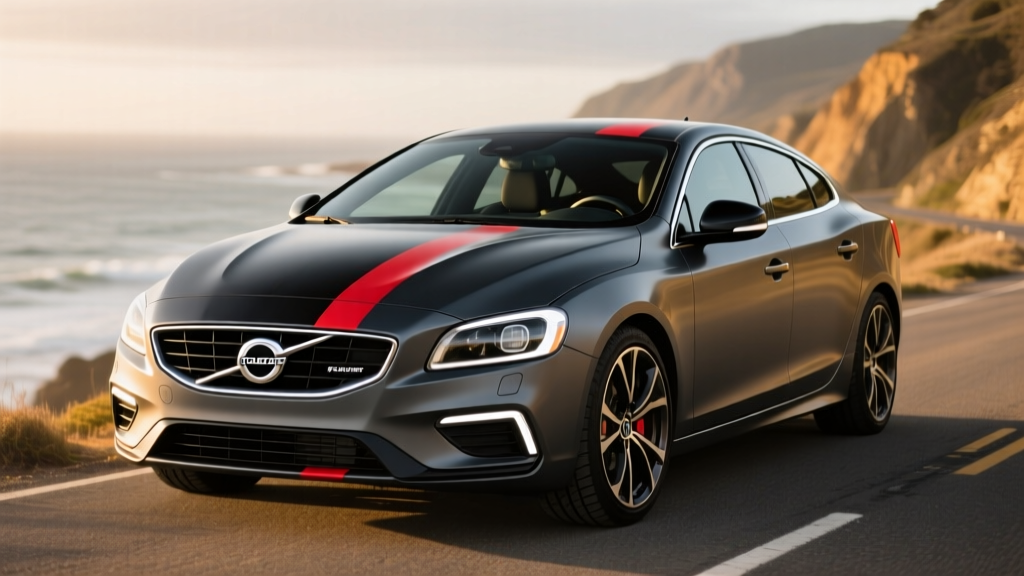
The 2016 Volvo V60 Polestar occupies a fascinating space in automotive history. Built before Volvo's full commitment to electrification, this limited-production performance wagon represents the final chapter of Polestar as a tuning division rather than a standalone electric brand. For enthusiasts searching the used market today, the V60 Polestar offers a compelling blend of turbocharged power, all-wheel-drive grip, and practical wagon utility — but it's critical to understand exactly what this car is, and more importantly, what it isn't.
This is not an electric vehicle. It is not a plug-in hybrid. The 2016 V60 Polestar is a pure internal combustion performance machine, and reviewing it through an EV lens reveals both its limitations in today's market and its enduring appeal for a specific type of driver. If you've landed here searching for the "2016 Volvo V60 Polestar" expecting battery specs and charging times, this guide will set expectations properly and point you toward Volvo's actual electrified alternatives.
What the 2016 Volvo V60 Polestar Actually Is
The 2016 V60 Polestar was a limited-run, factory-tuned variant of Volvo's V60 wagon, developed in partnership with Polestar — then Volvo's performance arm, now a separate EV manufacturer. Only approximately 750 units were allocated globally for the 2016 model year, with roughly 200 destined for the United States. It was sold exclusively through select Volvo dealerships and commanded a significant premium over the standard V60 T6.
Under the hood sits a 2.0-liter four-cylinder engine equipped with both a turbocharger and a supercharger (Volvo's "Drive-E" powertrain), producing 367 horsepower and 347 lb-ft of torque. Power reaches all four wheels through an 8-speed automatic transmission and Volvo's Haldex-based all-wheel-drive system. The result is a 0-60 mph sprint in approximately 4.5 seconds and an electronically limited top speed of 155 mph.
| Attribute | Specification |
|---|---|
| Engine | 2.0L Turbo + Supercharged I4 |
| Horsepower | 367 hp @ 6,000 rpm |
| Torque | 347 lb-ft @ 3,100-5,000 rpm |
| Drivetrain | AWD (Haldex-based) |
| Transmission | 8-speed automatic |
| 0-60 mph | 4.5 seconds |
| Top Speed | 155 mph (electronically limited) |
| EPA Fuel Economy | 20 city / 28 highway / 23 combined mpg |
| Cargo Volume (rear seats up) | 28.0 cu ft |
| Cargo Volume (rear seats folded) | 51.2 cu ft |
| Original MSRP | ~$62,275 (2016) |
| Production Volume | ~750 units globally |
Fuel Economy and Real-World Efficiency
The EPA rated the 2016 V60 Polestar at 20 mpg city, 28 mpg highway, and 23 mpg combined. These figures are respectable for a 367-hp performance wagon, but they underscore the fundamental difference between this car and modern electrified alternatives. For context, the current Polestar 2 Long Range Dual Motor achieves 92 MPGe combined, translating to roughly one-third the "fuel" cost per mile when charging at home on average utility rates.
At current national average gasoline prices (~$3.10/gallon as of early 2026), filling the V60 Polestar costs approximately $55 and yields about 370 miles. That equates to roughly $0.15 per mile in fuel alone. A comparable electric vehicle charging at home at $0.14/kWh and averaging 3.0 miles/kWh would cost approximately $0.047 per mile — a savings of roughly $1,200-$1,500 per year for a driver covering 12,000 miles annually.
Performance, Handling, and the Driving Experience
Where the V60 Polestar earns its keep is on a challenging back road. The Öhlins dual-flow dampers (manually adjustable, 20 clicks of compression/rebound), Brembo front brakes with 6-piston calipers, and 20-inch wheels wrapped in Michelin Pilot Super Sport tires give this wagon genuine sports-car credibility. The AWD system can send up to 70% of torque to the rear axle under hard acceleration, providing a rear-biased feel that's rare in the Volvo lineup.
The dual-charged engine (turbo for high-rpm power, supercharger for low-end response) delivers linear, lag-free acceleration that feels more like a larger-displacement engine. The 8-speed automatic is quick to downshift and holds gears in Sport mode, though it lacks the crispness of a dual-clutch unit. Polestar also retuned the steering for more weight and feedback, and added a Sport mode that sharpens throttle response and firms up the dampers.
The trade-off is ride comfort. The Öhlins suspension, even in its softest setting, is firm. Potholed urban streets and expansion joints transmit more impact than a standard V60, and road noise on coarse pavement is noticeable. This is a driver's car first, a luxury cruiser second.
Interior, Tech, and Daily Usability
The 2016 V60's interior reflects Volvo's pre-SPA (Scalable Product Architecture) generation. The center stack is button-heavy by modern standards, with a small 7-inch infotainment screen that feels dated next to the 9-inch Sensus touchscreen introduced in the 2016 XC90. Navigation, Bluetooth, and a premium Harman Kardon audio system are included, but Apple CarPlay and Android Auto were not available on this generation.
Front seats are excellent — deeply bolstered Polestar-specific sport seats with nubuck leather and contrasting stitching. Rear legroom is tight at 33.5 inches, adequate for children or short-trip adults but cramped for long journeys. The 28.0 cu ft cargo area behind the rear seats is generous for a sport wagon and expands to 51.2 cu ft with the 60/40 split rear seats folded, making it genuinely practical for gear-heavy weekends.
Driver-assistance technology is limited compared to current Volvo standards. The V60 Polestar includes City Safety (low-speed automatic emergency braking) and lane-departure warning, but lacks Pilot Assist (adaptive cruise with lane-centering), blind-spot monitoring, and rear cross-traffic alert that became standard on later Volvos.
Used Market Pricing and Ownership Costs
The 2016 V60 Polestar originally carried an MSRP of approximately $62,275, including destination. Today, used examples in good condition (60,000-90,000 miles) typically list between $28,000 and $38,000, with low-mileage, well-maintained examples commanding up to $42,000. Collector-grade examples under 30,000 miles occasionally surface above $45,000.
Ownership costs are higher than a standard V60. The Öhlins dampers cost approximately $2,500-$3,000 per corner to replace. Brembo front brake rotors and pads run $1,200-$1,500 for a full axle set. The 20-inch Michelin Pilot Super Sport tires are roughly $300 each and wear quickly under spirited driving (expect 15,000-20,000 miles from a set). Insurance premiums typically run 15-25% higher than a standard V60 T6 due to the Polestar's value and performance classification.
How It Compares to Electrified Alternatives in 2026
The most direct comparison is to Volvo's own electrified lineup. The Polestar 2 Long Range Dual Motor (the spiritual successor) produces 421 hp, hits 60 mph in 4.2 seconds, offers 276 miles of EPA range, and starts around $54,300 new — potentially dropping to ~$46,800 after the $7,500 federal tax credit for eligible buyers. The Polestar 2 also delivers instantaneous electric torque, lower running costs, over-the-air updates, and modern driver assists, but lacks the mechanical character and exclusivity of the V60 Polestar.
For buyers who want wagon practicality with electrification, the Volvo V60 Recharge (plug-in hybrid) offers 38 miles of electric-only range, 30 mpg combined once the battery depletes, and 415 combined horsepower from its T8 powertrain. Starting around $72,000, it's more expensive but qualifies for partial incentives and delivers dramatically lower fuel costs for commuters with home charging.
Outside the Volvo family, the Audi S4 Avant (not sold in the US), BMW 340i xDrive Touring (gray-market only), and Mercedes-AMG C43 wagon (discontinued) represent the V60 Polestar's original competitive set — all gasoline-powered, all similarly rare on the used market.
Who Should Buy the 2016 V60 Polestar — and Who Shouldn't
✓ Buy It If You...
- Want a rare, collectible performance wagon with analog character
- Prioritize driving dynamics over fuel economy
- Have access to a trusted Volvo specialist for maintenance
- Value exclusivity (only ~200 US examples exist)
- Don't need cutting-edge infotainment or driver assists
✗ Skip It If You...
- Want to minimize fuel and maintenance costs
- Need modern safety tech and driver assistance
- Prefer the instant torque and quiet of an electric powertrain
- Want warranty coverage or predictable repair bills
- Plan to use it as a primary daily commuter in traffic
The 2016 V60 Polestar is best understood as an enthusiast's collector car that happens to be practical — not as a rational appliance purchase. Its value proposition is emotional, not financial.
Frequently Asked Questions
Is the 2016 Volvo V60 Polestar an electric or hybrid vehicle?
No. The 2016 V60 Polestar is a conventional gasoline-powered vehicle with a 2.0-liter turbocharged and supercharged four-cylinder engine. It has no electric motor, no battery propulsion, and no plug-in capability. Volvo's electrified Polestar brand (Polestar 1, Polestar 2, etc.) launched separately beginning in 2019.
How rare is the 2016 V60 Polestar?
Very rare. Approximately 750 units were built globally for the 2016 model year, with around 200 allocated to the United States. This limited production contributes to strong residual values and growing collector interest.
What are the most common problems with the V60 Polestar?
Reported issues include premature wear on the Öhlins dampers (especially in regions with rough roads), supercharger clutch failures at higher mileage, and infotainment system glitches. The Drive-E four-cylinder engine has been generally reliable, but turbo/supercharger complexity means repairs can be costly. A pre-purchase inspection by a Volvo specialist is strongly recommended.
Can I convert the V60 Polestar to electric?
While EV conversion shops exist, converting a V60 Polestar would cost $30,000-$50,000+, void any remaining collector value, and require extensive custom engineering. The conversion cost alone would exceed the price of a new Polestar 2 with full warranty and modern technology.
Does it qualify for any federal tax credits?
No. The IRS §25E used clean vehicle credit (up to $4,000) applies only to qualifying battery electric vehicles and plug-in hybrids. The gasoline-only V60 Polestar does not qualify for any federal EV incentive.
What should I look for when buying a used V60 Polestar?
Prioritize examples with complete service records, stock Öhlins dampers (some owners swap to cheaper alternatives), and no history of supercharger or turbo issues. Verify the car is one of the genuine 2016 Polestar models (check the chassis number and Polestar badge on the trunk) rather than a standard V60 with aftermarket badges. Budget $2,000-$4,000 annually for maintenance above a standard V60.