If you're researching the 2016 Toyota Tundra bolt pattern, you likely fall into one of two camps: you're upgrading wheels on a gas-powered Tundra, or you're evaluating this half-ton platform for an electric-vehicle conversion project. Either way, the bolt pattern is the gateway spec that determines what wheels, adapters, and hub assemblies will physically mate to the truck.
This guide covers the exact 2016 Tundra bolt pattern, center bore, and thread specifications, then explores why these numbers matter for EV conversions, wheel upgrades, and how modern factory-electric trucks compare if you're weighing a swap versus buying new.
2016 Toyota Tundra Bolt Pattern: The Exact Numbers
The 2016 Toyota Tundra uses a 5-lug bolt pattern measuring 5x150mm (also written as 5x5.9 inches). This applies across all trim levels — SR, SR5, Limited, Platinum, 1794 Edition, and TRD Pro — regardless of cab configuration (Regular, Double, or CrewMax) or bed length.
| Specification | Value |
|---|---|
| Bolt Pattern (PCD) | 5x150mm (5x5.9") |
| Center Bore | 110.1mm |
| Lug Thread Size | M14 x 1.5 |
| Lug Nut Torque Spec | 97 lb-ft (131 Nm) |
| Stock Wheel Sizes | 18" (SR/SR5), 20" (Limited/Platinum/TRD) |
| Stock Tire Size (typical) | 275/65R18 or 275/55R20 |
| Offset Range (stock) | +50mm to +60mm |
The 5x150mm pattern is relatively uncommon in the North American truck market. Most domestic half-tons use 6-lug patterns (the Ford F-150 uses 6x135mm; the Chevy Silverado 1500 uses 6x139.7mm). Toyota's 5-lug setup on the Tundra means aftermarket wheel selection is narrower than for domestic trucks, and adapters or custom hubs are required for most EV conversion projects that swap in different axle assemblies.
Why Bolt Pattern Matters for EV Conversions
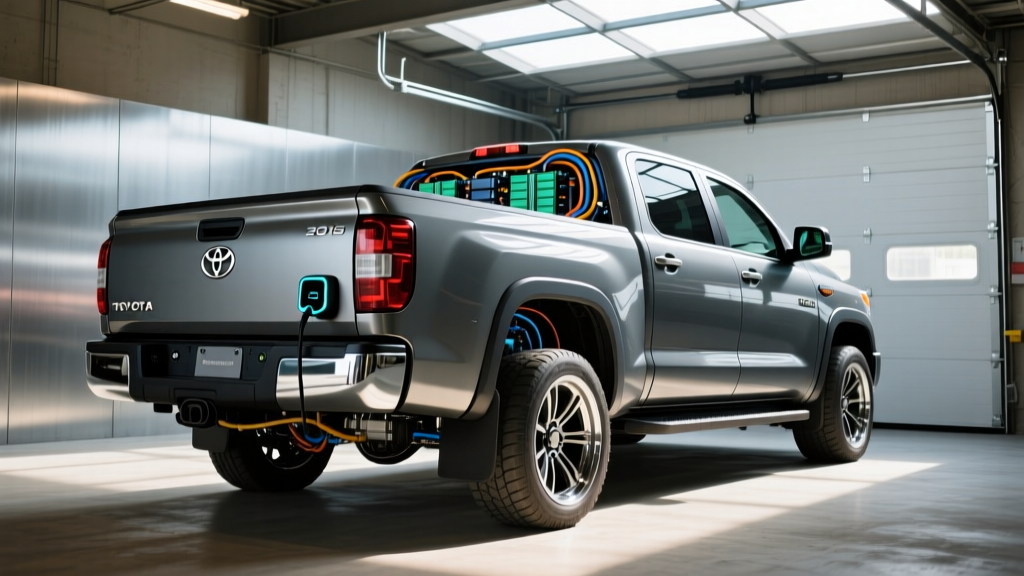
Converting a 2016 Tundra to electric power is a serious undertaking. The truck's curb weight (5,100–5,500 lbs depending on configuration) and its body-on-frame architecture make it a candidate for conversion, but the wheel and hub interface is where engineering decisions cascade.
Hub Motor Conversions
Hub motor setups (like those from NetGain or similar aftermarket suppliers) must match the Tundra's 110.1mm center bore and 5x150mm bolt circle exactly, or require a custom adapter plate. Most hub motors on the market are designed for 5x114.3mm or 5x127mm passenger-car patterns, making direct fitment to the Tundra impossible without machining.
Axle-Swap Conversions
Many Tundra EV conversions use a Tesla drive unit (from a Model S or Model X rear subframe) or a Cascadia Motion iDM. These drive units have their own bolt patterns and axle flanges. The conversion fabricator must either:
- Machine custom axle adapters that mate the EV drive unit's output to the Tundra's 5x150mm hubs
- Replace the entire hub assembly with one matching the donor drive unit, then use wheels matching that new pattern
- Use a solid rear axle from an EV-donor vehicle and re-drill or replace the axle shafts
Any of these approaches adds $2,000–$8,000 to a conversion budget just for driveline interface work, before batteries, motor, controller, or thermal management.
2016 Tundra EV Conversion: Battery, Range, and Cost Reality
Let's address the question conversion-minded readers are asking: what does an electric 2016 Tundra actually look like in terms of range, charging, and cost?
A professionally converted 2016 Tundra with a 100 kWh NMC battery pack (the practical maximum that fits the frame rails and bed area without compromising payload) can realistically achieve 120–160 miles EPA-equivalent range. Highway driving at 70 mph drops this to approximately 100–130 miles. Cold-weather operation (below 32°F) without a dedicated battery thermal management system can reduce range by 25–40%, yielding as little as 70–90 miles in winter conditions. These figures assume a vehicle weight of 6,000–6,500 lbs post-conversion.
| Specification | Estimated Value |
|---|---|
| Battery Capacity | 80–120 kWh (NMC chemistry typical) |
| Motor Output | 250–400 HP (single or dual motor) |
| Estimated Range | 120–160 miles (combined); 100–130 miles highway |
| DC Fast Charge (if equipped) | 50–150 kW peak (CCS, dependent on BMS); 10-80% in 35–60 min |
| Level 2 Home Charge | 7.2–11.5 kW; adds 20–35 miles/hr |
| 0-60 mph | 5.5–7.5 seconds (depending on motor/battery config) |
| Conversion Cost (total) | $50,000–$120,000+ |
| Drivetrain Warranty | None (aftermarket; builder warranty varies) |
Charging Reality for Converted Trucks
Most conversions use a CCS1 or CHAdeMO inlet wired to an aftermarket BMS (battery management system). DC fast-charge capability depends entirely on the BMS and contactor setup. Budget conversions often limit DC charging to 50 kW to protect cells without active liquid cooling, meaning a 100 kWh pack takes roughly 90 minutes from 10–80%. Higher-end builds with liquid-cooled packs and quality BMS units (like those from Thunderstruck Motors or Orion BMS) can support 100–150 kW peak, though sustained rates taper significantly above 80% state of charge.
Home Level 2 charging at 11.5 kW (48A on a 60A circuit) is practical for overnight replenishment, adding roughly 30 miles of range per hour of charging. A full charge from 10% takes 8–10 hours.
Federal Tax Credits: Does a Converted Tundra Qualify?
Under current IRS §30D rules for 2026, the federal clean vehicle credit applies to new qualified plug-in electric vehicles purchased from a manufacturer. A personally converted or aftermarket-converted 2016 Tundra does not qualify for the §30D new-vehicle credit of up to $7,500, because:
- The vehicle is not new (original MSRP date was 2016)
- The conversion is not performed by an OEM or recognized qualified manufacturer
- The battery sourcing and critical-mineral requirements apply to OEM-certified supply chains
The used EV credit (up to $4,000 or 30% of sale price, whichever is lower) also does not apply, because the vehicle was not originally manufactured as a qualified plug-in electric vehicle.
Some states offer conversion-specific incentives. California's CARB and certain air-district programs have occasionally funded EV conversion pilot projects, but these are grant-based and not consumer tax credits. Check your state energy office or Alternative Fuels Data Center for current local programs.
Modern Electric Truck Alternatives: What You Get Instead
If the conversion math isn't adding up, here's how factory-electric trucks compare. These are the vehicles that make a Tundra EV conversion a passion project rather than a practical choice.
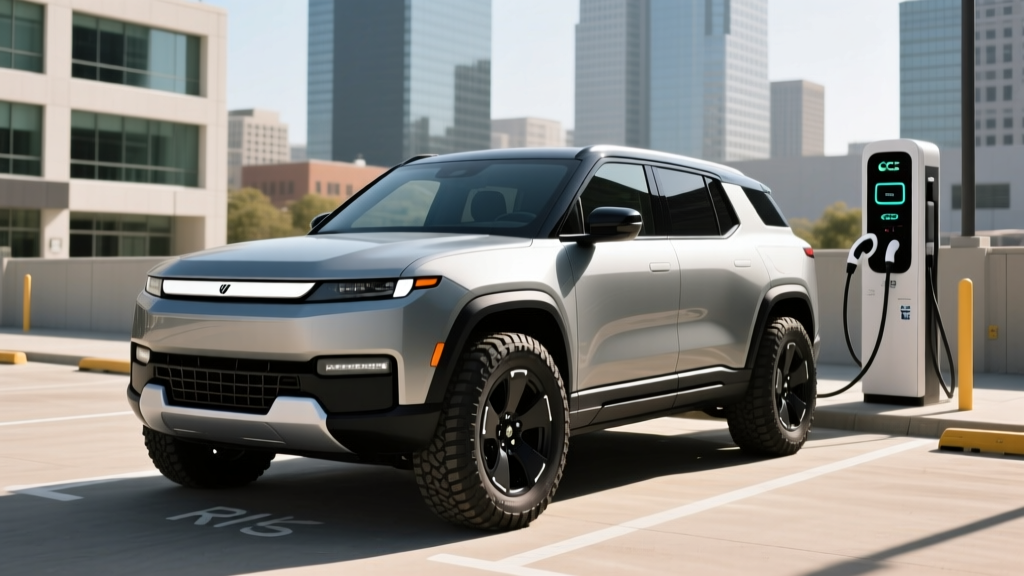
| Spec | Tundra Conversion (est.) | Ford F-150 Lightning | Rivian R1T (Dual-Motor) | Chevy Silverado EV |
|---|---|---|---|---|
| EPA Range | 120–160 mi | 230–320 mi | 270–420 mi | 280–440 mi |
| Battery (kWh) | 80–120 (NMC) | 98–131 (NMC) | 106–149 (NMC) | 200 (NMC) |
| DC Fast Charge | 50–150 kW | Up to 150 kW | Up to 220 kW | Up to 350 kW |
| 10–80% Charge Time | 35–60 min | ~41 min | ~27 min | ~20 min |
| 0–60 mph | 5.5–7.5 sec | 3.8–5.0 sec | 3.0–4.5 sec | 4.5 sec |
| Towing Capacity | Varies (often reduced) | 7,700–10,000 lbs | 11,000 lbs | 10,000–12,500 lbs |
| Starting MSRP | $50K+ (conv. only) | ~$55,000 | ~$73,000 | ~$55,000 |
| Federal Tax Credit | Not eligible | Up to $7,500* | Up to $7,500* | Up to $7,500* |
| Battery Warranty | None/Builder | 8 yr / 100,000 mi | 8 yr / 120,000 mi | 8 yr / 100,000 mi |
* Federal tax credit eligibility under IRS §30D depends on buyer income limits ($150K single / $300K joint), vehicle MSRP caps ($80K for trucks/vans/SUVs), and battery critical-mineral and component sourcing requirements. Point-of-sale transfer is available through registered dealers. Verify current eligibility at IRS.gov before purchase.
Who Should Convert a Tundra to Electric?
Given the cost, complexity, and limited range, a 2016 Tundra EV conversion makes sense only for a narrow set of use cases:
Good Fit
- Fabricators and engineers who want a learning project
- Fleet operators with fixed short routes (under 80 miles) who need a heavy-duty platform
- Off-grid or solar-charged property owners who want a silent, zero-local-emission work truck
- Enthusiasts who value the Tundra's frame and body but want electric drivetrain characteristics
Poor Fit
- Anyone who needs 200+ miles of daily range
- Buyers looking to save money vs. a factory EV
- Anyone who needs warranty coverage or OEM service support
- Towing-heavy users (conversions often reduce or unpredictably alter tow ratings)
- Anyone who needs federal tax credit eligibility
Wheel Upgrade Options for the 2016 Tundra (Gas or EV)
If you're keeping the Tundra gas-powered or mid-conversion and need wheels, the 5x150mm pattern limits but doesn't eliminate options:
- OEM Toyota wheels: The safest bet. Tundra, Sequoia, and Land Cruiser (200-series) share the 5x150mm pattern and 110.1mm center bore.
- Aftermarket manufacturers: Method Race Wheels, Fuel Off-Road, and XD Wheels offer select 5x150mm options, typically in 18" and 20" diameters.
- Wheel adapters: 5x150mm to 5x114.3mm or 6x135mm adapters exist (typically $150–$300 per set) but add unsprung weight, alter offset, and introduce a potential failure point — not recommended for towing or heavy payloads.
- Custom billet wheels: Several manufacturers (HRE, Forgeline) will machine custom 5x150mm wheels, but expect $1,200–$2,500+ per wheel.
For EV conversions, the wheel choice affects efficiency. Lighter forged aluminum wheels reduce rotational mass, which matters more in an EV where every watt-hour counts toward range. A 5-lb-per-wheel reduction can yield 2–4% range improvement in stop-and-go driving.
Pros and Cons: 2016 Tundra EV Conversion
Pros
- Body-on-frame architecture is conversion-friendly
- 5x150mm hub is robust (110.1mm bore handles heavy loads)
- Instant torque transforms the truck's character
- Silent operation for noise-sensitive work environments
- Regenerative braking reduces brake wear significantly
- Custom project with unique result
Cons
- $50K–$120K+ conversion cost exceeds buying a factory EV
- 120–160 mile range is severely limiting for a full-size truck
- No federal tax credit eligibility
- No OEM warranty on drivetrain or battery
- 5x150mm bolt pattern limits wheel and hub-motor options
- Insurance can be difficult and expensive to obtain
- Resale value is highly uncertain
- DC fast charging often limited to 50–100 kW
Frequently Asked Questions
What is the bolt pattern on a 2016 Toyota Tundra?
The 2016 Toyota Tundra uses a 5x150mm bolt pattern (also expressed as 5x5.9 inches). This is consistent across all trims and cab configurations. The center bore is 110.1mm, and lug nuts are M14 x 1.5 thread, torqued to 97 lb-ft.
Will Ford or Chevy wheels fit a 2016 Tundra?
No. Ford F-150 wheels use a 6x135mm pattern, and Chevy Silverado 1500 wheels use a 6x139.7mm pattern. Neither matches the Tundra's 5x150mm layout. Adapters exist but are not recommended for towing or heavy-duty use due to added stress on the hub interface.
Can I convert my 2016 Tundra to electric?
Yes, but expect to spend $50,000–$120,000+ for a professional conversion yielding 120–160 miles of range. The 5x150mm bolt pattern requires custom hub adapters for most EV drive units. The vehicle will not qualify for the federal §30D tax credit after conversion.
What electric truck should I buy instead of converting?
The Ford F-150 Lightning (starting ~$55,000, up to 320 miles EPA range) offers the best value proposition for most truck buyers. The Rivian R1T provides superior performance and range at a premium price. The Chevy Silverado EV (up to 440 miles range on top trims) leads in maximum range. All three qualify for the federal tax credit if buyer income and sourcing requirements are met.
Does the 2016 Tundra share its bolt pattern with any other Toyota?
Yes. The Toyota Sequoia (2008–2022 first generation), Toyota Land Cruiser (200-series, 2008–2021), and Lexus LX 570 share the 5x150mm bolt pattern and 110.1mm center bore. Wheels from these vehicles are direct-fit on the 2016 Tundra, provided offset and width are appropriate.
What is the real-world range of a Tundra EV conversion?
Expect 120–160 miles in mixed driving with a 100 kWh pack. Highway driving at 70+ mph reduces this to 100–130 miles. Cold weather (below freezing) without battery preconditioning can drop range to 70–90 miles. These figures assume a post-conversion weight of 6,000–6,500 lbs and moderate use of climate control.