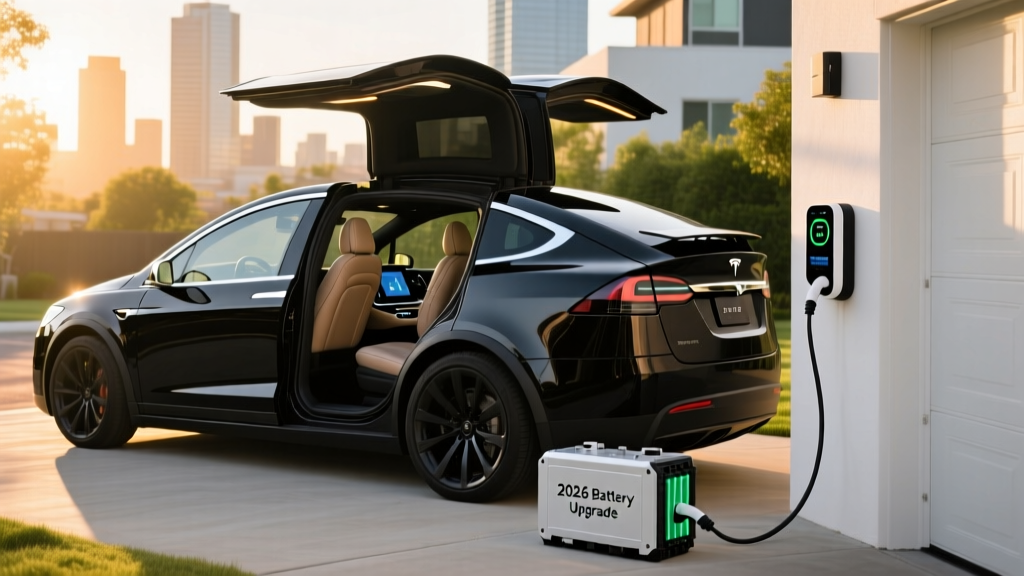
The 2016 Tesla Model X was Tesla's first SUV — a falcon-wing-doored, dual-motor family hauler that pushed the boundaries of what an electric vehicle could be. A decade later, it remains a common sight on the used EV market, often priced between $18,000 and $35,000 depending on mileage, condition, and battery health. But buying a 10-year-old luxury EV is a fundamentally different calculus than shopping for a new one. This review breaks down exactly what you're getting — and what you're risking — with a 2016 Model X in 2026.
2016 Tesla Model X: Core Specifications at a Glance
| Spec | 60D | 75D | 90D | P90D / P90DL |
|---|---|---|---|---|
| Usable Battery (kWh) | ~62 kWh (software-limited 75) | ~72.5 kWh | ~83.5 kWh | ~83.5 kWh |
| EPA Range (miles) | 200 | 237 | 250 | 250 |
| Drivetrain | Dual Motor AWD | Dual Motor AWD | Dual Motor AWD | Dual Motor AWD |
| Horsepower | ~329 hp | ~329 hp | ~417 hp | ~532 hp (Ludicrous) |
| 0-60 mph | 6.0 sec | 6.0 sec | 4.8 sec | 3.2 sec (Ludicrous) |
| MPGe (combined) | 92 MPGe | 92 MPGe | 92 MPGe | 89 MPGe |
| Efficiency | ~36 kWh/100mi | ~36 kWh/100mi | ~36 kWh/100mi | ~38 kWh/100mi |
The 2016 Model X launched with a 90 kWh battery pack (NMC chemistry — nickel-manganese-cobalt). The 60D variant was a 75 kWh pack software-limited to 62 kWh; many owners later paid Tesla to unlock the full capacity. The 75D, introduced mid-year, used a revised 75 kWh pack. All trims came standard with dual-motor all-wheel drive.
Real-World Range: What to Actually Expect
The 90D's EPA-estimated 250 miles was achievable in mild conditions at moderate speeds. In 2026, with typical battery degradation of 10-18% on a 10-year-old NMC pack, expect:
- Mild weather, mixed driving: 190–220 miles (90D with ~15% degradation)
- Highway at 75 mph: 165–195 miles (the Model X's 5,000+ lb curb weight and poor drag coefficient hurt efficiency at speed)
- Cold weather (below 32°F): 140–175 miles (NMC packs lose 20-30% range in freezing temps without preconditioning)
The 60D, even with the software unlock, realistically delivers 155–185 miles in daily use — tight for road trips but workable for commuting.
The Model X never won efficiency awards. Its tall, heavy body with complex falcon-wing hardware yields roughly 36-38 kWh per 100 miles (source: fueleconomy.gov). That's noticeably thirstier than a Model S of the same era and far behind modern EVs like the Hyundai Ioniq 5 or Tesla's own refreshed Model Y.
Charging Speeds: DC Fast Charge and Home Level 2
| Charging Method | Power (kW) | Speed | Notes |
|---|---|---|---|
| Level 1 (120V household) | ~1.4 kW | ~3 mi/hr | Emergency/top-up only |
| Level 2 (240V, 48A) | 11.5 kW | ~30 mi/hr | Full charge in ~8-9 hours (90D) |
| Level 2 (240V, 40A) | 9.6 kW | ~25 mi/hr | Common Wall Connector or public L2 |
| DC Fast Charge (Supercharger V2) | Peak ~120 kW | 10-80% in ~40 min | Peak rate only; tapers significantly above 60% |
| DC Fast Charge (Supercharger V3/V4) | Capped at ~150 kW | 10-80% in ~35 min | 2016 Model X cannot fully utilize V3's 250 kW |
The 2016 Model X uses the Tesla proprietary connector (now being rebranded as NACS) and accesses the full Tesla Supercharger network natively. This remains one of the strongest ownership advantages — Tesla's Supercharger network has the highest reliability rates among public DC networks in the U.S.
However, charging speed is this vehicle's weak point by 2026 standards. The older battery architecture caps DC fast-charging at roughly 120-150 kW peak, and the charge curve tapers aggressively above 60% State of Charge (SoC). A 10-80% session takes 35-40 minutes — compared to 15-20 minutes on a modern 800V architecture vehicle like the Hyundai Ioniq 5 or Porsche Taycan. For road trips, plan for longer stops.
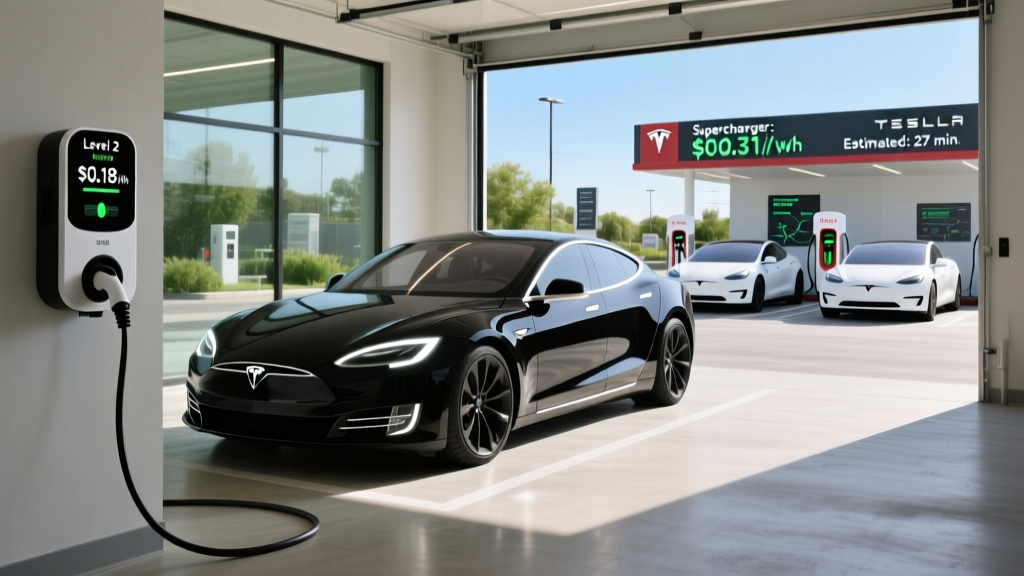
At home, the onboard charger supports up to 48 amps (11.5 kW) on a Level 2 circuit, which adds about 30 miles of range per hour. A full overnight charge is easily achievable with a Tesla Wall Connector or any J1772 station with a Tesla adapter.
Performance and Drivetrain
Even a decade on, the Model X delivers strong performance. The dual-motor AWD system provides instant torque to all four wheels, and the low center of gravity (battery pack under the floor) keeps body roll surprisingly controlled for a 5,000-lb SUV.
- 90D: 4.8-second 0-60 mph — quicker than most gas V6 SUVs of the era
- P90D with Ludicrous Mode: 3.2-second 0-60 mph — supercar territory in a three-row family hauler
- 60D/75D: 6.0-second 0-60 mph — adequate for daily driving and highway merging
All trims feature regenerative braking with one-pedal driving capability. The air suspension (standard on all 2016 Model X trims) provides adjustable ride height for comfort or clearance, though it's a known maintenance item — air strut failures are common past 80,000 miles and cost $800-$1,500 per corner to replace.
Interior, Cargo, and Technology
The 2016 Model X seats up to seven in a 2-3-2 configuration, though the optional six-seat layout (2-2-2) with second-row captain's chairs is more comfortable and practical. Cargo volume is generous:
- Behind third row: 26.6 cu ft
- Behind second row (third row folded): 56.8 cu ft
- Maximum (all rear seats folded): 88.1 cu ft
- Front trunk (frunk): 6.6 cu ft
The 17-inch touchscreen runs Tesla's software, which has received over-the-air updates through 2026, though older MCU1 (Media Control Unit) hardware in early 2016 builds is noticeably slow by modern standards. Tesla offered an MCU2 upgrade ($1,500-$2,000) that significantly improves responsiveness and enables newer features like Sentry Mode and Theater.
The 2016 Model X came with either first-generation Autopilot hardware (HW1, Mobileye-based) or the transitional HW2. Neither supports current Full Self-Driving (Supervised) features. Both are SAE Level 2 driver-assistance systems — you must keep your hands on the wheel and eyes on the road at all times. HW1 units cannot receive new Autopilot feature updates.
Used Pricing, Tax Credits, and Total Cost
| Trim | Used Price Range (2026) | Federal Used EV Credit (§25E) | Effective Price |
|---|---|---|---|
| 60D | $18,000 – $23,000 | Up to $4,000 (30% of sale price, max $4,000) | $14,000 – $19,000 |
| 75D | $22,000 – $28,000 | Up to $4,000 | $18,000 – $24,000 |
| 90D | $26,000 – $32,000 | Up to $4,000 | $22,000 – $28,000 |
| P90D/P90DL | $30,000 – $38,000 | Up to $4,000 | $26,000 – $34,000 |
Important: The 2016 Model X does not qualify for the new-vehicle §30D credit ($7,500) since it is no longer sold new. However, it may qualify for the §25E Used Clean Vehicle Credit — up to $4,000 or 30% of the sale price (whichever is less). Key eligibility requirements per IRS guidelines:
- Sale price must be $25,000 or less (this eliminates most P90D examples)
- Buyer income caps: $75,000 single / $112,500 head of household / $150,000 joint
- Must purchase from a licensed dealer (private-party sales do not qualify)
- Vehicle must be at least two model years old (2016 qualifies)
- Credit can be transferred to the dealer at point of sale for an immediate price reduction
Prices vary widely based on mileage, battery State of Health (SoH), and service history. Always request a battery health report from Tesla or a third-party diagnostic before purchasing.
Battery Health, Warranty, and Long-Term Costs
The 2016 Model X uses NMC (nickel-manganese-cobalt) battery chemistry, which offers high energy density but is more susceptible to calendar and cycle degradation than LFP (lithium iron phosphate). After 10 years, most 90D packs show 10-18% capacity loss, meaning a pack that originally held ~83.5 kWh usable may now hold 68-75 kWh.
Tesla's original battery and drive unit warranty was 8 years / unlimited miles (with a 70% minimum capacity retention threshold). This means most 2016 Model X vehicles are now out of battery warranty unless they were purchased late in 2016 or had a warranty-replacement pack installed. A full battery replacement from Tesla costs approximately $14,000-$20,000 as of 2026, though third-party options are emerging at lower prices.
Beyond the battery, budget for:
- Air suspension struts: $800-$1,500 per corner (common failure past 80K miles)
- Falcon-wing door mechanisms: $1,500-$3,000 per door for sensor or actuator issues
- Drive unit replacement: $5,000-$8,000 (front or rear; some 2016 units have had multiple replacements under warranty)
- MCU1 to MCU2 upgrade: ~$1,500-$2,000 (recommended for usability)
2016 Model X vs. the Alternatives
Pros
- Supercharger network access (NACS native — best public charging reliability)
- Strong performance even in base trims; P90D is genuinely fast
- Generous cargo space with usable third row
- Over-the-air updates keep software reasonably current
- Falcon-wing doors are practical in tight parking spaces (open upward, not outward)
- Low center of gravity; competent handling for a large SUV
Cons
- Out-of-warranty repair costs can be severe (battery, air suspension, falcon-wing doors)
- Slow DC charging by 2026 standards (120-150 kW peak vs. 250-350 kW on newer EVs)
- Real-world range of 155-220 miles is limiting for road trips
- Efficiency is poor (~36 kWh/100mi) — high electricity costs per mile
- MCU1 hardware is sluggish; upgrade costs extra
- Older Autopilot hardware cannot access current FSD features
- Build quality inconsistencies on 2016 examples (panel gaps, water leaks)
Who Should Buy a 2016 Tesla Model X?
Choose the 2016 Model X if: You need a three-row electric SUV on a tight budget, have reliable home Level 2 charging, drive under 200 miles daily, and can absorb potential out-of-warranty repair costs. The 90D offers the best balance of range and value.
Look elsewhere if: You road-trip frequently (the range and charge speed will frustrate), you can't tolerate repair-cost uncertainty, or you want modern driver-assistance features. Consider a used 2021+ Model Y Long Range, a Kia EV9 (new), or a Rivian R1S if budget allows.
Frequently Asked Questions
What is the real-world range of the 2016 Tesla Model X?
Expect 155-220 miles depending on trim, battery degradation, and driving conditions. The 90D delivers the most range (roughly 190-220 miles in mixed driving with moderate degradation), while the 60D may only achieve 155-185 miles. Cold weather and sustained highway speeds reduce range by 20-30%.
How fast does the 2016 Model X charge?
On a Tesla Supercharger (DC fast charge), it peaks at roughly 120-150 kW and takes 35-40 minutes for a 10-80% session. At home on a Level 2 charger (48A/11.5 kW), it adds about 30 miles per hour, achieving a full overnight charge in 8-9 hours.
Does the 2016 Model X qualify for any federal tax credit?
It does not qualify for the $7,500 new-vehicle §30D credit. It may qualify for the §25E Used Clean Vehicle Credit (up to $4,000) if purchased from a dealer for $25,000 or less and the buyer meets income requirements. Consult a tax professional and review IRS §25E guidelines.
Is the 2016 Model X worth buying vs. a newer used EV?
It depends on your priorities. The Model X offers more interior space and Supercharger access than most used EVs in the $20,000-$30,000 range. However, out-of-warranty repair risk is significant. A 2020-2021 Model Y Long Range offers similar utility with less risk and better efficiency, though typically at a higher used price.
What should I check before buying a used 2016 Model X?
Request a battery State of Health (SoH) report (Tesla service can provide this or use third-party tools like Tessie or TeslaFi). Verify air suspension function, test all falcon-wing door sensors, check for MCU1 vs. MCU2 hardware, and review service records for drive unit replacements. A pre-purchase inspection at a Tesla Service Center or EV-specialist shop is strongly recommended.