Quick Verdict: A Falcon-Winged Family Hauler Showing Its Age
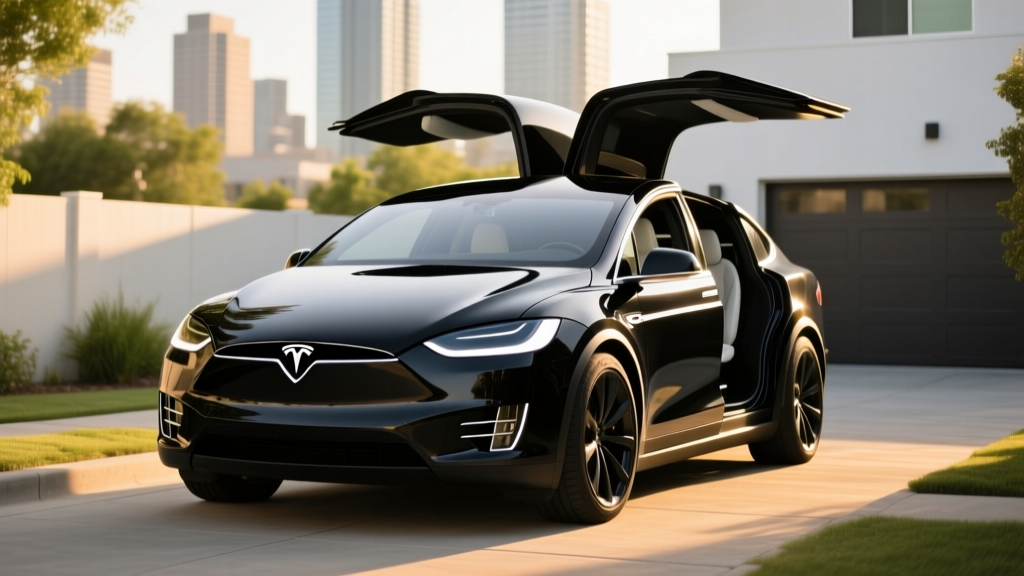
The 2016 Tesla Model X 90D was Tesla's second production vehicle and the first to prove an electric SUV could tow a family across the country. A decade later, it remains one of the most distinctive used EVs on the market — thanks to its falcon-wing rear doors, dual-motor all-wheel drive, and access to the Supercharger network. But buying a 10-year-old luxury EV requires clear eyes about battery degradation, aging hardware, and maintenance costs that don't disappear just because there's no engine.
This profile covers everything a used-EV shopper needs to evaluate a 2016 Model X 90D in 2026: real-world range expectations, charging speeds on modern networks, battery health indicators, and whether the math works against newer, cheaper competition.
Specs at a Glance: 2016 Tesla Model X 90D
| Specification | Value |
|---|---|
| EPA Range (original) | 257 miles |
| Battery Pack (usable) | ~83.5 kWh (NMC chemistry) |
| Drivetrain | Dual-motor AWD |
| Horsepower | 417 hp (combined) |
| 0–60 mph | 4.8 seconds |
| Top Speed | 155 mph |
| DC Fast Charge (peak) | ~120 kW (Supercharger V2) |
| Level 2 Charge Rate | 11.5 kW (48A) / ~30 mi/hr |
| MPGe (combined) | 92 MPGe |
| Efficiency | 36 kWh/100 mi |
| Cargo (behind 3rd row) | 26.6 cu ft |
| Cargo (max, seats folded) | 88.1 cu ft |
| Seating | 5, 6, or 7 passengers |
| Towing Capacity | 5,000 lbs |
| Original MSRP (base) | ~$88,200 (before options/incentives) |
| Battery Warranty (original) | 8 years / unlimited miles |
| Drive Unit Warranty | 8 years / 150,000 miles |
Sources: EPA Fueleconomy.gov, Tesla 2016 Model X owner's manual.
Real-World Range: What 257 EPA Miles Means in 2026
EPA (new): 257 miles
Expected in 2026 (10-yr-old pack): ~200–230 miles typical
Highway (70+ mph): ~190–210 miles
Cold weather (below 32°F): ~160–185 miles
Battery degradation of 10–15% is common at this age. Actual range depends heavily on State of Health (SoH).
The 2016 Model X 90D shipped with an EPA-estimated 257 miles of range — impressive for a 5,000-lb SUV a decade ago. The 90 kWh pack (roughly 83.5 kWh usable) uses NMC (nickel manganese cobalt) chemistry, which delivers strong energy density but is more susceptible to calendar degradation than the LFP packs Tesla later adopted in Standard Range models.
At 10 years old, expect 10–15% capacity loss depending on charging habits, climate exposure, and mileage. A well-maintained 90D with 80,000 miles might retain ~85–88% of its original capacity, translating to roughly 220 miles of usable range. High-mileage examples or those frequently charged to 100% and left sitting in hot climates may show 15–20% degradation.
The Model X's aerodynamics work against it at highway speeds. The SUV's tall stance and complex falcon-wing door seals create more drag than a Model S, so expect efficiency to drop from the EPA-rated 36 kWh/100 mi to 40–44 kWh/100 mi at sustained 75 mph. In cold weather, resistive cabin heating (this generation predates Tesla's heat pump introduction in 2021) can reduce range by 25–35%.
Buyer tip: Ask the seller to pull up the battery health screen or use a third-party OBD reader to check actual pack capacity. The in-car range estimate at 100% SoC is a quick proxy — if it reads below 220 miles, the pack has degraded significantly.
Charging Speed: DC Fast Charge and Home Level 2
The 2016 Model X 90D predates Tesla's V3 Supercharger architecture, so its DC fast-charging capability is limited by the vehicle's onboard charge controller, not just the station.
| Charging Level | Power | Speed | Notes |
|---|---|---|---|
| Level 1 (120V outlet) | ~1.4 kW | ~3–4 mi/hr | Emergency/trickle only |
| Level 2 (240V, 48A) | 11.5 kW | ~30 mi/hr | Full charge in ~9 hours |
| DC Fast (V2 Supercharger) | Peak ~120 kW | 10–80% in ~40 min | Tapers significantly above 60% |
| DC Fast (V3 Supercharger) | Limited to ~120 kW | Same as V2 | V3's 250 kW peak not utilized by this vehicle |
| CHAdeMO adapter (rare) | ~50 kW | 10–80% in ~90 min | Tesla CHAdeMO adapter discontinued |
The charging-curve reality: The 90D peaks near 120 kW only between roughly 10–30% State of Charge. By 50% SoC, the rate drops to ~80 kW, and above 70% it tapers to 40 kW or less. A 10–80% session at a V2 Supercharger takes approximately 40 minutes — adequate for road trips but noticeably slower than modern EVs like the Hyundai Ioniq 5 (10–80% in ~18 minutes at 240 kW).
For home charging, the 90D's dual onboard chargers (a $1,500 option when new, standard on some trims) accept up to 11.5 kW on a 48-amp Level 2 circuit. This adds roughly 30 miles of range per hour, meaning an overnight charge from 20% to 80% takes about 5 hours on a properly installed NEMA 14-50 or hardwired Wall Connector. Vehicles without the dual-charger option are limited to 40 amps (~9.6 kW / ~25 mi/hr).
Connector note: The 2016 Model X uses the Tesla proprietary connector (now officially NACS). With Tesla opening Superchargers to non-Tesla EVs, your 90D retains native access to the full Supercharger network — still the most reliable DC fast-charging ecosystem in the US. For CCS-equipped public chargers (Electrify America, EVgo), you'll need a Tesla-to-CCS adapter (~$100–150 aftermarket).
Performance and Driving Impressions
The 90D's dual-motor AWD powertrain produces 417 horsepower and delivers a 4.8-second 0–60 mph time — quick for a three-row SUV, even by 2026 standards. Instant electric torque makes highway merging effortless, and the low center of gravity (battery pack under the floor) keeps body roll surprisingly controlled for a vehicle this tall.
However, the 2016 Model X was Tesla's most complex vehicle at launch, and that complexity shows. The falcon-wing rear doors use ultrasonic sensors to detect overhead obstacles and articulate in tight spaces — impressive when they work, frustrating when a sensor fault triggers a warning and locks the doors in manual mode. Early-build 2016 models are more prone to door actuator failures, windshield trim separation, and half-shaft vibrations.
Ride quality is firm. Tesla prioritized handling over comfort in this generation, and the 20-inch wheels (common on 90D trims) transmit road imperfections noticeably. The air suspension can lower the vehicle at highway speeds for efficiency, but replacement air struts cost $1,500–2,500 per corner if they fail — a known expense on higher-mileage examples.
Autopilot hardware: The 2016 Model X straddles a critical hardware transition. Vehicles built before October 2016 have Hardware 1 (HW1) with a single camera and Mobileye processor — limited to basic Traffic-Aware Cruise Control and Autosteer, with no path to Full Self-Driving (Supervised). Vehicles built after October 2016 shipped with Hardware 2 (HW2) cameras, which Tesla later upgraded via software to support FSD (Supervised). Check the build date and confirm HW2 or later before expecting advanced driver-assist features.
Tesla Autopilot and FSD (Supervised) are SAE Level 2 driver-assistance systems. The driver must remain attentive, keep hands on the wheel, and supervise at all times. These are not self-driving systems. Only Level 4 robotaxi services (Waymo, Zoox) operate without a human driver.
Interior, Tech, and Cargo Space
The 2016 Model X interior is defined by its 17-inch portrait touchscreen — massive for its time, though the resolution and responsiveness feel dated against 2026 infotainment standards. The screen controls virtually every vehicle function (climate, media, navigation, vehicle settings), with minimal physical buttons. This creates a clean aesthetic but can be frustrating for simple adjustments while driving.
The panoramic windshield extends above the front seats, creating an airy, open cabin that remains one of the Model X's most praised features. However, the glass offers limited UV/IR protection — owners in sunny climates often install aftermarket tint or a sunshade.
Seating configurations:
- 5-seat: Bench second row; maximum cargo behind 2nd row (58 cu ft)
- 6-seat: Captain's chairs in 2nd row with a center console; most popular for families
- 7-seat: Small third-row jump seats; usable for children, tight for adults on long trips
Cargo volume with the 6-seat configuration: 26.6 cu ft behind the third row, 88.1 cu ft with all rear seats folded. The front trunk (frunk) adds roughly 5.3 cu ft — useful for charging cables or a small bag. The falcon-wing doors open dramatically upward, making loading child seats easier in tight parking spaces, but the door mechanism consumes interior headroom clearance and adds weight high in the vehicle.
Notable tech features:
- Over-the-air (OTA) software updates — Tesla continues to push updates to 2016 vehicles, though feature additions have slowed
- HEPA air filtration with "Bioweapon Defense Mode" — genuinely effective cabin air filtration
- Power-folding side mirrors, auto-presenting door handles
- Navigation with real-time Supercharger routing
- Sentry Mode (added via OTA) — uses cameras to record surroundings when parked
Pricing, Tax Credits, and Used-EV Value
| Item | Value |
|---|---|
| Original MSRP (2016, base 90D) | ~$88,200 |
| Typical as-tested (with options, 2016) | $95,000–$110,000 |
| Used market price (2026, avg. mileage) | $18,000–$28,000 |
| Federal Used EV Tax Credit (§25E) | Up to $4,000 (30% of sale price, max $4,000) |
| New EV Tax Credit (§30D) | Not eligible (used vehicle) |
| Price after max §25E credit | $14,000–$24,000 |
The federal tax credit picture for used EVs: The 2016 Model X 90D does not qualify for the new-vehicle §30D credit (which requires new vehicles meeting MSRP caps, buyer income limits, and battery-sourcing rules). Instead, buyers should look at the §25E Used Clean Vehicle Credit, which provides 30% of the sale price up to $4,000 for qualifying used EVs.
To qualify for §25E in 2026, the vehicle must:
- Be purchased from a licensed dealer (private-party sales don't qualify)
- Have a sale price of $25,000 or less
- Be at least two model years old (2016 easily qualifies)
- Buyer income must not exceed $75,000 (single) / $112,500 (head of household) / $150,000 (joint) — per IRS §25E guidelines
- Not have been claimed for the used credit by a previous owner after January 1, 2023 (check with dealer)
A 2016 Model X 90D priced at $22,000 from a dealer would yield a $4,000 credit (30% of $22,000 = $6,600, capped at $4,000). The credit is non-refundable, meaning you need sufficient tax liability to claim it. The point-of-sale transfer option (available for §30D) also applies to §25E, allowing dealers to apply the credit as an upfront discount.
Value context: At $18,000–$28,000 before credits, the 2016 Model X 90D competes against used 2020–2022 Tesla Model Y Long Range vehicles ($25,000–$35,000), which offer newer hardware, a heat pump, better efficiency, and lower maintenance risk. The Model X wins on cargo space, towing, and exclusivity; the Model Y wins on reliability and running costs.
Battery Warranty and Long-Term Ownership Costs
The 2016 Model X 90D's original battery warranty covers 8 years with unlimited miles against defects and capacity loss below 70% of original capacity. For a 2016 model, this warranty expires in 2024 — meaning most 90D vehicles on the used market in 2026 are out of battery warranty unless Tesla extended coverage for a specific repair.
The drive unit warranty was 8 years / 150,000 miles. Again, most 2016 examples will have exceeded this by now.
Battery replacement cost: A refurbished 90 kWh pack from Tesla costs approximately $14,000–$18,000 installed (as of 2025–2026 pricing). Third-party EV shops sometimes offer refurbished packs for $10,000–$13,000. This is a significant financial risk that buyers must factor in — a battery failure turns a $22,000 used SUV into a $36,000+ project.
Other ownership costs to budget for:
- Air suspension: $1,500–2,500 per corner if struts fail (common above 80,000 miles)
- Falcon-wing door actuators: $800–1,500 per door for sensor or motor repairs
- Half-shaft replacement: $600–1,000 (vibration issues were common on early builds)
- 12V battery: $300–500 replacement every 3–5 years (the 12V system runs electronics and must be maintained even though the traction battery is separate)
- Tires: $1,200–2,000 for a set of 20-inch EV-rated tires; the Model X's weight and torque wear tires faster than gas SUVs
- Insurance: Model X premiums run 20–40% above comparable gas SUVs; shop quotes before buying
Pros and Cons: The Honest Assessment
✓ Pros
- Supercharger network access — still the gold standard for road-trip charging
- Massive cargo space (88 cu ft) and 5,000-lb towing capacity
- Falcon-wing doors are genuinely useful for child-seat loading
- 417 hp and 4.8-sec 0–60 remain quick for a 3-row SUV
- OTA updates keep software current (Sentry Mode, UI improvements)
- HEPA cabin filtration is best-in-class
- Used EV tax credit (§25E) can knock $4,000 off the price
✗ Cons
- Most examples are out of battery and drive-unit warranty
- Battery replacement costs $14,000–18,000 if pack fails
- Falcon-wing door mechanisms are expensive to repair
- Charging speed (120 kW peak) is slow vs. modern EVs
- HW1 Autopilot vehicles cannot access FSD (Supervised)
- No heat pump — significant cold-weather range loss
- Air suspension and half-shaft failures are common and costly
- Insurance premiums are above average for the segment
Who Should Buy the 2016 Model X 90D?
Choose the 2016 Model X 90D if:
- You need 3-row seating and maximum cargo space on a budget under $25,000
- You tow a trailer (5,000-lb capacity) and want EV torque for hill climbs
- You take regular road trips and value Supercharger network reliability
- You can verify battery SoH above 85% and accept the warranty-expired risk
- You want falcon-wing doors for easy child-seat access in tight garages
Skip it and consider a used Model Y, Kia EV6, or Hyundai Ioniq 5 if:
- You want lower maintenance risk and newer hardware (heat pump, faster charging)
- You don't need 3 rows or 5,000-lb towing
- You want FSD (Supervised) capability — newer HW3/HW4 vehicles are better candidates
- You live in a cold climate and can't afford 30%+ range loss in winter
- You prefer predictable ownership costs over exotic door mechanisms
Frequently Asked Questions
What is the real-world range of a 2016 Tesla Model X 90D in 2026?
Expect 200–230 miles in mixed driving with a healthy battery (~85–90% SoH). Highway driving at 75 mph drops this to 190–210 miles. Cold weather (below freezing) can reduce range to 160–185 miles due to resistive cabin heating and battery impedance. Always check the vehicle's range display at 100% charge before purchasing.
How fast does the 2016 Model X 90D charge?
On DC fast chargers (Tesla V2 Superchargers), it peaks at ~120 kW and charges from 10–80% in approximately 40 minutes. The charge rate tapers significantly above 60% SoC. At home on a 48-amp Level 2 charger (240V), it adds about 30 miles of range per hour, fully recharging overnight. It cannot utilize V3 Supercharger 250 kW speeds due to its older onboard charge controller.
Does the 2016 Model X 90D qualify for any federal tax credit?
It does not qualify for the new-vehicle §30D credit. It may qualify for the §25E Used Clean Vehicle Credit (up to $4,000) if purchased from a licensed dealer for $25,000 or less, and if the buyer's income is within IRS limits ($75K single / $150K joint). Per IRS guidelines, the vehicle must also not have been previously claimed under §25E after January 1, 2023. Consult a tax professional for your specific situation.
Is the 2016 Model X 90D worth buying vs. a used Model Y?
It depends on your needs. The Model X 90D offers more cargo space (88 vs. 76 cu ft), 3-row seating, 5,000-lb towing, and falcon-wing doors. The used Model Y (2020+) offers newer hardware, a heat pump for better cold-weather range, faster charging, HW3 Autopilot, and lower maintenance risk. If you don't need 3 rows or heavy towing, the Model Y is the safer used-EV bet in 2026.
What are the biggest risks of buying a 10-year-old Model X?
The three biggest financial risks are: (1) battery pack failure ($14,000–18,000 replacement), (2) air suspension strut failure ($1,500–2,500 per corner), and (3) falcon-wing door actuator or sensor repairs ($800–1,500 per door). All original warranties have expired on most 2016 examples. A pre-purchase inspection by a Tesla-certified or EV-specialist shop is strongly recommended.
Can I use non-Tesla chargers with the 2016 Model X 90D?
Yes, with an adapter. The 2016 Model X uses Tesla's proprietary connector (now called NACS). For CCS-equipped public chargers (Electrify America, EVgo, some ChargePoint stations), you'll need a Tesla-to-CCS adapter. The 2016 Model X does not natively support CCS without an adapter. You retain full access to all Tesla Supercharger and Destination Charger locations without any adapter.
For current tax credit rules, consult IRS.gov §25E. For safety ratings, check NHTSA.gov. Vehicle specifications and market prices reflect data available as of early 2026 and may vary by region and condition.