Quick Verdict: A Used Luxury EV SUV With Caveats
The 2016 Tesla Model X 90D was Tesla's first SUV and one of the most ambitious electric vehicles of its era. With falcon-wing rear doors, a panoramic windshield, and dual-motor all-wheel drive, it pushed boundaries. But nearly a decade later, prospective used buyers need clear-eyed data — not nostalgia. The 90D trim pairs a 90 kWh battery pack with dual motors for 257 miles of EPA-estimated range and a 4.8-second 0-60 mph time. It remains a compelling family hauler on the used market, but battery degradation, aging charge hardware, and maintenance costs demand scrutiny before signing any paperwork.
This review covers everything a 2026 used-EV shopper needs: real-world range expectations, charging capabilities, ownership economics, and a direct comparison to alternatives at similar price points.
Range, Battery, and Efficiency
| Spec | Value |
|---|---|
| Battery Capacity (usable) | ~85.5 kWh (90 kWh gross, NMC chemistry) |
| EPA Estimated Range | 257 miles |
| EPA Efficiency | 89 MPGe combined (38 kWh/100 mi) |
| Drivetrain | Dual-motor AWD |
| Battery Chemistry | NMC (Nickel Manganese Cobalt) |
The EPA sticker says 257 miles, but real-world results vary significantly:
- Highway driving (70-75 mph): Expect 210-230 miles. The Model X's tall, heavy SUV body creates substantial aerodynamic drag at speed.
- City/suburban mixed: 240-260 miles is achievable thanks to regenerative braking recovery.
- Cold weather (below 32°F): Range drops 20-35%, yielding as little as 165-200 miles. The 2016 Model X lacks a heat pump — it uses resistive cabin heating, which draws heavily from the pack.
- With battery degradation: A 2016 90D pack in 2026 likely shows 8-18% degradation depending on charging history. That means actual full-charge range of roughly 210-235 miles under ideal conditions.
According to fueleconomy.gov, the 2016 Model X 90D rates at 89 MPGe combined. In practice, expect 2.6-3.0 miles per kWh in mixed driving.
The 90 kWh NMC pack was Tesla's larger offering for 2016, sitting above the 75D's 75 kWh pack. NMC chemistry provides strong energy density but is more sensitive to sustained high-state-of-charge storage and frequent DC fast charging. If the previous owner routinely charged to 100% and let the car sit, expect higher degradation. Request a battery health report (accessible through Tesla's service menu or third-party tools like Tessie) before purchase.
Charging Speeds: DC Fast, Level 2, and Level 1
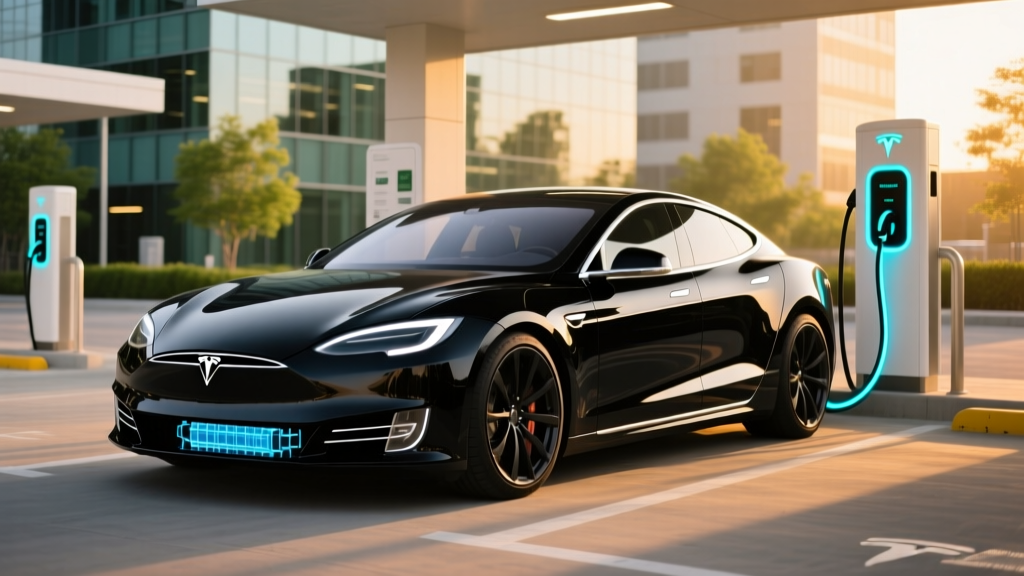
Charging is where the 2016 Model X 90D shows its age most clearly. Tesla's Supercharger network remains best-in-class, but the vehicle's onboard charge hardware limits how fast it can accept power.
| Charge Level | Power (kW) | Speed / Time | Notes |
|---|---|---|---|
| DC Fast Charge (Supercharger) | Peak ~120 kW | 10-80% in ~45-50 minutes | V2 Supercharger max; tapers significantly above 60% |
| Level 2 (240V, 48A onboard charger) | 11.5 kW | ~29 miles per hour of charging | Full charge in ~8-9 hours |
| Level 2 (240V, optional 72A dual charger) | 17.3 kW | ~43 miles per hour of charging | Rare; most 90Ds have 48A single charger |
| Level 1 (120V, 12A) | 1.4 kW | ~3-4 miles per hour | Emergency/trickle only |
Key charging insight: The 2016 Model X 90D peaked at roughly 120 kW on V2 Superchargers, and that peak is only sustained from roughly 10-40% state of charge. Above 60%, the charge curve tapers sharply — expect 50-60 kW from 60-80%, and below 20 kW for the final 80-100% stretch. This means a 10-80% session takes approximately 45-50 minutes at a V2 Supercharger. On newer V3/V4 Superchargers (250/350 kW), the car still caps at its ~120 kW hardware limit.
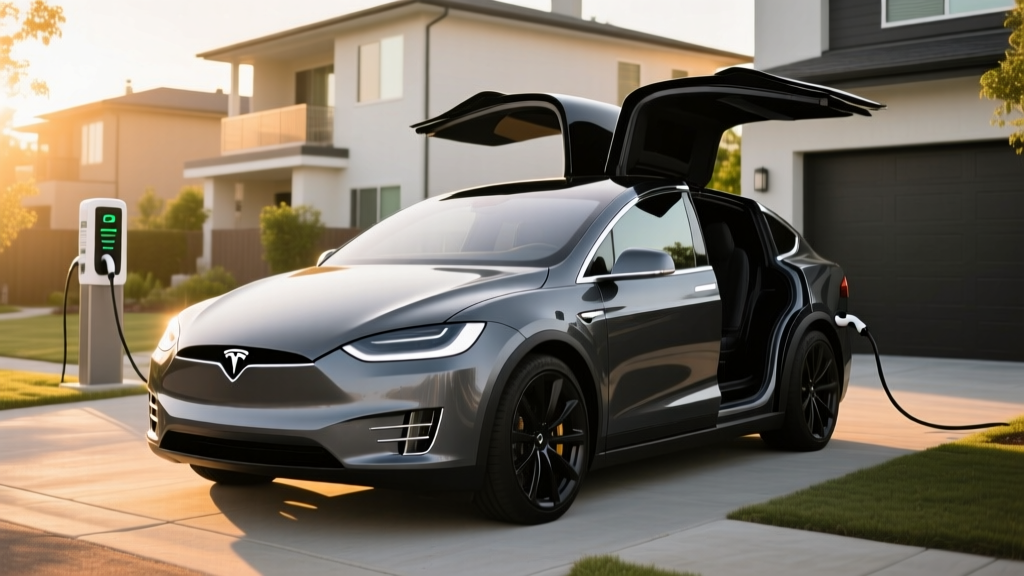
For home charging, a Level 2 wall connector on a 60A circuit (delivering 48A to the car) adds about 29 miles of range per hour — enough to fully replenish overnight. Installation of a 240V/60A circuit typically costs $800-$2,500 depending on panel capacity and run length. Factor this into your total purchase budget if you don't already have Level 2 infrastructure.
The Model X uses Tesla's proprietary connector (now standardized as NACS). In 2026, this is an advantage: the Supercharger network has over 30,000 stalls in North America, and non-Tesla EVs are now paying premium rates or using adapters to access it.
Performance and Driving Dynamics
| Spec | Value |
|---|---|
| 0-60 mph | 4.8 seconds |
| Horsepower | ~518 hp (combined dual motor) |
| Torque | ~487 lb-ft |
| Top Speed | 155 mph (electronically limited) |
| Drivetrain | Dual-motor AWD (one motor per axle) |
| Curb Weight | ~5,271 lbs |
The 90D's dual-motor setup provides confident all-weather traction and brisk acceleration. The 4.8-second 0-60 time is not the Ludicrous Mode variant (that's the P90D at 3.2 seconds), but it's genuinely quick for a 5,200-pound SUV. Instant electric torque makes highway merging and passing effortless.
Ride quality is firm — Tesla's air suspension (standard on the Model X) adjusts ride height for efficiency and ground clearance, but the overall tuning prioritizes handling over plushness. Road noise is noticeable at highway speeds, partly due to the large 20- or 22-inch wheel options common on these vehicles.
Towing: The 2016 Model X 90D is rated to tow up to 5,000 lbs when equipped with the optional tow package. However, towing cuts range dramatically — expect 40-50% range reduction when pulling a loaded trailer. If towing is a priority, consider the newer Model X Plaid or a Rivian R1S.
Interior, Cargo, and Technology
The Model X seats up to seven passengers in a three-row configuration (six- and five-seat layouts were also available). Cargo space is generous for the class:
- Behind third row: 26.6 cu ft
- Behind second row (third row folded): 57.3 cu ft
- Behind first row (all rear seats folded): 81.7 cu ft
- Front trunk (frunk): 6.6 cu ft
Second-row legroom measures 36.3 inches; third-row legroom is a tight 28.7 inches — best suited for children on short trips. The falcon-wing rear doors are a conversation piece and genuinely helpful for loading car seats in tight parking spots, but they add mechanical complexity and have been a source of reliability issues (sensor failures, hydraulic leaks, and seal problems).
Tech highlights for 2016:
- 17-inch center touchscreen running Tesla's proprietary OS
- Over-the-air software updates (still receiving updates in 2026, though hardware limits newer features)
- Autopilot hardware (HW1 or HW2 depending on build date — late-2016 cars may have HW2)
- HEPA air filtration with "Bioweapon Defense Mode"
- Panoramic windshield extending over front seats
- Navigation, streaming audio, and Tesla app connectivity
Important Autopilot note: The 2016 Model X's Autopilot is an SAE Level 2 driver-assistance system. It provides adaptive cruise control and lane-keeping, but the driver must remain fully engaged with hands on the wheel and eyes on the road. This is not self-driving. Cars with HW1 (early 2016 builds) cannot run Tesla's current FSD Supervised software; HW2 cars (late 2016) have limited FSD capability but lack the HW3/HW4 processing power of newer Teslas.
Pricing, Tax Credits, and Ownership Costs
The 2016 Model X 90D originally carried a base MSRP of approximately $93,200, with well-optioned examples reaching $120,000-$140,000. In the 2026 used market, expect to find examples in the $22,000-$38,000 range depending on mileage, condition, battery health, and Autopilot hardware version.
| Condition / Config | Typical Price Range |
|---|---|
| High mileage (90k+ mi), fair condition | $22,000 - $27,000 |
| Average mileage (50-80k mi), good condition | $27,000 - $33,000 |
| Low mileage (<50k mi), excellent, HW2 | $33,000 - $38,000 |
As a used vehicle, the 2016 Model X 90D does not qualify for the new-vehicle §30D credit. However, it may qualify for the §25E Used Clean Vehicle Credit, which provides up to $4,000 (or 30% of the sale price, whichever is less) when purchased from a licensed dealer. Requirements per IRS rules:
- Sale price must be $25,000 or less
- Buyer income caps: $75,000 single / $112,500 head of household / $150,000 joint
- Vehicle must be at least 2 model years old (2016 qualifies)
- Must purchase from a licensed dealer (private-party sales excluded)
- Credit is non-refundable and can only be claimed once per vehicle
At a $25,000 sale price, the maximum credit is $4,000 (30% × $25,000 = $7,500, capped at $4,000). This brings the effective price down to $21,000 for eligible buyers — strong value for a dual-motor AWD SUV. Consult a tax professional to confirm eligibility for your specific situation.
Ongoing ownership costs to budget for:
- Insurance: Model X premiums run 20-40% above comparable gas SUVs. Expect $2,200-$3,500/year depending on location and driving record.
- Maintenance: No oil changes, but budget for cabin air filters ($150-$250), brake fluid flushes, wiper blades, and tire rotations. Tires are expensive — 20- or 22-inch EV-rated tires run $300-$500 each and wear faster due to the vehicle's weight and torque.
- Potential big-ticket repairs: Air suspension struts ($1,500-$2,500 per corner), falcon-wing door mechanisms ($2,000-$5,000 per door), drive unit replacement ($5,000-$8,000), and touchscreen MCU failures ($1,500-$3,000). These are known failure points on 2016-era Model X vehicles.
- Battery replacement: If the pack fails outside warranty, a refurbished 90 kWh replacement costs $12,000-$20,000. Tesla's battery warranty for the 2016 Model X was 8 years/150,000 miles (whichever comes first) with a minimum 70% capacity retention guarantee. Most 2016 examples are now at or beyond the 8-year mark, meaning warranty coverage depends on mileage.
Pros and Cons
Pros
- Spacious three-row SUV with frunk storage
- Dual-motor AWD provides excellent all-weather traction
- Access to Tesla Supercharger network (30,000+ stalls in North America)
- Strong performance (4.8s 0-60) for a family SUV
- Over-the-air updates still supported
- HEPA air filtration system
- Potential $4,000 used EV tax credit at qualifying prices
- Falcon-wing doors ease car-seat loading in tight spaces
Cons
- DC fast charging peaks at ~120 kW — slow by 2026 standards
- No heat pump — significant cold-weather range loss (20-35%)
- Falcon-wing doors are a reliability and repair-cost liability
- Air suspension failures are common and expensive
- Autopilot hardware (HW1/HW2) is outdated vs. current HW4
- Battery warranty likely expired or near expiration (8-yr/150k-mi)
- High insurance premiums relative to purchase price
- Third-row seating is cramped for adults
- High tire wear due to vehicle weight
How It Compares: Model X 90D vs. Used Alternatives
| Spec | 2016 Tesla Model X 90D | 2018 Jaguar I-PACE EV320 | 2017 Tesla Model S 90D |
|---|---|---|---|
| EPA Range | 257 mi | 234 mi | 294 mi (sedan) |
| Battery | 90 kWh NMC | 90 kWh NMC | 90 kWh NMC |
| 0-60 mph | 4.8s | 4.5s | 4.2s |
| DC Fast Peak | ~120 kW | ~100 kW | ~120 kW |
| Seating | 5/6/7 | 5 | 5 |
| Cargo (rear seats down) | 81.7 cu ft | 51.0 cu ft | 26.3 cu ft (trunk) |
| Charging Network | Tesla Supercharger | CCS (Electrify America, etc.) | Tesla Supercharger |
| Typical 2026 Used Price | $22k-$38k | $20k-$30k | $22k-$35k |
Decision Framework
Choose the 2016 Model X 90D if: You need three-row seating, want Supercharger access for road trips, and can budget $3,000-$5,000/year for potential repairs. It's the only used EV SUV in this price range that seats seven.
Choose the Jaguar I-PACE if: You want a sportier, lower-slung EV crossover with better build quality and don't need more than five seats. CCS charging is improving but still less reliable than Superchargers.
Choose the Model S 90D if: You don't need SUV cargo space and prioritize range (294 mi EPA) and a lower center of gravity. The sedan is also lighter on tires and suspension components.
Consider a newer used EV if: You want faster charging (200+ kW), a heat pump, and current-generation driver assists. A 2021-2022 Model Y Long Range or Hyundai Ioniq 5 will charge roughly twice as fast and offer better real-world efficiency, though at a higher purchase price ($30k-$42k).
Pre-Purchase Inspection Checklist
Before buying any 2016 Model X 90D, verify the following:
- Battery health: Request the car's State of Health (SoH) reading. Navigate to Service Mode (if accessible) or use a third-party app. Look for less than 15% degradation. A car showing 20%+ degradation at 80,000 miles may need a pack replacement soon.
- Autopilot hardware version: Check whether the car has HW1 (pre-October 2016) or HW2 (October 2016+). HW1 cars cannot run modern FSD features and have inferior camera resolution. HW2 is preferable.
- Falcon-wing door operation: Test all ultrasonic sensors. Open and close both doors multiple times. Listen for hydraulic whining or sluggish operation. Check weather seals for tears.
- Air suspension: Cycle through all ride height settings. Listen for compressor strain. Check for uneven ride height when parked — a sagging corner indicates a failed strut.
- Drive unit noise: Listen for whining, grinding, or clunking from the front or rear drive units during acceleration and deceleration.
- MCU (touchscreen): Verify the screen is responsive, has no yellowing or bubbling (a known issue with MCU1 units), and that all apps load. MCU1 is slow by 2026 standards; an MCU2 upgrade (~$1,500-$2,000) significantly improves responsiveness.
- Service history: Request records through Tesla's service center. Check for open recalls (there have been several for the Model X, including seat belt tensioners, power steering bolts, and falcon-wing door struts).
- Title and warranty status: Confirm the battery/drive unit warranty status. At 8 years and 150,000 miles, the original battery warranty has likely expired by calendar date for most 2016 vehicles.
Who Should Buy the 2016 Model X 90D?
This vehicle suits a specific buyer profile:
- Families needing three rows: If you have three or more children or regularly haul passengers, the Model X is one of the few used EVs offering genuine seven-seat capacity with a frunk.
- Tesla ecosystem loyalists: If you already use Tesla Solar, Powerwall, or own another Tesla, the integrated app experience and Supercharger access are compelling.
- Budget-conscious luxury seekers: At $25,000-$35,000 with a potential $4,000 tax credit, you're getting a vehicle that cost $100,000+ new for a fraction of the price — if you can stomach potential repair bills.
This vehicle does not suit:
- Reliability-first buyers: If you want a trouble-free daily driver, a used Toyota RAV4 Hybrid or a newer Hyundai Ioniq 5 will cost less to maintain.
- Frequent road-trippers in cold climates: The lack of a heat pump and 120 kW charging cap make winter road trips slower and more stressful than in newer EVs.
- Buyers without home charging: Relying solely on public charging with a 120 kW peak vehicle means longer sessions and higher costs compared to newer EVs that charge at 200-350 kW.
Frequently Asked Questions
What is the real-world range of the 2016 Tesla Model X 90D?
The EPA rates it at 257 miles, but real-world range typically falls between 210-240 miles in mixed driving. Highway speeds above 70 mph reduce range to roughly 210-230 miles. Cold weather (below freezing) can drop range to 165-200 miles due to the resistive heating system and lack of a heat pump. Battery degradation in 2026 further reduces usable capacity — expect 5-18% loss depending on the car's charging history.
How fast does the 2016 Model X 90D charge?
On a Tesla V2 Supercharger, it peaks at approximately 120 kW and charges from 10-80% in about 45-50 minutes. The charge curve tapers significantly above 60% SoC. At home on a Level 2 (240V/48A) charger, it adds roughly 29 miles of range per hour, with a full charge taking 8-9 hours. It cannot take advantage of V3/V4 Supercharger speeds (250-350 kW) due to its older charge hardware.
Does the 2016 Model X 90D qualify for the federal EV tax credit?
Not the new-vehicle §30D credit. However, it may qualify for the §25E Used Clean Vehicle Credit of up to $4,000 if: the sale price is $25,000 or less, you buy from a licensed dealer, and your income is below $75,000 (single) / $150,000 (joint). The credit equals 30% of the sale price, capped at $4,000. Always consult a tax professional and verify current IRS rules before relying on credit eligibility.
Is the 2016 Model X 90D worth buying in 2026?
It depends on your priorities. If you need a seven-seat EV SUV on a tight budget and can set aside $3,000-$5,000 annually for repairs, it offers strong value — especially with a $4,000 used EV credit. If reliability and low maintenance costs are your priority, a newer used EV (2020+ Model Y, Ioniq 5, or Kia EV6) will cost more upfront but save money long-term. The Model X's falcon-wing doors, air suspension, and aging electronics make it one of the riskier used EV purchases.
What are the biggest problems with the 2016 Model X?
The most common and costly issues include: falcon-wing door mechanism failures (sensors, actuators, seals), air suspension strut leaks and compressor failures, MCU1 touchscreen yellowing/unresponsiveness, front drive unit whine and bearing wear, and windshield cracking (the panoramic windshield is expensive to replace at $1,500-$2,500). Battery degradation is moderate for the NMC chemistry but varies by owner habits.
What is the battery warranty on the 2016 Model X 90D?
Tesla provided an 8-year/150,000-mile battery and drive unit warranty (whichever comes first) with a minimum 70% capacity retention guarantee. As of 2026, most 2016 vehicles have exceeded the 8-year calendar limit, meaning the battery warranty has expired unless the car has fewer than 150,000 miles and was delivered late in 2016. Verify warranty status directly with Tesla using the VIN before purchasing.