Quick Verdict: The 2016 Model S at 10 Years Old
The 2016 Tesla Model S occupies a unique space in the used EV market. A decade after its launch year, it remains one of the most compelling luxury electric sedans available secondhand — offering Supercharger access, over-the-air updates, and a driving experience that still feels modern. But buying a 10-year-old EV demands hard questions about battery degradation, charging hardware limitations, and whether the savings over a newer model justify the trade-offs.
This review breaks down every spec that matters for a used 2016 Model S buyer in 2026: real-world range expectations across the 60, 75, and 90 kWh variants, DC fast-charging realities on older hardware, battery health indicators, and total ownership costs. If you're cross-shopping this against a newer Model 3, a used Chevy Bolt, or a Hyundai Ioniq 5, the data below will clarify where the 2016 Model S wins and where it shows its age.
2016 Tesla Model S Specifications at a Glance
| Specification | 60 / 60D | 75 / 75D | 90D | P90D |
|---|---|---|---|---|
| Battery Capacity (usable) | ~60 kWh (software-limited 75) | ~75 kWh (NMC) | ~90 kWh (NMC) | ~90 kWh (NMC) |
| EPA Range (original) | 210 mi (60 RWD) | 259 mi (75D) | 294 mi (90D) | 270 mi (P90D) |
| Drivetrain | RWD / AWD (Dual Motor) | RWD / AWD (Dual Motor) | AWD (Dual Motor) | AWD (Dual Motor) |
| Horsepower | 315 hp (60) / 328 hp (60D) | 315 hp (75) / 328 hp (75D) | 417 hp | 532 hp (762 hp Ludicrous) |
| 0–60 mph | 5.5s (60) / 5.2s (60D) | 5.5s (75) / 5.2s (75D) | 4.2s | 3.2s (2.8s Ludicrous) |
| MPGe (combined, EPA) | 101 MPGe | 101 MPGe | 101 MPGe | 89 MPGe |
| Efficiency | ~33 kWh/100 mi | ~33 kWh/100 mi | ~33 kWh/100 mi | ~38 kWh/100 mi |
| Max DC Fast Charge | ~120 kW (Supercharger V2) | ~120 kW (Supercharger V2) | ~120 kW (Supercharger V2) | ~120 kW (Supercharger V2) |
| 10–80% DC Charge Time | ~30 min | ~35 min | ~40 min | ~40 min |
| Level 2 Home Charge | ~10 kW (40A onboard) | ~10 kW (40A onboard) | ~10 kW (40A onboard) | ~10 kW (40A onboard) |
| Original MSRP (base) | $66,000 | $74,500 | $89,500 | $108,500 |
| 2026 Used Market Range | $14,000–$18,000 | $17,000–$24,000 | $22,000–$30,000 | $26,000–$35,000 |
Sources: fueleconomy.gov, Tesla historical spec sheets. Used pricing reflects private-party and dealer listings as of early 2026.
Real-World Range: What the EPA Sticker Doesn't Tell You
EPA Sticker (90D): 294 miles
Real-World Expectation in 2026: 220–260 miles (typical), depending on battery health and conditions
Highway (75 mph, moderate climate): ~230–250 miles (90D with healthy pack)
Cold Weather (below 32°F): ~180–210 miles — expect 20–30% reduction
City/Commuter (regen-heavy): ~250–275 miles
The 2016 Model S was rated under the EPA's 5-cycle testing, which tends to be optimistic for highway-heavy drivers. The car's large frontal area and ~4,600-lb curb weight work against efficiency at speed. In real-world 2026 driving, a well-maintained 90D with 85–90% State of Health (SoH) will deliver roughly 240 miles at 70–75 mph in mild weather. Push 80+ mph or drive into headwinds and that drops to 210–220 miles.
Cold weather is the bigger equalizer. The 2016 Model S has resistive cabin heating (no heat pump — Tesla didn't introduce heat pumps until the 2021 Model Y/refreshed Model S). In sub-freezing temperatures, battery preconditioning helps, but you should plan for a 20–30% range reduction. A 90D that shows 250 miles on a warm day may deliver only 180–195 miles on a 20°F morning commute.
Battery degradation reality: Most 2016 Model S packs have lost 8–15% of original capacity after 10 years and 80,000–130,000 miles. NMC chemistry degrades faster in the first 30,000 miles, then the curve flattens. A 90D that originally delivered 294 EPA miles may now show 245–265 miles at 100% charge. Before purchasing, request a battery health screenshot from the car's service menu or have a Tesla Service Center run a diagnostic.
Charging Speeds: Older Hardware, Real Limitations
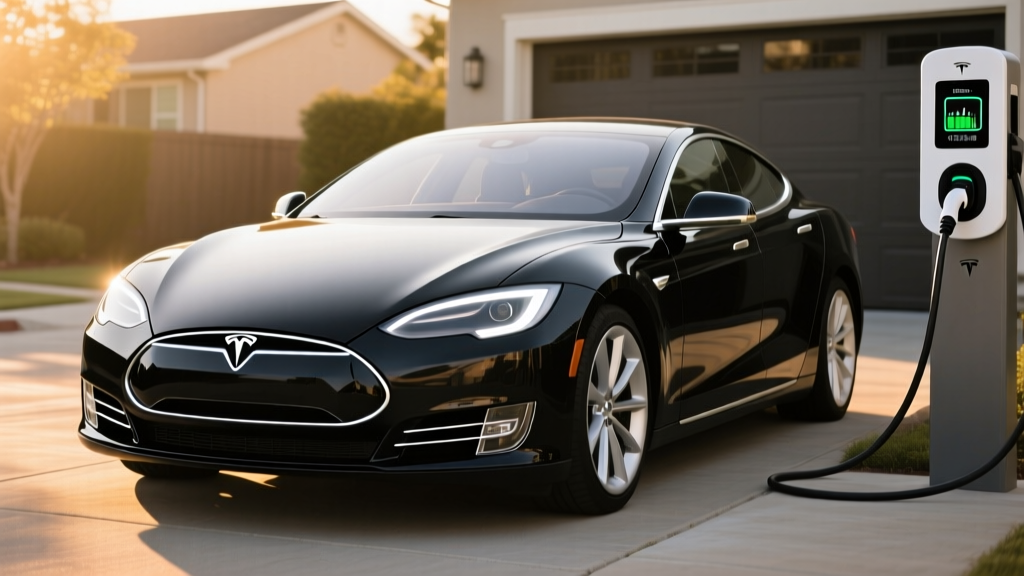
The 2016 Model S uses Tesla's proprietary connector (now being rebranded as NACS across the industry). It charges on the Tesla Supercharger network — which remains the most reliable DC fast-charging infrastructure in the U.S. — and via a J1772 adapter for non-Tesla Level 2 stations. However, its charging hardware reflects 2016 technology, and the gap versus modern EVs is significant.
| Charging Level | Power (kW) | Speed | Notes |
|---|---|---|---|
| Level 1 (120V household) | ~1.4 kW | ~3–4 mi/hr | Emergency/trickle only |
| Level 2 (240V, 40A onboard charger) | ~10 kW | ~29 mi/hr | Standard onboard charger; some cars have optional dual chargers (20 kW / ~58 mi/hr) |
| Level 2 (240V, 48A Wall Connector) | ~11.5 kW | ~33 mi/hr | Limited by car's 40A onboard charger unless dual-charger equipped |
| DC Fast Charge (Supercharger V2) | Peak ~120 kW | 10–80% in ~35–40 min (75D/90D) | Peak rate sustained only below ~50% SoC; tapers significantly above 80% |
| DC Fast Charge (Supercharger V3/V4) | Capped at ~120–140 kW | No benefit from 250 kW stalls | 2016 hardware cannot accept V3's 250 kW peak |
| CCS DC Fast Charge | Not natively supported | Requires Tesla CCS adapter + compatible Supercharger | Limited availability; not a practical primary option |
Charging curve reality: The 2016 Model S peaks at roughly 120 kW only when the battery is warm and below 40–50% State of Charge. Above 60% SoC, the rate drops to ~80 kW, and above 80% it falls to ~40 kW or lower. This means the advertised "170 miles in 30 minutes" applies only to the bottom half of the battery. A full 10–80% session on a V2 Supercharger takes 35–40 minutes for a 90D — slower than modern 800V platforms (Hyundai Ioniq 5, Kia EV6, Porsche Taycan) that accomplish 10–80% in 18 minutes.
Home charging setup: A Tesla Wall Connector on a 60A circuit delivers up to 48A, but the 2016 Model S's single onboard charger accepts only 40A (~10 kW). This yields approximately 29 miles of range per hour of charging — enough to replenish a full day's driving in 3–4 hours. If the car has the optional dual onboard charger (a $3,600 option when new), it can accept up to 80A / 20 kW, cutting that time in half. Always verify dual-charger status before purchase.
Performance and Driving Dynamics
Even a decade later, the 2016 Model S delivers performance that embarrasses most gas-powered luxury sedans. The instant torque from the electric motors, low center of gravity (battery pack mounted under the floor), and precise steering make it genuinely engaging to drive.
The base 60 (RWD) hits 0–60 mph in 5.5 seconds with 315 hp — brisk by any sedan standard. The 75D's dual-motor AWD system adds all-weather traction and a 5.2-second 0–60 time. But the headliner is the P90D with Ludicrous Mode: 2.8 seconds to 60 mph, making it one of the quickest production sedans ever built at its launch.
Ride quality: The 2016 Model S uses an adaptive air suspension (standard on most trims) that provides a comfortable highway ride and adjustable ground clearance. However, air suspension failures are a known issue on 2012–2017 Model S vehicles. Replacement struts cost $1,500–$2,500 per corner. Budget for this if the car hasn't had them replaced.
NVH (noise, vibration, harshness): The 2016 Model S is quiet at low speeds but exhibits noticeable wind and road noise above 70 mph compared to the refreshed 2021+ Model S or competitors like the Mercedes EQS. Frameless windows and thinner glass contribute to this.
Interior, Cargo, and Technology
The 2016 Model S interior was redesigned midway through the model year (April 2016 facelift), replacing the original 17-inch portrait screen with an updated version and swapping the previous instrument cluster for a cleaner digital display. The facelifted version is noticeably more refined and is the one to seek out.
Cargo space: The Model S offers a combined 26.3 cubic feet of cargo volume — 26.3 cu ft in the rear hatch area plus a small front trunk (frunk). The rear hatch opening is wide and practical, and the rear seats fold 60/40 for longer items. This significantly outpaces a BMW 5 Series sedan (14.8 cu ft trunk) but falls short of a Tesla Model Y (76 cu ft max).
Passenger space: Front legroom is generous at 42.7 inches; rear legroom is 35.4 inches — adequate for adults but tighter than a full-size luxury sedan. The optional rear-facing third-row jump seats (for small children) were available but are rare and not recommended for safety-conscious buyers in 2026.
Infotainment: The 17-inch touchscreen runs Tesla's software, which has received continuous over-the-air updates since 2016. As of 2026, the 2016 Model S still supports navigation, streaming media (Spotify, Apple Music), and basic Autopilot features. However, the hardware (MCU1 or early MCU2) is slower than modern Tesla infotainment, and some newer software features (theater mode, advanced gaming) are not supported. Cars with MCU1 (Media Control Unit 1) may be eligible for a paid MCU2 upgrade (~$1,500–$2,000 at Tesla Service) — verify this before purchase.
Driver assistance: The 2016 Model S may have Hardware 1 (HW1, Mobileye-based) or Hardware 2 (HW2, NVIDIA-based, introduced October 2016). HW1 cars support basic Autopilot (lane centering, adaptive cruise) but cannot run Tesla's FSD (Supervised) software. HW2 cars can theoretically support FSD, but performance on older hardware is limited. Critically, all Tesla Autopilot and FSD features are SAE Level 2 — the driver must remain fully engaged with hands on the wheel and eyes on the road. This is not autonomous driving.
Pricing, Tax Credits, and Ownership Costs
The 2016 Model S is no longer eligible for the federal §30D new EV tax credit (that applies only to new vehicle purchases). However, it may qualify for the federal used EV tax credit under IRS §25E, which provides up to $4,000 (30% of sale price, capped at $4,000) for qualifying used EVs.
§25E Used EV Tax Credit Requirements (2026):
- Sale price must be $25,000 or less
- Buyer income caps: $75,000 (single), $112,500 (head of household), $150,000 (joint)
- Vehicle must be at least 2 model years old (2016 qualifies)
- Must purchase from a licensed dealer (private-party sales do not qualify)
- Credit is non-refundable (cannot exceed your tax liability)
- Can only claim the credit once every 3 years per buyer
Source: IRS.gov §25E. Verify eligibility with a tax professional before purchase.
| Variant | Typical Used Price | After §25E Credit (max) | Effective Price |
|---|---|---|---|
| 60 / 60D | $14,000–$18,000 | -$4,000 | $10,000–$14,000 |
| 75 / 75D | $17,000–$24,000 | -$4,000 (if ≤$25,000 dealer sale) | $13,000–$20,000 |
| 90D | $22,000–$30,000 | -$4,000 (only if ≤$25,000 dealer sale) | $18,000–$26,000 |
| P90D | $26,000–$35,000 | Not eligible (exceeds $25,000 cap) | $26,000–$35,000 |
Insurance: The 2016 Model S carries higher insurance premiums than comparable gas sedans due to expensive body panels (aluminum), high repair costs, and Tesla's direct-repair network limitations. Expect $1,800–$2,800/year for a good driver, depending on state and coverage level. Get quotes before purchasing.
Maintenance: EVs eliminate oil changes, spark plugs, and transmission fluid, but the 2016 Model S has specific cost items:
- Tires: Heavy weight and instant torque wear tires faster. Expect $1,200–$1,800 for a set of premium tires every 25,000–35,000 miles.
- Cabin air filter: Replace every 2 years (~$50–$80 DIY, $150 at service).
- Brake fluid: Flush every 2 years (~$100–$150).
- Coolant: Battery/motor coolant check every 4 years.
- Air suspension: As noted, $1,500–$2,500 per corner if struts fail (common at 80,000+ miles).
- Drive unit: Some 2016 cars have experienced drive unit failures. Replacement is $3,000–$5,000 out of warranty.
Battery Warranty and Longevity
The 2016 Model S came with an 8-year/unlimited-mile battery and drive unit warranty for the 60/75/90 kWh packs. This warranty guaranteed that the battery would retain at least 70% of its original capacity. As of 2026, the original 8-year warranty has expired for all 2016 vehicles (the last ones rolled off the line in late 2016, meaning warranty expired in late 2024 at the latest).
This means you are purchasing the car without any remaining factory battery coverage. A replacement battery pack for a 2016 Model S costs approximately $12,000–$20,000 through Tesla Service, depending on the pack size and whether a remanufactured unit is available. Third-party EV repair shops may offer replacements for $8,000–$14,000.
Practical battery longevity: Tesla's NMC packs from this era have proven reasonably durable. Data from high-mileage Model S owners shows typical degradation of 10–15% at 100,000–150,000 miles. The degradation curve flattens significantly after the first 50,000 miles. Many 2016 Model S vehicles with 120,000+ miles still have packs delivering 80–85% of original capacity. However, individual pack health varies based on charging habits, climate exposure, and Supercharger frequency. Always verify SoH before purchase.
Pros and Cons
Pros
- Supercharger network access — still the gold standard for road-trip charging reliability
- Over-the-air updates keep software current even at 10 years old
- Excellent performance, especially P90D with Ludicrous
- Generous cargo space (26.3 cu ft) with hatchback practicality and frunk
- Premium luxury feel, air suspension, and quiet cabin at city speeds
- Used pricing has dropped significantly — strong value at $15,000–$25,000
- Eligible for up to $4,000 federal used EV credit (§25E) on qualifying purchases
Cons
- DC fast charging capped at ~120 kW — significantly slower than modern 250–350 kW EVs
- No heat pump — cold-weather range loss is substantial (20–30%)
- Battery warranty expired — replacement costs $12,000–$20,000 out of pocket
- Air suspension failures common and expensive ($6,000–$10,000 for all four corners)
- Older MCU1 infotainment hardware is slow and lacks modern features
- Insurance premiums higher than comparable gas sedans
- No CCS native support — dependent on Tesla's network or adapters
- Some HW1 Autopilot cars cannot receive FSD or newer driver-assist features
Who Should Buy a 2016 Model S?
The 2016 Model S is best suited for:
- Commuters with home charging who want a luxury sedan with low daily running costs and don't need cutting-edge charging speed.
- Budget-conscious luxury seekers who want a premium EV experience at a fraction of a new Model S price.
- Tesla ecosystem enthusiasts who value Supercharger access and OTA updates and are comfortable with older hardware.
- Performance sedan buyers — a P90D at $28,000 delivers supercar acceleration for economy car money.
The 2016 Model S is not ideal for:
- Frequent road trippers who need 20-minute charging stops — the 120 kW cap means 35–40 minute sessions.
- Cold-climate buyers without a garage — resistive heating and no heat pump mean painful winter range loss.
- Risk-averse buyers unwilling to absorb potential $10,000+ repair costs (battery, air suspension, drive unit).
- Buyers who want modern ADAS — HW1 cars are limited, and even HW2 FSD performance lags current Tesla hardware.
2016 Model S vs. Key Competitors
If you're cross-shopping the 2016 Model S, here's how it stacks up against common alternatives in the 2026 used market:
- 2018–2020 Tesla Model 3 Long Range: More efficient (~25 kWh/100 mi vs 33), faster charging (up to 170 kW on 2019+ models), newer hardware, and lower maintenance risk. But less cargo space, smaller interior, and no air suspension. The Model 3 is the more rational choice for most buyers.
- 2017–2019 Chevy Bolt EV: Far cheaper ($8,000–$14,000), but only 238 miles of range, no DC fast charging to speak of (50 kW CCS max), and a much smaller car. Great as a second car or commuter, not a luxury sedan replacement.
- 2019–2021 Hyundai Kona Electric: 258-mile EPA range, 64 kWh pack, affordable ($14,000–$20,000), but 50 kW DC charging and a compact crossover form factor. Good value, less prestige.
- 2017–2019 BMW i3 (94 Ah / 120 Ah): Unique, efficient, and fun, but only 114–153 miles of range and a polarizing design. A niche pick for urban drivers.
Choose the 2016 Model S if: You prioritize luxury, performance, and Supercharger access, and you're comfortable budgeting $2,000–$4,000/year for potential out-of-warranty repairs.
Choose a newer Model 3 or Ioniq 5 instead if: You want faster charging, a remaining battery warranty, modern ADAS hardware, and lower maintenance risk — even if it means a smaller car or higher purchase price.
Frequently Asked Questions
What is the real-world range of a 2016 Tesla Model S in 2026?
Expect 220–260 miles from a healthy 90D pack in mild weather, dropping to 180–210 miles in freezing temperatures. The 75D delivers roughly 200–230 miles real-world. Always verify battery State of Health before purchase — degradation of 10–15% is typical at 10 years old.
How fast does the 2016 Model S charge at home and on road trips?
At home on a Level 2 Tesla Wall Connector (40A), you'll add about 29 miles of range per hour, fully replenishing overnight. On Superchargers, peak rate is ~120 kW with a 10–80% session taking 35–40 minutes. This is noticeably slower than modern EVs that achieve 10–80% in 18–22 minutes.
Does the 2016 Model S qualify for any EV tax credit?
Not the new-vehicle §30D credit. However, it may qualify for the §25E used EV credit (up to $4,000) if purchased from a dealer for $25,000 or less, and the buyer meets income limits ($75K single / $150K joint). Confirm eligibility on IRS.gov and with a tax professional.
Is the 2016 Model S worth buying versus a newer, cheaper EV?
It depends on your priorities. If you want a full-size luxury sedan with Supercharger access and strong performance, the 2016 Model S at $15,000–$25,000 offers exceptional value. If you prioritize low maintenance risk, fast charging, and modern tech, a used 2019+ Model 3 or a new Hyundai Ioniq 5 may serve you better despite a higher sticker price.
What are the most expensive things that can go wrong?
The three big-ticket items are: battery replacement ($12,000–$20,000), air suspension strut replacement ($1,500–$2,500 per corner), and drive unit replacement ($3,000–$5,000). Setting aside a $3,000–$5,000 emergency repair fund is wise for any 10-year-old Model S purchase.
Can a 2016 Model S use Tesla's FSD (Full Self-Driving)?
Only if the car has Hardware 2 (introduced October 2016) or later, and the owner purchased the FSD package. HW1 cars (Mobileye-based, built before October 2016) cannot run FSD. Even with HW2, FSD performance is limited compared to HW3/HW4 vehicles. Remember: FSD (Supervised) is an SAE Level 2 system — the driver must remain fully engaged at all times.
Does the 2016 Model S support NACS or CCS charging?
The 2016 Model S uses Tesla's proprietary connector, which is the same physical connector now designated as NACS. It charges natively on Tesla Superchargers. For CCS charging, you would need Tesla's CCS adapter and a Supercharger stall that supports it — a limited scenario. The car cannot charge at non-Tesla CCS stations without significant adapter workarounds that are not officially supported for this model year.