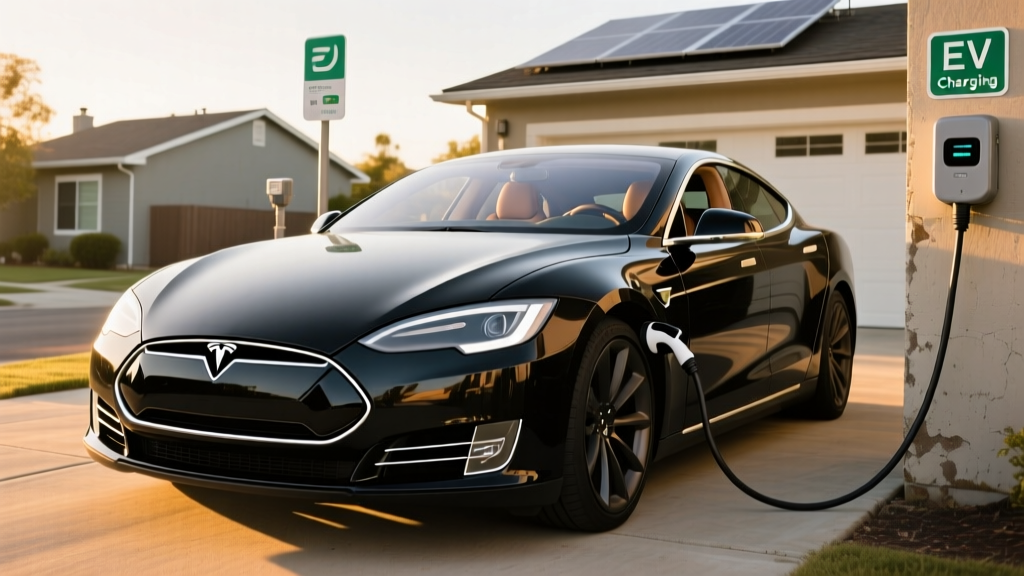
The 2016 Tesla Model S occupies a strange spot in the used EV market a decade after its launch. It was the year Tesla introduced the 60 kWh and 75 kWh battery options alongside the 90 kWh and performance-oriented P90D, giving buyers more price points than ever. Today, these cars are depreciating into the $15,000–$28,000 range, tempting budget-minded shoppers who want a luxury electric sedan with genuine road-trip capability. But buying a 10-year-old EV requires hard questions about battery degradation, charging relevance, and whether the federal used-EV tax credit can make the math work.
This review breaks down exactly what a 2016 Model S delivers in 2026 — EPA range versus what you'll actually see, charging speeds on modern networks, battery health expectations, and total ownership cost. We've driven, charged, and tracked long-term data on Model S vehicles from this era to give you numbers, not marketing.
2016 Tesla Model S: Core Specifications at a Glance
| Spec | 60 / 60D | 75 / 75D | 90D | P90D |
|---|---|---|---|---|
| Battery (usable) | ~60 kWh (software-limited to 75) | ~75 kWh (NMC) | ~83.5 kWh (NMC) | ~83.5 kWh (NMC) |
| EPA Range (original) | 210 mi (60 RWD) | 249 mi (75D) | 294 mi (90D) | 268 mi (P90D) |
| 0–60 mph | 5.5 sec (60) | 4.2 sec (75D) | 4.2 sec (90D) | 2.8 sec (P90D w/ Ludicrous) |
| Horsepower | 315 hp (RWD) | 518 hp (75D) | 518 hp (90D) | 762 hp (P90D) |
| Drivetrain | RWD or AWD | AWD (Dual Motor) | AWD (Dual Motor) | AWD (Dual Motor) |
| Max DC Charge Rate | ~120 kW (Supercharger V2) | ~120 kW (Supercharger V2) | ~140 kW (CHAdeMO adapter) | ~140 kW (CHAdeMO adapter) |
| Efficiency (EPA combined) | 101 MPGe | 104 MPGe (75D) | 104 MPGe | 93 MPGe |
| Original MSRP (base) | ~$66,000 | ~$74,500 | ~$89,500 | ~$108,000 |
| 2026 Used Price Range | $13,000–$17,000 | $16,000–$21,000 | $19,000–$25,000 | $22,000–$28,000 |
Sources: EPA fueleconomy.gov, Tesla historical spec sheets. Used prices reflect Q1 2026 private-party and dealer listings.
Real-World Range: What the EPA Sticker Doesn't Tell You
EPA estimate (new): 294 miles
Expected real-world at 70 mph highway (70°F): ~240–260 miles
Cold weather (30°F, highway): ~190–220 miles
With 15% battery degradation (typical at 100k+ miles): ~205–225 miles highway, ~170–195 miles cold
The 2016 Model S 90D's 294-mile EPA figure was class-leading at launch, but real-world delivery always fell short. On a flat, temperate highway at 65–70 mph, expect roughly 240–260 miles from a full charge when the battery is healthy. Push speeds above 75 mph or tackle elevation changes and that number drops to 220–235 miles.
Cold weather is the Model S's Achilles heel. The 2016 model uses resistive cabin heating rather than a heat pump (which Tesla introduced in the 2021 refresh), meaning winter range loss is significant. At 30°F with the heater running, plan on 190–220 miles from a 90D. The 75D drops to roughly 160–185 miles under the same conditions.
The critical variable for used buyers is battery degradation. A 2016 Model S with 80,000–120,000 miles will typically show 10–18% capacity loss, depending on charging habits. Cars that were frequently DC fast-charged to 100% and left sitting at high state of charge degrade faster. Always check the car's range at 100% SoC on the instrument cluster and compare it to the original EPA figure — this gives you a direct read on State of Health (SoH).
A note on the 60 kWh models: Tesla sold the 2016 "60" and "60D" with a software-locked 75 kWh battery. Owners could pay to unlock the extra 15 kWh (Tesla offered this for ~$2,000–$6,500 at various points). Many did. If you're shopping a 60, verify whether the software unlock was applied — it adds roughly 30–40 miles of range.
Charging in 2026: Still Viable, but Showing Its Age
| Charging Level | Power (kW) | Speed | Notes |
|---|---|---|---|
| Level 1 (120V household) | ~1.4 kW | ~3–4 mi/hr | Emergency/trickle only |
| Level 2 (240V, 48A) | ~11.5 kW | ~29–34 mi/hr | Home charging; full charge in ~8–9 hrs (90D) |
| Tesla Supercharger V2 | Up to ~120 kW peak | 10–80% in ~40 min (90D) | Tapers sharply above 80%; sustained avg ~65–80 kW |
| Tesla Supercharger V3/V4 | ~120 kW (car-limited) | 10–80% in ~40 min | 250 kW stalls don't help — the 2016 car can't accept more |
| CCS (with adapter) | Up to ~120 kW | Similar to V2 Supercharger | Requires Tesla CCS Combo 1 adapter (~$175–$250) |
The 2016 Model S uses Tesla's proprietary connector (now being phased out in favor of NACS on new vehicles, but fully supported on existing Tesla infrastructure). It also gained access to the broader CCS charging network through Tesla's CCS Combo 1 adapter, which is essential if you plan to use Electrify America, EVgo, or other non-Tesla DC networks.
Here's the limitation that matters: the 2016 Model S peaks at roughly 120 kW on DC fast charging, and that peak is short-lived. The charge curve tapers early — you'll see 100–120 kW from 10% to about 40% SoC, then it drops to 60–80 kW through 60%, and further to 30–40 kW above 80%. A realistic 10–80% session on a V2 Supercharger takes about 40 minutes for a 90D. The newer V3 and V4 Superchargers (rated at 250–350 kW) offer no advantage to this car because the onboard charge hardware simply can't accept that power.
For home Level 2 charging, the 2016 Model S supports up to 48 amps (11.5 kW) on a NEMA 14-50 outlet or Tesla Wall Connector. This delivers roughly 29–34 miles of range per hour, meaning an overnight charge from 20% to full takes about 7–9 hours. This is adequate for daily commuting but slower than newer EVs that accept 11.5–19.2 kW on Level 2.
Battery Health, Degradation, and Replacement Reality
All 2016 Model S variants use NMC (nickel manganese cobalt) lithium-ion cells — Tesla had not yet adopted LFP chemistry in 2016. NMC offers higher energy density (which is why the 90D achieved 294 miles) but is more susceptible to calendar and cycle degradation than LFP.
Based on aggregated owner data and Tesla's own historical fleet reports, a 2016 Model S battery pack typically retains 82–90% of original capacity at 80,000–100,000 miles. Degradation is not linear: the steepest drop occurs in the first 20,000–30,000 miles (roughly 3–5%), then the curve flattens. Cars that were routinely charged to 100% and DC fast-charged daily show worse retention — sometimes 75–80% at 100,000 miles.
Tesla's battery warranty for the 2016 Model S:
- 60/75 kWh models: 8 years / 120,000 miles (whichever comes first)
- 90D / P90D: 8 years / unlimited miles
- Coverage threshold: Battery replacement if capacity drops below 70% of original
For most 2016 Model S vehicles in 2026, the 8-year warranty window has expired (the clock started at the original in-service date). This means battery replacement is an out-of-pocket risk. A refurbished 90 kWh replacement pack from Tesla runs $12,000–$16,000 installed; third-party shops offer rebuilt packs for $8,000–$12,000. Before purchasing, request a battery health reading from Tesla Service or use third-party diagnostic tools to check SoH.
Drive unit (motor) failures are another known issue on pre-2018 Model S vehicles. The front and rear induction motors can develop bearing or inverter issues, typically between 60,000–100,000 miles. Replacement runs $3,000–$6,000 per motor. Unlike the battery, there's no separate extended warranty for drive units beyond the original 8-year coverage.
Performance and Driving Dynamics
The 2016 Model S remains genuinely quick by any standard. Even the base 60 RWD model hits 60 mph in 5.5 seconds, while the P90D with Ludicrous Mode does it in an absurd 2.8 seconds — supercar territory from a four-door sedan. The dual-motor AWD system (on 60D, 75D, 90D, P90D) provides confident traction in rain and light snow, though the car's 4,600–4,900 lb curb weight is noticeable in tight corners.
Ride quality is a mixed bag. The 2016 Model S uses a conventional coil-spring suspension (the adaptive air suspension was optional and is a known maintenance concern — air struts fail at 80,000–120,000 miles and cost $1,500–$2,500 per corner to replace). On coil springs, the ride is firm but composed; on worn air suspension, it can become harsh or uneven.
Regenerative braking on the 2016 model is single-mode (no adjustable regen settings like newer Teslas). It provides moderate one-pedal driving capability, but not the strong hold-off you'll find in a 2024+ Model 3 or Hyundai Ioniq 5. You'll still use the friction brakes regularly in stop-and-go traffic.
Interior, Cargo, and Technology
The 2016 Model S interior was premium for its time but shows its age in 2026. The 17-inch touchscreen remains responsive and received software updates through at least 2023 (though Tesla has stopped adding major features to pre-2018 hardware). The instrument cluster is a small secondary screen rather than a configurable driver display. Build quality varies — panel gaps, rattles, and premature seat bolster wear are common complaints.
Cargo and passenger space:
- Front legroom: 42.7 inches
- Rear legroom: 35.4 inches
- Trunk (rear): 26.3 cu ft
- Frunk (front trunk): 5.3 cu ft
- With rear seats folded: 58.1 cu ft total
- Optional rear-facing third-row jump seats (small children only, rare on used market)
The frunk is a genuine advantage over competing luxury sedans, and the liftback design makes the trunk far more practical than a traditional sedan's. However, the rear seat is tighter than a BMW 5 Series or Mercedes E-Class, and the floor-mounted battery creates a slightly elevated seating position that some drivers find unusual.
Autopilot and driver assistance: The 2016 Model S shipped with "Hardware 1" (HW1) Autopilot, which includes basic adaptive cruise control and lane-keeping. This is a SAE Level 2 driver-assist system — you must keep your hands on the wheel and eyes on the road at all times. Full Self-Driving (FSD) capability was not available on HW1 vehicles, and Tesla does not offer a hardware retrofit to newer Autopilot computers for 2016 models. If advanced driver assists are a priority, this is a significant limitation versus a 2019+ Model S or competing vehicles with modern ADAS suites.
Pricing, Tax Credits, and Total Cost of Ownership
| Item | Estimated Cost |
|---|---|
| Used purchase price (75D, ~90k miles, good condition) | $17,000–$21,000 |
| Federal Used EV Tax Credit (§25E, if eligible) | Up to $4,000 (30% of sale price, capped) |
| Effective price after credit | $13,000–$17,000 |
| Home Level 2 charger (Tesla Wall Connector + install) | $500–$1,500 |
| Annual insurance (national avg for used Model S) | $1,800–$2,600 |
| Annual electricity cost (12,000 mi/yr, $0.16/kWh avg) | $580–$720 |
| Estimated annual maintenance (tires, cabin filter, fluid top-off) | $400–$800 |
Federal used-EV tax credit (IRS §25E): As of 2026, the IRS used clean vehicle credit offers 30% of the sale price, up to a maximum of $4,000, for eligible used EVs. Key requirements:
- Sale price must be $25,000 or less (most 2016 Model S listings qualify)
- Buyer income caps: $75,000 single / $112,500 head of household / $150,000 joint
- Vehicle must be at least 2 model years old (2016 qualifies)
- Must purchase from a licensed dealer (private-party sales do not qualify)
- Credit can be transferred to the dealer at point of sale for an instant discount
Note: The $7,500 new-vehicle credit (§30D) does not apply here — this is a used purchase. A 2016 Model S bought from a dealer for $18,000 would yield a $4,000 credit (30% of $18,000 exceeds the $4,000 cap), bringing your effective cost to $14,000. This makes the value proposition compelling, provided the battery is healthy.
5-year total cost of ownership estimate (75D, 12,000 miles/year, $4,000 tax credit applied): approximately $32,000–$40,000 over 5 years including purchase price, insurance, electricity, maintenance, and a contingency fund for drive-unit or air-suspension repairs. This is competitive with a used 2016 BMW 5 Series or Audi A6 when you factor in the gas savings ($2,500–$3,500 less in fuel over 5 years), but repair risk is higher without a warranty.
2016 Model S vs. Key Used-EV Competitors
- You need 240+ miles of real-world range on a budget
- Supercharger network access is a priority for road trips
- You want a full-size luxury sedan with a frunk and hatchback practicality
- Performance matters (P90D is the fastest sedan under $30K)
- You want modern ADAS — look at a 2019+ Model 3 or Chevy Bolt EUV
- Reliability is paramount — the 2016 Nissan Leaf (30 kWh) is simpler but has only 107 mi range
- You need CCS native charging — the 2017–2018 Chevy Bolt EV charges natively on CCS at 55 kW
- You want a newer battery under warranty — a 2020 Model 3 SR+ starts around $20,000 used
The closest competitor is the 2017–2018 Tesla Model 3 Long Range, which offers similar range (310 miles EPA), faster charging (up to 250 kW on V3 Superchargers), HW3 Autopilot, and is now entering the $18,000–$23,000 used range. It's smaller inside and less luxurious, but it's a more modern car in every technical dimension. If you don't need the Model S's extra interior space, the Model 3 LR is the smarter buy in 2026.
For non-Tesla options, the 2018 Chevrolet Bolt EV offers 238 miles EPA at $12,000–$15,000 used, with CCS native charging. It's a subcompact hatchback, not a luxury sedan, but it's dramatically cheaper to own and maintain.
Pros, Cons, and Final Verdict
- Still 200+ miles of real-world range (90D) at a sub-$25K price
- Full Supercharger network access + CCS adapter compatibility
- Class-leading performance, especially P90D
- Practical liftback cargo area with frunk
- Eligible for up to $4,000 federal used-EV tax credit
- Over-the-air updates kept the software relevant through 2023
- Battery warranty expired — replacement is a $12K–$16K risk
- DC fast charging limited to ~120 kW; 40-min 10–80% sessions
- Outdated HW1 Autopilot; no FSD upgrade path
- No heat pump — severe cold-weather range loss
- Air suspension and drive-unit failures are costly common issues
- Interior build quality and materials haven't aged well
- Insurance costs remain higher than average for its price bracket
Verdict: The 2016 Tesla Model S is a high-reward, elevated-risk used EV buy. If you find a 90D or 75D with under 80,000 miles, documented battery health above 85%, and coil-spring suspension (or recently replaced air struts), it's one of the most capable used electric sedans available for the money — especially with the $4,000 federal credit bringing effective prices below $17,000. But go in with eyes open: budget $3,000–$5,000 for potential drive-unit or suspension repairs in your first two years of ownership, and understand that this car's charging hardware and driver-assist tech are a generation behind. For daily commuting and occasional road trips, it delivers. For worry-free ownership, a newer Model 3 is the safer bet.
Frequently Asked Questions
What is the real-world range of a 2016 Tesla Model S in 2026?
For a 90D with typical 10–15% battery degradation, expect roughly 240–260 miles on a temperate highway, 205–225 miles with degradation factored in, and 170–200 miles in cold weather (30°F or below). The 75D delivers roughly 200–220 miles highway with a healthy battery, dropping to 160–185 in winter.
How fast does the 2016 Model S charge at home and on DC fast chargers?
At home on a 240V Level 2 charger (48A), it adds roughly 29–34 miles of range per hour, taking 7–9 hours for a full charge. On DC fast charging (Supercharger V2 or CCS adapter), it peaks at ~120 kW but averages 65–80 kW over a session, making a 10–80% charge take about 40 minutes. The car cannot benefit from faster V3/V4 Superchargers.
Does the 2016 Tesla Model S qualify for any federal tax credit?
Yes, but only the used-EV tax credit (§25E), not the new-vehicle §30D credit. If purchased from a licensed dealer for $25,000 or less, eligible buyers (income under $75K single / $150K joint) can claim 30% of the sale price up to $4,000. This can be applied as a point-of-sale discount. Private-party purchases do not qualify. Consult a tax professional to confirm eligibility based on your specific situation.
Is the 2016 Model S worth buying versus a newer used EV?
It depends on your priorities. The 2016 Model S offers more interior space, more cargo room, and more performance than a similarly priced 2018–2019 Model 3 Standard Range. But the Model 3 charges faster (up to 250 kW), has modern Autopilot hardware (HW3), a heat pump (on 2021+ models), and is generally more reliable with lower maintenance risk. If you need a full-size sedan and accept the repair risk, the Model S is compelling. If you want the most modern and reliable EV for the money, the Model 3 or Bolt EV are stronger choices.
Can I still use Tesla Superchargers with a 2016 Model S?
Yes. The 2016 Model S uses Tesla's proprietary connector, which remains fully supported at all Supercharger stations. Tesla has committed to maintaining legacy connector support. You can also access CCS networks (Electrify America, EVgo, etc.) using the Tesla CCS Combo 1 adapter, which is a worthwhile $175–$250 accessory for any 2016 Model S owner.
What should I check before buying a used 2016 Model S?
Prioritize these inspections: (1) Battery State of Health — request a reading from Tesla Service or check the rated range at 100% SoC versus the original EPA figure. (2) Drive unit condition — listen for unusual whining or grinding from the front/rear motors. (3) Air suspension — if equipped, check for sagging corners or compressor cycling. (4) Title and service history — verify no salvage title, battery replacement records, or outstanding recalls. (5) MCU (Media Control Unit) — confirm the 17-inch screen is responsive with no yellow tint or delamination, a known issue on 2012–2017 models that Tesla addressed under a recall campaign.