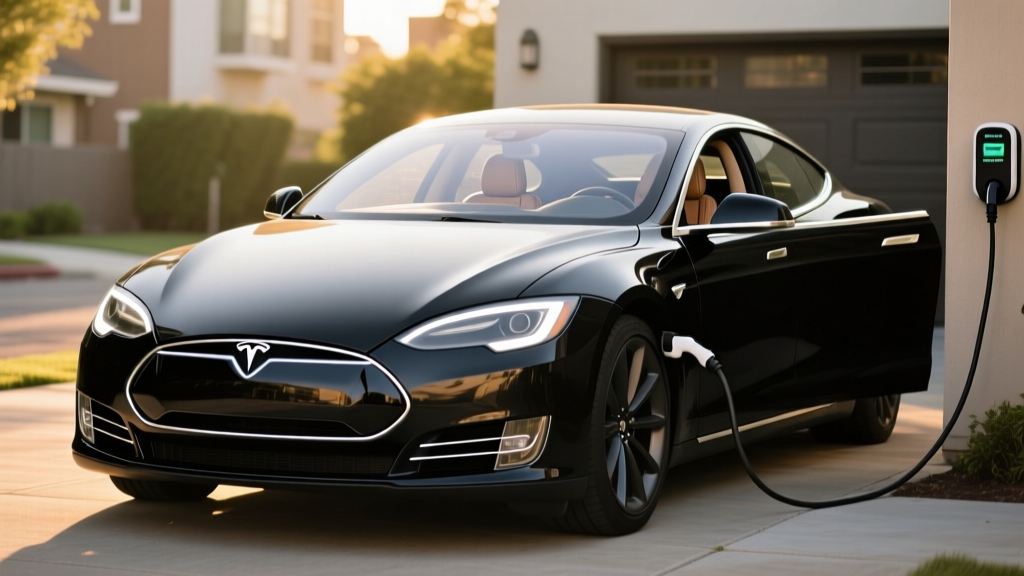
If you're searching for a 2016 Tesla in today's used-EV market, you're almost certainly looking at the Model S — the flagship sedan that defined Tesla's first mass-market decade. The 2016 model year is significant because it introduced the facelifted front fascia (no more black grille), Hardware 2.0 Autopilot computers, and a wider spread of battery options from 60 kWh to 100 kWh. In 2026, a well-maintained 2016 Model S can still deliver premium electric performance at a fraction of its original MSRP — but battery health, warranty expiration, and outdated tech make pre-purchase diligence essential.
This guide breaks down the exact specs, real-world range expectations, charging behavior, and ownership costs you need to evaluate before signing on a used 2016 Model S.
2016 Tesla Model S: Core Specifications at a Glance
| Spec | 60 / 60D | 75 / 75D | 90D | 100D | P100D |
|---|---|---|---|---|---|
| Battery (usable, kWh) | ~62 | ~75 | ~83.5 | ~98 | ~98 |
| EPA Range (miles) | 200–218 | 249 | 294 | 335 | 315 |
| Drivetrain | RWD / AWD | RWD / AWD | AWD | AWD | AWD |
| 0–60 mph (seconds) | 5.5 / 5.2 | 4.3 / 4.2 | 4.2 | 4.1 | 2.5 (Ludicrous) |
| Horsepower | 315 / 328 | 315 / 328 | 417 | 417 | 670 |
| MPGe (combined) | 92 | 97 | 101 | 102 | 98 |
| kWh/100 mi | 36 | 34 | 33 | 33 | 35 |
Source: fueleconomy.gov — EPA figures. The 60 kWh model was software-limited to 62 kWh usable; some owners purchased the software unlock to access 75 kWh.
Real-World Range: What the EPA Number Doesn't Tell You
EPA Sticker: 200–335 miles depending on trim
Real-World Expectation in 2026: Subtract 10–15% for highway driving at 70+ mph. Subtract an additional 20–30% in cold weather (below 32°F / 0°C). A 2016 90D that originally delivered 294 EPA miles may now show 220–260 miles at 100% charge depending on battery degradation and conditions.
The 2016 Model S predates Tesla's more efficient heat-pump thermal management (introduced with the Model Y and refreshed Model S). It relies on resistive cabin heating, which draws heavily from the traction battery in winter. Owners in northern climates consistently report 30–35% range loss on sub-freezing commutes compared to mild-weather EPA tests.
Battery degradation is the other variable. NMC (nickel-manganese-cobalt) cells in the 2016 Model S typically show 8–15% capacity loss after 8–10 years and 80,000–150,000 miles. Tesla's battery management system (BMS) includes a top and bottom buffer, so degradation isn't always linear — but you should check the car's displayed range at 100% State of Charge (SoC) against the original EPA figure to estimate State of Health (SoH).
How to Check Battery Health on a Used 2016 Model S
- Charge to 100% and note the rated range displayed — compare to the original EPA number.
- Use the car's energy graph (or third-party tools like TeslaFi or Tessie) to track kWh used vs. miles driven over several trips.
- Request a battery health report from a Tesla Service Center or use an OBD-II reader with Tesla-compatible software to read nominal full-pack kWh.
Charging Speed: Supercharger, Level 2, and the CCS Reality
The 2016 Model S uses Tesla's proprietary connector (later standardized as NACS). It charges natively at Tesla Superchargers and requires a CHAdeMO or CCS adapter (sold by Tesla and third parties) for non-Tesla DC fast-charging networks.
| Charging Method | Power (kW) | Speed / Notes |
|---|---|---|
| Tesla Supercharger V2 | Up to 150 kW (peak) | ~170–200 mi/hr peak; 10–80% in ~40–50 min |
| Tesla Supercharger V3/V4 | Capped ~150 kW (2016 architecture) | Older pack/BMS limits prevent V3's 250 kW peak |
| CHAdeMO (with adapter) | Up to 50 kW | ~100 mi/hr; 10–80% in ~90 min |
| CCS (with Tesla adapter) | Up to ~150 kW | Varies by station; protocol handshake can be inconsistent on pre-2020 cars |
| Level 2 (240V, 48A HPWC) | 11.5 kW | ~34 mi/hr; full charge in 8–10 hours |
| Level 1 (120V, 12A) | ~1.4 kW | ~3–4 mi/hr; emergency/trickle only |
Charge curve reality: The 2016 Model S peaks at ~120–150 kW only between roughly 10–40% SoC. Above 60%, the curve tapers significantly — from 10–80% takes 40–50 minutes at a V2 Supercharger, but 80–100% can take nearly as long. Plan road-trip stops around 10–80% windows for efficiency.
One important note for 2016 owners: Tesla removed free unlimited Supercharging for most vehicles sold after January 2017. However, many 2016 Model S units retain transferable free Supercharging if they were originally purchased with it — this is a significant value-add on the used market. Verify by checking the Tesla account associated with the VIN.
Autopilot, Tech, and Interior: What Has Aged Well (and What Hasn't)
SAE Automation Level: Level 2
The 2016 Model S with Autopilot (Hardware 2.0, introduced October 2016) is a Level 2 driver-assistance system. The driver must remain fully engaged — hands on the wheel, eyes on the road. This is not self-driving. Tesla's "Full Self-Driving (Supervised)" capability was not available on 2016 Hardware 2.0 vehicles and cannot be retrofitted to these cars.
The October 2016 switch from Mobileye-based Hardware 1.0 to Tesla's in-house Hardware 2.0 (HW2) is a critical dividing line. HW1 cars (built before ~October 2016) have a single forward-facing camera and Mobileye EyeQ3 chip, limited to basic lane-keeping and adaptive cruise. HW2 cars have 8 surround cameras, 12 ultrasonic sensors, and a more capable NVIDIA-based processor — but HW2 initially launched with reduced functionality and received features over subsequent OTA updates.
Infotainment: The 2016 Model S uses the older MCU1 (Media Control Unit) with an NVIDIA Tegra 3 processor. By 2026 standards, it's noticeably sluggish — slow map rendering, limited browser capability, and no support for newer Tesla features like the visualization upgrades, Sentry Mode viewer improvements, or Netflix/YouTube streaming while parked. Tesla offered an MCU2 upgrade ($1,500–$2,500 at service centers) that significantly improves responsiveness; check whether a used car has received this upgrade.
Interior Space and Cargo
| Dimension | Measurement |
|---|---|
| Front legroom | 42.7 in |
| Rear legroom | 35.4 in |
| Cargo (rear trunk) | 26.3 cu ft |
| Cargo (rear seats folded) | 58.1 cu ft |
| Front trunk (frunk) | 5.3 cu ft |
| Seating | 5 standard; optional rear-facing 3rd row (2 small children) |
The liftback design and available rear-facing jump seats made the 2016 Model S surprisingly practical for families, though that third row is best reserved for children under ~4'9" and short trips. Cargo capacity outclasses most sedans thanks to the hatchback-style trunk.
Pricing in 2026: Used Market Value and Tax Credit Reality
The 2016 Model S originally carried an MSRP of roughly $66,000 (base 60) to $140,000+ (P100D with options). In the 2026 used-EV market, expect to pay:
| Trim | Original MSRP | 2026 Used Price Range | Federal Tax Credit Eligible? |
|---|---|---|---|
| 60 / 60D | $66,000–$71,000 | $14,000–$19,000 | Yes — up to $4,000 (used-EV credit) |
| 75 / 75D | $74,500–$79,500 | $17,000–$23,000 | Yes — up to $4,000 |
| 90D | $89,500–$95,000 | $20,000–$27,000 | Yes — up to $4,000 |
| 100D | $96,000–$105,000 | $23,000–$30,000 | Yes — up to $4,000 |
| P100D | $135,000–$145,000 | $28,000–$38,000 | Yes — up to $4,000 |
Federal used-EV tax credit (§25E): Under current IRS rules, a used 2016 Model S purchased from a licensed dealer for $25,000 or less qualifies for a credit of 30% of the sale price, up to $4,000. Income caps apply: modified AGI must not exceed $75,000 (single), $112,500 (head of household), or $150,000 (joint). The vehicle must be at least two model years old, and you cannot have claimed another used-EV credit in the prior three years. Private-party sales do not qualify.
This means a 2016 Model S 75D purchased from a dealer for $20,000 could net a $4,000 credit, effectively reducing cost to $16,000 — a compelling value proposition if the battery checks out.
Battery Warranty Status: The Critical Ownership Question
Tesla's original battery and drive unit warranty for the 2016 Model S was:
- 60/75 kWh: 8 years / 120,000 miles (whichever comes first), minimum 70% capacity retention
- 90/100 kWh: 8 years / 150,000 miles (whichever comes first), minimum 70% capacity retention
As of 2026, nearly all 2016 Model S battery warranties have expired based on the 8-year time limit (expiring 2024 at the latest). This means battery replacement is an out-of-pocket risk. A Tesla Service Center replacement pack for a 2016 Model S typically costs $12,000–$20,000 depending on capacity and availability of refurbished units. Independent EV shops can sometimes source and install packs for less.
This warranty expiration is the single biggest financial risk of buying a 2016 Model S. Before purchasing:
- Confirm the odometer reading and battery SoH percentage.
- Budget $12,000–$15,000 as a potential battery-replacement reserve over your ownership period.
- Check if Tesla has performed any warranty battery replacement — a recently replaced pack under warranty resets your risk profile significantly.
2016 Model S vs. Key Used-EV Competitors
How does the 2016 Model S stack up against other used EVs in the $15,000–$35,000 range in 2026?
| Category | 2016 Tesla Model S 90D | 2017–2018 Chevy Bolt EV | 2018–2019 Nissan Leaf Plus |
|---|---|---|---|
| Used Price (2026) | $20,000–$27,000 | $11,000–$16,000 | $13,000–$18,000 |
| EPA Range | 294 mi | 238 mi | 226 mi |
| DC Fast Charge (peak kW) | ~150 kW | ~55 kW (CCS) | ~100 kW (CHAdeMO) |
| Performance (0–60) | 4.2 sec | 6.5 sec | 6.9 sec |
| Charging Network | Supercharger (NACS) | CCS (declining) | CHAdeMO (declining) |
| Battery Warranty (2026) | Expired | Expired or expiring | Expired or expiring |
| Cargo Space | 26.3 cu ft (liftback) | 16.9 cu ft (hatch) | 23.6 cu ft (hatch) |
Best for Road Trips: 2016 Model S — Supercharger network access and 294-mile range (new) still make it the most capable long-distance used EV in this price range.
Best Budget Pick: Chevy Bolt EV — significantly cheaper, adequate range for commuting, but slow DC charging and the discontinued CCS connector ecosystem are drawbacks.
Pros and Cons: The Honest 2026 Verdict
Pros
- Class-leading performance — even the base 60 hits 0–60 in 5.5 sec; the P100D remains one of the quickest production sedans ever made
- Supercharger network access (NACS) — the most reliable DC fast-charging ecosystem in North America
- Liftback cargo versatility with optional rear-facing 3rd row
- Over-the-air updates still deliver occasional improvements (though HW1/HW2 cars receive fewer)
- Premium build: aluminum construction, air suspension (optional), spacious cabin
- Potential free unlimited Supercharging (verify by VIN — adds $2,000–$4,000 in annual fuel savings)
- Used-EV tax credit up to $4,000 on dealer purchases ≤$25,000
Cons
- Battery warranty expired — $12,000–$20,000 replacement risk falls on the owner
- MCU1 infotainment is slow and lacks modern features; MCU2 upgrade costs $1,500–$2,500
- HW1 Autopilot (pre-Oct 2016) is severely limited; HW2 is still only basic Level 2
- No heat pump — significant cold-weather range loss (20–35%)
- Air suspension failures are common at 80,000+ miles ($1,500–$2,500 per corner)
- Door handles, window regulators, and 12V battery are known failure points
- Insurance premiums remain elevated vs. non-Tesla sedans of similar value
- Cannot receive FSD (Supervised) — hardware is too old
Who Should Buy a 2016 Tesla Model S in 2026?
Choose the 2016 Model S if:
- You want a premium, fast electric sedan with road-trip capability and Supercharger access at a used price.
- You can verify strong battery SoH (above 85%) or a recent warranty replacement.
- You value the liftback cargo design and optional 7-seat layout for occasional family use.
- You accept the risk of out-of-warranty repairs and budget accordingly.
Look elsewhere if:
- You need a warranty-backed battery — consider a 2020+ Model 3 or a certified pre-owned EV.
- You want modern Autopilot/FSD capabilities — you'll need at least Hardware 3.0 (2019+).
- Your budget can't absorb a potential $15,000 battery replacement within the next 3–5 years.
- You primarily drive in extreme cold — the lack of a heat pump makes the Model S less efficient than newer EVs in winter.
Pre-Purchase Inspection Checklist
- Battery SoH: Check rated range at 100% SoC; request a Tesla Service Center diagnostic or use Tessie/TeslaFi for nominal full-pack kWh.
- Autopilot hardware: Confirm HW1 vs. HW2 (check the Autopilot settings menu or the camera cluster above the rearview mirror — HW2 has a wider camera housing).
- MCU version: Check if MCU2 has been installed (Settings → Software will show the processor type; MCU2 is noticeably faster).
- Free Supercharging: Verify transferability by VIN through Tesla support before purchase.
- Air suspension: Test all ride-height settings; listen for compressor cycling; check for uneven ride height when parked.
- Drive unit whine: Listen for unusual grinding or whining from the front or rear motor under acceleration — early drive units were prone to bearing issues.
- 12V battery: The 2016 Model S uses a standard 12V lead-acid battery that typically needs replacement every 3–4 years; check age and voltage.
- Title and accident history: Tesla's aluminum body panels are expensive to repair; a salvaged title often means poorly executed collision work.
Frequently Asked Questions
What is the real-world range of a 2016 Tesla Model S today?
A 2016 Model S 90D with 10% degradation will deliver roughly 250–265 miles in mild weather on mixed driving. Highway-only driving at 75 mph drops that to ~220–235 miles. In sub-freezing temperatures, expect 175–200 miles from the same pack. The 75D typically delivers 190–220 miles real-world depending on conditions and SoH.
How fast does a 2016 Model S charge on road trips?
At a Tesla V2 Supercharger (150 kW), a 2016 Model S charges from 10–80% in approximately 40–50 minutes. Peak charge rate is ~120–150 kW but only sustained up to ~40% SoC. The 2016 architecture cannot take advantage of V3 Supercharger 250 kW speeds. For home Level 2 charging at 48 amps (11.5 kW), a full charge takes 8–10 hours depending on battery size.
Does a 2016 Tesla Model S qualify for any federal tax credit?
It is not eligible for the new-vehicle §30D credit (that applies only to new purchases). However, under the §25E used-EV credit, buying a 2016 Model S from a licensed dealer for $25,000 or less qualifies you for 30% of the sale price up to $4,000, subject to income caps ($75K single / $150K joint). Private-party purchases do not qualify.
Can a 2016 Model S use FSD (Full Self-Driving)?
No. FSD (Supervised) requires Hardware 3.0 or later, which was introduced in April 2019. The 2016 Model S has either Hardware 1.0 (Mobileye) or Hardware 2.0 — neither supports FSD. These cars are limited to basic Autopilot (lane centering + adaptive cruise), which is SAE Level 2 and requires full driver engagement.
Is it worth buying a 2016 Model S vs. a newer Model 3?
A used 2016 Model S ($20K–$30K) competes on price with a 2019–2020 Model 3 Standard Range Plus. The Model S wins on space, ride comfort, air suspension, and cargo versatility. The Model 3 wins on efficiency (heat pump on 2021+), modern Autopilot hardware (HW3), faster MCU, and a remaining or recently-expired battery warranty with fewer miles. If battery risk is your primary concern, the Model 3 is the safer used bet. If you need a large sedan with road-trip capability and accept the warranty risk, the Model S delivers more car for the money.
What are the most common repairs on a 2016 Model S?
Beyond the battery, the most common out-of-warranty issues are: air suspension strut failure ($1,500–$2,500 per corner), drive unit replacement ($3,000–$5,000 refurbished), MCU1 failure or sluggishness ($1,500–$2,500 for MCU2 upgrade), power door handle motors ($200–$400 each), and 12V battery replacement every 3–4 years ($200–$350). The traction battery remains the single largest financial exposure.
Sources: EPA / fueleconomy.gov, IRS §25E Used Clean Vehicle Credit, Tesla Battery Warranty.