Quick Verdict: A Used Luxury EV That Still Turns Heads
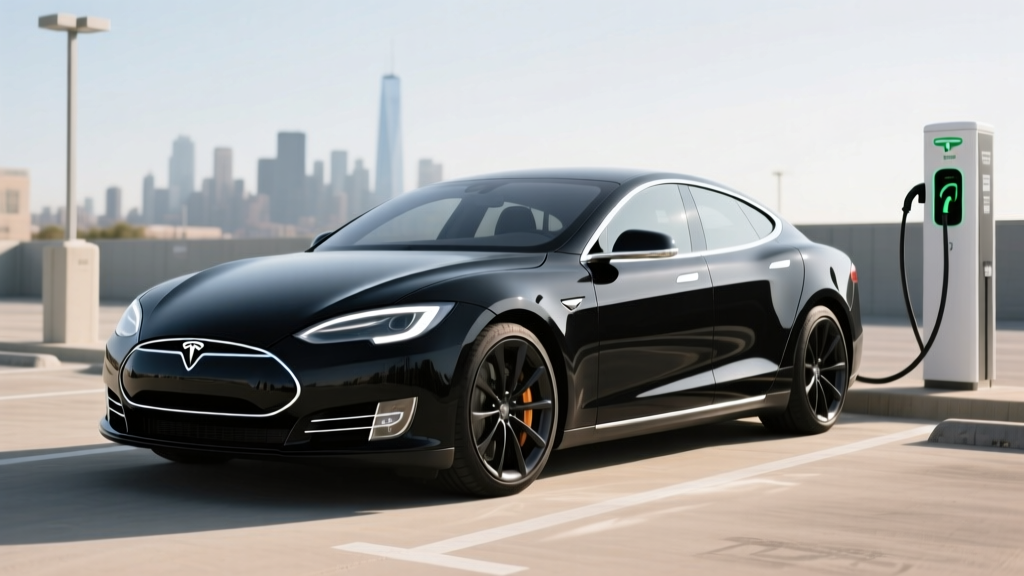
The 2016 Tesla Model S is a landmark vehicle — it proved a battery-electric sedan could rival a BMW 5 Series in refinement while out-accelerating an M5. In 2026, a decade after it rolled off the Fremont line, it remains one of the most compelling used EVs on the market. But buying a 10-year-old electric car requires careful scrutiny of battery health, charging hardware limitations, and real-world range that often falls well short of the original EPA sticker.
This review covers every variant Tesla sold for the 2016 model year — the 60, 75, 90D, and P90D (and later the 100D/P100D that carried into the 2017 model year but were available by late 2016). We'll give you the exact numbers on range degradation, Supercharger speeds, and what you should budget for ownership.
Range, Efficiency, and Real-World Expectations
The 2016 Model S was sold with three primary battery packs: a 60 kWh pack (software-limited to 75 kWh in later OTA updates for some owners), a 75 kWh pack, and a 90 kWh pack. By late 2016, Tesla introduced the 100 kWh pack in the 100D and P100D trims. All packs used NMC (nickel-manganese-cobalt) lithium-ion chemistry — Tesla did not switch to LFP until much later, and only in the Model 3/Y Standard Range.
| Trim | Battery (kWh, usable) | EPA Range (mi) | MPGe (combined) | kWh/100 mi | Drivetrain |
|---|---|---|---|---|---|
| 60 (RWD) | 60 (software-limited) | 208 | 95 | 35 | RWD |
| 75 (RWD) | 75 | 249 | 101 | 33 | RWD |
| 90D (AWD) | 90 | 294 | 104 | 32 | Dual-motor AWD |
| P90D (AWD) | 90 | 270 | 93 | 36 | Dual-motor AWD |
| 100D (AWD, late 2016) | 100 | 335 | 104 | 32 | Dual-motor AWD |
| P100D (AWD, late 2016) | 100 | 315 | 98 | 34 | Dual-motor AWD |
Expect 10–20% less than the EPA sticker in real-world mixed driving. The 90D's 294-mile EPA rating translates to roughly 240–265 miles in moderate temperatures on a mix of city and highway. At sustained 75+ mph highway speeds, plan for 220–240 miles. In cold weather (below 32°F), range can drop an additional 15–30% due to battery resistance and cabin heating demands — a 90D may deliver as little as 180–200 miles on a winter highway trip.
Critically, a 10-year-old NMC pack will have degraded. According to fueleconomy.gov, original 90D efficiency was 32 kWh/100 mi. Owners of 2016 Model S vehicles with 80,000–120,000 miles typically report 8–15% capacity loss, meaning a 90 kWh pack that originally held ~85 usable kWh may now hold 72–78 kWh. Factor this into your range expectations.
Charging: Supercharger Speeds and Home Level 2
The 2016 Model S uses Tesla's proprietary connector (which became the basis for the NACS standard). It does not natively support CCS1 — though aftermarket CCS adapters are available for ~$200–$400 from third-party suppliers, enabling access to Electrify America and other CCS networks.
| Charging Level | Power | Miles of Range Added | Notes |
|---|---|---|---|
| Level 1 (120V household) | ~1.2 kW | ~3 mi/hr | Emergency/trickle only |
| Level 2 (240V, single charger) | ~11.5 kW | ~29 mi/hr | Standard onboard charger |
| Level 2 (240V, dual charger option) | ~20 kW | ~52 mi/hr | Rare option; requires 100A circuit |
| DC Fast (Supercharger V2) | Peak ~120 kW | ~170 mi in 30 min | 10–80% in ~40–45 min |
| DC Fast (Supercharger V3) | Capped ~120 kW | Same as V2 for this model | V3 stalls won't deliver 250 kW to a 2016 Model S |
The 2016 Model S architecture maxes out at roughly 120 kW on DC fast charging. This is a hard limitation of the older battery management system and pack design. Even at a 250 kW V3 Supercharger, you will not see charge rates above ~120 kW. The charge curve is relatively flat between 20–60% SoC, then tapers significantly above 80% — charging from 80–100% can take as long as 20–60% did.
For home charging, the single onboard charger (11.5 kW / 48A) is adequate for overnight replenishment. A 90D driven 40 miles per day will fully recharge in roughly 3.5 hours on a Level 2 home station. A 240V/50A circuit with a Tesla Wall Connector or compatible J1772/NACS station is the practical standard. Expect $500–$1,500 for home Level 2 installation depending on panel capacity and run length — consult a licensed electrician for your specific setup.
Performance and Drivetrain
Even a decade later, the 2016 Model S delivers performance that embarrasses many new EVs. The dual-motor AWD system provides instant torque to all four wheels, and the P90D's Ludicrous mode remains one of the quickest production-car launches ever recorded.
| Trim | 0–60 mph | Horsepower | Drivetrain | Top Speed |
|---|---|---|---|---|
| 60 (RWD) | 5.5 sec | 315 hp | Rear-wheel drive | 130 mph |
| 75 (RWD) | 4.2 sec | 328 hp | Rear-wheel drive | 140 mph |
| 90D (AWD) | 4.0 sec | 417 hp (combined) | Dual-motor AWD | 155 mph |
| P90D (AWD, Ludicrous) | 2.8 sec | 532 hp (combined) | Dual-motor AWD | 155 mph |
| 100D (AWD) | 4.0 sec | 417 hp (combined) | Dual-motor AWD | 155 mph |
| P100D (AWD, Ludicrous) | 2.5 sec | 532 hp (combined) | Dual-motor AWD | 155 mph |
The P90D and P100D in Ludicrous mode deliver supercar-level acceleration from a four-door sedan. The 90D and 100D are the sweet spot for most used buyers — dual-motor AWD provides confident all-weather traction, and the power output is more than sufficient for highway merging and passing.
Pricing, Tax Credits, and Ownership Costs
Because the 2016 Model S is a used vehicle, it does not qualify for the new-vehicle §30D federal tax credit (which applies only to new EV purchases). However, it may qualify for the Used Clean Vehicle Credit (§25E), which provides up to $4,000 or 30% of the sale price (whichever is less) for qualifying used EVs.
| Trim / Battery | Typical Used Price (80K–120K mi) | §25E Used EV Credit (if eligible) | Net Cost After Credit |
|---|---|---|---|
| 60 / 75 kWh (RWD) | $18,000–$24,000 | Up to $4,000 | $14,000–$20,000 |
| 90D (AWD) | $22,000–$30,000 | Up to $4,000 | $18,000–$26,000 |
| P90D (AWD) | $24,000–$32,000 | Up to $4,000 | $20,000–$28,000 |
| 100D (AWD) | $28,000–$36,000 | Up to $4,000 | $24,000–$32,000 |
| P100D (AWD) | $32,000–$42,000 | Up to $4,000 | $28,000–$38,000 |
- §25E Used EV Credit requirements (per IRS.gov):
- Sale price must be $25,000 or less to qualify for the full $4,000 credit
- Buyer income caps: $75,000 (single), $112,500 (head of household), $150,000 (joint)
- Vehicle must be at least 2 model years old (2016 qualifies in 2026)
- Must purchase from a licensed dealer (private-party sales do not qualify)
- Vehicle must have a battery capacity of at least 7 kWh (all 2016 Model S trims qualify)
- Credit is non-refundable and can only be claimed once per buyer per 3-year period
Insurance for a 2016 Model S typically runs $1,800–$2,800/year depending on trim, driver profile, and state. The P90D/P100D command higher premiums due to performance classification. Maintenance costs are lower than a comparable BMW or Mercedes — no oil changes, fewer brake replacements thanks to regenerative braking — but suspension components (air springs, control arms) and the MCU (media control unit) are known wear items on 10-year-old examples.
Interior, Cargo, and Technology
The 2016 Model S interior is defined by its massive 17-inch touchscreen — still one of the largest in any production car. The infotainment system received incremental OTA updates through 2022, though the MCU1 hardware (Nvidia Tegra 3) in early 2016 cars is sluggish by modern standards. Tesla offered an MCU2 upgrade (Intel Atom) for ~$1,500–$2,000 that significantly improves responsiveness and enables newer software features including Sentry Mode and updated navigation.
| Dimension | Measurement |
|---|---|
| Front headroom | 38.8 in |
| Rear headroom | 35.3 in |
| Front legroom | 42.7 in |
| Rear legroom | 35.4 in |
| Cargo (rear trunk) | 26.3 cu ft |
| Cargo (front trunk / frunk) | 5.3 cu ft |
| Cargo (rear seats folded) | 58.1 cu ft |
| Seating capacity | 5 (optional rear-facing 3rd-row jump seats for 7) |
The Model S liftback design provides exceptional cargo versatility — 26.3 cubic feet behind the rear seats and 58.1 with them folded, rivaling many midsize SUVs. The optional rear-facing jump seats (for small children only) made the 2016 Model S one of the few sedans to offer 7-passenger seating, though this option is rare and the seats are cramped.
Driver Assistance: 2016 Model S vehicles built after October 2015 include Hardware 1 (HW1) Autopilot, which supports basic Autopilot (Traffic-Aware Cruise Control and Autosteer). Full Self-Driving (FSD) capability was available as a paid software add-on. Note: Autopilot and FSD are SAE Level 2 driver-assistance systems — the driver must remain fully engaged and supervise at all times. These are not self-driving systems. HW1 Autopilot is functional but lacks the capabilities of HW3/HW4 in newer Teslas (no Smart Summon, limited FSD features).
Battery Health, Warranty, and What to Watch For
The original 2016 Model S battery and drive unit warranty was 8 years with unlimited miles for the 60/75 kWh packs and 8 years/unlimited miles for the 90D and P90D. In 2026, virtually all factory warranties on 2016 examples have expired unless the vehicle received a replacement battery or drive unit under warranty (which resets the clock for that component).
| Component | Original Warranty | Status in 2026 |
|---|---|---|
| Basic vehicle | 4 yr / 50,000 mi | Expired |
| Battery (60/75 kWh) | 8 yr / unlimited mi (min 70% retention) | Expired for most; check replacement history |
| Battery (90/100 kWh) | 8 yr / unlimited mi (min 70% retention) | Expired for most; check replacement history |
| Drive unit | 8 yr / unlimited mi | Expired for most |
Key concerns for used buyers:
- Battery degradation: Request the current State of Health (SoH) percentage via the car's service menu or a pre-purchase inspection at a Tesla Service Center. Expect 85–92% SoH on a well-maintained 90D with ~100,000 miles. Below 80% is a red flag.
- Drive unit failures: The front drive unit on early dual-motor cars had higher failure rates. Listen for whining or clunking during test drives.
- MCU1 yellowing/delamination: The original Tegra 3 screen is prone to yellowing and "bubble" delamination. Budget $1,500–$2,500 for MCU2 replacement if not already done.
- Air suspension: Air struts typically last 60,000–100,000 miles. Replacement runs $1,200–$1,800 per corner at a Tesla Service Center, or ~$600–$900 per corner at an independent EV shop.
- Supercharger access: All 2016 Model S vehicles include free Supercharging — but this is tied to the original vehicle. Some cars had free unlimited Supercharging transferred to subsequent owners; others did not. Verify Supercharger status in the Tesla app before purchase.
A replacement 90 kWh battery pack from Tesla currently costs approximately $14,000–$18,000 including labor. Third-party refurbishers offer rebuilt packs for $8,000–$12,000. This is a critical cost to factor into your total ownership calculation.
Pros and Cons
Pros
- Class-leading range (100D: 335 mi EPA) even by 2026 standards
- Exceptional cargo space for a sedan (26.3 + 5.3 cu ft)
- Access to the Tesla Supercharger network — the most reliable DC fast-charging network in the US
- Over-the-air updates kept the car current for years after purchase
- P90D/P100D acceleration (2.5–2.8 sec 0–60) remains world-class
- Low running costs: electricity at ~$0.04–$0.15/mi vs. $0.12–$0.20/mi for gas equivalents
- Potential §25E used EV credit of up to $4,000
Cons
- DC fast charging capped at ~120 kW — significantly slower than modern 250+ kW EVs
- Expired battery warranty means a $10K–$18K replacement risk
- MCU1 hardware is slow and prone to screen delamination
- No native CCS charging — adapter required for non-Tesla networks
- Autopilot HW1 is outdated; lacks modern FSD capabilities
- Insurance premiums are elevated for a 10-year-old vehicle with high repair costs
- Interior materials (door handles, seat bolsters) show wear at high mileage
Who Should Buy a 2016 Tesla Model S?
Choose the 2016 Model S if:
- You want a spacious, fast luxury EV for under $30,000 (after credit)
- You have reliable home Level 2 charging and commute under 60 miles daily
- You value Supercharger network access for occasional road trips
- You can budget $2,000–$5,000 for potential battery/suspension/MCU repairs over 3 years
Look elsewhere if:
- You need fast DC charging for frequent long-distance travel (consider a 2022+ Hyundai Ioniq 5 or Tesla Model 3)
- You want modern Level 2 driver assists with HW3/HW4 capability
- You cannot absorb a potential $10K+ battery replacement cost
- You prioritize a fresh interior and latest infotainment over performance and space
The 90D is the best value pick for most used buyers: dual-motor AWD, ~240–265 real-world miles of range, and pricing in the $22,000–$30,000 range before the §25E credit. The 100D is the range king if you can find one within budget, but examples are rarer and command a premium.
Frequently Asked Questions
What is the real-world range of a 2016 Tesla Model S in 2026?
With typical battery degradation (8–15% over 10 years), a 90D will deliver approximately 240–265 miles in mixed driving, 220–240 miles on the highway, and 180–200 miles in cold weather. The 75 kWh RWD models will deliver 190–220 miles mixed. Always verify the specific car's State of Health before purchasing.
How fast does the 2016 Model S charge at home and on the road?
At home on a 240V Level 2 charger, expect ~29 miles of range per hour (11.5 kW) with the standard single onboard charger. On DC fast charging (Tesla Supercharger), the 2016 Model S peaks at ~120 kW, adding roughly 170 miles in 30 minutes. A 10–80% charge takes approximately 40–45 minutes. It will not charge faster at V3 Superchargers due to hardware limitations.
Does the 2016 Tesla Model S qualify for any federal tax credit?
Not the new-vehicle §30D credit. However, it may qualify for the §25E Used Clean Vehicle Credit of up to $4,000 if the sale price is $25,000 or less, you purchase from a licensed dealer, and your income falls below IRS caps ($75K single / $150K joint). Consult a tax professional to confirm eligibility.
Is the 2016 Model S worth buying vs. a newer used EV?
It depends on your priorities. The 2016 Model S offers more interior space, cargo room, and (in P90D/P100D trims) more performance than most 2022–2024 EVs at a similar price. However, a newer Model 3, Hyundai Ioniq 5, or Chevrolet Bolt EUV will charge faster, have a fresher battery under warranty, and feature more modern driver-assist hardware. If range-per-dollar and Supercharger access matter most, the 2016 Model S 90D or 100D is hard to beat. If reliability and low maintenance risk are your priority, consider a newer, lower-mileage alternative.
What are the biggest risks of buying a 10-year-old Tesla?
Battery replacement cost ($10,000–$18,000), air suspension failure ($1,200–$1,800 per corner), MCU1 screen delamination ($1,500–$2,500 to upgrade), and potential drive unit replacement. A pre-purchase inspection at a Tesla Service Center (~$200–$300) is strongly recommended. Check service records for prior battery or drive unit replacements — a car with a Tesla-installed replacement battery is actually a positive.
Does the 2016 Model S have free Supercharging?
Originally, yes — all 2016 Model S vehicles came with free unlimited Supercharging. However, Tesla changed its transfer policy multiple times. Some cars retained free Supercharging through ownership transfers; others lost it. Verify the specific vehicle's Supercharger status in the Tesla app or by contacting Tesla with the VIN before purchasing. Do not rely on a seller's verbal claim.