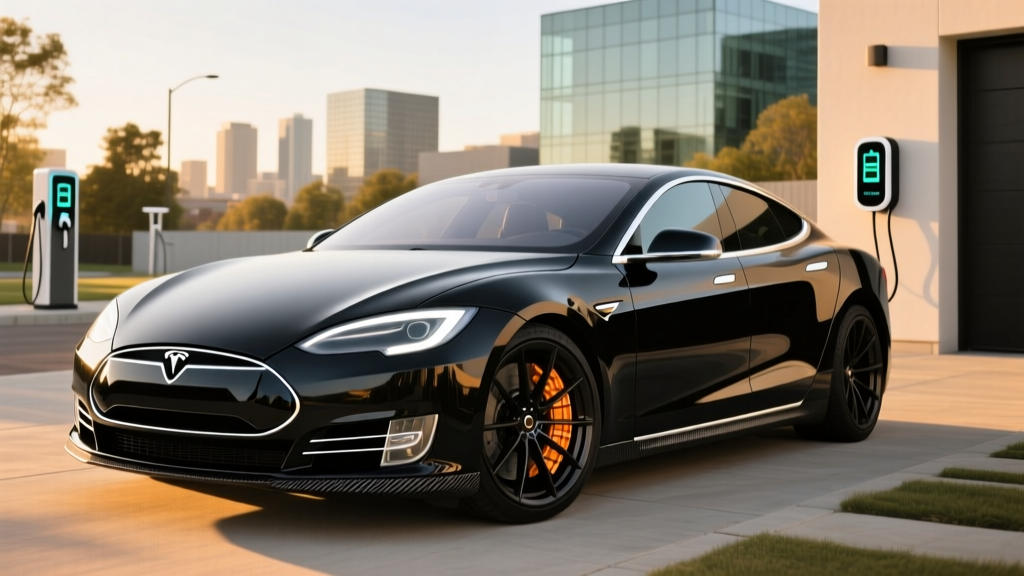
The 2016 Tesla Model S P90D: A Performance Bargain With Battery Caveats
Ten years after its debut, the 2016 Tesla Model S P90D remains one of the most compelling used EVs on the market — if you go in with eyes wide open. This dual-motor, all-wheel-drive sedan packed a 90 kWh NMC battery, Tesla's infamous Ludicrous mode, and a 2.8-second 0-60 mph time that embarrassed supercars costing three times as much. In 2026, used P90D examples trade between $18,000 and $32,000 depending on mileage, condition, and crucially, battery state of health (SoH).
But buying a decade-old luxury EV is not the same as buying a new one. Battery degradation, outdated Supercharger hardware, expired warranties, and the absence of any federal tax credit eligibility fundamentally change the value equation. This guide breaks down the exact numbers you need — EPA range versus real-world expectations, charging speeds on 2026 infrastructure, battery chemistry trade-offs, and total ownership cost — so you can decide whether a used P90D is a smart buy or a money pit.
Range, Battery, and Efficiency: What the Numbers Actually Mean
| Spec | Value |
|---|---|
| EPA Range (new) | 253 miles |
| Battery Usable Capacity | ~85 kWh (90 kWh pack, NMC) |
| Battery Chemistry | NMC (Nickel Manganese Cobalt) |
| Drivetrain | Dual-motor AWD |
| Horsepower | ~532 hp (combined, with Ludicrous) |
| 0–60 mph | 2.8 seconds (Ludicrous mode) |
| EPA Efficiency | 101 MPGe combined / 33 kWh/100mi |
| Cargo Volume | 26.3 cu ft (rear) + 5.3 cu ft (frunk) |
| Seating | 5 passengers (standard); 7 with rear-facing jump seats |
| Original MSRP | ~$112,000 (base P90D, before options) |
| 2026 Used Price Range | $18,000 – $32,000 |
Real-World Range vs. EPA Sticker
EPA (new): 253 miles
Expected real-world (2026, moderate SoH): 190–220 miles in mixed driving
Highway at 75 mph: ~170–195 miles
Cold weather (below 32°F): ~145–175 miles
The P90D's original 253-mile EPA rating was achieved with a brand-new battery. A decade-old NMC pack with 80,000–120,000 miles typically retains 78–88% of its original capacity, based on aggregated fleet data from sources like fueleconomy.gov and Tesla owner community tracking. That means your usable energy drops from roughly 85 kWh to somewhere between 66 and 75 kWh. Combine that with the Model S's heavy curb weight (~4,900 lbs) and its less aerodynamic profile compared to newer EVs, and 200 real-world miles is an honest expectation for a well-maintained example.
The 90 kWh pack uses NMC (Nickel Manganese Cobalt) chemistry, which offers higher energy density than LFP but is more susceptible to calendar degradation — especially if the previous owner habitually charged to 100% or let the car sit at low SoC for extended periods. Unlike Tesla's newer LFP packs (found in the 2022+ Model 3 RWD), NMC packs prefer daily charging to 80–90% and should not be stored fully charged or fully depleted.
Efficiency measured at 101 MPGe combined when new, which translates to roughly 33 kWh per 100 miles. In 2026 driving with a degraded battery, expect real-world efficiency closer to 35–38 kWh/100mi depending on tire condition, alignment, and climate-control usage. The Model S P90D was never an efficiency leader — its performance-oriented powertrain and heavy build prioritized acceleration over frugality.
Charging Speeds: Supercharger V1/V2, Home Level 2, and 2026 Compatibility
| Charging Level | Max Power | Speed / Time | Notes |
|---|---|---|---|
| Level 1 (120V, 12A) | ~1.4 kW | ~3–4 mi/hr | Emergency/trickle only |
| Level 2 (240V, 48A) | ~11.5 kW | ~29–34 mi/hr; full charge in ~8 hr | Requires HPWC or J1772 adapter |
| Level 2 (240V, 72A — dual charger option) | ~17.3 kW | ~44–50 mi/hr; full charge in ~5.5 hr | Rare dual-charger option; requires 100A circuit |
| DC Fast Charge (Supercharger V2) | ~120 kW peak | 10–80% in ~40 min | Tapers hard above 60%; CCS adapter may be needed at non-Tesla stations |
The 2016 Model S P90D uses Tesla's proprietary connector (now called NACS) for both AC and DC charging. At Tesla Superchargers, it can peak at roughly 120 kW on V2 cabinets, but — and this is critical for used buyers — the charge curve tapers significantly above 60% SoC. You will see strong pull from 10% to about 50%, then a steep decline. The 10–80% charge takes approximately 40 minutes, which was respectable in 2016 but feels slow against modern EVs that hit 10–80% in 18–25 minutes on 350 kW chargers.
For home Level 2 charging, the P90D supports up to 48 amps on a single onboard charger, yielding about 11.5 kW. Some examples were optioned with Tesla's now-discontinued dual-charger setup (72 amps / 17.3 kW), which requires a 100-amp dedicated circuit — a significant electrical upgrade that can cost $1,500–$3,500 to install, according to typical electrician estimates. A standard 48-amp Level 2 installation on a 60-amp circuit runs $800–$2,000 including the Tesla Wall Connector and labor.
CCS compatibility note: The 2016 Model S has a NACS port. In 2026, many public fast-charging networks (Electrify America, EVgo) use CCS1 connectors. Tesla sells a CCS adapter (~$250), and the P90D's firmware supports CCS charging via this adapter, though at reduced speeds compared to native CCS vehicles. Plan your road trips around Tesla Supercharger coverage for the best experience.
Performance and Driving Dynamics
The P90D's headline number is its 2.8-second 0–60 mph time in Ludicrous mode — a figure that still commands respect in 2026. The dual-motor setup sends roughly 259 hp to the front axle and 503 hp to the rear (with Ludicrous unlocked), for a combined system output around 532 hp. The instant torque delivery and all-wheel-drive traction make it brutally quick from any stoplight.
Beyond straight-line speed, the P90D is a competent grand tourer. The air suspension (standard on P90D) provides adjustable ride height and a comfortable highway cruise, though used examples often need air-strut replacements at $1,200–$2,000 per corner. Steering is precise but numb compared to a Porsche Taycan, and the regenerative braking offers strong one-pedal driving capability — though it lacks the adjustable regen levels found in newer EVs.
The P90D does not support Tesla's latest FSD (Supervised) hardware. Vehicles built before October 2016 have Hardware 1 (HW1) or early Hardware 2 (HW2), which limits them to basic Autopilot (lane centering, adaptive cruise). Full self-driving capability as offered in 2026 requires HW3 or HW4, meaning this car is stuck with Level 2 driver-assist features that are noticeably less capable than what Tesla offers on current models.
Interior, Cargo, and Technology
The Model S interior was a benchmark in 2016, and the P90D's cabin still offers generous space. Rear legroom measures 35.4 inches, and the massive 17-inch touchscreen dominated the dashboard years before competitors adopted similar layouts. However, the screen on 2016 models uses an older, slower processor (NVIDIA Tegra 3) that feels sluggish by 2026 standards — expect noticeable lag when loading maps or switching apps.
Cargo capacity is a genuine strength: 26.3 cubic feet behind the rear seats, plus a 5.3-cubic-foot front trunk (frunk). The rear seats fold 60/40, opening up enough space for long cargo. Tesla offered an optional rear-facing third-row jump seat (for children only), bringing seating to seven, though these are rare and not recommended for regular use.
Notable tech drawbacks in 2026:
- MCU1 (Media Control Unit): The original Tegra 3 processor is slow. Tesla offered an MCU2 upgrade (Intel Atom) for ~$2,000 — check whether the previous owner completed this. MCU1 units are also prone to eMMC memory failure, a known issue that can brick the touchscreen.
- No native Apple CarPlay or Android Auto.
- Over-the-air updates: The P90D still receives some OTA updates, but feature additions are minimal compared to HW3+ vehicles.
- Sentry Mode and Dashcam: Available on HW2+ vehicles with MCU2 upgrade; not available on HW1.
Pricing, Tax Credits, and Total Ownership Cost
| Item | Amount |
|---|---|
| Original MSRP (2016) | ~$112,000 – $135,000 (with options) |
| 2026 Used Market Price | $18,000 – $32,000 |
| Federal §30D New EV Credit | NOT eligible (used vehicle) |
| Federal §25E Used EV Credit | Potentially $4,000 (see rules below) |
| Estimated Annual Insurance | $2,200 – $3,400 |
| Estimated Annual Electricity (12,000 mi) | $550 – $750 (at $0.16/kWh avg) |
| Estimated Annual Maintenance | $800 – $1,500 |
Federal tax credit breakdown: The 2016 Model S P90D does not qualify for the new-vehicle §30D credit — that credit applies only to new EV purchases. However, under the IRS §25E Used Clean Vehicle Credit, you may qualify for up to $4,000 (or 30% of the sale price, whichever is less) if you meet all of the following:
- Sale price cap: The vehicle must sell for $25,000 or less from a licensed dealer
- Buyer income cap: AGI must not exceed $75,000 (single) / $112,500 (head of household) / $150,000 (joint)
- Dealer sale required: Private-party sales do not qualify
- Model year rule: Vehicle must be at least two model years old (2016 easily qualifies)
- First-time transfer: The credit can only be claimed once per vehicle VIN after August 16, 2022 — verify the VIN hasn't already been claimed
- Point-of-sale transfer: The credit can be applied at the time of purchase to reduce the sale price directly
At a $22,000 purchase price from a qualifying dealer, the §25E credit would be $4,000 (30% of $22,000 = $6,600, but capped at $4,000), bringing your effective cost to $18,000. This is where the P90D becomes genuinely compelling as a budget performance EV. Always consult a tax professional and verify current IRS rules before purchasing, as credit availability and income caps are subject to legislative change.
Battery Health, Warranty, and Long-Term Reliability
The P90D's 8-year/150,000-mile battery and drive unit warranty expired in 2024 for all 2016 examples. You are buying this car entirely out of warranty unless a third-party extended warranty is in place — and most EV-specific extended warranties exclude battery degradation below a certain threshold.
Battery degradation expectations: Tesla's NMC 90 kWh packs from this era typically show 12–22% degradation at 100,000 miles, based on community-sourced data. A P90D showing 85% SoH at 90,000 miles is average; one showing 90%+ is above average and worth a premium. Before buying, request a battery health readout via the car's service menu or have a Tesla Service Center perform a diagnostic ($0–$200).
Battery replacement cost: If the pack fails outside warranty, a refurbished 90 kWh replacement from Tesla runs $14,000–$18,000 including labor. Third-party shops like Electrified Garage or Gruber Motors offer replacements for $10,000–$14,000. This is the single biggest financial risk of buying a used P90D — budget for it.
Common failure points on the 2016 Model S:
- Air suspension struts: $1,200–$2,000 per corner; all four often need replacement by 100K miles
- MCU1 eMMC failure: Touchscreen goes black; $1,500–$2,500 repair or MCU2 upgrade
- Door handles: Retractable handles are a known weak point; $400–$700 per handle
- Drive unit (motor): Generally reliable, but front drive unit replacements run $3,000–$5,000 if they fail
- 12V battery: The auxiliary 12V battery should be replaced every 3–4 years; a dead 12V bricks the car's electronics even if the main pack is full
Pros
- 2.8s 0–60 mph — supercar acceleration at a used-economy-car price
- Generous cargo space (26.3 cu ft + frunk) and comfortable 5-seat layout
- Access to Tesla Supercharger network (with adapter flexibility)
- Air suspension and premium interior materials
- Potential §25E used-EV credit of up to $4,000
- Over-the-air updates still provide incremental improvements
Cons
- Battery degradation reduces real-world range to 170–220 miles
- All factory warranties expired — battery replacement costs $14K–$18K
- Slow DC fast charging by 2026 standards (~40 min for 10–80%)
- Outdated HW1/HW2 Autopilot — no modern FSD capability
- MCU1 touchscreen is slow and prone to eMMC failure
- Air suspension and door handle repairs are expensive
- No Apple CarPlay or Android Auto
2016 P90D vs. Key Used EV Competitors in 2026
| Vehicle | Used Price | EPA Range | 0–60 mph | DC Fast Charge | §25E Eligible? |
|---|---|---|---|---|---|
| 2016 Tesla Model S P90D | $18K–$32K | 253 mi | 2.8s | ~120 kW | If ≤$25K from dealer |
| 2018 Tesla Model 3 Long Range | $17K–$25K | 310 mi | 4.8s | ~170 kW | If ≤$25K from dealer |
| 2019 Porsche Taycan 4S | $38K–$52K | 203 mi | 3.8s | ~270 kW | No (over $25K cap) |
| 2018 Chevrolet Bolt EV | $11K–$16K | 238 mi | 6.5s | ~55 kW | Yes (under $25K) |
| 2019 Audi e-tron | $22K–$30K | 204 mi | 5.5s | ~150 kW | If ≤$25K from dealer |
Who Should Buy the 2016 P90D?
Choose the P90D if: You want supercar acceleration and a premium sedan experience on a sub-$25K budget, you have home Level 2 charging, your daily commute is under 100 miles round-trip, and you can set aside $3,000–$5,000 for potential repairs in the first year.
Choose the Model 3 Long Range instead if: You want better real-world range (~260–280 mi in a 2018–2019 example), faster DC charging, HW2.5 or HW3 Autopilot, lower maintenance costs, and a more modern interior tech experience.
Choose the Bolt EV if: Budget is your top priority and you need a reliable, affordable commuter with cheap maintenance and a usable 238-mile range — but don't care about performance or luxury.
Frequently Asked Questions
What is the real-world range of the 2016 Tesla Model S P90D in 2026?
With a typical 10-year-old NMC battery at 80–88% state of health, expect 190–220 miles in mixed driving, 170–195 miles on the highway at 75 mph, and as low as 145–175 miles in freezing weather. The original 253-mile EPA rating applies only to a new battery.
How fast does the P90D charge at home and on road trips?
At home on a 48-amp Level 2 charger, you'll add roughly 30 miles per hour, with a full charge taking about 8 hours. On Tesla Superchargers (V2), peak rate is ~120 kW with a 10–80% time of approximately 40 minutes. Charging slows substantially above 60% SoC due to the NMC pack's charge curve taper.
Does the 2016 Model S P90D qualify for any federal EV tax credit?
It does not qualify for the new-vehicle §30D credit. However, if you buy from a licensed dealer for $25,000 or less and your income is under the §25E caps ($75K single / $150K joint), you may claim up to $4,000 as a used-EV credit. Verify the VIN hasn't been previously claimed and consult IRS §25E guidelines.
Is the 2016 P90D worth buying versus a newer used EV?
It depends on your priorities. For raw performance and luxury at a sub-$25K price, the P90D is hard to beat. But if range, modern driver-assist, fast charging, and lower maintenance risk matter more, a 2018–2019 Model 3 Long Range or a 2019 Audi e-tron may be a smarter long-term buy. Always budget $3,000–$5,000 for first-year repairs on a P90D.
What should I check before buying a used 2016 P90D?
Request a battery SoH diagnostic from Tesla Service, verify whether the MCU1→MCU2 upgrade has been done, check air suspension function at all ride heights, inspect door handle mechanisms, confirm the 12V battery age, and review the vehicle's service history for drive unit or battery replacements. A pre-purchase inspection at a Tesla Service Center or EV-specialist shop is strongly recommended.
Can the 2016 P90D use Tesla's current FSD (Supervised)?
No. The 2016 P90D was built with HW1 or early HW2, which cannot run Tesla's current FSD neural-network software. You are limited to basic Autopilot (lane centering + adaptive cruise control), which is SAE Level 2 and requires full driver engagement. Hardware retrofits to HW3/HW4 are not offered by Tesla for this model year.