The 2016 Tesla Model S 90D in 2026: Still a Premium EV Bargain?
Ten years after it rolled off the Fremont line, the 2016 Tesla Model S 90D occupies a unique spot in the used EV market. It was Tesla's flagship dual-motor, all-wheel-drive sedan during a pivotal year — the last of the pre-facelift nose cone on early builds, and the first to offer the larger 90 kWh battery pack. For buyers shopping the used luxury EV segment in 2026, the 90D presents a compelling value proposition: a full-size premium sedan with genuine long-range capability, Supercharger access, and over-the-air updates — typically for $18,000 to $28,000 depending on mileage and condition.
But a decade-old EV battery raises legitimate questions. How much range has degraded? What does long-term ownership actually cost? And how does this car stack up against newer, cheaper EVs like the Hyundai Ioniq 6 or Tesla Model 3 Highland? This review breaks down every number you need to make an informed decision.
EPA Range vs. Real-World Miles: What to Actually Expect
Real-World Expectation in 2026: 220–265 miles depending on battery State of Health (SoH), driving style, and climate
Highway (70+ mph): ~210–240 miles at moderate temperatures
Cold Weather (below 32°F): ~180–210 miles — a 25–35% reduction from the EPA sticker is typical for NMC packs in freezing temps
The 2016 Model S 90D carries a 90 kWh battery pack (approximately 85.5 kWh usable, with the remainder reserved as a top/bottom buffer to protect cell longevity). Tesla used NMC (nickel-manganese-cobalt) chemistry in this generation — specifically 18650-format cells in the battery module. NMC delivers excellent energy density, which is why the 90D achieved class-leading range in 2016, but it is more susceptible to calendar degradation than the LFP (lithium iron phosphate) chemistry Tesla later adopted in Standard Range models.
Based on aggregated owner data from TeslaFi and community reports, a 2016 90D with 80,000–120,000 miles typically retains 80–88% of its original capacity. That translates to roughly 235–260 miles of usable range in mixed driving at 65°F. Highway-only driving at 75+ mph pushes consumption higher — expect 300–330 Wh/mile, which cuts range to the low 220s. Cold weather compounds the loss: NMC packs experience increased internal resistance in freezing temperatures, and the 90D lacks the heat pump that Tesla introduced in the 2021 Model S refresh. Instead, it uses resistive cabin heating, which draws significant energy from the traction battery.
According to EPA data on fueleconomy.gov, the original efficiency rating was 101 MPGe combined (33 kWh/100 miles). In real-world 2026 ownership with a slightly degraded pack, expect 310–360 Wh/mile in mixed driving — still competitive for a large luxury sedan.
Battery Specs, Charging Speeds, and the Supercharger Advantage
| Specification | Value |
|---|---|
| Battery Capacity (total / usable) | 90 kWh / ~85.5 kWh |
| Battery Chemistry | NMC (18650 cells) |
| EPA Range (original) | 294 miles |
| EPA Efficiency | 101 MPGe / 33 kWh/100mi |
| Drivetrain | Dual-motor AWD |
| Horsepower | 518 hp (combined) |
| 0–60 mph | 4.2 seconds |
| Top Speed | 155 mph |
| Max DC Fast Charge Rate | ~120 kW (peak, V2 Supercharger) |
| 10–80% DC Fast Charge Time | ~40–45 minutes |
| Level 2 Home Charging (max) | 11.5 kW / 48A (Dual Charger option) or 7.2 kW / 32A (single) |
| Connector | Tesla proprietary (NACS); CCS adapter available |
| Original MSRP (base) | $94,000 |
| 2026 Used Market Price | $18,000–$28,000 |
DC Fast Charging: Supercharger V2 vs. V3
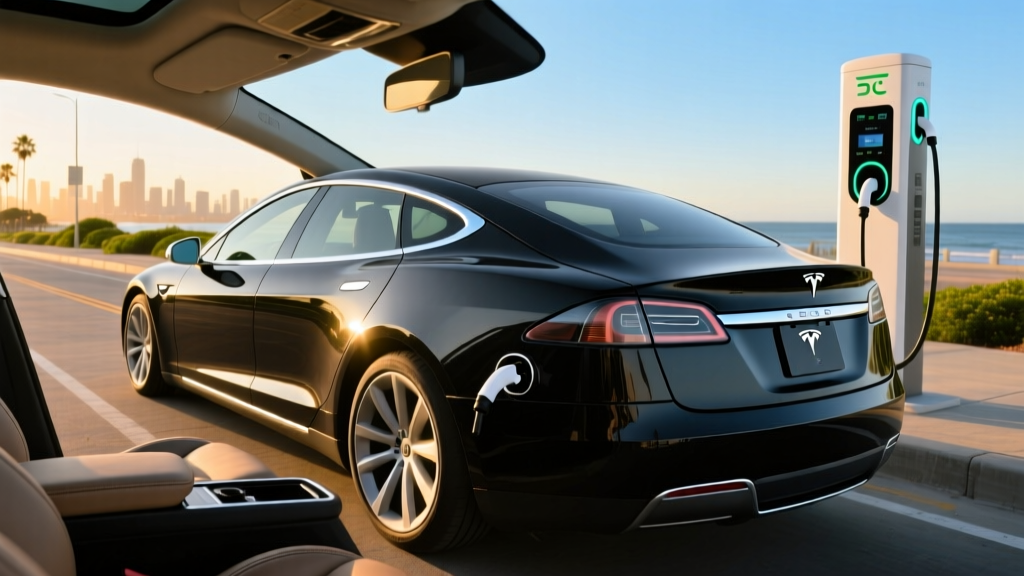
The 2016 Model S 90D was designed around Tesla's V2 Supercharger architecture, which peaks at approximately 120 kW. On a V2 stall, you'll see the charge curve ramp quickly from 10% to roughly 50% SoC at 100–120 kW, then taper progressively. The 10–80% charge takes approximately 40–45 minutes. On a newer V3 Supercharger (250 kW capable), the 90D is hardware-limited to roughly 120–140 kW — you won't unlock the full V3 speed because the car's onboard charge controller and battery management system predate the higher-rate architecture.
This is a critical ownership consideration: while the 90D has access to Tesla's unmatched Supercharger network (over 6,000 U.S. stations as of 2026), its charging speed is roughly half what a current Model 3 or Model Y achieves on V3 stalls. For road-trippers who regularly drive 300+ miles in a day, plan on one extra stop compared to a newer EV.
Level 2 Home Charging
At home, the 90D supports up to 48 amps (11.5 kW) on a NEMA 14-50 outlet or hardwired Level 2 station if equipped with Tesla's optional Dual Charger. Most 90D examples came with the single charger (32 amps / 7.2 kW). At 11.5 kW, you recover roughly 34–38 miles of range per hour — a full overnight charge from 10% to 90% takes about 7–8 hours. At 7.2 kW, expect 22–25 miles per hour and a 10–11 hour full charge.
For daily commuting, home Level 2 is the ideal charging strategy. It's cheaper than Supercharging (typically $0.10–$0.16/kWh at home vs. $0.28–$0.36/kWh on Superchargers in 2026) and gentler on the NMC battery, which degrades faster under repeated high-power DC charging.
Performance, Ride, and Daily Livability
The dual-motor AWD powertrain in the 90D produces 518 horsepower and delivers a 4.2-second 0–60 mph time — still brisk by any standard, and effortless in daily driving. The instant torque from the electric motors makes highway merging and passing maneuvers trivial. Unlike the P90D with its Ludicrous mode, the 90D prioritizes range over maximum acceleration, but few owners will find it lacking in thrust.
Ride quality is a strong point. The adaptive air suspension (standard on most 90D builds) provides a compliant, luxury-sedan feel with adjustable ride height. The cabin is quiet at highway speeds, with minimal wind noise — a hallmark of the Model S platform. However, the 2016 interior shows its age in 2026: the 17-inch portrait touchscreen runs an older version of Tesla's software (though it still receives OTA updates), and the instrument cluster is a smaller secondary display rather than the fully digital dash in later models.
Cargo and Passenger Space
The Model S is a full-size sedan, and the dimensions reflect it:
- Front legroom: 42.7 inches
- Rear legroom: 35.4 inches
- Cargo volume (rear trunk): 26.3 cubic feet
- Frunk (front trunk): 5.3 cubic feet
- Total cargo (seats folded): 58.1 cubic feet
The rear trunk is genuinely massive for a sedan — deeper and wider than most midsize SUVs. The frunk adds useful space for charging cables or a small bag. For families, the rear seat comfortably fits two adults or three children, though the center position is best for shorter trips due to the floor hump from the drivetrain tunnel (yes, even in an EV — the 90D's platform was adapted from the original Model S architecture).
Tax Credits, Pricing, and the Used EV Credit (§25E)
Here's where the 2016 Model S 90D becomes genuinely interesting from a financial perspective. As a used vehicle, it does not qualify for the new-vehicle §30D federal tax credit (which requires a new purchase, MSRP under $55,000 for sedans, buyer income caps, and battery-sourcing compliance). Instead, it may qualify for the §25E Used Clean Vehicle Credit, which provides up to $4,000 or 30% of the sale price (whichever is lower) for eligible used EVs.
| Item | Amount |
|---|---|
| Typical Used Price (80k–100k miles) | $20,000–$25,000 |
| §25E Used EV Credit (30% of $22,000) | Up to $4,000 (capped at $4,000 or 30%) |
| Effective Price After Credit | $18,000–$21,000 |
| Annual Electricity Cost (12,000 mi/yr) | $550–$750 (home charging) |
| Annual Gas Equivalent (25 MPG, $3.50/gal) | $1,680 |
| Annual Fuel Savings vs. Gas | $930–$1,130 |
§25E eligibility requirements (per IRS guidelines):
- Sale price must be $25,000 or less
- Buyer income caps: $75,000 (single), $112,500 (head of household), $150,000 (joint)
- Vehicle must be at least two model years old (the 2016 qualifies easily)
- Must purchase from a licensed dealer (private-party sales do not qualify)
- Credit can only be claimed once per vehicle (check the VIN's credit history)
- Starting in 2024, the credit can be transferred to the dealer as a point-of-sale discount
At a $22,000 purchase price from a qualifying dealer, the §25E credit delivers $4,000 — bringing the effective cost to $18,000. That's a luxury AWD sedan with 250+ miles of real-world range, Supercharger access, and 518 hp for less than a new Honda Civic.
Battery Warranty, Degradation, and Replacement Costs
Tesla's original battery and drive unit warranty for the 2016 Model S 90D was 8 years / unlimited miles with a capacity retention threshold of 70%. By 2026, most 90D examples have exceeded the 8-year mark, meaning the original factory warranty has expired unless the battery was replaced under warranty at some point.
This is the single biggest risk factor in buying a used 2016 90D. Here's what to know:
- Typical degradation at 100,000 miles: 10–18% capacity loss (SoH of 82–90%)
- Battery replacement cost (2026): $12,000–$18,000 for a refurbished pack from Tesla or a third-party specialist
- Drive unit replacement: $4,000–$7,000 per motor (front or rear)
- Pre-purchase inspection: Request a battery health report from Tesla Service or use TeslaFi data if the owner has been logging. Look for SoH above 82% and check for any cell-imbalance warnings.
The NMC chemistry in the 90D degrades primarily from calendar aging and high-SoC storage. Vehicles that were routinely charged to 100% and left sitting will show more degradation than those kept between 20–80% daily. Ask the seller about their charging habits and review the charge history if available.
Driver Assistance, Tech, and Safety
Most 2016 Model S 90D examples were built with Hardware 1 (HW1) Autopilot, which supports basic lane-centering, adaptive cruise control, and automatic emergency braking. Some late-2016 builds received Hardware 2 (HW2), which Tesla later enabled for Enhanced Autopilot features (auto lane change, autosteer on highways, summon). However, HW2 in the 2016 era is significantly less capable than Tesla's current HW4 hardware, and Full Self-Driving (Supervised) capability on HW2 vehicles has been limited or deprecated.
From a safety standpoint, the Model S earned a 5-star overall rating from NHTSA and was an IIHS Top Safety Pick+ in its era. The large crumple zones and low center of gravity (battery pack under the floor) contribute to excellent crash performance that still holds up in 2026.
Infotainment is functional but dated. The 17-inch screen handles navigation, media, and vehicle settings, and Tesla still pushes OTA updates to 2016-era vehicles. However, you won't find the latest UI redesigns, theater mode, or the refreshed gaming capabilities available on current Teslas. Bluetooth audio works; Apple CarPlay and Android Auto are not supported (Tesla has never adopted either).
Pros, Cons, and the Verdict
Pros
- Genuine 220–260 mile real-world range — still practical for daily driving and moderate road trips
- Full Supercharger network access (6,000+ U.S. stations)
- 518 hp dual-motor AWD with 4.2-second 0–60 — performance that embarrasses most new sedans
- Massive cargo space (26.3 cu ft trunk + frunk) for a sedan
- §25E used EV credit can reduce effective price to $18,000
- Continued OTA software updates from Tesla
- Air suspension provides a premium ride quality
Cons
- Original battery warranty expired — replacement risk of $12,000–$18,000
- DC fast charging capped at ~120 kW — slower than modern EVs on V3 Superchargers
- Dated interior materials and infotainment compared to 2024+ models
- No heat pump — significant cold-weather range loss (25–35%)
- HW1 Autopilot is rudimentary; FSD upgrades unlikely on older hardware
- Premium insurance costs — expect $1,800–$2,800/year depending on location
- Out-of-warranty air suspension and drive unit repairs can be costly
Who the 2016 Model S 90D Suits Best
- You want a spacious luxury sedan with real 250-mile range for under $25,000
- You have reliable home Level 2 charging and commute under 80 miles round-trip
- You value AWD performance and cargo versatility over the latest tech
- You road-trip 2–4 times a year and want Supercharger convenience
- You need a battery warranty — consider a CPO Tesla or a newer EV still under warranty
- You live in a cold climate and need maximum winter range (look for a heat-pump-equipped EV)
- You want current-gen Autopilot/FSD or Apple CarPlay
- You charge exclusively on DC fast chargers and need sub-20-minute stops
2016 Model S 90D vs. Key Used EV Competitors
How does the 90D compare to other used EVs in the $18,000–$28,000 range in 2026?
| Spec | 2016 Tesla Model S 90D | 2019 Tesla Model 3 Long Range | 2020 Hyundai Kona Electric |
|---|---|---|---|
| Typical Used Price | $20,000–$25,000 | $22,000–$27,000 | $18,000–$22,000 |
| EPA Range (original) | 294 mi | 310 mi | 258 mi |
| Real-World Range (2026) | 220–260 mi | 260–290 mi | 220–245 mi |
| Battery Chemistry | NMC (90 kWh) | NMC (75 kWh) | NMC (64 kWh) |
| DC Fast Charge (peak) | ~120 kW | ~150 kW | ~77 kW |
| 0–60 mph | 4.2 sec | 4.4 sec | 7.6 sec |
| Cargo Space | 26.3 + 5.3 cu ft | 15.0 cu ft | 19.2 cu ft |
| Drivetrain | AWD dual-motor | AWD dual-motor | FWD single-motor |
| Battery Warranty Remaining | Expired | ~1–3 years left | ~2–4 years left |
The Model 3 Long Range is the more rational choice if battery warranty matters — a 2019 example still has 1–3 years of Tesla's 8-year/120,000-mile battery coverage remaining. The Kona Electric is cheaper and more efficient but slower and FWD-only. The 90D wins on space, power, and luxury feel but carries the most financial risk from its expired warranty.
Frequently Asked Questions
What is the real-world range of a 2016 Tesla Model S 90D in 2026?
Expect 220–265 miles in mixed driving at moderate temperatures, depending on the battery's State of Health. Highway driving at 75+ mph reduces this to roughly 210–240 miles. In cold weather (below freezing), plan for 180–210 miles due to NMC chemistry limitations and the lack of a heat pump.
How fast does the 2016 Model S 90D charge?
On a Tesla V2 Supercharger, it peaks at roughly 120 kW, with a 10–80% charge taking about 40–45 minutes. On V3 Superchargers, it's hardware-limited to ~120–140 kW. At home on Level 2, expect 7.2 kW (single charger) or 11.5 kW (dual charger option), adding 22–38 miles of range per hour.
Does the 2016 Tesla Model S 90D qualify for any federal tax credit?
Not the new-vehicle §30D credit. It may qualify for the §25E Used Clean Vehicle Credit of up to $4,000 (30% of sale price, capped at $4,000) if purchased from a licensed dealer for $25,000 or less, and if the buyer meets income caps ($75k single / $150k joint). Consult a tax professional and verify eligibility on IRS.gov.
Is the 2016 Model S 90D worth buying vs. newer used EVs?
It depends on your priorities. If you need maximum space, AWD performance, and Supercharger access at the lowest price, the 90D is hard to beat. If battery warranty peace of mind and faster DC charging matter more, a 2019 Model 3 Long Range or a 2020+ Hyundai/Kia EV with remaining warranty is a safer bet.
What should I check before buying a used 2016 Model S 90D?
Request a battery health report (SoH percentage) from Tesla Service or the owner's TeslaFi logs. Look for SoH above 82%. Check for air suspension leaks (listen for the compressor running excessively), drive unit whine, and verify that Autopilot hardware is functional. Confirm whether the car has a salvage or rebuilt title, which voids any remaining Tesla support. Finally, verify the VIN hasn't already been used to claim the §25E credit if you plan to use it.
How much does it cost to replace the battery in a 2016 Model S 90D?
A refurbished 90 kWh pack from Tesla or a qualified third-party shop typically costs $12,000–$18,000 in 2026, including labor. Some independent EV shops offer cell-level repairs for $5,000–$9,000 if only specific modules have degraded. Factor this potential cost into your purchase budget.