Quick Verdict: A Flagship Sedan at a Used-EV Bargain Price
The 2016 Tesla Model S 90D occupies a unique position in the used EV market. Originally priced above $90,000, these sedans now trade between $18,000 and $28,000 depending on mileage, battery health, and trim — putting a once-premium long-range EV within reach of budget-conscious buyers. But the 90 kWh NMC battery pack that defines this model is also its biggest liability: degradation on early high-capacity packs is real, and replacement costs can exceed the vehicle's current value.
If you find a 2016 Model S 90D with strong State of Health (SoH) readings and documented service history, it delivers a compelling package: dual-motor all-wheel drive, 288 EPA-rated miles of range (when new), and the spacious, tech-forward cabin that made the Model S famous. Just go in with eyes open about battery risk and the absence of any federal tax credit on this purchase.
2016 Model S 90D: Core Specifications
| Specification | Value |
|---|---|
| EPA Range (original) | 288 miles |
| Battery Capacity | 90 kWh (usable ~85 kWh), NMC chemistry |
| Drivetrain | Dual-motor AWD |
| Horsepower | 518 hp (combined) |
| 0–60 mph | 4.0 seconds |
| Max DC Fast Charge | ~120 kW (Supercharger V2) |
| Level 2 Charge Rate | 11.5 kW (48A) / ~34 mi/hr |
| Efficiency (original EPA) | 101 MPGe combined / 33 kWh/100mi |
| Cargo Volume | 26.3 cu ft (rear) + 5.3 cu ft (frunk) |
| Rear Legroom | 35.4 inches |
| Battery Warranty (original) | 8 years / unlimited miles |
| Original MSRP | $92,000 (base before options) |
| Used Price Range (2026) | $18,000–$28,000 |
Real-World Range: What to Actually Expect
EPA (when new): 288 miles
Real-world 2026 (battery at ~80% SoH): ~200–230 miles mixed driving
Highway at 75 mph: ~185–210 miles
Cold weather (below 32°F): ~155–185 miles
The 90 kWh pack in the 2016 Model S 90D uses nickel-manganese-cobalt (NMC) chemistry, which offers higher energy density than LFP but is more susceptible to capacity loss over time and charge cycles. After 8–10 years on the road, most 90D packs have experienced 12–22% degradation depending on charging habits, climate, and mileage. A pack that started with roughly 85 kWh usable now typically holds 66–75 kWh.
According to fueleconomy.gov, the original EPA combined rating was 101 MPGe. In practice, expect efficiency around 33–38 kWh/100mi in mixed driving. Highway speeds above 70 mph push consumption higher, and cold weather without preconditioning can drop range by 25–35%. The Model S does include a battery heater, but using it draws from the pack itself.
Before purchasing, request a battery health report from Tesla or use third-party tools like TeslaFi or Scan My Tesla (via an OBD-II adapter) to check current full-charge capacity. A 90D showing fewer than 220 rated miles at 100% SoC likely has a degraded pack worth factoring into your offer price.
Charging Speed: DC Fast Charge and Home Level 2
The 2016 Model S 90D predates Tesla's V3 Supercharger architecture and the CCS/NACS open-standard era. It charges exclusively through Tesla's proprietary connector (now designated NACS), which in 2026 remains compatible with the entire Supercharger network — a significant advantage as other used EVs with CHAdeMO connectors face shrinking public infrastructure.
| Charging Method | Power (kW) | Speed / Time |
|---|---|---|
| Level 1 (120V household) | ~1.4 kW | ~4 miles per hour |
| Level 2 (240V, 48A HPWC) | 11.5 kW | ~34 miles per hour |
| DC Fast (V2 Supercharger) | Peak ~120 kW | 10–80% in ~40 minutes |
| DC Fast (V3 Supercharger) | Capped at ~120 kW* | 10–80% in ~40 minutes |
*The 2016 Model S 90D cannot accept the full 250 kW from V3 Superchargers; its onboard charge architecture caps DC input at approximately 120 kW.
The charge curve on the 90D is relatively flat from 10–50% SoC, sustaining close to peak rate. Above 60%, tapering begins, and charging slows significantly past 80%. For road trips, plan stops around the 10–80% window to minimize time at the charger. A typical 200-mile highway leg followed by a 30-minute Supercharger stop is a realistic rhythm.
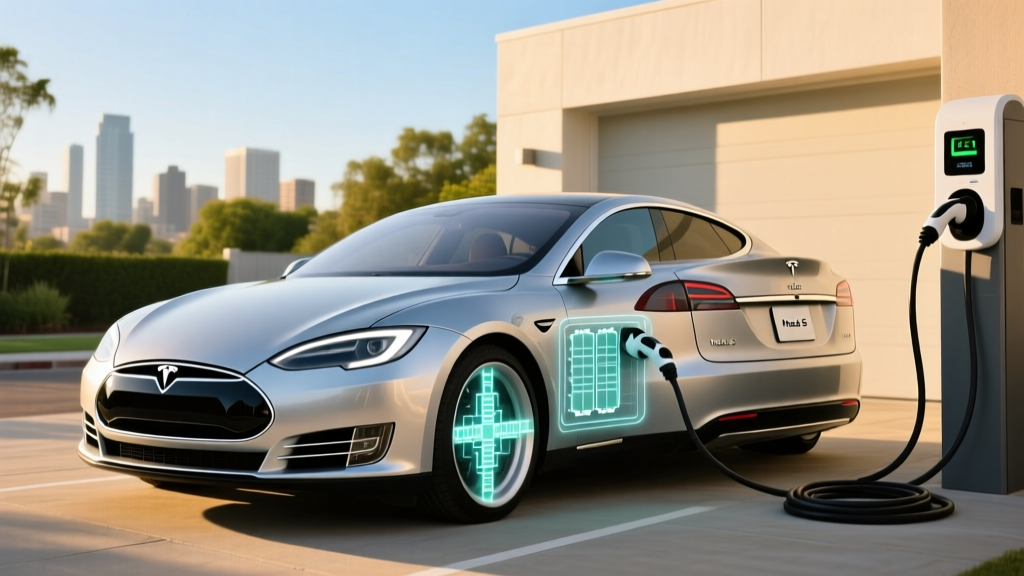
At home, the 90D's 11.5 kW onboard charger (dual-charger option was available but rare) adds roughly 34 miles of range per hour on a 48A Level 2 circuit. A full charge from 10% takes about 7–8 hours — easily achievable overnight with a Tesla Wall Connector or compatible NACS Level 2 unit. Installation costs for a dedicated 60A circuit typically run $800–$2,000 depending on panel proximity and local permitting, per U.S. Department of Energy guidance.
Performance and Driving Dynamics
Even by 2026 standards, the 2016 Model S 90D is quick. The dual-motor setup produces 518 horsepower and launches the sedan to 60 mph in 4.0 seconds — faster than most new crossovers and sedans in its current price bracket. The all-wheel-drive system provides confident traction in rain and light snow, and the low center of gravity from the floor-mounted battery pack keeps body roll well-controlled through corners.
The air suspension (standard on most 90D trims) offers adjustable ride height and a compliant highway ride, though aging air struts are a known maintenance item — budget $1,500–$3,000 per corner if they need replacement. Regenerative braking is adjustable but lacks the aggressive one-pedal-driving feel of newer EVs; you'll still use the friction brakes regularly in stop-and-go traffic.
Steering feel is precise if somewhat numb, and the cabin is impressively quiet at speed. Where the 90D shows its age is in the absence of adaptive cruise with stop-and-go in base Autopilot hardware (Hardware 1 on early 2016 builds, Hardware 2 on later production). Full Self-Driving (Supervised) capability was never retrofitted to HW1 vehicles, and HW2 vehicles received limited functionality compared to current Tesla AI stacks.
Tech, Interior, and Practicality
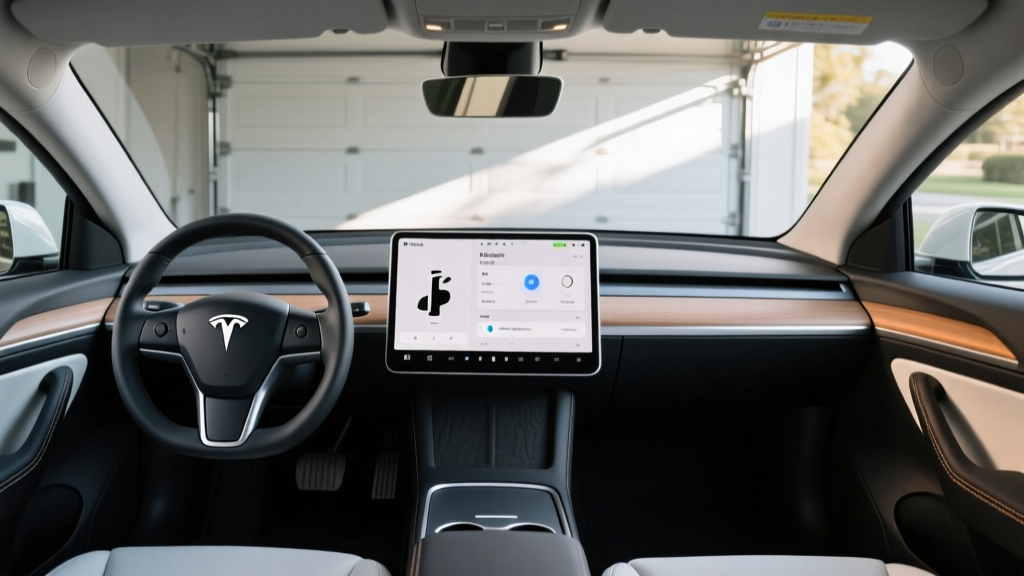
The 2016 Model S interior is defined by its 17-inch center touchscreen — massive for its era and still competitive in size today. However, the infotainment runs on older MCU1 (NVIDIA Tegra) hardware in early 2016 builds, which is noticeably sluggish by modern standards. Tesla offered an MCU2 upgrade (Intel Atom) for ~$2,500 that dramatically improves responsiveness and enables newer software features; check whether a given vehicle has received this upgrade.
Notable tech and interior features include:
- 17-inch touchscreen with navigation, media, and vehicle controls
- Over-the-air software updates (though HW1 vehicles receive fewer new features)
- Keyless entry with key fob and phone-as-key (on updated builds)
- Power liftgate with 26.3 cu ft rear cargo + 5.3 cu ft front trunk
- Available third-row rear-facing jump seats (adds two small child seats)
- HEPA air filtration with "Bioweapon Defense Mode" (on equipped vehicles)
- Panoramic glass roof (fixed, no shade — cabin heat soak is real in summer)
Passenger space is generous for a sedan: 42.7 inches of front legroom and 35.4 inches in the rear. The rear seat comfortably fits two adults, though the sloping roofline limits headroom for taller passengers. The combined 31.6 cu ft of cargo space (trunk + frunk) rivals many midsize SUVs, making the 90D practical for road trips and weekly grocery hauls alike.
The 2016 Model S 90D's Autopilot is an SAE Level 2 driver-assistance system. It provides lane-centering and adaptive cruise but requires the driver to remain fully engaged with hands on the wheel and eyes on the road. This is not autonomous or self-driving capability. Only Level 4 services like Waymo operate without a human driver.
Pricing, Tax Credits, and Ownership Costs
The 2016 Model S 90D originally started at approximately $92,000 before destination and options. Well-equipped examples with the Premium Interior, air suspension, and Autopilot pushed past $105,000. In the 2026 used market, these vehicles typically sell for $18,000–$28,000 depending on mileage (80k–140k miles is common), battery health, and cosmetic condition.
The IRS §30D federal EV tax credit applies only to new qualifying vehicles. The used-EV credit (§25E) caps at $4,000 but requires the vehicle to be purchased from a licensed dealer for under $25,000, with buyer income limits ($75k single / $150k joint). A 2016 Model S 90D may qualify for the used credit if purchased from a dealer below the $25,000 cap and the buyer meets IRS income requirements. Private-party purchases do not qualify.
| Cost Factor | Estimate |
|---|---|
| Used Purchase Price | $18,000–$28,000 |
| Federal Used EV Credit (§25E) | Up to $4,000 (dealer sale <$25k, income caps apply) |
| Insurance (annual avg.) | $2,200–$3,400 |
| Home Charging (est. 12,000 mi/yr) | $480–$720/yr at $0.14/kWh |
| Battery Replacement (if needed) | $12,000–$18,000 (remanufactured pack) |
| Air Suspension (per strut) | $1,500–$3,000 |
| Annual Maintenance | $600–$1,200 (tires, cabin filter, wipers, fluid) |
The 8-year/unlimited-mile battery and drive unit warranty on the 2016 Model S 90D has expired for all vehicles in this model year. Any battery failure or significant degradation is now an out-of-pocket expense. Tesla offers battery replacement through service centers using remanufactured packs, typically costing $12,000–$18,000 including labor. Third-party EV battery shops are an emerging alternative, sometimes at lower cost. Factor this risk into your total budget — a $20,000 purchase price can quickly become a $35,000 investment if the pack needs service within your ownership window.
Pros, Cons, and Who Should Buy
- 288 mi EPA range (new); still 200+ mi with healthy pack
- 518 hp dual-motor AWD — 4.0s to 60 mph
- Supercharger network access (NACS connector)
- Spacious cabin with 31.6 cu ft total cargo
- Premium sedan ride quality with air suspension
- OTA updates still delivered (feature set varies by hardware)
- Low purchase price vs. original $92k+ MSRP
- Battery degradation: 12–22% typical; replacement $12k–$18k
- Original battery warranty expired (8yr/unlimited)
- MCU1 infotainment is slow without $2,500 MCU2 upgrade
- DC fast charge capped at ~120 kW; 40-min 10–80%
- Air suspension struts prone to failure at age
- HW1 Autopilot limited; no FSD retrofit
- No federal new-vehicle tax credit; used credit conditional
- Insurance premiums above average for price bracket
- Budget-minded commuters who want a premium sedan with 200+ miles of daily range and home charging access.
- Tech-savvy buyers comfortable evaluating battery SoH data and accepting degradation risk for a lower entry price.
- Road-trip-capable families who value Supercharger network access and need sedan cargo space — but don't tow (no official tow rating).
- Not ideal for: Buyers in extreme cold climates (range drops sharply), those without home charging (reliance on 120 kW DC is limiting), or anyone seeking the latest ADAS features.
Frequently Asked Questions
What is the real-world range of the 2016 Model S 90D in 2026?
With typical battery degradation of 12–22%, expect 200–230 miles in mixed driving, 185–210 miles at highway speeds, and 155–185 miles in cold weather. Always verify the specific vehicle's full-charge rated miles before purchasing — this single metric tells you more than the odometer.
How fast does the 2016 Model S 90D charge?
On DC fast chargers (including V3 Superchargers), the 90D peaks at approximately 120 kW, reaching 10–80% in about 40 minutes. At home on a 48A Level 2 charger (11.5 kW), it adds roughly 34 miles per hour, completing a full overnight charge in 7–8 hours. The 90D cannot accept the 250 kW rate of newer Teslas on V3 Superchargers.
Does the 2016 Model S 90D qualify for any federal tax credit?
It does not qualify for the new-vehicle §30D credit ($7,500). It may qualify for the used-EV credit (§25E, up to $4,000) if purchased from a licensed dealer for under $25,000 and the buyer's modified adjusted gross income falls within IRS limits ($75,000 single / $150,000 joint). Private-party sales are ineligible. Verify current rules at irs.gov before purchase.
Is the 2016 Model S 90D worth buying versus a newer used EV?
It depends on risk tolerance. The 90D offers more range, power, and space than most used EVs in the $20k–$28k bracket (Chevy Bolt, Nissan Leaf Plus, early Model 3). However, its expired battery warranty and potential $12k–$18k replacement cost create financial risk that newer, lower-range EVs with remaining warranty do not. If battery SoH checks out above 82%, the 90D is a compelling value. If SoH is below 78%, negotiate hard or walk away.
What are the biggest maintenance concerns?
Beyond battery degradation, watch for: air suspension strut failure ($1,500–$3,000 per corner), MCU1 screen delamination or failure, door handle mechanism wear, and drive unit whine or bearing noise at high mileage. Tesla's mobile service and independent EV shops can address most issues, but parts availability for 2012–2016 Model S components is tightening.
Can the 2016 Model S 90D use non-Tesla chargers?
Natively, no — the 90D has Tesla's proprietary connector (NACS). However, Tesla provides a CCS-to-NACS adapter (sold separately, ~$250) that enables charging at CCS-equipped public stations. Charging speed through the adapter is limited to the vehicle's ~120 kW DC maximum. In 2026, the expanding NACS-open Supercharger network means most public charging needs are met without an adapter.