Quick Verdict: The 2016 Tesla Model S 75D a Decade Later
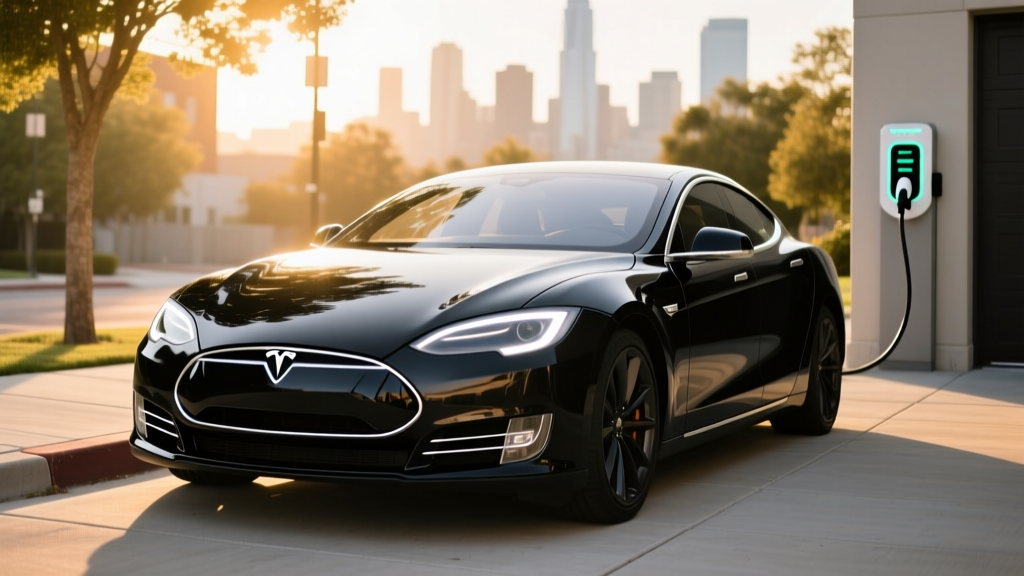
Ten years after it rolled off the Fremont line, the 2016 Tesla Model S 75D remains one of the most searched used electric vehicles on the market — and for good reason. It was the first Model S variant to pair a 75 kWh battery with dual-motor all-wheel drive, delivering a then-class-leading 259 miles of EPA range. In 2026, it represents an accessible entry into the Tesla Supercharger network and premium EV sedan ownership, with used examples trading between $14,000 and $22,000 depending on mileage, condition, and battery state of health (SoH).
But buying a decade-old EV demands scrutiny that a new-car purchase does not. Battery degradation, outdated MCU1 infotainment hardware, expired warranties, and the absence of modern fast-charging speeds all factor into the calculus. This review breaks down every number you need before signing the paperwork.
Range, Efficiency, and the Battery Degradation Reality
The 2016 Model S 75D carries a 75 kWh (gross) lithium-ion battery pack using NMC (nickel-manganese-cobalt) chemistry. Usable capacity was approximately 72.5 kWh when new. Tesla's NMC packs from this era are known for a characteristic degradation curve: a steeper initial drop of roughly 5–8% in the first 30,000 miles, followed by a much slower linear decline.
Real-World Expectation in 2026 (10-year-old pack):
• Typical SoH at 80,000–120,000 mi: 82–90% of original capacity
• Effective range at 85% SoH: ~220 miles (mixed driving)
• Highway (70+ mph): ~190–205 miles
• Cold weather (below 32°F): ~160–185 miles
• City / moderate climate: ~215–235 miles
Efficiency was rated by the EPA at 101 MPGe combined (33 kWh/100 mi). In real-world highway driving, expect consumption closer to 35–38 kWh/100 mi, which tightens range further on long road trips. The 75D's dual-motor AWD system adds a slight efficiency penalty versus the single-motor 75 (RWD), but the trade-off is all-weather traction and better performance.
| Spec | Value |
|---|---|
| EPA Range (new) | 259 miles |
| Battery (gross / usable) | 75 kWh / ~72.5 kWh |
| Battery Chemistry | NMC (Nickel-Manganese-Cobalt) |
| Drivetrain | Dual-motor AWD |
| Horsepower | 328 hp (combined) |
| 0–60 mph | 5.2 seconds |
| EPA Efficiency | 101 MPGe / 33 kWh/100 mi |
| Max DC Fast Charge | ~120 kW (Supercharger V2) |
| 10–80% DC Charge Time | ~40–45 minutes |
| Level 2 Charge Rate | 11.5 kW (48A) — ~30 mi/hr |
| Original Base MSRP | $74,500 (before incentives) |
| Used Price Range (2026) | $14,000–$22,000 |
| Battery Warranty (original) | 8 years / 120,000 miles |
Charging Speeds: What to Expect at Home and on the Road
The 2016 Model S 75D uses Tesla's proprietary connector (pre-NACS standardization) and charges via the onboard charger at up to 11.5 kW on Level 2 (240V, 48 amps) when equipped with the dual onboard charger option. Single-charger cars are limited to 7.7 kW (32 amps), yielding roughly 20 miles of range per hour versus 30 miles per hour with the dual setup. Verify which configuration the specific car has before purchasing — it significantly affects overnight charging practicality.
| Charging Level | Power (kW) | Speed | Notes |
|---|---|---|---|
| Level 1 (120V / 12A) | ~1.4 kW | ~3–4 mi/hr | Emergency/trickle only |
| Level 2 (240V, single charger) | 7.7 kW | ~20 mi/hr | Standard onboard charger |
| Level 2 (240V, dual charger) | 11.5 kW | ~30 mi/hr | Optional; check build sheet |
| DC Fast (Supercharger V2) | ~120 kW peak | 10–80% in ~40–45 min | Tapers significantly above 80% |
| DC Fast (Supercharger V3) | Capped ~120 kW | No V3 benefit | 75D cannot utilize V3's 250 kW |
On DC fast charging, the 75D peaks around 120 kW at a low state of charge (below 30%), but the charge curve tapers steadily. Expect 10–80% in roughly 40–45 minutes at a V2 Supercharger. At V3 stalls (250 kW capable), the 75D's battery management system caps the rate — you will not see faster charging than at a V2 post. This is the single biggest road-trip limitation versus newer EVs like the Hyundai Ioniq 5 or Tesla Model 3 Highland, which can do 10–80% in 18–20 minutes.
For CCS adapter compatibility: Tesla began offering a CCS1 adapter for legacy Model S vehicles, but DC fast charging via CCS is limited to roughly 50–70 kW on 2016-era cars. Superchargers remain the fastest option.
Performance and Driving Dynamics
The dual-motor 75D produces 328 horsepower and 325 lb-ft of torque, reaching 0–60 mph in 5.2 seconds. That's quick by any sedan standard and remains respectable in 2026. The low center of gravity from the floor-mounted battery pack gives the Model S composed handling, though at roughly 4,650 lbs, it is no sports car through tight corners.
The regenerative braking system offers a single mode (no adjustable regen in 2016 firmware), which provides moderate one-pedal driving capability but not the aggressive deceleration found in later Teslas or competitors like the Chevrolet Bolt. The hydraulic brake feel is adequate but unremarkable — the Model S predates Tesla's switch to Bosch iBooster brake-by-wire in later models.
Ride quality benefits from the available Smart Air Suspension, which adjusts ride height automatically. However, air suspension failures are a known cost point on 2016-era Model S vehicles. Budget $1,500–$2,500 per corner if struts need replacement — a common need above 80,000 miles.
Interior, Cargo, and Technology
The 2016 Model S received Tesla's mid-cycle interior refresh, which added a revised center console with phone storage, improved rear-seat cushioning, and available HEPA air filtration (Bioweapon Defense Mode). The 17-inch portrait touchscreen remains the command center for all vehicle functions.
Cargo and Passenger Space:
- Rear cargo (trunk): 26.3 cu ft
- Front trunk (frunk): 5.3 cu ft
- With rear seats folded: 58.1 cu ft
- Front headroom: 38.8 in
- Rear legroom: 35.4 in
- Optional rear-facing third-row jump seats (child-rated only): adds 2 seats, eliminates trunk space
Infotainment — The MCU1 Problem: The 2016 Model S 75D shipped with MCU1 (Media Control Unit 1), powered by an NVIDIA Tegra 3 processor. By 2026 standards, MCU1 is painfully slow — map rendering lags, the browser is essentially unusable, and newer software features (Tesla Theater, visualizations, Sentry Mode enhancements) are not supported. Tesla offered a paid MCU2 upgrade ($1,500–$2,500 at service centers), which swaps in an Intel Atom processor and enables modern software. Confirm whether the car has been upgraded; it materially affects daily usability and resale value.
Driver Assistance: Vehicles built after October 2016 include Hardware 2.0 (HW2) for Autopilot, with additional cameras and improved ultrasonic sensors. However, HW2 is limited in capability compared to HW3/HW4 — it cannot run the latest FSD (Supervised) neural networks at full fidelity. Basic Autopilot (lane centering + adaptive cruise) works adequately on highways, but this is a Level 2 driver-assist system requiring full driver attention — it is not self-driving.
Pricing, Tax Credits, and Ownership Costs
The 2016 Model S 75D originally carried an MSRP of approximately $74,500 before any incentives. In 2026, used-market pricing has settled considerably:
| Condition / Mileage | Price Range |
|---|---|
| Under 60,000 mi, excellent | $19,000–$22,000 |
| 60,000–100,000 mi, good | $15,500–$19,000 |
| 100,000+ mi, fair | $14,000–$16,500 |
| Salvage / rebuilt title | $9,000–$13,000 |
Federal Tax Credit — Used EV Credit (§25E): The 2016 Model S 75D is no longer eligible for the new-vehicle §30D credit (that expired for Tesla in 2018). However, as a used EV purchased from a dealer, it may qualify for the IRS §25E Used Clean Vehicle Credit of up to $4,000 (30% of sale price, capped at $4,000). Eligibility requirements include:
- Sale price must be $25,000 or less (most 75D examples qualify)
- Buyer income caps: $75,000 single / $112,500 head of household / $150,000 joint
- Must purchase from a licensed dealer (private-party sales do not qualify)
- Vehicle must be at least 2 model years old (easily satisfied)
- Credit is non-refundable — you must have tax liability to claim it
- Can only be claimed once per VIN in its lifetime
A $17,000 purchase could yield a $4,000 credit (30% of $17,000 = $5,100, capped at $4,000), effectively reducing net cost to $13,000. Consult a tax professional to confirm eligibility for your specific situation.
Ongoing Ownership Costs to Budget:
- Insurance: $1,800–$2,800/year (varies by state, driver profile)
- Tires: $800–$1,400 per set (245/45R19); expect 25,000–35,000 mi life due to weight and torque
- Air suspension replacement (if equipped): $1,500–$2,500 per corner
- Drive unit replacement (rare but possible): $3,000–$5,000
- Annual maintenance: $300–$600 (cabin filter, brake fluid, wiper blades, tire rotation)
Battery Warranty and Longevity
The original battery and drive unit warranty on the 2016 Model S 75D was 8 years / 120,000 miles with no explicit capacity retention threshold (unlike the later 70% minimum). This means that as of 2024, all factory battery warranties on 2016 examples have expired unless extended coverage was purchased separately.
Based on aggregated owner data, NMC packs from this generation typically retain 82–90% capacity at 100,000 miles. Some high-mileage examples (150,000+ mi) have reported 75–80% SoH. A replacement battery from Tesla Service currently runs $12,000–$16,000 for a 75 kWh pack — a significant expense relative to the car's value. Third-party EV battery shops offer refurbished packs for $8,000–$11,000 installed.
Pre-Purchase Tip: Request a battery health reading from the vehicle's service menu (or have a Tesla Service Center run a diagnostic). Compare the rated range at 100% charge to the original 259-mile figure. A car showing 215+ rated miles at 100% has a healthy pack. Below 200 miles rated, negotiate aggressively or walk away.
Pros and Cons
- Supercharger network access (largest, most reliable DC network in the US)
- Spacious liftback sedan with frunk — practical for families and cargo
- Smooth, quiet dual-motor AWD with strong acceleration
- Over-the-air software updates still delivered (basic feature additions)
- Used pricing under $20K makes it one of the cheapest large premium EVs
- Eligible for up to $4,000 used-EV tax credit (§25E)
- Slow DC fast charging vs. modern EVs (~40 min 10–80%)
- MCU1 infotainment is sluggish without paid MCU2 upgrade
- Original battery warranty expired — replacement is $12K–$16K
- Air suspension and drive unit repairs can total the car's value
- HW2 Autopilot hardware is outdated; limited FSD capability
- No heat pump — resistive cabin heater reduces winter range significantly
- CCS adapter support limited to low DC speeds (~50–70 kW)
Who Should Buy the 2016 Model S 75D?
Best fit: Budget-conscious commuters who want a spacious premium sedan with Supercharger access for occasional road trips. If your daily round-trip is under 80 miles and you can charge at home, the 75D's real-world range is more than adequate. The §25E used credit makes the effective price compelling against a new Chevrolet Bolt or Nissan LEAF.
Poor fit: High-mileage road-trippers who need fast DC charging (look at a used 2021+ Model 3 Long Range or Ioniq 5 instead), buyers in extreme cold climates without a garage (the resistive heater hammers range), and anyone who cannot absorb a potential $10K+ repair bill for battery or suspension work.
Competitor Comparison
| Vehicle | Year | Used Price | EPA Range | DC Charge | Key Advantage |
|---|---|---|---|---|---|
| Tesla Model S 75D | 2016 | $14K–$22K | 259 mi | ~120 kW | Space, Supercharger access |
| Tesla Model 3 LR AWD | 2019 | $20K–$27K | 310 mi | ~170 kW | Better efficiency, HW3 |
| Chevrolet Bolt EV | 2020 | $14K–$18K | 259 mi | ~55 kW | Lowest cost, reliable pack |
| Polestar 2 LRDM | 2021 | $22K–$28K | 249 mi | ~150 kW | Build quality, CCS charging |
Frequently Asked Questions
What is the real-world range of the 2016 Tesla Model S 75D in 2026?
With typical battery degradation at 10 years old (82–90% SoH), expect approximately 215–235 miles in mixed city/highway driving in moderate temperatures. Highway-only driving at 75+ mph drops this to 190–205 miles. In sub-freezing weather, plan for 160–185 miles due to the resistive cabin heater and reduced battery efficiency.
Does the 2016 Model S 75D qualify for any federal EV tax credit?
It does not qualify for the new-vehicle §30D credit. It may qualify for the §25E Used Clean Vehicle Credit of up to $4,000 if purchased from a dealer for $25,000 or less, and the buyer meets income limits ($75K single / $150K joint). The credit is non-refundable and limited to one claim per VIN.
How much does a replacement battery cost for the 75D?
A new 75 kWh pack from Tesla Service runs $12,000–$16,000 installed. Third-party refurbished packs are available for $8,000–$11,000. Given the car's used value of $14K–$22K, a battery replacement can approach or exceed the vehicle's worth — making pre-purchase battery health verification essential.
Can the 2016 Model S 75D use Tesla Supercharger V3 stalls?
Yes, but it cannot take advantage of V3's 250 kW peak rate. The 75D's battery and BMS limit charging to approximately 120 kW, identical to V2 Supercharger speeds. Expect 10–80% in 40–45 minutes regardless of stall generation.
Is the MCU1 infotainment upgrade worth it?
If the car still has MCU1, the $1,500–$2,500 upgrade to MCU2 is strongly recommended. MCU1 struggles with modern map rendering, lacks Tesla Theater and Sentry Mode visualizations, and the eMMC flash storage in MCU1 units is prone to failure (a known issue). MCU2 eliminates these problems and adds meaningful daily usability.
Is the 2016 Model S 75D worth buying versus a newer used EV?
It depends on priorities. If you need maximum cargo space, Supercharger network access, and AWD for under $20K (before the §25E credit), the 75D is hard to beat. If you prioritize fast charging, modern infotainment, and lower long-term repair risk, a 2019+ Model 3 Long Range or a 2021+ Polestar 2 is a safer bet at a higher entry price. Always verify battery SoH and MCU status before committing.