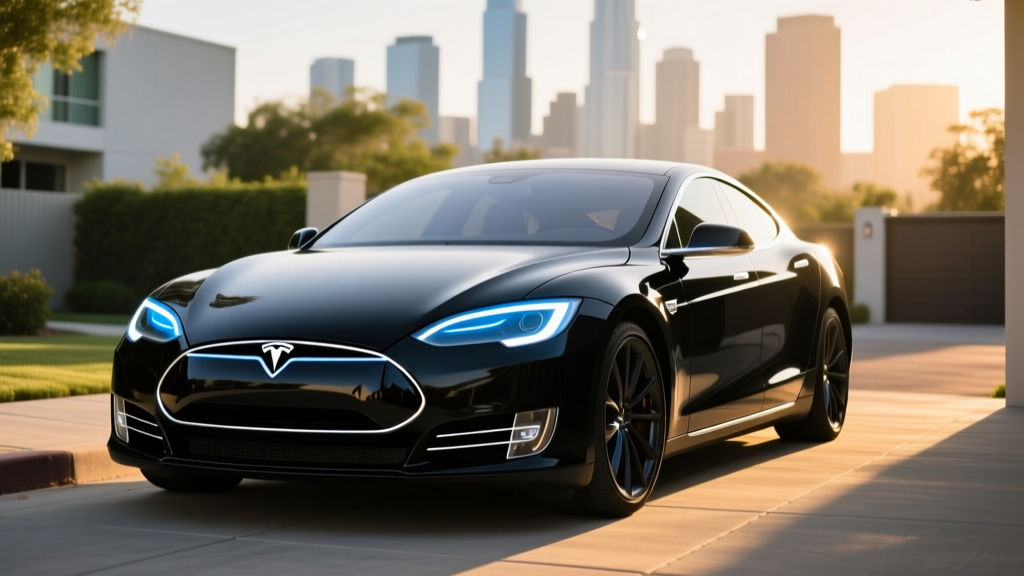
The 2016 Tesla Model S 70D occupies a unique position in the used EV market: it's the most affordable entry point into Tesla's dual-motor all-wheel-drive sedan, yet it carries the compromises of an early-generation large battery pack. For buyers eyeing a sub-$20,000 luxury EV in 2026, the 70D demands careful scrutiny — its 210-mile EPA range and aging NMC cells tell a very different story than the 400-mile Model S Plaid of today.
This review dissects the 2016 Model S 70D with the exact numbers used-EV buyers need: real-world range expectations after battery degradation, actual DC fast-charge speeds on modern networks, home charging practicality, and the tax-credit math that can make or break this purchase.
2016 Tesla Model S 70D Specifications at a Glance
| Specification | Value |
|---|---|
| EPA Range (original) | 210 miles |
| Battery Capacity (gross) | 71.2 kWh |
| Battery Capacity (usable) | ~68.8 kWh |
| Battery Chemistry | NMC (Nickel Manganese Cobalt) |
| Drivetrain | Dual-Motor AWD |
| Horsepower | 328 hp (combined) |
| 0–60 mph | 5.2 seconds |
| Top Speed | 140 mph |
| EPA Efficiency | 93 MPGe combined (36 kWh/100 mi) |
| DC Fast Charge (peak) | ~120 kW (Supercharger V2) |
| Level 2 Charge Rate | 11.5 kW (48A) |
| Cargo Volume | 26.3 cu ft (rear) + 5.3 cu ft (frunk) |
| Seating | 5 adults (optional 3rd-row for 7) |
| Original Base MSRP | $75,000 |
| Typical 2026 Used Price | $16,000–$24,000 |
Real-World Range: What the 210-Mile EPA Sticker Actually Means in 2026
EPA rated (new): 210 miles
Expected today (10-year-old pack, moderate degradation): 170–195 miles at 100% SoC
Highway at 75 mph (70°F): ~155–175 miles
Cold weather (30°F, highway): ~130–150 miles
Recommendation: Plan trips around 140–150 miles between charges for a comfortable buffer.
The EPA's 210-mile rating applied to a brand-new 70D rolling off the Fremont line in 2016. A decade later, NMC battery degradation is the dominant variable. Tesla's NMC packs from this era typically lose 10–15% of original capacity over 100,000–150,000 miles, according to long-term fleet data aggregated by sources like fueleconomy.gov and independent Tesla battery studies.
The 70D's relatively small 71.2 kWh pack means that every percentage point of degradation translates to fewer lost miles than a 100 kWh pack would, but the starting point was already modest. Expect a well-maintained 70D with 80,000–120,000 miles to deliver roughly 175–195 miles at full charge under mixed driving conditions. Push it onto the interstate at 75+ mph and watch that drop to the 155–175 range. In freezing temperatures, the resistive cabin heating (this generation predates Tesla's heat pump introduction) can slash range by 25–30%, putting realistic winter highway range near 130–150 miles.
This is a commuter and regional road-trip vehicle, not a cross-country cruiser. If your daily round trip exceeds 100 miles and you lack reliable home charging, the 70D will demand frequent stops.
Charging Speeds: DC Fast Charging and Home Level 2
| Charging Level | Power / Rate | Time / Miles Added |
|---|---|---|
| Level 1 (120V, 12A) | ~1.4 kW | ~3–4 miles per hour |
| Level 2 (240V, 48A) | 11.5 kW | ~29 miles per hour; 0–100% in ~7 hours |
| Tesla Supercharger V2 | Peak ~120 kW | 10–80% in ~35–40 minutes |
| CHAdeMO w/ adapter | ~50 kW | 10–80% in ~70–80 minutes |
The 70D uses Tesla's proprietary connector (pre-NACS standardization). On Tesla's Supercharger V2 stalls — still widely available — the 70D peaks around 120 kW, but this peak holds only briefly. The charge curve tapers significantly past 50% SoC, and the entire 10–80% session typically takes 35–40 minutes. By comparison, a modern 800V architecture EV like the Hyundai Ioniq 5 can complete the same session in roughly 18 minutes at 240 kW.
For the 70D's ~69 kWh usable battery, a 120 kW peak represents roughly a 1.7C charge rate — respectable for 2016 NMC chemistry but modest by 2026 standards. Expect average charging power during the 10–80% window closer to 65–75 kW.
At home on a Level 2 wall connector at 48 amps (11.5 kW), the 70D adds approximately 29 miles of range per hour and will fully replenish from near-empty in about 7 hours. This is perfectly adequate for overnight charging. Note that the onboard charger supports up to 48 amps; if your home circuit is limited to 32 amps (a common 40-amp breaker configuration), you'll see roughly 7.7 kW and about 19 miles per hour.
Adapter note: The 2016 Model S uses Tesla's proprietary connector. For non-Tesla DC fast chargers (Electrify America, EVgo CCS stations), you would need a third-party adapter, and speeds will be limited. Tesla's CCS adapter works on newer vehicles; for a 2016 Model S, CHAdeMO adapters (now discontinued by Tesla) were the primary option, and availability on the used market is limited. Plan your road trips around the Supercharger network.
Performance and Driving Dynamics
The 70D's dual-motor setup — one on each axle — delivers 328 combined horsepower and standard all-wheel drive. The 5.2-second 0–60 mph time was quick for a luxury sedan in 2016 and remains adequate today, though it's overshadowed by the Long Range and Plaid variants.
Where the 70D shines is in daily driving composure. The air suspension (standard on most 70Ds) provides a plush ride, the regenerative braking enables near-one-pedal driving, and the low center of gravity keeps body roll minimal. The steering is precise if somewhat numb. At highway speeds, cabin noise is well-suppressed — this is still a genuinely comfortable long-distance cruiser, range permitting.
The dual-motor AWD system provides confident traction in rain and light snow, though ground clearance and the low front air dam limit any off-pavement ambitions. Owners in severe winter climates should budget for dedicated winter tires.
Interior, Tech, and Cargo Space
The 2016 Model S interior reflects Tesla's minimalist philosophy — a 17-inch touchscreen dominates the center stack, replacing nearly all physical buttons. The digital instrument cluster is functional but lacks the configurability of modern competitors. Build quality on 2016 examples is variable; panel gaps, rattles, and early touchscreen delamination are documented issues in owner forums.
Cargo and passenger dimensions:
- Rear cargo (behind 2nd row): 26.3 cu ft
- Front trunk (frunk): 5.3 cu ft
- Total cargo with rear seats folded: 58.1 cu ft
- Front legroom: 42.7 inches
- Rear legroom: 35.4 inches
- Optional rear-facing 3rd row (child-sized): adds 2 seats, 7 total
The hatchback-style liftback makes loading bulky items far easier than a traditional sedan trunk. The frunk is useful for charging cables and groceries but smaller than the Model 3's.
Infotainment and driver assist: The 2016 Model S runs Tesla's software stack, which continues to receive over-the-air updates — though hardware limitations (older MCU1 computers in early 2016 builds) cap functionality. Vehicles with MCU1 may experience sluggish navigation and lack features like Netflix/YouTube streaming. An MCU2 upgrade (available through Tesla service for ~$1,500–$2,000) resolves this and is strongly recommended.
Enhanced Autopilot was available as a $5,000 option on the 70D. This is a SAE Level 2 driver-assist system — it provides adaptive cruise control and lane-centering on highways, but requires continuous driver supervision. It is not self-driving. Vehicles equipped with Hardware 1 (HW1) Autopilot have more limited capabilities than later HW2/HW3 systems; Full Self-Driving (FSD) capability is generally not available or functional on HW1 vehicles.
Tesla Autopilot and Enhanced Autopilot on the 2016 Model S are SAE Level 2 systems. The driver must remain fully attentive, with hands on the wheel and eyes on the road, at all times. These systems do not make the vehicle autonomous.
Pricing, Tax Credits, and Total Ownership Cost
The 2016 Model S 70D originally carried a base MSRP of $75,000, with options like Enhanced Autopilot, premium interior packages, and the panoramic roof pushing as-tested prices to $85,000–$95,000.
In the 2026 used market, expect to find 70D examples in the following ranges:
| Condition / Mileage | Typical Price Range |
|---|---|
| 80,000–100,000 mi, good condition | $18,000–$24,000 |
| 100,000–130,000 mi, average condition | $15,000–$19,000 |
| 130,000+ mi, higher wear | $12,000–$16,000 |
Federal Tax Credit Eligibility
The 2016 Model S 70D does not qualify for the new-vehicle §30D federal tax credit (it is discontinued and was never eligible under current battery-sourcing rules). However, it may qualify for the Used Clean Vehicle Credit (§25E), which provides up to $4,000 or 30% of the sale price (whichever is less) for qualifying used EVs. Key requirements per IRS guidelines:
- Sale price: Must be $25,000 or less — most 70Ds qualify at current market prices
- Buyer income caps: AGI ≤ $75,000 (single), $112,500 (head of household), $150,000 (joint)
- Dealer requirement: Must be purchased from a licensed dealer (private-party sales excluded)
- Vehicle age: Must be at least 2 model years old (2016 qualifies)
- One-time use: The specific VIN can only receive this credit once; verify the vehicle hasn't previously claimed it
- Point-of-sale transfer: Credit can be applied at purchase to reduce out-of-pocket cost
At a $20,000 purchase price from a qualifying dealer, the 30% calculation yields $6,000, but the credit is capped at $4,000 — bringing the effective cost to $16,000 for income-eligible buyers. Consult a tax professional to verify your eligibility.
Ownership Cost Considerations
Beyond the purchase price, budget for the following:
- Insurance: Model S premiums remain elevated; expect $2,000–$3,500/year depending on state, driving record, and coverage
- Maintenance: No oil changes, but budget for cabin air filters, wiper fluid, brake fluid checks, and tire rotations (~$400–$600/year)
- Tires: The 70D's weight (~4,600 lbs) and instant torque accelerate tire wear; expect replacement every 25,000–35,000 miles ($800–$1,400 per set)
- Air suspension: A known failure point on older Model S vehicles; replacement struts cost $1,500–$2,500 per corner if out of warranty
- MCU upgrade: ~$1,500–$2,000 if the vehicle still has MCU1
- Electricity: At the national average of ~$0.16/kWh and 36 kWh/100 mi, fuel cost is approximately $5.76 per 100 miles — roughly half the cost of a comparable gas sedan at 25 MPG and $3.50/gallon
Battery Warranty and Longevity
Tesla's original battery and drive unit warranty for the 2016 Model S 70D was 8 years or 120,000 miles, whichever came first, with a capacity retention threshold of approximately 70%. As of 2026, most 70Ds have aged out of the 8-year window regardless of mileage. This means battery replacement, if needed, falls entirely on the owner.
A refurbished or remanufactured 70D battery pack from Tesla Service typically costs $12,000–$16,000 installed. Third-party EV repair shops may offer alternatives in the $8,000–$12,000 range. Given that a replacement battery can approach or exceed the vehicle's market value, a pre-purchase battery health check is essential.
Before buying, check the State of Health (SoH): Tesla's service menu or third-party tools like TeslaFi or Scan My Tesla can report current battery capacity. Look for vehicles retaining at least 80–85% of original capacity. A 70D showing less than 75% SoH will deliver under 160 miles of real-world range and should be priced accordingly — or avoided.
Pros and Cons of the 2016 Model S 70D
Pros
- Dual-motor AWD standard — confident in rain and snow
- Air suspension provides excellent ride quality
- Hatchback liftback with 26.3 cu ft cargo — highly practical
- Over-the-air software updates still supported
- Supercharger network access (most reliable DC network)
- Potential $4,000 used-EV tax credit brings price under $16K
- Spacious interior with available 7-seat configuration
Cons
- 210-mi EPA range (170–195 real-world) limits road-trip practicality
- Battery and drivetrain warranty expired (8yr/120K mi)
- Peak 120 kW DC charging is slow by 2026 standards
- Air suspension failures are common and costly
- MCU1 hardware is outdated; upgrade costs $1,500+
- No CCS adapter support; reliant on Supercharger network
- Insurance premiums remain high relative to vehicle value
- HW1 Autopilot severely limits driver-assist features
How the 2016 Model S 70D Compares to Used Alternatives
At $16,000–$24,000 (post-credit), the 70D competes with several used EVs worth considering:
| Vehicle | EPA Range | DC Fast Charge | Typical Used Price | Key Advantage |
|---|---|---|---|---|
| 2016 Tesla Model S 70D | 210 mi | 120 kW peak | $16K–$24K | Luxury, AWD, Supercharger access |
| 2018 Chevy Bolt EV | 238 mi | 55 kW peak | $14K–$19K | Better range, lower cost, CCS charging |
| 2017 Tesla Model 3 Long Range | 310 mi | ~170 kW peak | $20K–$27K | Far superior range and charging |
| 2019 Hyundai Kona Electric | 258 mi | 77 kW peak | $17K–$22K | Better efficiency, CCS, lower maintenance risk |
The 70D wins on interior space, ride comfort, and Supercharger access. But the 2018+ Model 3 Long Range offers nearly 50% more range and faster charging in a smaller, more modern package — and is often available at a similar price. The Bolt EV and Kona Electric sacrifice luxury and performance but deliver more usable range with lower maintenance risk.
Choose the 70D if you need a large sedan with AWD, value air-suspension comfort, and your daily driving stays within 100–120 miles. Choose the Model 3 LR or Kona Electric if range, charging speed, and lower long-term risk matter more than interior volume.
Frequently Asked Questions
What is the real-world range of the 2016 Tesla Model S 70D?
Originally rated at 210 miles by the EPA, a 2016 70D with typical battery degradation (10–15%) delivers approximately 170–195 miles at full charge under mixed conditions. Highway driving at 75 mph reduces this to 155–175 miles, and cold weather can push it below 150 miles.
How fast does the 70D charge on DC fast chargers and at home?
On a Tesla Supercharger V2, the 70D peaks around 120 kW but averages 65–75 kW during a 10–80% session that takes approximately 35–40 minutes. At home on a Level 2 (240V, 48A) connection, it charges at 11.5 kW, adding roughly 29 miles per hour and reaching a full charge in about 7 hours.
Does the 2016 Model S 70D qualify for any federal tax credit?
It does not qualify for the new-vehicle §30D credit. It may qualify for the Used Clean Vehicle Credit (§25E) of up to $4,000 if purchased from a licensed dealer for $25,000 or less, and the buyer meets IRS income caps ($75K single / $150K joint). Verify eligibility with a tax professional and check IRS §25E guidelines.
Is the 2016 Model S 70D worth buying in 2026?
It depends on your priorities. If you need a spacious, comfortable AWD sedan for commuting and regional trips under 120 miles, and you can find one with strong battery health (85%+ SoH) near $16,000–$18,000 after the used-EV credit, it's a compelling luxury bargain. If you need 250+ miles of range, fast charging, or modern driver assists, look at a used Model 3 Long Range or Hyundai Kona Electric instead.
What are the biggest risks of buying a used 2016 Model S 70D?
The three major cost risks are: (1) battery replacement ($12,000–$16,000) if the pack has degraded significantly, (2) air suspension failure ($1,500–$2,500 per corner), and (3) MCU1 obsolescence requiring a $1,500–$2,000 upgrade for acceptable infotainment performance. A pre-purchase inspection by a Tesla-qualified technician is strongly recommended.
Can I use non-Tesla chargers with the 2016 Model S 70D?
Not easily. The 2016 Model S uses Tesla's proprietary connector. Tesla's official CCS adapter is not compatible with this model year. CHAdeMO adapters existed but are discontinued and scarce. For practical purposes, plan to rely on the Tesla Supercharger network for DC fast charging and use a Level 2 home charger for daily needs.