Quick Verdict: The Budget Entry to Tesla's Dual-Motor Era
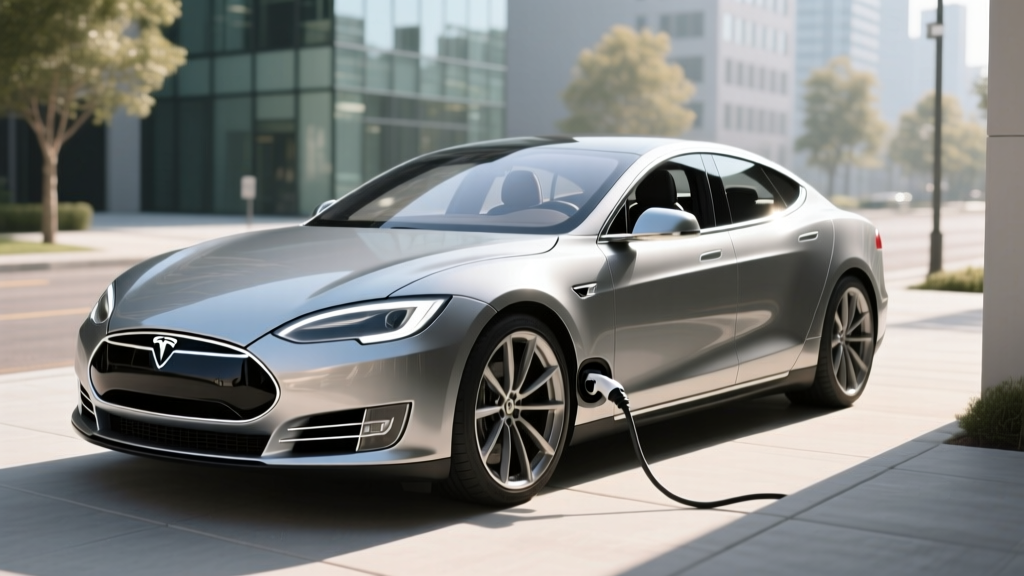
The 2016 Tesla Model S 70D AWD was Tesla's volume play nearly a decade ago — a dual-motor, all-wheel-drive luxury sedan with a 70 kWh (usable) battery and an EPA-rated 219 miles of range. In 2026, it trades on the used market between $14,000 and $22,000 depending on mileage, condition, and battery state of health (SoH). That makes it one of the cheapest ways into a dual-motor Tesla, but buyers need to weigh aging battery chemistry, slower DC fast charging by modern standards, and the near-certainty that the original 8-year battery warranty has expired or will expire in 2024–2025.
This isn't a car for someone chasing 300+ mile road-trip confidence. It's a practical commuter and family hauler for buyers who want Supercharger network access, solid acceleration, and a premium cabin at a fraction of a new EV's price — provided they go in with eyes open about battery replacement risk and charging-speed limitations.
Range, Battery, and Real-World Efficiency
| Spec | Value |
|---|---|
| EPA Range | 219 miles |
| Battery Capacity (Usable) | ~70 kWh (NMC chemistry) |
| Battery Chemistry | Nickel Manganese Cobalt (NMC) |
| EPA Efficiency | 101 MPGe combined (33 kWh/100 mi) |
| Drivetrain | Dual-motor AWD |
| 0–60 mph | 5.2 seconds |
| Horsepower | 328 hp (combined, dual motor) |
| Top Speed | 140 mph |
The 70 kWh NMC pack in the 70D was Tesla's mid-tier offering at the time, sitting below the 85 kWh and 90 kWh variants. NMC chemistry offers strong energy density but degrades faster than LFP (lithium iron phosphate) when regularly charged to 100%. Tesla's own guidance has long recommended daily charging to 80–90% for NMC packs, reserving 100% for trips. Following that advice means your usable daily range is closer to 150–175 miles at 80% SoC with a degraded pack.
According to EPA data on fueleconomy.gov, the 70D rated at 101 MPGe combined (95 city / 106 highway). That's solid efficiency for a 4,600-pound luxury sedan, though newer EVs like the Hyundai Ioniq 6 (140 MPGe) and Tesla's own refreshed Model 3 (132 MPGe) have moved well past it.
Charging Speed: DC Fast Charge and Home Level 2
| Charging Level | Max Rate | Speed / Time |
|---|---|---|
| Level 1 (120V household) | ~1.4 kW | ~3–4 miles per hour |
| Level 2 (240V, 40A onboard charger) | ~10 kW (single), ~20 kW (dual charger option) | ~29 mi/hr (single) or ~58 mi/hr (dual) |
| DC Fast Charge (Tesla Supercharger) | ~120 kW peak | 10–80% in ~40 minutes |
The 2016 Model S 70D uses Tesla's proprietary connector (which became the NACS standard). It charges natively on the Tesla Supercharger network — still the most reliable DC fast-charging infrastructure in the U.S. as of 2026. However, the 70D's peak charge rate tops out around 120 kW, and that peak is short-lived. The charge curve tapers aggressively above 50% SoC due to the older NMC cell design and thermal management approach.
In practice, a 10–80% session at a V2 Supercharger (150 kW capable) takes roughly 40 minutes. At a V3 Supercharger (250 kW), you won't see faster speeds — the car's battery management system limits intake. For road trips, plan on a 30–40 minute stop every 150–170 miles of highway driving.
At home, the 70D shipped with a 40-amp onboard charger as standard (10 kW), with a dual-charger option that doubled that to 80 amps (20 kW) — rare but worth asking about on used examples. On a standard 40-amp Level 2 wall connector, a full charge from empty takes about 7–8 hours. If the car has the dual-charger option and your home circuit supports it, that drops to under 4 hours.
CCS compatibility note: The 2016 Model S predates Tesla's CCS adapter availability. Tesla now offers a CCS adapter for older vehicles, but DC fast-charge speeds via CCS are limited to ~50 kW — slower than native Supercharging. Stick with Superchargers for road trips.
Performance and Driving Dynamics
The dual-motor AWD setup delivers 328 combined horsepower and a 5.2-second 0–60 mph time — quick by any measure and effortlessly so thanks to instant electric torque. The 70D doesn't feel like the entry-level model it was; it pulls hard from any stop and the all-wheel-drive system provides confident traction in rain and light snow.
Ride quality is a highlight: the Model S uses an adaptive air suspension (standard on most 70D builds) that soaks up highway imperfections and allows ride-height adjustment. However, air suspension on a 10-year-old car is a known maintenance item — strut and compressor failures are not uncommon past 80,000–100,000 miles, with replacement running $1,500–$3,000 per corner at independent shops.
Regenerative braking on the 70D is strong and enables one-pedal driving in most city scenarios. The steering is precise and well-weighted. Where the 70D shows its age is in cabin noise isolation — it's noticeably louder at highway speeds than the refreshed 2021+ Model S, and the interior materials, while premium for 2016, don't match current luxury EV benchmarks.
Interior, Cargo, and Technology
The 2016 Model S interior is dominated by the 17-inch portrait touchscreen, which controlled nearly every vehicle function even then. The infotainment system received incremental software updates over the years, but a 2016-era MCU1 (Media Control Unit) is sluggish by 2026 standards — slow map rendering, laggy app switching. Some owners have paid for the MCU2 upgrade (~$1,500–$2,000 at Tesla Service), which brings faster performance and enables newer software features. Ask whether this upgrade has been performed.
Passenger and cargo dimensions:
- Front legroom: 42.7 inches
- Rear legroom: 35.4 inches
- Trunk (rear): 26.3 cu ft
- Frunk (front trunk): 5.3 cu ft
- With rear seats folded: 58.1 cu ft
- Optional rear-facing third-row jump seats (seats 2 small children)
The frunk and deep rear trunk give the Model S genuine road-trip cargo versatility. The optional rear-facing jump seats were a popular family option, though they're tight and best suited for children under about 5 feet tall.
Driver assistance: The 2016 Model S came with Autopilot hardware (HW1 or HW2 depending on production date). HW1 cars have limited Autopilot capability — basic lane-keeping and adaptive cruise. HW2 cars (built after approximately October 2016) support Enhanced Autopilot and Full Self-Driving (Supervised) if the software was purchased. Note: FSD is a Level 2 driver-assist system, not self-driving. The driver must remain fully engaged, hands on or near the wheel, and eyes on the road at all times.
Pricing, Tax Credits, and Used-EV Value
| Item | Details |
|---|---|
| Original 2016 MSRP | ~$71,200 (base 70D) to ~$85,000+ with options |
| 2026 Used Market Range | $14,000 – $22,000 (private party / dealer) |
| Federal Used EV Tax Credit (§25E) | Up to $4,000 or 30% of sale price (whichever is less) |
| Federal New EV Credit (§30D) | NOT eligible — discontinued model |
The 2016 Model S 70D does not qualify for the $7,500 new-vehicle federal tax credit (§30D) — that credit applies only to new vehicle purchases. However, it may qualify for the §25E Used Clean Vehicle Credit, which offers up to $4,000 or 30% of the sale price (whichever is less) on eligible used EVs. Per IRS guidelines, requirements include:
- Sale price must be $25,000 or less
- Buyer income caps: $75,000 single / $112,500 head of household / $150,000 joint
- Vehicle must be at least 2 model years old (easily met)
- Must be purchased from a licensed dealer (not private party)
- Must not have claimed the used credit previously after 2022 (VIN-specific)
- Credit is non-refundable — you need sufficient tax liability to benefit
At a typical dealer price of $18,000, the 30% calculation yields $5,400, but the credit caps at $4,000 — so an eligible buyer could reduce their effective cost to roughly $14,000. Verify the VIN's credit history with the dealer and consult a tax professional before relying on this credit.
Battery Warranty and Long-Term Ownership Costs
This is the single most important factor for a used 2016 Model S 70D buyer. Tesla's original battery and drive unit warranty was 8 years / 120,000 miles (whichever comes first) with a capacity retention threshold of approximately 70%. For a 2016 model year, that warranty expired in 2024 at the latest.
What this means: If the battery fails or degrades below 70% capacity, you're paying out of pocket. A Model S battery replacement at Tesla Service currently runs $15,000–$22,000 depending on pack availability and labor. Third-party EV shops offer refurbished pack swaps for $8,000–$14,000. This is a real financial risk that must be factored into your purchase decision.
Before buying, request a battery health report from Tesla Service (the car's onboard diagnostics can show estimated range at 100% charge vs. original, which gives a rough SoH percentage). Independent pre-purchase inspections by EV-specialist shops are strongly recommended.
Other ownership cost considerations:
- Insurance: Model S premiums run 20–40% higher than average sedans. Expect $2,000–$3,500/year depending on your profile and state.
- Tires: The 70D's weight and torque wear tires faster than gas sedans. Budget $1,200–$2,000 for a set of premium tires every 25,000–35,000 miles.
- Supercharging: Some 2016 Model S vehicles came with free unlimited Supercharging that transfers to subsequent owners — this is a significant value-add. Verify via the Tesla app or vehicle settings whether free Supercharging is active on the specific VIN.
- Air suspension: As noted, $1,500–$3,000 per corner if struts or the compressor fail.
How the 2016 Model S 70D Compares to Alternatives
At the $14,000–$22,000 used price point, the 70D competes with several compelling options:
Pros
- Dual-motor AWD with strong 5.2s 0–60 performance
- Tesla Supercharger network access (most reliable DC network)
- Generous cargo space with frunk + deep trunk
- Air suspension and premium ride quality
- OTA software updates still occasionally delivered
- Potential $4,000 used-EV tax credit
- Free unlimited Supercharging on some VINs
Cons
- Battery warranty expired — $8K–$22K replacement risk
- Real-world range of 165–200 mi limits road-trip flexibility
- DC fast charging limited to ~120 kW (40-min 10–80%)
- MCU1 infotainment is slow without paid upgrade
- No heat pump — significant winter range loss
- Higher insurance premiums than comparable sedans
- Air suspension repair costs at this age
vs. 2017–2018 Chevrolet Bolt EV: The Bolt offers more EPA range (238 mi) and a lower battery-replacement cost, but no DC fast charging on many early models (CCS was optional), slower acceleration, and a far less refined cabin. The Bolt wins on range-per-dollar; the 70D wins on performance and Supercharger access.
vs. 2016–2017 BMW i3 (94 Ah): The i3 is lighter, more efficient, and cheaper to insure, but its 114-mile EPA range (without the range extender) makes it strictly a city car. The 70D is far more versatile for mixed use.
vs. 2018–2019 Tesla Model 3 Long Range (used): A used Model 3 LR (310-mile EPA range, ~150 kW charging, newer battery chemistry) typically commands $22,000–$28,000 — a meaningful step up in price, but with substantially better range, charging speed, and remaining warranty. If your budget stretches, the Model 3 LR is the stronger buy for most shoppers.
Frequently Asked Questions
What is the real-world range of the 2016 Tesla Model S 70D AWD in 2026?
Expect 185–200 miles on a full charge with typical battery degradation (8–15% loss from the 219-mile EPA original). Highway driving at 75+ mph drops this to 165–180 miles. Cold weather (below freezing) can push it down to 130–150 miles due to resistive heating and reduced battery efficiency. Always check the specific vehicle's estimated range at 100% SoC before purchasing.
How fast does the 2016 Model S 70D charge at home and on DC fast chargers?
On a Tesla Supercharger, the 70D peaks at approximately 120 kW and takes about 40 minutes for a 10–80% charge. At home on a 240V Level 2 wall connector with the standard 40-amp onboard charger, it adds roughly 29 miles per hour, taking 7–8 hours for a full charge. Cars with the optional dual charger can accept up to 20 kW on Level 2, cutting that roughly in half.
Does the 2016 Tesla Model S 70D qualify for any federal tax credit?
It does not qualify for the $7,500 new-vehicle §30D credit. It may qualify for the §25E Used Clean Vehicle Credit (up to $4,000 or 30% of sale price) if purchased from a licensed dealer at or below $25,000 and the buyer meets income caps ($75K single / $150K joint). The VIN must not have previously claimed the used credit after 2022. Consult a tax professional per IRS guidance to confirm eligibility.
Is the 2016 Model S 70D still worth buying in 2026?
It can be — for the right buyer. If you find one with strong battery SoH (above 85%), free Supercharging, and under 80,000 miles for around $16,000–$18,000, and you can claim the $4,000 used credit, the effective cost is compelling for a dual-motor luxury sedan. But you're accepting real risk: an out-of-warranty battery that could cost $8,000–$22,000 to replace, aging air suspension, and range that limits road-trip use. Budget for a $5,000–$10,000 contingency fund in the first two years of ownership.
What should I check before buying a used 2016 Model S 70D?
Request a battery health report from Tesla Service showing estimated range at 100% charge. Verify whether the car has MCU1 or the upgraded MCU2. Confirm if free unlimited Supercharging transfers with the VIN. Check service records for air suspension repairs, drive unit replacements, and 12V battery swaps. Get a pre-purchase inspection from an EV-specialist shop. Finally, run the VIN through the NHTSA recall database to confirm all open recalls (including the Takata passenger airbag recall affecting some 2016 Model S vehicles) have been addressed.
Does Autopilot on the 2016 Model S 70D make it self-driving?
No. The 2016 Model S 70D's Autopilot (whether HW1 or HW2) is a SAE Level 2 driver-assist system. It can manage lane centering, adaptive cruise control, and in some configurations automatic lane changes — but the driver must remain fully attentive, with hands on or near the steering wheel and eyes on the road. It does not handle construction zones, complex intersections, or adverse weather reliably. Even with FSD (Supervised) enabled on HW2 vehicles, you are the responsible driver at all times.