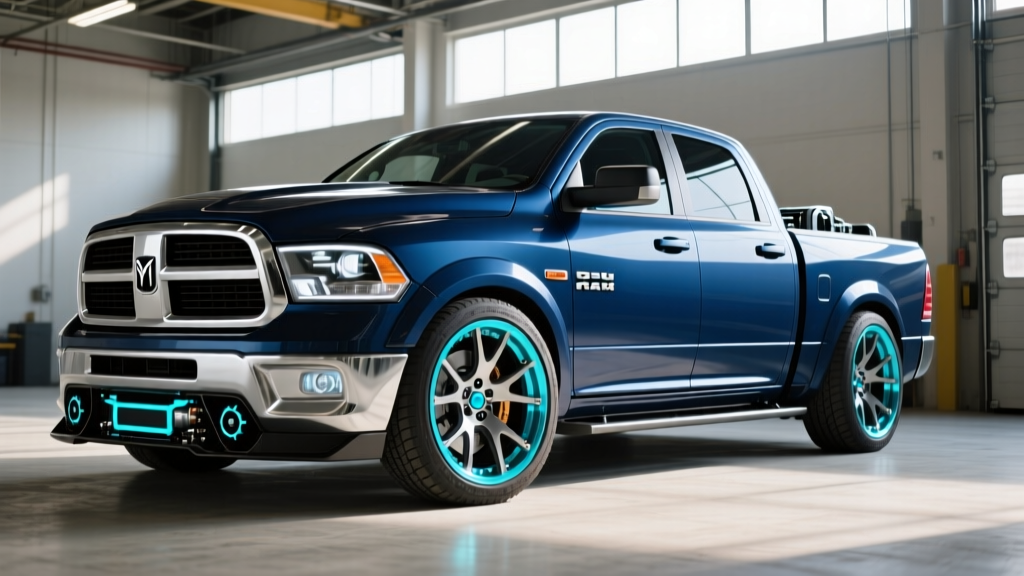
If you're researching the 2016 Ram 1500 bolt pattern, you're likely planning a wheel upgrade, considering aftermarket alloys for a lighter unsprung-weight setup, or evaluating the half-ton platform for a custom EV conversion project. Regardless of your end goal, getting the lug pattern, center bore, and offset right is non-negotiable — a mismatched wheel can cause vibration, bearing wear, or outright separation under load.
Below is a precise, spec-driven breakdown of the 2016 Ram 1500 wheel fitment data, followed by practical context for EV-minded owners exploring this chassis for electrification projects.
2016 Ram 1500 Bolt Pattern: The Core Specs
The 2016 Ram 1500 (third-generation DS platform, 2009–2018) uses a 6-lug, 139.7 mm (5.5-inch) bolt circle. This is commonly written as 6×139.7 or 6×5.5. This pattern is shared across most half-ton trucks from GM (Silverado 1500, Tahoe), Toyota (Tundra, Sequoia, Land Cruiser), and older Ford F-150s (pre-2004), making it one of the most common truck bolt patterns in North America.
| Specification | Value |
|---|---|
| Bolt Pattern (PCD) | 6×139.7 mm (6×5.5 in) |
| Center Bore | 77.8 mm |
| Lug Nut Thread Size | M14 × 1.5 |
| Lug Nut Torque Spec | 130 lb-ft (176 Nm) |
| Stock Wheel Sizes | 17", 18", 20" (trim-dependent) |
| Stock Offset Range | +19 mm to +25 mm |
| Stock Tire Sizes | 265/70R17, 275/60R20 |
The 77.8 mm center bore is critical. The hub-centric design means the wheel centers on the hub, not the lug studs. If you install aftermarket wheels with a larger center bore (common with universal-fit alloys), you must use hub-centric rings sized to 77.8 mm on the hub side and the wheel's bore on the outer side. Skipping rings transfers centering load to the studs, causing high-speed vibration and accelerated bearing wear.
Trim-Level Wheel Differences (2016 Model Year)
The 2016 Ram 1500 was offered in Tradesman, Express, SLT, Big Horn/Lone Star, Sport, Laramie, Laramie Longhorn, and Limited trims. While the bolt pattern remains identical across all trims, the factory wheel diameter, width, and offset vary:
- Tradesman / Express: 17×7.5" steel wheels, +25 mm offset, 265/70R17 tires
- SLT / Big Horn: 18×8" aluminum, +19 mm offset, 275/60R18 tires
- Sport / Laramie: 20×8" aluminum, +19 mm offset, 275/60R20 tires
- Laramie Longhorn / Limited: 20×8" polished aluminum, +19 mm offset
For an EV conversion or suspension rework, note that 20" wheels add approximately 8–12 lbs of unsprung weight per corner over 17" steelies. In a heavy battery-pack conversion, minimizing unsprung mass improves ride quality and reduces stress on half-shafts and CV joints — factors that matter when you're adding 800+ lbs of battery low in the chassis.
Wheel Fitment for EV Swap Projects on the Ram 1500 Chassis
The third-gen Ram 1500 has become a popular donor chassis for custom EV conversions due to its robust frame, widely available parts, and generous payload capacity (up to 1,930 lbs on properly equipped 2016 models). Builders dropping in Tesla large-drive-unit axles or NetGain Hyper9 motor kits need to plan wheel fitment early in the project.
Key considerations for EV-swap wheel selection:
- Load rating: EV conversions add significant mass. Stock 17" Ram wheels carry a ~1,800 lb load rating per wheel. Verify aftermarket wheels meet or exceed this, especially if your conversion pushes gross vehicle weight toward the 6,900 lb GVWR.
- Offset and scrub radius: Changing offset alters scrub radius, affecting steering feel and regenerative braking stability. Stay within ±6 mm of stock offset unless you've recalculated suspension geometry.
- Clearance for brake upgrades: Many EV conversions use larger rotors for regen-compatible braking. Confirm spoke clearance before ordering custom wheels.
- Aerodynamic wheel designs: Enclosed-face or turbine-style wheels can reduce drag by 3–5% at highway speeds — meaningful for extending range on a conversion with a 100–150 kWh pack.
Compatible Aftermarket Wheels and Spacer Guidelines
The 6×139.7 pattern opens up a broad aftermarket catalog. Popular options include:
- Method Race Wheels 301/701 series: 17×8.5", +0 mm to +12 mm offset — popular for overland EV builds needing sidewall height
- Fuel Zephyr / D585: 20×9", +1 mm offset — aggressive stance, verify fender clearance
- KMC XD Series: Multiple 6×139.7 options, typically 78.1 mm bore (requires 78.1→77.8 hub rings)
- Toyota TRD Pro wheels: 6×139.7, 106.1 mm bore — requires 106.1→77.8 hub rings, commonly used for lighter-weight setups
Spacer warning: If you use wheel spacers, select hub-centric units machined to 77.8 mm on the hub side. Spacers over 25 mm should be bolt-on type (with their own studs), not slip-on. Re-torque lug nuts after the first 50 miles — spacers introduce an additional mating surface that can settle under thermal cycling.
Lug Nut Torque and Maintenance
The 2016 Ram 1500 specifies 130 lb-ft (176 Nm) for M14×1.5 lug nuts. Always torque in a star pattern with a calibrated torque wrench. Impact guns over-torque by 30–50% in practice, risking stud stretch and warped rotors.
Re-torque after:
- Any wheel removal and reinstallation
- The first 50 miles on new wheels or spacers
- Seasonal tire changeovers
For EV conversions with higher gross weight, inspect lug nuts at every charging-stop on long trips until you've established a reliable torque-retention baseline with your specific wheel/hub combination.
Frequently Asked Questions
Is the 2016 Ram 1500 bolt pattern the same as the Ford F-150?
No. The 2016 Ram 1500 uses 6×139.7 mm. The 2016 Ford F-150 uses 6×135 mm. They are not interchangeable — the 4.7 mm difference per stud will cause binding and potential stud failure if forced.
Can I use 6×5.5 wheels on a 2016 Ram 1500?
Yes — 6×5.5 inches is the imperial equivalent of 6×139.7 mm. They are the same bolt pattern. Ensure center bore and offset are compatible.
What is the center bore of the 2016 Ram 1500?
77.8 mm. Any aftermarket wheel with a larger bore requires hub-centric rings for proper centering.
Will 2016 Ram 1500 wheels fit a Toyota Tacoma or 4Runner?
The bolt pattern (6×139.7) matches, but Toyota hubs use a 106.1 mm center bore. Ram wheels with a 77.8 mm bore will not physically slide onto a Toyota hub. The reverse works with hub-centric rings.
Does the 2016 Ram 1500 use lug nuts or lug bolts?
Lug nuts (conical/acorn seat). The studs are pressed into the hub. Never use lug bolts — they require a different hub design.
What torque spec for aftermarket wheels?
Follow the wheel manufacturer's spec if provided; otherwise use the vehicle's 130 lb-ft. Never exceed 140 lb-ft on M14×1.5 studs without verifying stud grade and thread condition.
For the most accurate fitment data, cross-reference with the Ram owner's manual or consult a qualified wheel-and-tire specialist before purchasing.