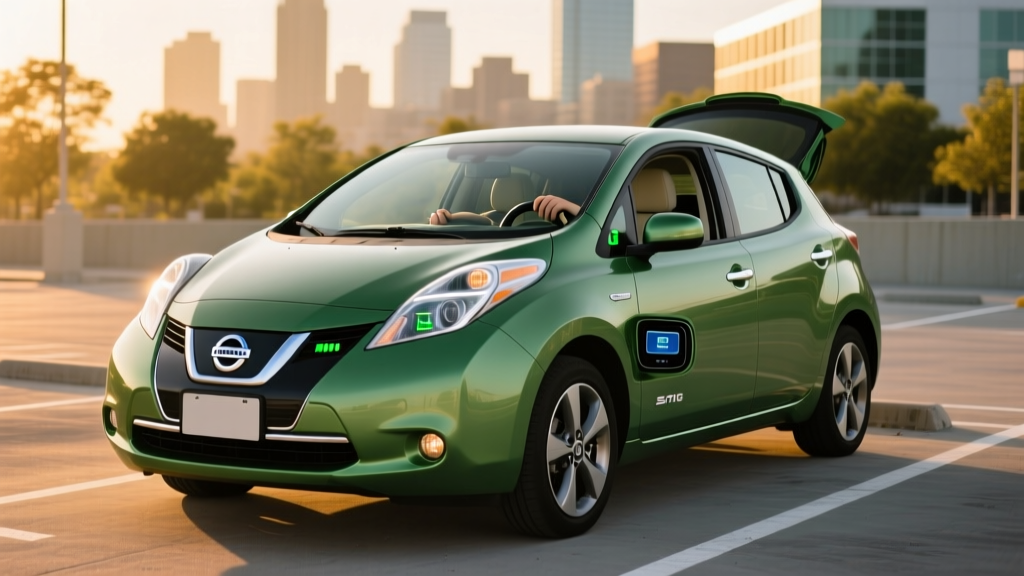
The 2016 Nissan Leaf occupies a unique space in the used EV market. As one of the first mass-market electric vehicles to reach global scale, it remains one of the most affordable entry points into EV ownership a decade later. But buying a 10-year-old battery-electric vehicle demands scrutiny that gas-car buyers never face: battery degradation, obsolete charging standards, and real-world range that may have shrunk considerably from its original EPA sticker. This review breaks down exactly what you get — and what to watch for — when evaluating a used 2016 Leaf in 2026.
2016 Nissan Leaf at a Glance: Core Specifications
| Specification | 24 kWh Battery (S trim) | 30 kWh Battery (SV/SL) |
|---|---|---|
| EPA Range (original) | 84 miles | 107 miles |
| Usable Battery Capacity | ~21.3 kWh (of 24 kWh gross) | ~27.1 kWh (of 30 kWh gross) |
| Battery Chemistry | NMC (nickel manganese cobalt) | NMC (nickel manganese cobalt) |
| Motor Output | 80 kW / 107 hp | 80 kW / 107 hp |
| Torque | 187 lb-ft | 187 lb-ft |
| 0–60 mph | ~9.9 seconds | ~9.9 seconds |
| Drivetrain | FWD (single motor) | FWD (single motor) |
| EPA Efficiency | 114 MPGe (30 kWh/100 mi) | 112 MPGe (30 kWh/100 mi) |
| Max DC Fast Charge | ~46 kW (CHAdeMO) | ~46 kW (CHAdeMO) |
| Level 2 Charge Rate | 3.3 kW (optional 6.6 kW) | 6.6 kW (standard on SV/SL) |
| Cargo Volume | 24.0 cu ft (rear seats up) | 24.0 cu ft (rear seats up) |
| Original Base MSRP | ~$29,010 | ~$34,200 |
| Used Price Range (2026) | $4,500–$7,500 | $6,000–$10,500 |
Real-World Range: What the EPA Sticker Doesn't Tell You
Range in a used EV is a moving target. The 2016 Leaf uses passive air cooling for its battery pack — no liquid thermal management. This design choice, while simpler and cheaper, exposes the cells to accelerated degradation in hot climates and during repeated fast charging. Owners in Phoenix, Las Vegas, or the Gulf Coast should budget for 30–40% capacity loss by year 10, while Pacific Northwest or moderate-climate cars may retain 75–85% of original capacity.
Highway driving at 70+ mph reduces range by roughly 15–20% compared to city driving, where regenerative braking recovers energy. Cold weather (below 32°F) compounds the problem: expect a further 20–30% range reduction due to increased cabin heating demands and reduced battery efficiency. A 30 kWh Leaf that delivers 90 miles in spring city driving may drop to 55–60 miles on a cold winter highway run.
Before purchasing any used Leaf, request a Leaf Spy battery health report. This OBD2-based tool reads the actual State of Health (SoH) percentage — a far more reliable indicator than the dashboard "capacity bars" alone. A battery showing 70% SoH or below warrants either a steep discount or a replacement battery quote (typically $5,000–$7,500 installed at a Nissan dealer).
Charging: CHAdeMO in an NACS World
| Charging Level | Power / Rate | Time or Miles Added |
|---|---|---|
| Level 1 (120V household) | ~1.2 kW | ~4–5 miles per hour |
| Level 2 (240V, 3.3 kW onboard) | 3.3 kW | ~12–14 miles per hour; full charge ~7–8 hrs |
| Level 2 (240V, 6.6 kW onboard) | 6.6 kW | ~23–25 miles per hour; full charge ~4–5 hrs |
| DC Fast Charge (CHAdeMO) | Peak ~46 kW | 0–80% in ~30–35 minutes (new battery) |
The 2016 Leaf's biggest long-term liability isn't range — it's the CHAdeMO DC fast-charging connector. By 2026, the North American charging landscape has overwhelmingly standardized on NACS (Tesla's connector, now adopted by Ford, GM, Rivian, Hyundai, and others) and CCS1. CHAdeMO stations are increasingly rare at new public charging installations, and Electrify America, EVgo, and ChargePoint have been phasing out CHAdeMO stalls or leaving them unrepaired.
On DC fast charging, the Leaf peaks at roughly 46 kW — modest by modern standards where 150–250 kW is common. The charge curve is relatively flat to 80%, then tapers sharply. A 24 kWh model might add 50–60 miles in 30 minutes; a 30 kWh model, roughly 65–75 miles. However, the air-cooled battery is prone to "Rapidgate": repeated same-day fast charges cause the battery to heat up, and the car progressively throttles charge speed to protect the cells. On a road trip with two or three DC fast stops, expect the second and third charges to be significantly slower.
For daily use, Level 2 home charging is where the Leaf makes the most sense. If you can install a 240V outlet and use a Level 2 station, the 6.6 kW onboard charger (standard on SV and SL trims) replenishes the 30 kWh pack in about 4–5 hours — more than enough for overnight top-ups. The base S trim's 3.3 kW charger is painfully slow for a full recharge but adequate for overnight commuting needs.
Performance, Interior, and Daily Usability
The 2016 Leaf's 80 kW (107 hp) AC synchronous motor delivers 187 lb-ft of instant torque to the front wheels. The 0–60 mph time of roughly 9.9 seconds feels adequate for city merging but underwhelming on highway on-ramps. This is a comfort-oriented commuter, not a performance EV. Top speed is electronically limited to approximately 90 mph.
Inside, the cabin reflects its economy-car origins. The SV and SL trims offer a 7-inch touchscreen with navigation, a rearview camera, and Nissan's CarWings telematics (now largely discontinued for this generation). The SL adds leather seats, a Bose audio system, LED headlights, and a quick-charge port. All trims include a basic driver-assist suite: ABS, stability control, and six airbags. There is no adaptive cruise control, lane-keeping assist, or modern ADAS — this predates Nissan's ProPILOT system.
Practical dimensions:
- Passenger volume: 94.0 cu ft
- Rear legroom: 33.5 inches
- Cargo (seats up): 24.0 cu ft
- Cargo (seats folded): 30.0 cu ft
- Curb weight: ~3,256 lbs
The cargo area is competitive with compact hatchbacks like the Volkswagen Golf. The rear seats fold in a 60/40 split, but there's a noticeable load-floor step. There is no frunk (front trunk) — the space under the hood houses the motor and power electronics.
Used Pricing, Tax Credits, and Ownership Costs
In the 2026 used market, a 2016 Nissan Leaf typically lists between $4,500 and $10,500 depending on trim, mileage, battery health, and region. The 24 kWh S trim clusters at the low end; well-maintained 30 kWh SL models with strong battery health reports command the premium.
The original §30D new-vehicle federal tax credit no longer applies to a 2016 model purchased used. However, the §25E used clean vehicle credit can significantly reduce your effective cost. A Leaf purchased for $6,500 with a $1,950 credit brings the net cost to roughly $4,550 — making it one of the cheapest ways to access EV commuting in the United States.
Ongoing ownership costs are favorable:
- Electricity cost: At $0.14/kWh national average, fully charging a 24 kWh pack costs ~$3.36, yielding roughly $0.04–$0.05/mile — versus $0.12–$0.15/mile for a 30 MPG gas car at $3.50/gallon.
- Maintenance: No oil changes, no spark plugs, no transmission fluid. Brake pads last significantly longer due to regenerative braking. Budget for cabin air filter, wiper fluid, and tire rotations.
- Insurance: Typically $800–$1,200/year depending on region and driver profile — modest for an EV.
- Battery replacement risk: If the pack degrades below usable thresholds, Nissan dealer replacement runs $5,000–$7,500. Third-party refurbishment shops offer alternatives at $3,500–$5,000.
Battery Warranty and Degradation: What to Expect
Nissan's original battery warranty for the 2016 Leaf covers 8 years / 100,000 miles against capacity loss below 9 bars (out of 12) on the dashboard capacity gauge. By 2026, most 2016 Leafs have aged out of the 8-year warranty window regardless of mileage. Some low-mileage examples sold late in the 2016 calendar year may still have residual coverage through early 2025 or 2026, but buyers should not count on it.
The 2016 model year was notable for introducing the 30 kWh battery option (SV/SL trims), which used a revised cell chemistry that Nissan claimed would degrade more slowly. Real-world data from Leaf communities confirms this: the 30 kWh pack generally shows better capacity retention than the 24 kWh pack, though both suffer in hot climates due to the shared passive cooling design.
Typical degradation trajectories at 10 years:
- Moderate climate, garage-kept, mostly L2 charging: 75–85% SoH (24 kWh: ~63–71 mi range; 30 kWh: ~80–91 mi range)
- Hot climate, frequent DC fast charging: 60–70% SoH (24 kWh: ~50–59 mi range; 30 kWh: ~64–75 mi range)
- Worst-case (Arizona, outdoor parking, daily fast charging): Below 60% SoH, with 40–50 miles of usable range
Pros, Cons, and the Competition
Pros
- Extremely low entry price ($4,500–$10,500 used)
- Low running costs — ~$0.04/mile on electricity
- Simple, proven drivetrain with minimal maintenance
- Practical hatchback cargo space (24 cu ft)
- §25E used EV tax credit eligible (up to $4,000)
- Strong parts availability and independent shop knowledge
Cons
- CHAdeMO connector — shrinking public DC fast-charge access
- Passive air cooling accelerates battery degradation in heat
- 84–107 miles original range; less with degradation
- Slow DC fast charging (~46 kW peak) with Rapidgate throttling
- No modern ADAS (no adaptive cruise, no lane-keeping)
- Battery replacement cost ($5,000–$7,500) can exceed car value
- Outdated infotainment; no Apple CarPlay/Android Auto
Key competitors in the used EV market (2026):
- 2016–2017 BMW i3 (60 Ah): 81-mile EPA range, similar pricing, but offers CCS charging (with adapter) and a more premium interior. Less cargo space.
- 2016–2018 Chevrolet Spark EV: 82-mile EPA range, CCS charging, very affordable ($5,000–$8,000). Subcompact with limited cargo room.
- 2017–2018 Volkswagen e-Golf: 125-mile EPA range (2017+), CCS charging, more refined driving experience. Commands a higher used price ($10,000–$15,000).
- 2018+ Nissan Leaf (second generation): 150-mile range (40 kWh) or 226-mile range (62 kWh), still CHAdeMO but dramatically more usable. Priced $12,000–$20,000 used.
Who Should Buy a 2016 Nissan Leaf?
Wrong fit: Anyone who needs road-trip capability, lives in a hot climate without garage parking, lacks home charging access, or needs more than 60–80 miles of daily range. The CHAdeMO standard and modest range make this car impractical as a sole vehicle for most households.
Frequently Asked Questions
What is the real-world range of a 2016 Nissan Leaf in 2026?
With a decade of battery degradation, expect 60–75 miles from a 24 kWh model and 80–95 miles from a 30 kWh model in moderate conditions. Cold weather and highway driving reduce these figures by 20–30%. Always verify with a Leaf Spy SoH reading before purchase.
How fast does the 2016 Leaf charge at home and on DC fast chargers?
On a 240V Level 2 charger, the 6.6 kW onboard charger (SV/SL) adds roughly 23–25 miles per hour, fully recharging in 4–5 hours. The base S trim's 3.3 kW charger takes 7–8 hours. DC fast charging peaks at ~46 kW via CHAdeMO, reaching 80% in approximately 30–35 minutes — but finding operational CHAdeMO stations is increasingly difficult in 2026.
Does a used 2016 Leaf qualify for any federal tax credit?
Not the §30D new-vehicle credit. However, the §25E used clean vehicle credit offers 30% of the sale price, up to $4,000, if the car is sold for $25,000 or less through a dealer, and the buyer's adjusted gross income is under $75,000 (single) or $150,000 (joint). Most 2016 Leafs easily meet the price cap.
Is the 2016 Leaf worth buying versus newer used EVs?
It depends on budget and use case. If you need a dirt-cheap commuter and can charge at home, a $5,000–$7,000 Leaf after the used EV credit is hard to beat on cost-per-mile. If you need more range, modern safety features, or reliable public fast charging, a 2018+ second-generation Leaf or a used Chevrolet Bolt EV (238-mile range, CCS) is a significantly better long-term investment at a higher price.
Should I be worried about the CHAdeMO charging standard?
Yes, this is a legitimate concern. CHAdeMO has effectively lost the North American connector war to NACS and CCS1. While existing CHAdeMO stations still operate in many metro areas, new installations rarely include them, and broken CHAdeMO stalls are less likely to be repaired. For a Leaf used exclusively with home Level 2 charging, this is manageable. For anyone relying on public DC fast charging, it's a growing problem.
How do I check battery health before buying?
Use a Leaf Spy OBD2 dongle (approximately $20–$50 for the app and adapter) to read the battery's State of Health percentage, cell voltage variance, and capacity bars. The dashboard capacity bar display gives a rough indication (12 bars = good, 8 bars or fewer = significant degradation), but Leaf Spy provides granular data. Cross-reference with the vehicle's mileage, climate history, and charging habits.