Quick Verdict: The 2016 Nissan Leaf SV a Decade Later
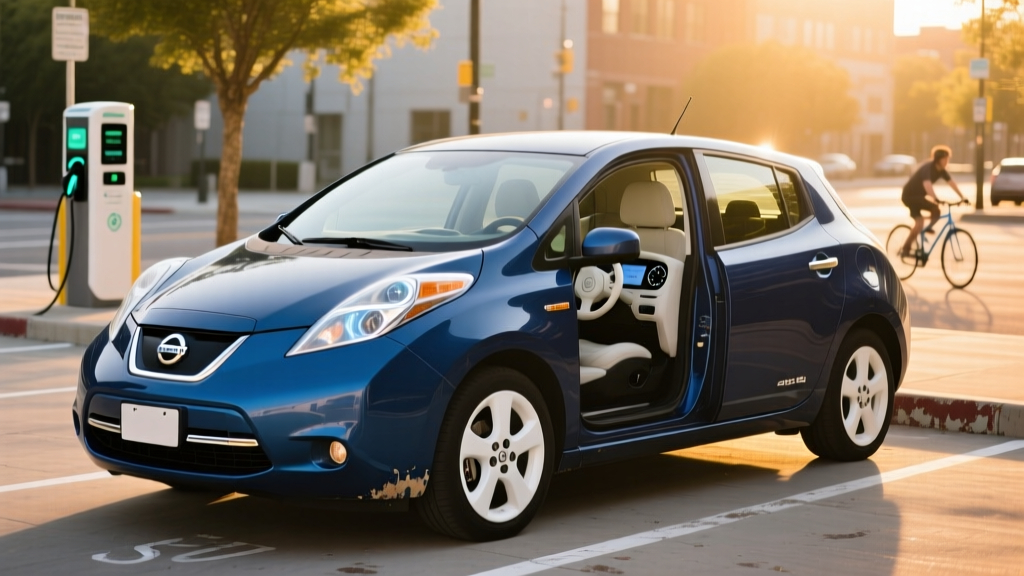
The 2016 Nissan Leaf SV was a pivotal model year for Nissan's pioneering electric hatchback. It introduced the upgraded 30 kWh battery pack (up from 24 kWh in prior years), pushing EPA-estimated range from 84 to 107 miles. For 2026 used-EV shoppers, the Leaf SV remains one of the most affordable entry points into electric driving — provided your commute is short, you can charge at home, and you understand the real-world limitations of a passively cooled battery a decade into its service life.
This is not a road-trip EV. It is a budget commuter with genuine daily utility, low running costs, and access to the used clean vehicle tax credit if you qualify. But battery degradation, CHAdeMO charging obsolescence, and the absence of modern driver assists mean buyers must go in with eyes open.
Range, Efficiency, and the Degradation Reality
The 2016 Leaf SV with the 30 kWh pack carries an official EPA range estimate of 107 miles. The base S trim with the older 24 kWh pack was rated at 84 miles. Efficiency is strong by any era's standards: the EPA rates the 30 kWh Leaf at 112 MPGe combined, or roughly 30 kWh per 100 miles.
- EPA sticker: 107 miles (combined city/highway)
- City driving, mild weather: 95–110 miles achievable
- Highway (70 mph, sustained): 75–90 miles
- Cold weather (below 32°F): 60–75 miles (resistive heater draws heavily from the pack)
- With 10 years of degradation (~15–25% loss): Expect 65–90 miles usable in mixed conditions
The 2016 Leaf has no active thermal management — the battery relies on passive air cooling. This means repeated fast charging, hot-weather driving, or sustained high-speed runs accelerate degradation. A 2016 model in 2026 will almost certainly show reduced State of Health (SoH). Always check the battery health bars on the dash (the small bars near the range gauge — 12 bars is new, anything below 10 signals meaningful loss).
| Spec | Value |
|---|---|
| Battery Capacity (usable) | ~30 kWh (NMC chemistry) |
| EPA Range | 107 miles (30 kWh) / 84 miles (24 kWh, S trim) |
| EPA Efficiency | 112 MPGe combined (30 kWh/100 mi) |
| Motor Output | 80 kW (107 hp), 187 lb-ft torque |
| 0–60 mph | ~9.9 seconds |
| Drivetrain | Front-wheel drive, single-speed reduction |
| DC Fast Charge (max) | ~46 kW (CHAdeMO) |
| DC Fast Charge 10–80% | ~30 minutes (at 46 kW peak, tapering above 80%) |
| Level 2 Home Charge | 6.6 kW onboard charger (~22 miles/hr) |
| Level 1 (120V) Charge | ~1.4 kW (~5 miles/hr) |
| Cargo Volume | 24.0 cu ft (rear seats up) / 30.0 cu ft (seats folded) |
| Rear Legroom | 33.3 inches |
| Original MSRP (SV trim) | ~$35,700 (before incentives) |
| Battery Warranty (original) | 8 years / 100,000 miles (capacity loss below 9 bars) |
| Powertrain Warranty | 5 years / 60,000 miles |
Charging Speed: CHAdeMO in an NACS World
The 2016 Leaf uses the CHAdeMO DC fast-charging standard and a J1772 inlet for Level 1 and Level 2 AC charging. This matters enormously in 2026.
| Level | Connector | Max Power | Speed (approx.) |
|---|---|---|---|
| Level 1 (120V household) | J1772 | 1.4 kW | ~5 miles per hour |
| Level 2 (240V home/public) | J1772 | 6.6 kW | ~22 miles per hour |
| DC Fast Charge | CHAdeMO | ~46 kW peak | 10–80% in ~30 min |
The SV trim includes the 6.6 kW onboard charger as standard (the base S trim was limited to 3.3 kW, making home charging painfully slow). A full Level 2 charge from empty takes roughly 4.5–5 hours.
DC fast charging tops out around 46 kW — modest by 2026 standards where newer EVs pull 150–350 kW. The charge curve tapers significantly above 80% State of Charge, so plan your stops around 10–80% sessions for the best time efficiency.
The CHAdeMO problem: Major networks like Electrify America, EVgo, and ChargePoint have progressively deprioritized CHAdeMO connectors in favor of CCS1 and the now-dominant NACS (Tesla) standard. While CHAdeMO stations still exist, coverage is shrinking. If your local public chargers lack CHAdeMO cables, your fast-charging options are severely limited. The U.S. Department of Energy's Alternative Fuels Station Locator can help you map CHAdeMO availability near your routes.
Performance and Driving Impressions
The Leaf SV's 80 kW (107 hp) AC synchronous motor delivers 187 lb-ft of torque to the front wheels. The 0–60 mph time of roughly 9.9 seconds is unremarkable but adequate for city merging and suburban driving. The instant electric torque makes the Leaf feel peppier than the stopwatch suggests at low speeds, but highway passing requires planning.
The ride is comfortable and compliant. Steering is light and easy. Visibility is excellent. At 3,250 lbs, the Leaf is relatively light for an EV, which contributes to its strong efficiency. Regenerative braking is moderate — the Leaf does not offer true one-pedal driving. The "B" mode on the shifter increases regen somewhat, but the car still creeps and requires brake-pedal use for full stops.
There are no advanced driver-assistance features beyond standard ABS, stability control, and a rearview camera. Nissan's ProPILOT Assist did not arrive on the Leaf until the redesigned 2018 model. If you expect adaptive cruise or lane-keeping, this is not the EV for you.
Interior, Tech, and Cargo Practicality
The 2016 Leaf SV interior is functional but dated. Key features include:
- Infotainment: 5-inch touchscreen with navigation (SV trim), Bluetooth, USB input, and the Around View Monitor (360° camera system — a standout feature for parking)
- Climate: Automatic climate control with a resistive PTC heater (no heat pump — cold-weather range suffers as a result)
- Instrument cluster: Digital dash with battery capacity bars, range estimate, and power/eco meters
- Seating: Cloth upholstery, 60/40 split rear seat, fits four adults comfortably (five in a pinch)
- Cargo: 24.0 cu ft behind the rear seat — competitive with compact hatchbacks. Folding the rear seat yields 30.0 cu ft.
The SV trim added key upgrades over the base S: the 6.6 kW charger, quick-charge port (CHAdeMO), fog lights, and upgraded seat fabric. The SL trim added leather, a Bose audio system, and LED headlights.
One notable drawback: the battery pack intrudes into the cargo area, creating a raised load floor. The rear seats don't fold completely flat. There is no frunk.
Pricing and Federal Tax Credit Eligibility
The 2016 Leaf SV originally carried an MSRP of approximately $35,700 (before the then-available $7,500 federal credit and any state incentives). In the 2026 used market, expect to pay between $7,000 and $12,000 depending on mileage, condition, and critically — battery State of Health.
| Item | Amount |
|---|---|
| Typical used price (good SoH, ~60k mi) | $9,000–$11,000 |
| Typical used price (degraded SoH, ~90k mi) | $6,500–$8,500 |
| Federal Used Clean Vehicle Credit (§25E) | Up to $4,000 (30% of sale price, max $4,000) |
| Effective price after max credit | $5,000–$7,000 |
Federal used-EV tax credit (§25E): The 2016 Leaf SV can qualify for the Used Clean Vehicle Credit — up to $4,000 or 30% of the sale price, whichever is less. Per IRS guidelines, eligibility requires:
- Sale price of $25,000 or less (the Leaf easily clears this)
- Buyer income limits: $75,000 single / $112,500 head of household / $150,000 joint filers (modified AGI)
- Vehicle must be at least two model years old (2016 qualifies)
- Purchased from a licensed dealer (private-party sales do not qualify)
- The vehicle's battery must have at least 7 kWh capacity (the Leaf's 30 kWh qualifies)
- Point-of-sale transfer is available — the dealer applies the credit as a down-payment reduction at purchase
Note: The §25E used-vehicle credit is distinct from the §30D new-vehicle credit. It does not have the same critical-mineral or battery-sourcing requirements. However, you can only claim the used credit once every three years, and the vehicle must be the first transfer after the original sale.
Pros and Cons at a Glance
- Very low purchase price — among the cheapest EVs available used
- Strong city efficiency (112 MPGe combined)
- 6.6 kW Level 2 charger standard on SV (solid home charging)
- Around View Monitor (360° camera) — excellent for parking
- Hatchback practicality with 24 cu ft cargo
- Qualifies for up to $4,000 used-EV federal tax credit
- Low maintenance costs (no oil changes, minimal brake wear with regen)
- Passive battery cooling — degradation accelerates in heat and with DC fast charging
- CHAdeMO connector — shrinking public fast-charge network in 2026
- Real-world range often 65–90 miles after 10 years of degradation
- No active thermal management or heat pump
- No advanced driver assists (no adaptive cruise, no lane-keeping)
- 46 kW peak DC charge rate is slow by modern standards
- Battery replacement cost ($6,500–$9,000+) can exceed vehicle value
- Dated infotainment with small 5-inch screen
Who Should Buy the 2016 Leaf SV?
- Your daily round-trip commute is under 50 miles and you can charge at home every night
- You want the cheapest possible entry into EV ownership with tax-credit savings
- You primarily drive in mild climates (extreme heat accelerates passive-battery degradation)
- You have a second vehicle for longer trips
- You value low operating costs over performance and tech
- You need more than 80 miles of reliable daily range in all weather
- You lack home charging access and need public fast-charging infrastructure (CHAdeMO is fading)
- You want modern driver assists, a large touchscreen, or over-the-air updates
- You live in a hot climate (Arizona, Texas, Florida) where passive cooling accelerates battery wear
- You plan to keep the vehicle long-term and are concerned about battery replacement economics
Strong alternatives to cross-shop include the 2017–2018 Chevrolet Bolt EV (238-mile EPA range, active battery cooling, CCS charging), the 2016–2018 BMW i3 (unique build, available range extender), and the 2018+ Nissan Leaf (redesigned with 151-mile range and ProPILOT Assist).
Frequently Asked Questions
What is the real-world range of a 2016 Nissan Leaf SV in 2026?
With the 30 kWh battery and a decade of use, expect 65–90 miles of usable range in mixed driving, depending on battery State of Health, ambient temperature, and driving style. Highway speeds and cold weather reduce this further. Always check the dash battery health bars before purchasing — 12 bars is ideal; 10 or fewer indicates meaningful degradation.
How fast does the 2016 Leaf SV charge at home and on the road?
On a Level 2 home charger (240V), the SV's 6.6 kW onboard charger adds about 22 miles of range per hour, filling the pack in roughly 4.5 hours. DC fast charging peaks at about 46 kW via CHAdeMO, reaching 10–80% in approximately 30 minutes. However, CHAdeMO stations are becoming less common as the industry shifts to NACS and CCS1.
Does the 2016 Nissan Leaf qualify for any federal tax credit?
It does not qualify for the new-vehicle §30D credit (the original credit expired for Nissan in 2019). However, it can qualify for the §25E Used Clean Vehicle Credit — up to $4,000 or 30% of the sale price — when purchased from a licensed dealer by a buyer meeting income requirements (see IRS guidelines for current limits).
Is the 2016 Leaf SV worth buying vs. a used Chevy Bolt or newer Leaf?
The 2016 Leaf SV makes sense only at a very low price point (under $8,000 after credits) for short-commute buyers who charge at home. The 2017+ Chevy Bolt EV offers nearly triple the range (238 miles EPA), active battery cooling, and CCS charging — a far more capable used EV for only modestly more money. The redesigned 2018+ Leaf offers 151 miles (40 kWh) or 226 miles (62 kWh Plus) and modern driver assists. If your budget allows $12,000+, the Bolt or newer Leaf is the stronger buy.
What does a battery replacement cost for the 2016 Leaf?
Nissan's official battery replacement pricing has historically been in the $6,500–$9,000 range for the 30 kWh pack, though availability and pricing vary by dealer and region in 2026. Third-party refurbishment options may exist for less. Given that a used 2016 Leaf SV might cost $8,000–$10,000, a battery replacement can approach or exceed the vehicle's value — a critical factor in the purchase decision.
Can I use a Tesla Supercharger with the 2016 Leaf?
Not directly. The 2016 Leaf uses CHAdeMO for DC fast charging and J1772 for AC. Tesla's NACS connector is incompatible. While adapters exist (CHAdeMO-to-NACS), they are expensive ($300–$500), add complexity, and may not be supported at all Supercharger stalls. For most Leaf owners, home Level 2 charging remains the primary refueling method.