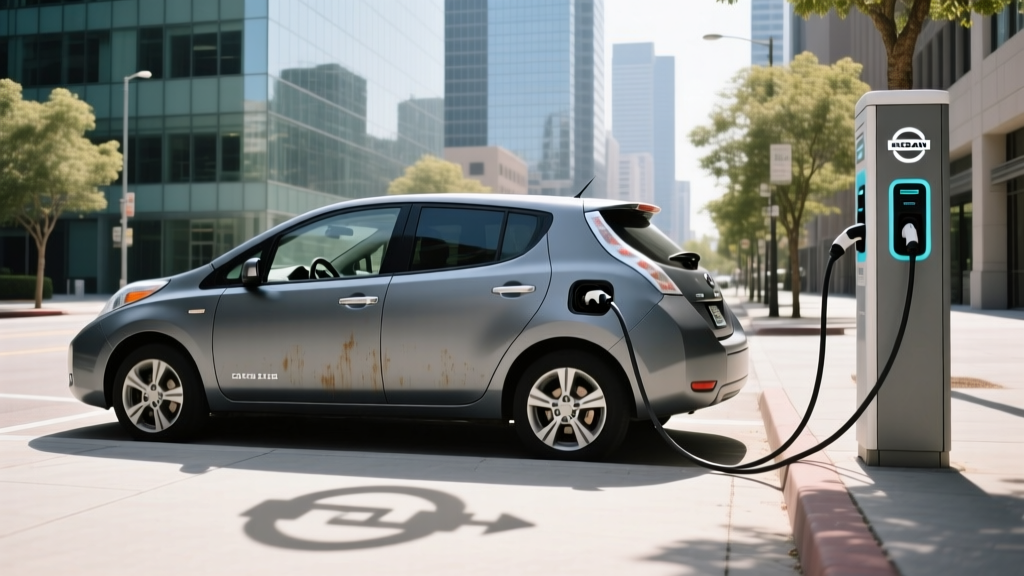
The 2016 Nissan Leaf was once the world's best-selling electric car, and a decade later it remains a fixture on the used EV market. With prices now hovering between $6,000 and $12,000 depending on battery health, it's an accessible entry point into electric driving — but only if you understand exactly what you're getting. This review breaks down the real-world range, charging limitations, battery degradation risks, and whether the 2016 Leaf still makes sense as a daily driver in 2026.
2016 Nissan Leaf: Core Specifications at a Glance
| Spec | Value |
|---|---|
| EPA Range | 84 miles (24 kWh battery) / 107 miles (30 kWh battery) |
| Battery Capacity | 24 kWh (usable ~21.5 kWh) or 30 kWh (usable ~27 kWh) |
| Battery Chemistry | Lithium Manganese Oxide (LMO) with NMC blend — no active thermal management |
| Motor Output | 80 kW (107 hp), 187 lb-ft torque |
| 0-60 mph | ~9.9 seconds |
| Drivetrain | FWD (front-wheel drive, single motor) |
| EPA Efficiency | 114 MPGe combined (24 kWh) / 112 MPGe combined (30 kWh) |
| Max DC Fast Charge | ~50 kW (CHAdeMO connector) |
| Level 2 Charge Rate | 6.6 kW (onboard charger) |
| Cargo Volume | 24.0 cu ft (rear seats up) / 30.0 cu ft (rear seats folded) |
| Original MSRP | $29,010 (S) – $35,120 (SL) before incentives |
| Used Price Range (2026) | $6,000 – $12,000 depending on battery SoH |
Real-World Range: What the EPA Sticker Doesn't Tell You
EPA Estimate: 84 miles (24 kWh) / 107 miles (30 kWh SV/SL)
Real-World Expectation: 60–75 miles highway for the 24 kWh model; 80–95 miles for the 30 kWh. In cold weather (below 40°F), expect a 25–40% reduction due to the lack of a heat pump and passive air-cooled battery.
The 2016 Leaf was sold in two battery configurations. The base S trim carried the carryover 24 kWh pack, while the SV and SL trims received a new 30 kWh pack that bumped EPA range to 107 miles. According to fueleconomy.gov, the 24 kWh version achieves 114 MPGe combined (29 kWh/100 mi), while the 30 kWh version rates at 112 MPGe combined.
Real-world range diverges sharply from the sticker for a few reasons. First, the Leaf uses passive air cooling for its battery — no liquid thermal management. This means battery temperature swings directly affect efficiency and available capacity. In summer highway driving at 70+ mph, you'll see range drop due to aerodynamic drag and battery heat buildup. In winter, the resistive cabin heater draws heavily from the same small pack, and cold cells deliver less usable energy.
For the 24 kWh model, owners consistently report 65–75 miles of usable range in moderate temperatures with mixed driving. Highway-only trips at 70 mph drop that to roughly 55–65 miles. The 30 kWh model improves this by roughly 20–25%, but you're still working with a small energy reserve. This is a strict city-and-suburb commuter — not a road-trip vehicle.
Charging Speed: CHAdeMO Limitations and Home Setup
Charging is where the 2016 Leaf shows its age most visibly. Nissan equipped it with a CHAdeMO DC fast-charge port and a J1772 AC port. The maximum DC fast-charge rate is approximately 50 kW, though real-world sustained rates are often lower due to the air-cooled battery's thermal constraints.
| Charging Level | Connector | Max Power | Charging Speed |
|---|---|---|---|
| Level 1 (120V) | J1772 | 1.4 kW | ~4–5 miles per hour |
| Level 2 (240V) | J1772 | 6.6 kW | ~20–22 miles per hour |
| DC Fast Charge | CHAdeMO | ~50 kW peak | 10–80% in ~30–40 min (varies with battery temp) |
A full Level 2 charge from empty takes roughly 4–5 hours on the 6.6 kW onboard charger, which is adequate for overnight home charging. The 2016 Leaf's 6.6 kW charger was an upgrade from earlier 3.3 kW units and is a meaningful improvement for daily use.
DC fast charging is the pain point. The 50 kW peak rate was acceptable in 2016 but is severely outpaced by modern EVs that pull 150–250 kW. Worse, the Leaf's passive battery cooling means repeated fast charges in warm weather trigger the infamous "Rapidgate" — the car throttles charging speed to protect the overheating battery. You might see 50 kW on your first session, but by the second or third consecutive charge, speeds can drop to 20–30 kW. This makes road-trip charging tedious and unpredictable.
Another critical factor: CHAdeMO infrastructure is shrinking in the US. Networks like Electrify America and most newer installations use CCS or NACS connectors. While CHAdeMO stations still exist (notably through EVgo and some legacy Electrify America sites), the trend is firmly against this standard. If your local charging options are limited to CCS/NACS stations, the Leaf's DC fast-charging capability becomes largely theoretical.
Battery Degradation: The 2016 Leaf's Biggest Risk
Battery health is the single most important factor when evaluating a used 2016 Leaf. Nissan's air-cooled battery design is uniquely susceptible to degradation from heat exposure and repeated fast charging. Unlike liquid-cooled packs in Teslas, Bolts, and modern Hyundai/Kia EVs, the Leaf's battery has no active temperature regulation, meaning cells in hot climates degrade faster.
Nissan provides a battery capacity gauge on the dashboard — the "capacity bars" — out of 12 total. A new battery shows 12 bars. As the battery degrades, bars disappear. Many 2016 Leafs in 2026 show 9–11 bars, meaning 8–25% capacity loss. In hot climates like Arizona or Texas, some units have dropped to 8 bars or below, losing over 33% of original capacity.
The battery warranty was 8 years / 100,000 miles against capacity loss below 9 bars (for the 24 kWh pack) or below a specified threshold. For 2016 models, this warranty has now expired for most vehicles, meaning any battery replacement falls entirely on the owner. A replacement battery from Nissan costs roughly $6,500–$9,000 installed, though refurbished options from third-party shops run $3,500–$5,500.
Buying tip: Use a LeafSpy OBD-II dongle (around $20 for the adapter plus the app) to read the actual State of Health (SoH) percentage and check for cell voltage imbalance. Don't rely solely on the dashboard capacity bars, as they are a coarse approximation. A healthy 2016 Leaf should show 80%+ SoH; anything below 75% means significantly reduced range and potential near-term replacement cost.
Performance, Ride Quality, and Daily Driving
The 2016 Leaf's 80 kW (107 hp) AC synchronous motor delivers 187 lb-ft of torque to the front wheels. The 0–60 mph time of approximately 9.9 seconds is leisurely by modern EV standards — a 2025 Tesla Model Y does it in under 5 seconds — but the instant torque still makes the Leaf feel punchy around town at 0–35 mph. Highway passing power is modest; merging onto fast-moving freeways requires planning.
Ride quality is a genuine strength. The Leaf's soft suspension tuning and compliant seats make it one of the more comfortable compact hatchbacks for city driving. The cabin is quiet at low speeds, though wind and tire noise become noticeable above 55 mph. The regenerative braking system offers a "B mode" for stronger regen, but it does not enable true one-pedal driving — the car creeps at low speeds and won't come to a complete stop without using the friction brake.
The 2016 Leaf comes equipped with Nissan's Around View Monitor (360-degree camera) on SL trims, a 7-inch touchscreen infotainment system with navigation, Bluetooth, and a USB port. There is no Apple CarPlay or Android Auto — you'll rely on the native infotainment or a phone mount. Driver-assist features are limited: no adaptive cruise, no lane-keeping assist. You get a basic backup camera and standard stability control. This is a pre-ADAS era vehicle.
Pricing, Ownership Costs, and Tax Credit Eligibility
| Item | Amount |
|---|---|
| Used Price (24 kWh, avg SoH) | $6,000 – $8,500 |
| Used Price (30 kWh, good SoH) | $8,500 – $12,000 |
| Federal Used EV Tax Credit (§25E) | Up to $4,000 (30% of sale price, capped) |
| Credit-Adjusted Price (30 kWh example) | ~$5,500 – $8,000 effective cost |
| Annual Electricity Cost (12,000 mi/yr) | ~$450 – $600 (at $0.14/kWh national avg) |
| Estimated Annual Insurance | $900 – $1,300 |
The 2016 Leaf no longer qualifies for the new-vehicle §30D federal tax credit, as it's only available on new purchases. However, it can qualify for the §25E Used Clean Vehicle Credit, which provides up to $4,000 (30% of the sale price, capped at $4,000) for used EVs purchased from a licensed dealer for $25,000 or less. Per IRS guidelines, buyer income caps apply: $75,000 single / $112,500 head of household / $150,000 joint filers. The vehicle must be at least two model years old (which a 2016 easily satisfies), and the credit can be transferred to the dealer at point of sale as an upfront discount.
This credit dramatically improves the Leaf's value proposition. A $9,000 30 kWh Leaf purchased from a qualifying dealer could effectively cost $5,000–$6,000 after the credit. That's among the cheapest ways to get into any electric vehicle in 2026.
Running costs are minimal. At the national average residential electricity rate of ~$0.14/kWh, a full 24 kWh charge costs about $3.00–$3.50, yielding a cost per mile of roughly $0.03–$0.04. Compare that to a 30 MPG gas car at $3.20/gallon ($0.11/mile), and the Leaf saves roughly $700–$900 per year in fuel for a 12,000-mile driver. Maintenance is nearly zero: no oil changes, no spark plugs, minimal brake wear thanks to regen. The main long-term cost variable is battery replacement if degradation accelerates.
Pros and Cons: Honest Assessment
Pros
- Very low used entry price, especially with §25E credit
- Comfortable ride and quiet cabin for city driving
- Low running costs — ~$0.03–$0.04/mile on home charging
- Hatchback practicality with 24–30 cu ft cargo space
- 6.6 kW Level 2 onboard charger is adequate for overnight use
- Strong reliability record for motor and power electronics
Cons
- 84–107 mile EPA range is severely limiting by 2026 standards
- Air-cooled battery degrades faster, especially in hot climates
- CHAdeMO fast-charging standard is being phased out in the US
- 50 kW max DC charge speed with thermal throttling (Rapidgate)
- No Apple CarPlay, Android Auto, or modern ADAS features
- Expired battery warranty means replacement cost is owner's burden
- Resistive cabin heater drains range significantly in winter
Who Should Buy the 2016 Nissan Leaf?
Choose the 2016 Leaf if:
- You need a sub-$10,000 EV for a predictable commute under 40 miles round-trip
- You have reliable home Level 2 charging and don't depend on public DC fast chargers
- You live in a moderate climate (not extreme heat or extreme cold)
- You qualify for the §25E used EV credit and buy from a licensed dealer
- You want minimal maintenance costs and can accept the range limitations
Look elsewhere if:
- Your daily commute exceeds 50 miles round-trip or involves sustained highway speeds
- You live in a hot climate (AZ, TX, NV) where battery degradation accelerates
- You need DC fast charging for road trips or lack home charging access
- You want modern infotainment, driver assists, or one-pedal driving
- You're considering a second car for a family that needs flexibility
The 2016 Leaf is best understood as a dedicated commuter appliance. If your daily driving is short, predictable, and within its range envelope — and you can charge at home every night — it's one of the cheapest ways to drive electric in 2026. The §25E credit makes the economics compelling: a $9,000 Leaf effectively costing $5,000–$6,000 with annual fuel savings of $700+ pays for itself quickly.
But it's not a versatile vehicle. The limited range, degrading battery, shrinking CHAdeMO network, and lack of modern tech make it a niche choice. If your budget can stretch to $15,000–$20,000, a used 2019–2021 Chevy Bolt EV (238-mile EPA range, liquid-cooled battery, CCS charging) or a 2018+ Leaf with the 40 kWh pack (151-mile range) offers dramatically more capability and longevity.
2016 Nissan Leaf vs. Key Used EV Competitors
| Attribute | 2016 Nissan Leaf (30 kWh) | 2017 Chevy Bolt EV | 2017 VW e-Golf |
|---|---|---|---|
| EPA Range | 107 mi | 238 mi | 125 mi |
| Battery | 30 kWh, air-cooled | 60 kWh, liquid-cooled | 35.8 kWh, liquid-cooled |
| DC Fast Charge | 50 kW CHAdeMO | 55 kW CCS | 50 kW CCS |
| 0–60 mph | ~9.9 sec | ~6.5 sec | ~9.6 sec |
| Used Price (2026) | $8,500–$12,000 | $12,000–$17,000 | $10,000–$14,000 |
| Battery Degradation Risk | High (air-cooled) | Moderate (liquid-cooled) | Low-Moderate (liquid-cooled) |
The Bolt EV is the clear upgrade pick if your budget allows — double the range, active thermal management, and a CCS connector that remains widely supported. The e-Golf offers a more premium driving experience and liquid cooling but with only modest range improvement over the Leaf. The Leaf wins purely on price, especially after the §25E credit.
Frequently Asked Questions
What is the real-world range of the 2016 Nissan Leaf?
The 24 kWh model delivers roughly 60–75 real-world miles in moderate conditions, dropping to 45–55 miles in cold weather or sustained highway driving. The 30 kWh model provides approximately 80–95 real-world miles under similar conditions. Both fall well short of modern EVs.
How fast does the 2016 Leaf charge at home and on DC fast chargers?
On a 240V Level 2 home charger at 6.6 kW, the Leaf gains about 20–22 miles of range per hour, with a full charge taking 4–5 hours. DC fast charging peaks around 50 kW via CHAdeMO, reaching 10–80% in roughly 30–40 minutes, though thermal throttling can slow subsequent charges significantly.
Does the 2016 Nissan Leaf qualify for any federal tax credit?
Not the new-vehicle §30D credit, but it can qualify for the §25E Used Clean Vehicle Credit — up to $4,000 (30% of sale price, capped) when purchased from a licensed dealer for under $25,000. Buyer income caps apply ($75K single / $150K joint). Confirm eligibility with your tax professional and review IRS §25E guidelines.
Is the 2016 Leaf worth buying in 2026 vs. newer used EVs?
It depends on your use case and budget. If you need a dirt-cheap commuter EV for short trips and have home charging, the Leaf at $6,000–$9,000 (after credit) is hard to beat on price. If you need more range, better battery longevity, or DC fast-charging compatibility with modern networks, spend more on a used Bolt EV or a 2018+ Leaf with the 40 kWh pack.
How long will the 2016 Leaf battery last?
Air-cooled Leaf batteries degrade faster than liquid-cooled alternatives. Expect 75–85% State of Health at 8–10 years in moderate climates, and potentially 65–75% in hot climates. At 70% SoH, the 30 kWh pack effectively holds only ~19 kWh, reducing range to roughly 60–70 miles. Battery replacement costs $3,500–$9,000 depending on source.
What are the biggest drawbacks of the 2016 Leaf?
The top concerns are limited range (84–107 miles EPA), passive air-cooled battery degradation, the declining CHAdeMO charging network, thermal throttling during fast charging, and outdated infotainment with no smartphone integration. It's a functional commuter, not a versatile primary vehicle.