Quick Verdict: Should You Buy a Used 2016 Mercedes-Benz B-Class Electric?
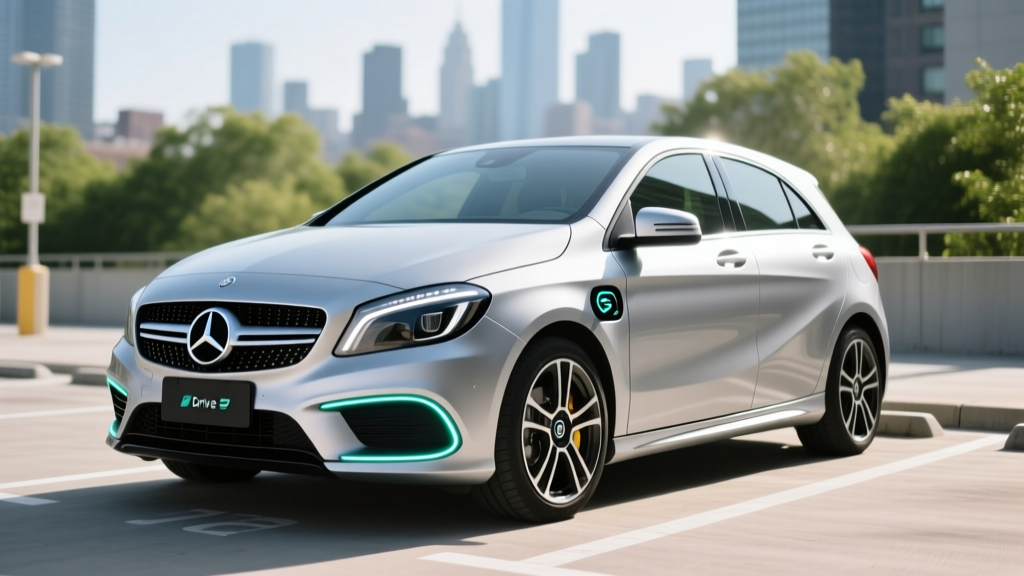
Bottom line: The 2016 Mercedes-Benz B-Class Electric Drive (also badged B250e) is a comfortable, well-built compliance EV with an EPA-estimated 87 miles of range from its 28 kWh usable battery. On the used market in 2026, expect to pay $7,000–$12,000 depending on mileage and condition. It works as a city commuter or second car if you have reliable home Level 2 charging and short daily drives. It is not a road-trip EV, it lacks DC fast charging, and battery degradation on 10-year-old packs is a real concern. This car does not qualify for the federal §30D new-EV tax credit, but the used-EV credit (up to $4,000 or 30% of sale price, whichever is less) may apply if you buy from a dealer and meet income caps.
Mercedes-Benz built the B-Class Electric Drive primarily to satisfy California's zero-emission vehicle mandate. The electric powertrain was engineered in partnership with Tesla, which supplied the motor and power electronics, while Mercedes handled the chassis, interior, and packaging. The result is a hatchback that drives like a Mercedes but carries the range limitations of early-2010s battery technology. If you're cross-shopping this against a used Nissan Leaf, Chevy Bolt, or BMW i3, the specifics below will help you decide.
Specs at a Glance: 2016 B-Class Electric Drive
| Specification | 2016 Mercedes-Benz B-Class Electric Drive (B250e) |
|---|---|
| EPA Range | 87 miles |
| Real-World Range (mixed driving) | 70–85 miles; 55–65 miles in cold weather or sustained highway |
| Battery (usable) | 28 kWh lithium-ion (NMC chemistry, Tesla-supplied) |
| Motor Output | 177 hp / 251 lb-ft torque |
| 0–60 mph | 7.1 seconds |
| EPA Efficiency | 84 MPGe combined (40 kWh/100 mi) |
| Level 1 Charging (120V, 12A) | ~1.4 kW — adds ~4 miles/hour |
| Level 2 Charging (240V, 32A) | ~7.2 kW — adds ~22 miles/hour; 0–100% in ~4 hours |
| DC Fast Charging | Not available (no CCS or CHAdeMO port) |
| Connector | J1772 (Level 2) |
| Cargo Volume | 21.7 cu ft (rear seats up), 51.5 cu ft (folded) |
| Battery Warranty (original) | 8 years / 100,000 miles (mostly expired by 2026) |
| Original MSRP | $41,450 (before incentives); lease-heavy program |
| 2026 Used Price Range | $7,000–$12,000 |
Real-World Range: What 87 EPA Miles Actually Means
EPA Sticker: 87 miles
Real-World Expectation: 70–85 miles in mild weather, mixed city/highway driving. Expect 55–65 miles in freezing temperatures or at sustained 70+ mph highway speeds.
The B-Class Electric Drive's 28 kWh usable pack is small by 2026 standards — for context, a current Chevrolet Bolt EV carries 65 kWh and achieves 259 miles EPA. The B-Class was designed for urban commuting, not corridor travel. In practice, the car's range estimate on the dashboard (the "guess-o-meter") is reasonably accurate when driving in the city, where regenerative braking recovers energy during stop-and-go traffic.
However, two factors compress range significantly:
- Cold weather: Lithium-ion batteries lose efficiency below 40°F, and cabin heating draws heavily from the pack. Owners in northern climates report 20–30% range loss in winter, dropping real range to the 55–65 mile window.
- Highway driving: At 70–75 mph, aerodynamic drag dominates and regen braking is minimal. Efficiency drops to roughly 33–35 kWh/100 mi, cutting range to around 60–70 miles on a full charge.
If your round-trip commute is under 50 miles and you can charge at home overnight, this car covers daily needs with a comfortable buffer. If you regularly drive more than 60 miles one way, or if you lack home charging, this vehicle will create daily stress.
Charging Reality: Level 2 Only, No Fast-Charging Option
The most critical limitation of the 2016 B-Class Electric Drive is the absence of DC fast charging. There is no CCS, CHAdeMO, or Tesla Supercharger adapter. You are limited to Level 1 (standard 120V outlet) and Level 2 (240V) AC charging. This means:
| Charging Level | Power (kW) | Miles Added Per Hour | Full 0–100% Time |
|---|---|---|---|
| Level 1 (120V, 12A) | ~1.4 kW | ~4 mi/hr | ~20+ hours |
| Level 2 (240V, 32A) | ~7.2 kW | ~22 mi/hr | ~4 hours |
| DC Fast Charging | N/A | N/A | Not supported |
For daily ownership, a home Level 2 charger is effectively mandatory. A full charge from near-empty takes about 4 hours on Level 2, meaning an overnight session easily tops off the battery. But if you need to replenish mid-day on a longer drive, your only option is finding a public Level 2 station (via ChargePoint, EVgo, or similar networks) and waiting 1–2 hours for a meaningful charge.
According to fueleconomy.gov, Level 2 charging is the practical baseline for any EV without DC fast-charge capability. Budget $500–$1,500 for a quality Level 2 home charger (such as a ChargePoint Home Flex or Emporia Vue) plus $300–$1,200 for electrician installation, depending on whether your electrical panel needs an upgrade to support a dedicated 40-amp circuit.
Cost Breakdown: Buying, Charging, and Maintaining
| Cost Category | 2016 B-Class Electric (Used) | Comparable Gas Hatchback (e.g., 2016 Honda Fit) |
|---|---|---|
| Purchase Price (2026 used market) | $7,000–$12,000 | $9,000–$14,000 |
| Federal Used-EV Tax Credit | Up to $4,000 (30% of sale price, income caps apply) | $0 |
| Effective Purchase Price (with credit) | $5,000–$8,000 | $9,000–$14,000 |
| Fuel/Energy Cost Per Mile | $0.04–$0.06 (at $0.14/kWh avg) | $0.12–$0.15 (at $3.50/gal, 33 MPG) |
| Annual Fuel/Energy (10,000 mi) | $400–$600 | $1,200–$1,500 |
| Annual Maintenance | $200–$400 (tires, cabin filter, wipers, brake fluid) | $600–$900 (oil, filters, belts, brakes) |
| Insurance (annual avg) | $1,100–$1,500 | $900–$1,200 |
| Home Charger Install (one-time) | $800–$2,700 | $0 |
The used-EV tax credit under IRS §25E can significantly reduce your effective purchase price. To qualify, you must buy from a licensed dealer (not a private party), have modified adjusted gross income below $75,000 (single) / $150,000 (joint), and the vehicle must be at least two model years old with a sale price at or below $25,000. At a $10,000 sale price, the credit would be $3,000 (30% of $10,000). At $12,000, it would be $3,600. Confirm eligibility with a tax professional before relying on this credit.
On the fueling side, the B-Class Electric's efficiency of 40 kWh/100 miles means that at the U.S. average residential electricity rate of roughly $0.14/kWh, you're paying about $0.056 per mile. A comparable gas hatchback at 33 MPG combined with $3.50/gallon fuel costs roughly $0.106 per mile — nearly double. Over 10,000 miles annually, that's a savings of roughly $600–$900 per year on energy alone.
Battery Health: The Biggest Used-EV Risk
The 2016 B-Class Electric Drive uses a Tesla-supplied NMC (nickel-manganese-cobalt) lithium-ion battery pack. After 10 years of service, some capacity loss is expected. Based on owner reports and general NMC degradation curves for this era:
- Typical degradation at 10 years / 60,000–80,000 miles: 10–18% capacity loss
- Resulting usable range: 72–78 miles (from the original 87-mile EPA figure), assuming a 12–15% degradation scenario
- Worst-case scenarios: Packs exposed to frequent high-temperature environments or repeated deep discharges (below 10% SoC regularly) may show 20%+ degradation
The original 8-year/100,000-mile battery warranty has expired for most 2016 models by 2026. If the pack fails or degrades beyond usability, replacement is extremely difficult — Mercedes-Benz never widely stocked B-Class EV replacement batteries, and third-party options are scarce. A pack replacement, if available, would likely cost $8,000–$15,000, potentially exceeding the car's value.
Before buying, insist on a battery health check. Ask the seller or a Mercedes-Benz dealer to pull the State of Health (SoH) reading from the battery management system. An SoH above 85% is acceptable; below 80% is a significant negotiation point or walk-away signal. Unlike newer EVs with liquid-cooled packs and sophisticated thermal management, the B-Class system is passively cooled in some configurations, making it more susceptible to heat-related degradation in hot climates.
Myths vs. Facts About the B-Class Electric
| Myth | Fact |
|---|---|
| "It has a Tesla battery, so it's basically a Tesla." | Tesla supplied the motor, inverter, and battery cells, but the pack design, thermal management, and vehicle integration are Mercedes-Benz. It does not access the Supercharger network and uses J1772, not NACS. |
| "87 miles is enough for anyone's commute." | The average U.S. one-way commute is ~16 miles (per Census data), but 87 EPA miles drops to 55–65 in winter or highway use. Errands, detours, and climate control reduce the buffer further. |
| "It qualifies for the $7,500 federal tax credit." | The §30D new-EV credit no longer applies to this discontinued model. The §25E used-EV credit (up to $4,000) may apply if purchased from a dealer under income and price caps. See IRS guidelines. |
| "Electric cars cost more to maintain." | EVs eliminate oil changes, spark plugs, timing belts, and exhaust repairs. Brake wear is greatly reduced due to regenerative braking. The B-Class EV's annual maintenance is typically $200–$400 vs. $600–$900 for a gas equivalent. |
| "I can charge it at any public charger." | Without DC fast charging, you're limited to Level 2 public stations. A 30-minute stop at a 150 kW DC charger does nothing — there's no port for it. Plan routes around Level 2 availability. |
Decision Framework: Is This the Right Used EV for You?
Buy the 2016 B-Class Electric Drive if:
- Your daily round-trip driving is under 50 miles
- You have (or can install) a Level 2 home charger on a 240V circuit
- You live in a mild climate where winter range loss is moderate
- You want a premium, quiet, comfortable hatchback at a bargain used price
- This is a second car, and you have a gas or long-range EV for longer trips
- You can verify battery SoH above 85% before purchase
Skip the B-Class Electric and look at a used Chevy Bolt EV, Nissan Leaf (40 kWh), or Hyundai Kona Electric instead if:
- Your daily driving exceeds 60 miles round-trip
- You lack home charging access and would rely on public infrastructure
- You live in a region with harsh winters (below 20°F regularly)
- You need DC fast charging for any occasional road trips
- You want a vehicle with remaining battery warranty coverage
- The battery SoH check shows degradation below 80%
For comparison, a used 2017–2019 Chevrolet Bolt EV offers 238 miles EPA, DC fast charging (CCS, up to 55 kW), and a 60 kWh battery — typically available for $10,000–$15,000 on the 2026 used market. A used Nissan Leaf (40 kWh, 2018+) provides 151 miles EPA and CHAdeMO DC fast charging for $9,000–$13,000. Both are more practical for most buyers, though neither matches the B-Class's interior refinement and ride quality.
What a First-Time EV Buyer Should Know Before Purchasing
- kW vs. kWh: kW (kilowatts) measures power — how fast energy flows during charging. kWh (kilowatt-hours) measures energy — the battery's total capacity. The B-Class has a 28 kWh battery and charges at up to 7.2 kW on Level 2. Think of kWh as the size of the gas tank and kW as the diameter of the fuel hose.
- Charge your car like your phone: Plug in at home every night. Most daily driving uses only a portion of the battery, and overnight Level 2 charging restores it by morning. You'll rarely visit a gas station again for local driving.
- Preconditioning matters: If your B-Class has a preconditioning feature (cabin and battery pre-warming while plugged in), use it. Warming the battery while on grid power preserves range in cold weather.
- Regenerative braking: The B-Class offers adjustable regen. In city driving, higher regen settings let you drive almost entirely with the accelerator pedal ("one-pedal driving"), recovering energy during deceleration and reducing brake wear.
- Insurance: Get a quote before buying. Used EVs can carry slightly higher premiums than equivalent gas cars due to repair-cost assumptions. Shop multiple insurers — some offer EV-specific discounts.
- Safety: The 2016 B-Class earned strong crash-test ratings in its era. Check NHTSA for the specific ratings. Note that it lacks modern ADAS features like automatic emergency braking and lane-keeping assist that are standard on 2026 EVs.
Frequently Asked Questions
Can I use a Tesla Supercharger with the 2016 B-Class Electric?
No. Despite the Tesla-sourced powertrain, the B-Class Electric Drive uses a standard J1772 connector and cannot access Tesla Superchargers or any DC fast-charging network. There is no adapter that enables DC fast charging on this vehicle.
How long will the battery last?
NMC lithium-ion packs from this era typically retain 80–90% of original capacity after 10 years with normal use. However, the B-Class's passive thermal management and age mean that checking State of Health before purchase is essential. Budget for the possibility that the pack may need replacement within the next 5–8 years at a cost that could exceed the car's value.
Is the 2016 B-Class Electric safe in a crash?
The B-Class received a 4-star overall NHTSA rating (out of 5) in its model year. It includes standard stability control, multiple airbags, and a reinforced battery enclosure. However, it lacks modern active safety features like automatic emergency braking, blind-spot monitoring, and lane-departure warning that are now common.
Does it qualify for any tax credits in 2026?
Not the new-EV §30D credit. However, the §25E used clean vehicle credit may provide up to $4,000 (30% of the sale price) if you purchase from a dealer, meet income requirements ($75K single / $150K joint MAGI), and the sale price is $25,000 or less. Consult a tax professional to confirm your eligibility.
What should I inspect before buying a used B-Class Electric?
Prioritize: (1) battery State of Health reading from the BMS, (2) charging port condition and J1772 connector integrity, (3) 12V auxiliary battery age (a dead 12V battery prevents the car from starting even if the main pack is full), (4) service records showing regular cabin filter and brake fluid changes, and (5) tire condition — EVs are heavier than gas equivalents and wear tires faster.