The Verdict on the 2016 Kia Soul EV in 2026
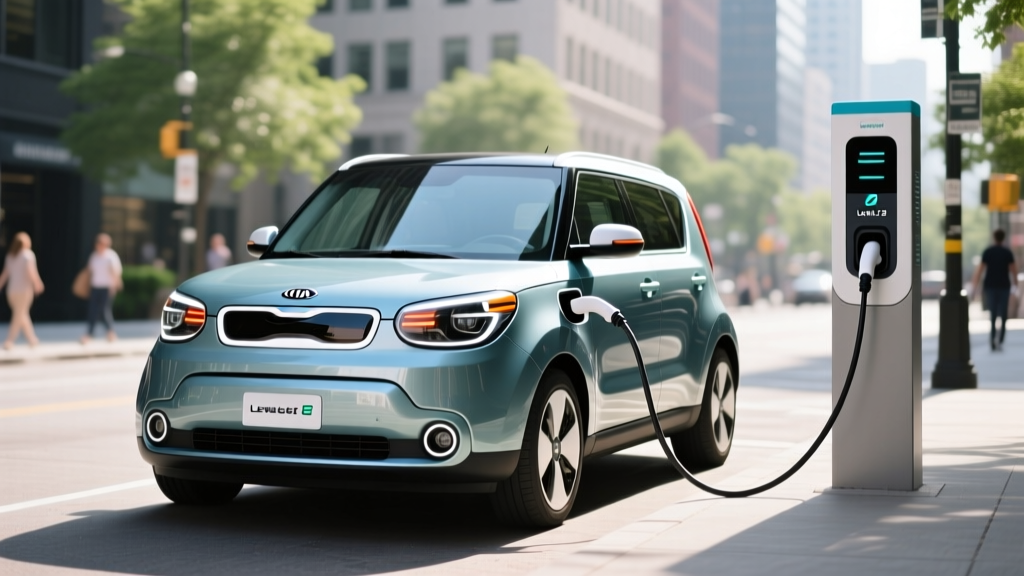
The 2016 Kia Soul Electric was rated at 93 miles of EPA range from a 27 kWh usable battery. In 2026, a used example with typical 80,000–100,000 miles will likely deliver 70–82 real-world miles due to battery degradation. It charges at just 6.6 kW on Level 2 and peaks around 50 kW on DC fast charging via its CHAdeMO connector — a standard that is being phased out across North America. Priced between $6,500 and $10,000 on the used market, it can serve as a hyper-local commuter if you have home charging, a warm climate, and a short daily drive. It is not a road-trip vehicle, and its CHAdeMO plug limits public charging access significantly in 2026.
Range, Battery, and What Degradation Really Means
The 2016 Kia Soul EV uses a 27 kWh lithium-ion polymer (LiPoly) pack — an NMC-type chemistry supplied by SK Innovation. When new, the EPA rated it at 93 miles combined, with an efficiency rating of 105 MPGe combined (roughly 32 kWh/100 mi). That was modest even for 2016; today it is among the lowest ranges of any highway-legal EV you can buy.
Real-World Range Expectations (2026 Used Example)
| Condition | Estimated Range |
|---|---|
| Mild weather, city driving (80% SoH) | 72–82 mi |
| Highway at 70 mph (80% SoH) | 55–65 mi |
| Cold weather, 30°F, mixed driving | 45–60 mi |
| Mild weather, city driving (90% SoH) | 80–88 mi |
Battery degradation is the central variable when buying any 8-to-10-year-old EV. Kia originally warranted the Soul EV's high-voltage battery for 10 years / 100,000 miles against defects and excessive capacity loss (defined as dropping below roughly 70% of original capacity). If you are buying a 2016 model in 2026, that factory battery warranty has either expired or is about to expire based on time — making a pre-purchase battery health check essential.
Ask the seller for a State of Health (SoH) reading from a Kia dealer or a qualified EV technician using an OBD-II scanner with EV-capable software (such as SoulEV-specific apps reading the BMS). An SoH of 85% or above means the pack is in reasonable shape for its age; below 75% signals significant range loss that may make the car impractical even for commuting.
Charging: Connectors, Speeds, and the CHAdeMO Problem
The 2016 Soul EV charges through three pathways. Understanding each — and the connector situation — is critical before you buy.
| Level | Connector | Max Power (kW) | Approx. Time (Empty to Full / 10–80%) | Miles Added per Hour |
|---|---|---|---|---|
| Level 1 (120V household) | J1772 | 1.2 kW | ~22–24 hours (full) | ~4–5 mi/hr |
| Level 2 (240V home/public) | J1772 | 6.6 kW | ~4.5–5 hours (full) | ~22–24 mi/hr |
| DC Fast Charge | CHAdeMO | ~50 kW (peak) | ~30–35 min (10–80%) | N/A |
The CHAdeMO challenge in 2026: When the Soul EV was new, CHAdeMO was one of two dominant DC fast-charging standards (alongside CCS). Since then, virtually every automaker has adopted either CCS or Tesla's NACS connector. Electrify America, the largest U.S. DC fast-charging network, stopped installing new CHAdeMO stalls after 2022 and has been gradually retiring them. In most metro areas, you will find far fewer operational CHAdeMO chargers than CCS or NACS stations in 2026. This is the single biggest practical limitation of owning this car.
The onboard charger is capped at 6.6 kW, meaning even if you plug into a 48-amp (11.5 kW) Level 2 home charger, the car will only draw 6.6 kW. A full charge from empty still takes about 4.5 hours. For daily commuting, plugging in overnight at home is the only practical routine — relying on public Level 2 or DC fast charging with this car is frustrating and time-consuming.
Common Misconceptions About the 2016 Soul EV
| Myth | Fact |
|---|---|
| "It qualifies for the $7,500 federal tax credit." | The federal §30D credit applies only to new EVs meeting current MSRP, income, and battery-sourcing requirements. The used EV credit (up to $4,000) applies to vehicles under $25,000 sold by a dealer, but the Soul EV often qualifies — verify with your tax professional. |
| "I can fast-charge it anywhere." | The CHAdeMO connector is increasingly rare on public networks. You may need a CHAdeMO-to-CCS adapter (limited availability) or plan routes around the few remaining CHAdeMO stalls. |
| "93 miles is enough for anyone's commute." | Average U.S. commute is ~32 miles round-trip, but errands, detours, highway driving, and climate control can cut real range to 55–65 miles. It works for short, predictable commutes — not flexible lifestyles. |
| "Battery replacement is affordable." | A replacement 27 kWh pack from Kia can cost $8,000–$15,000 depending on labor and availability. On a car worth $7,000–$10,000, a battery failure can total the vehicle economically. |
Performance and Daily Drivability
The 2016 Soul EV produces 109 horsepower and 210 lb-ft of torque from its front-mounted permanent-magnet synchronous motor. Kia claimed a 0–60 mph time of approximately 11.2 seconds — leisurely by modern EV standards (a 2026 Hyundai Ioniq 5 does it in under 5 seconds). However, the instant torque delivery makes it feel peppy around town, and it handles stoplights and suburban merging adequately.
Top speed is electronically limited to roughly 90 mph. Regenerative braking offers multiple levels selectable via steering-wheel paddles, and the strongest setting provides a close approximation of one-pedal driving — though the car does not come to a complete stop without touching the brake pedal.
Interior space is a genuine strength. The Soul's boxy shape yields 24.2 cubic feet of cargo volume behind the rear seats (slightly less than the gas Soul due to battery packaging under the floor). The cabin materials are hard plastics typical of Kia's 2016-era economy cars, but the layout is practical, and the infotainment system includes a dedicated EV screen showing energy flow, charging status, and range estimates.
Cost Breakdown: Buying and Owning a Used 2016 Soul EV
Here is a realistic five-year ownership cost estimate for a 2016 Kia Soul EV purchased in 2026, compared to a comparable used gas-powered 2016 Kia Soul (1.6L, automatic).
| Cost Category | 2016 Soul EV (Used) | 2016 Soul Gas (Used) |
|---|---|---|
| Purchase price (avg.) | $7,500–$10,000 | $8,000–$11,000 |
| Federal used-EV credit (potential) | Up to $4,000 (income/dealer caps apply) | $0 |
| Effective purchase price | $3,500–$10,000 | $8,000–$11,000 |
| Annual fuel/energy (12,000 mi/yr) | ~$430 (home L2 at $0.14/kWh) | ~$1,560 (29 MPG avg, $3.75/gal) |
| 5-year fuel/energy total | ~$2,150 | ~$7,800 |
| Annual maintenance | ~$200 (tires, cabin filter, wipers) | ~$650 (oil, filters, brakes, fluids) |
| 5-year maintenance total | ~$1,000 | ~$3,250 |
| Insurance (annual avg.) | ~$1,100 | ~$950 |
| 5-year insurance total | ~$5,500 | ~$4,750 |
| Home Level 2 charger install (one-time) | $500–$1,500 | $0 |
| Estimated 5-year total cost | $12,650–$19,150 | $23,800–$26,800 |
The Soul EV's savings come almost entirely from energy and maintenance. Electricity at $0.14/kWh (national residential average) costs roughly $0.045 per mile versus $0.13 per mile for gasoline at $3.75/gallon. The EV also eliminates oil changes, spark plugs, and most brake wear (regenerative braking extends pad life significantly).
However, these savings assume home charging access. If you must rely on public DC fast charging at $0.35–$0.50/kWh, your per-mile energy cost jumps to $0.11–$0.16 — nearly erasing the fuel-cost advantage. And if you lack a garage or driveway for a Level 2 installation, the Soul EV's slow charging and CHAdeMO connector make public charging dependency genuinely painful.
Who Should (and Shouldn't) Buy This Car in 2026
Decision Framework
Buy the 2016 Kia Soul EV if:
- Your daily round-trip drive is under 40 miles with predictable routes
- You have garage or driveway access for a Level 2 (240V) home charger
- You live in a mild-winter climate (Southern U.S., coastal California, Southeast)
- This is a second car — you have a gas or long-range EV for longer trips
- You can verify the battery SoH is above 80% before purchase
- The purchase price plus any used-EV credit makes it a compelling bargain (under $8,000 net)
Skip the 2016 Kia Soul EV if:
- Your daily driving exceeds 50 miles or includes significant highway miles
- You live in a cold-weather region (Upper Midwest, Northeast, Mountain states) — winter range drops to 45–60 miles
- You have no home charging access (apartment, street parking only)
- This would be your only vehicle
- The battery SoH reads below 75% and the seller won't negotiate on price
- You need reliable public DC fast charging — the CHAdeMO network is shrinking
What a First-Time EV Buyer Should Know Before Purchasing Any Used EV
If the 2016 Soul EV is your introduction to electric vehicles, understand these fundamentals before signing any paperwork:
kWh vs. kW: The battery capacity is 27 kWh (kilowatt-hours) — this is the energy "tank size" that determines range. The charge rate is measured in kW (kilowatts) — this is how fast energy flows into the battery. A 6.6 kW Level 2 charger fills a 27 kWh battery in about 4 hours. Never confuse these two units.
Charge curve taper: DC fast charging does not sustain peak speed. The Soul EV may peak near 50 kW at low state of charge, but it tapers significantly above 60–70% SoC. The last 20% of charging takes disproportionately longer — plan your charging sessions to 80% unless you need the full range.
Cold weather impact: Lithium-ion batteries lose efficiency in cold temperatures, and running the cabin heater draws heavily from the pack. Expect 25–40% range reduction in freezing weather. The 2016 Soul EV does not have a heat pump (a more efficient heating system found on newer EVs), so winter range hits are substantial.
Pre-purchase inspection: Have the battery health checked by a Kia dealer or an independent EV specialist. Request the SoH percentage. Check for any outstanding recalls — the 2016 Soul EV had recalls related to the charging port and battery management system. Verify these were completed.
The used-EV tax credit: Under current IRS rules for the previously owned clean vehicle credit, you may qualify for up to $4,000 (30% of the sale price, capped at $4,000) if you buy from a licensed dealer, the sale price is under $25,000, and your modified adjusted gross income falls below the thresholds ($75,000 single / $150,000 joint). This credit is non-refundable unless transferred at point of sale. Consult a tax professional to confirm your eligibility.
Frequently Asked Questions
Is the 2016 Kia Soul EV still worth buying in 2026?
It depends entirely on your use case. For a short-commute second car with home charging in a warm climate, it can be an inexpensive entry to EV ownership — especially with the potential $4,000 used-EV credit. For a primary vehicle or longer commutes, you are better served by a used 2019+ Chevy Bolt EV (238–259 mi range) or a 2018+ Nissan Leaf Plus (226 mi range), both of which offer far more practical range and (in the Bolt's case) CCS fast charging.
Can I charge a 2016 Kia Soul EV at a Tesla Supercharger?
Not natively. Tesla Superchargers use the NACS connector. The Soul EV uses J1772 for Level 2 and CHAdeMO for DC fast charging. You would need a CHAdeMO-to-NACS adapter, which as of 2026 is not widely available or certified. Tesla's J1772 adapter (for Level 2 Destination Chargers) does work for slow AC charging.
What happens if the battery fails out of warranty?
A full battery replacement from Kia costs approximately $8,000–$15,000 including labor — often exceeding the car's resale value. Some independent EV repair shops offer module-level repairs (replacing individual degraded cells rather than the full pack) for $2,000–$5,000, but availability varies by region. Factor this risk into your purchase price negotiation.
How does the 2016 Soul EV compare to a 2016 Nissan Leaf?
The 2016 Nissan Leaf offered 84 miles of range from a 24 kWh battery (a 30 kWh / 107-mile variant was also available). The Soul EV's 93-mile range is slightly better, and its cabin is more practical. However, the Leaf also used CHAdeMO, so both face the same charging-network problem. The Leaf has a larger used-parts ecosystem and more independent shops familiar with its battery. Neither is ideal for 2026 buyers unless range needs are very modest.
Does the 2016 Soul EV support over-the-air updates or modern apps?
No. The 2016 Soul EV's infotainment system is from an era before OTA updates were standard. Kia's UVO telematics may still function for basic remote features, but the navigation maps, Bluetooth stack, and EV-specific software are frozen at their last dealer update. Expect a 2016-era technology experience — no wireless CarPlay, no modern app integration.