Quick Answer: There Is No 2016 Ford Fusion Electric
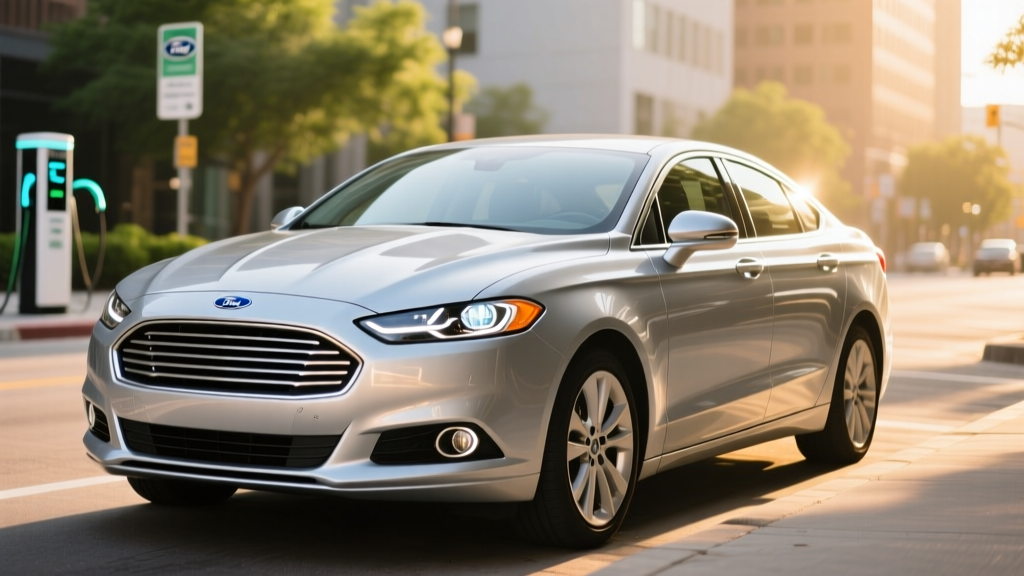
Ford never produced a fully electric (BEV) version of the Fusion sedan in any model year, including 2016. If you're searching for a 2016 Ford Fusion electric, you're most likely thinking of one of two things:
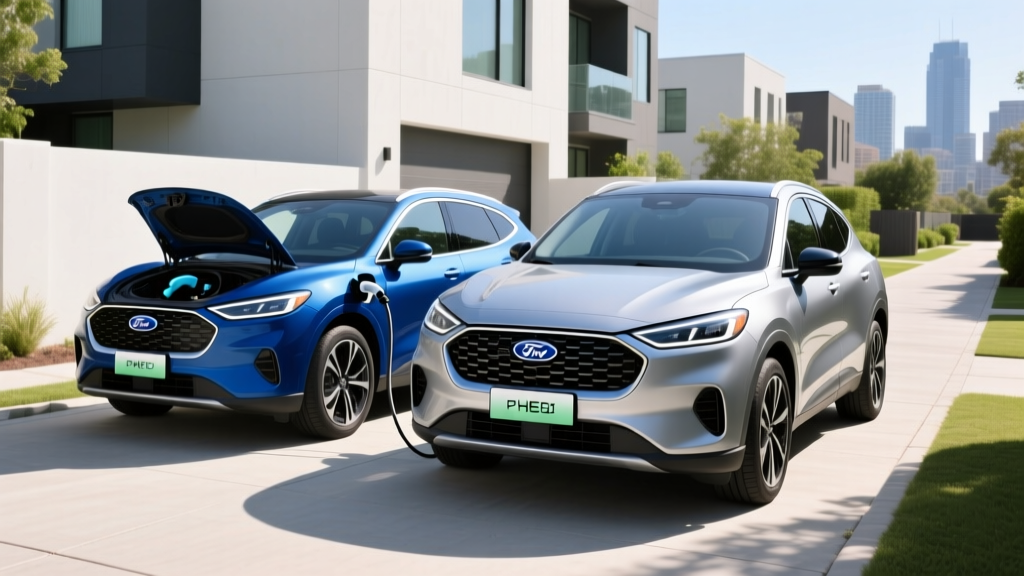
- 2016 Ford Fusion Energi — a plug-in hybrid (PHEV) with ~19 miles of electric-only range and a 7.6 kWh battery.
- 2016 Ford Fusion Hybrid — a conventional hybrid (HEV) with no plug and no electric-only driving, rated at 44 MPG combined.
Both were discontinued when the Fusion lineup ended after the 2020 model year. Below, we break down what the Energi actually delivers on the used market in 2026, what it costs to own, and which modern EVs or PHEVs make better sense today.
What the 2016 Ford Fusion Energi Actually Is
The Fusion Energi is a plug-in hybrid, not a battery electric vehicle. It pairs a 2.0-liter Atkinson-cycle four-cylinder engine with an electric motor and a modest 7.6 kWh lithium-ion battery pack. Here are the core specifications from the EPA:
| Specification | 2016 Ford Fusion Energi |
|---|---|
| Powertrain Type | Plug-in Hybrid (PHEV) |
| Electric-Only Range (EPA) | 19 miles |
| Total Range (Electric + Gas) | ~550 miles |
| Battery Capacity | 7.6 kWh (lithium-ion) |
| Combined Horsepower | 188 hp |
| MPGe (Electric Mode) | 88 MPGe |
| MPG (Hybrid Mode, Combined) | 38 MPG |
| Level 1 Charging (120V) | ~7 hours (full) |
| Level 2 Charging (240V) | ~2.5 hours (full) |
| DC Fast Charging | Not supported |
| 0–60 mph | ~8.4 seconds |
| Original MSRP (2016) | $33,170 (SE) – $39,070 (Titanium) |
| 2026 Used Market Price (est.) | $9,000 – $14,000 |
| Battery Warranty (Original) | 8 years / 100,000 miles |
That 19-mile electric range covers short commutes, but the battery is small enough that most drivers will burn gas on any trip over 20 miles. This is a bridge vehicle, not a zero-tailpipe-emissions solution.
Real-World Range and Efficiency: What to Expect in 2026
EPA Electric-Only Range: 19 miles
Real-World Expectation: 14–17 miles in mixed driving; 11–13 miles in cold weather (below 35°F) or at sustained highway speeds above 65 mph.
After a decade on the road, battery degradation is a real factor. Lithium-ion packs in PHEVs from this era typically lose 15–25% of their original capacity over 8–10 years, depending on climate exposure and charging habits. A 2016 Fusion Energi in 2026 may deliver only 14–16 miles of electric range on a full charge, compared to the original 19.
The hybrid mode remains largely unaffected by battery degradation since the engine compensates. Expect 35–38 MPG combined in hybrid operation, which still beats most non-hybrid midsize sedans from the same era.
Cost Breakdown: Buying and Owning a Used Fusion Energi
Here's a realistic five-year ownership cost estimate for a 2016 Fusion Energi purchased in 2026, assuming 12,000 miles per year, a $11,500 purchase price, and a national average electricity cost of $0.16/kWh and gas at $3.30/gallon:
| Cost Category | Fusion Energi (PHEV) | 2016 Gas Sedan (30 MPG avg) |
|---|---|---|
| Purchase Price | $11,500 | $10,000 |
| Annual Fuel / Electricity | ~$1,050 | ~$1,320 |
| 5-Year Fuel Total | $5,250 | $6,600 |
| Annual Insurance (avg) | ~$1,350 | ~$1,200 |
| 5-Year Insurance Total | $6,750 | $6,000 |
| Maintenance (5-Year) | ~$2,800 | ~$3,200 |
| Potential Battery Replacement | $3,500–$5,500 (if out of warranty) | N/A |
| 5-Year Total (no battery replacement) | $26,300 | $25,800 |
| 5-Year Total (with battery replacement) | $29,800–$31,800 | $25,800 |
The Fusion Energi saves roughly $270/year in fuel compared to a conventional 30 MPG sedan — but that savings is easily erased if the high-voltage battery needs replacement. The original 8-year/100,000-mile battery warranty has expired on every 2016 model by 2026. This is the single biggest financial risk of buying a decade-old PHEV.
Fusion Energi vs. Modern Used EVs: A 2026 Comparison
For buyers spending $10,000–$15,000 on a used electrified vehicle, the market in 2026 offers several compelling alternatives that deliver far more electric range and modern charging infrastructure:
| Vehicle | Type | Electric Range | Battery | DC Fast Charge | Used Price (2026) |
|---|---|---|---|---|---|
| 2016 Fusion Energi | PHEV | 19 mi (EPA) | 7.6 kWh | No | $9K–$14K |
| 2018–2019 Chevrolet Bolt EV | BEV | 238 mi (EPA) | 60 kWh | 55 kW (CCS) | $11K–$16K |
| 2018–2020 Nissan Leaf (62 kWh) | BEV | 212 mi (EPA) | 62 kWh | 50 kW (CHAdeMO) | $10K–$15K |
| 2021–2022 Hyundai Kona Electric | BEV | 258 mi (EPA) | 64 kWh | 75 kW (CCS) | $16K–$22K |
| 2020–2022 Toyota RAV4 Prime | PHEV | 42 mi (EPA) | 18.1 kWh | No | $28K–$36K |
Used BEVs like the Chevy Bolt EV deliver over 200 miles of range and support DC fast charging — critical for road trips. The Fusion Energi's 19-mile range and lack of DC fast charging limit it to short urban commutes where you can plug in at home every night.
Charging the Fusion Energi: What You Need at Home
The Fusion Energi uses a standard J1772 connector and charges at a maximum of 3.3 kW on Level 2 (240V). It does not support DC fast charging of any kind.
| Charging Level | Power | Full Charge Time | Cost to Install |
|---|---|---|---|
| Level 1 (120V household outlet) | 1.4 kW | ~7 hours | $0 (included cord) |
| Level 2 (240V, 16A) | 3.3 kW | ~2.5 hours | $300–$800 (outlet + electrician) |
Because the battery is only 7.6 kWh, Level 1 charging from a standard wall outlet is actually practical — you can fully recharge overnight without investing in a Level 2 station. However, if you want to top off between errands in 2–3 hours, a 240V outlet (NEMA 14-50) installed by a licensed electrician typically costs $300–$800, assuming your electrical panel has capacity. Older homes may require a panel upgrade ($1,500–$3,000+) to support a dedicated 240V circuit.
Key ownership note: If you do not have access to home or workplace charging, a PHEV with only 19 miles of electric range defeats much of its purpose. You'll burn gas on nearly every trip and pay a premium for a heavier, more complex powertrain you're not using to its advantage.
Federal Tax Credits and Incentives for Used PHEVs
The IRS §30D new-vehicle tax credit does not apply to used car purchases. However, the Used Clean Vehicle Credit (§25E) offers up to $4,000 (or 30% of the sale price, whichever is less) for qualifying used EVs and PHEVs. Key requirements for 2026:
- Sale price cap: Vehicle must sell for $25,000 or less (the Fusion Energi qualifies).
- Buyer income limits: AGI must not exceed $75,000 (single), $112,500 (head of household), or $150,000 (joint).
- Vehicle eligibility: Must be a qualified clean vehicle with at least 4 kWh battery capacity (Fusion Energi's 7.6 kWh qualifies).
- Dealer requirement: Must be purchased from a licensed dealer (private-party sales don't qualify).
- Model-year rule: Vehicle must be at least two model years old (2016 qualifies).
- One-time use: You can only claim this credit once every three years.
On an $11,500 Fusion Energi, 30% of the sale price equals $3,450 — so the credit would be $3,450 (below the $4,000 cap). This effectively drops the purchase price to roughly $8,050, making the economics significantly more attractive. Always confirm eligibility with a tax professional and check the fueleconomy.gov database for the specific VIN.
Common Misconceptions About the Fusion Energi
| Myth | Fact |
|---|---|
| "The Fusion Electric is a fully electric car." | No fully electric Fusion was ever produced. The Energi is a plug-in hybrid with a gas engine. |
| "It qualifies for the $7,500 federal tax credit." | The new-vehicle §30D credit expired for the Fusion Energi years ago due to Ford hitting the manufacturer cap. The used-vehicle §25E credit (up to $4,000) may apply. |
| "The battery will need expensive replacement soon." | Possible, but not guaranteed. Many PHEV batteries last 10–15 years. Get a pre-purchase battery health check before buying. |
| "I can fast-charge it on road trips." | The Fusion Energi has no DC fast charging capability. Level 2 at 3.3 kW is the maximum. |
| "I'll save thousands on fuel vs. a gas car." | Savings are modest: roughly $270/year based on national averages. The financial case depends on the used-EV tax credit and avoiding battery replacement. |
Decision Framework: Should You Buy a 2016 Fusion Energi in 2026?
Buy the Fusion Energi if:
- Your daily round-trip commute is under 18 miles and you can charge at home every night.
- You need a midsize sedan with a large trunk (the Energi's battery eats into cargo space, but it's still usable).
- You want to reduce gas consumption without committing to a full EV and don't have reliable DC fast charging nearby.
- You qualify for the §25E used-vehicle credit, bringing the effective price under $9,000.
- A pre-purchase inspection confirms the battery state of health is above 80%.
Skip the Fusion Energi and consider a used BEV or newer PHEV if:
- Your commute exceeds 20 miles one-way — you'll burn gas most of the time.
- You take regular road trips and need DC fast charging capability.
- You don't have reliable home or workplace charging access.
- You want more than 19 miles of electric range (look at a used Chevy Volt, Toyota RAV4 Prime, or a full BEV like the Bolt EV).
- The battery health check shows degradation below 75% — replacement costs of $3,500–$5,500 negate the value proposition.
Frequently Asked Questions
Did Ford ever make a fully electric Fusion?
No. Ford offered the Fusion Hybrid (HEV) and Fusion Energi (PHEV) but never a battery-electric (BEV) Fusion. Ford's early BEVs were the Focus Electric (2012–2018, 110-mile range) and later the Mustang Mach-E (2021–present).
How long does the 2016 Fusion Energi battery last?
Ford's original warranty covered the high-voltage battery for 8 years or 100,000 miles. By 2026, all 2016 models are past that warranty window. Real-world data suggests these packs often retain 75–85% capacity at 10 years, but replacement costs $3,500–$5,500 if cells fail. Always request a battery health report before purchasing.
Can I charge the Fusion Energi at a Tesla Supercharger?
No. The Fusion Energi uses a J1772 connector for Level 1 and Level 2 AC charging only. It does not support DC fast charging, so Tesla Superchargers, Electrify America, and other DC networks are incompatible. You're limited to Level 2 public stations with J1772 connectors.
Is the Fusion Energi a good first plug-in vehicle?
It can be, if your needs match its limitations. The 19-mile electric range works for short commutes, and the gas engine eliminates range anxiety. But for the same budget in 2026, a used Chevy Bolt EV gives you 238 miles of range and DC fast charging — a far more capable introduction to electric driving.
What maintenance does the Fusion Energi require?
Beyond standard hybrid maintenance (oil changes, brake fluid, cabin filters), the Energi's regenerative braking extends brake pad life significantly. The main concern unique to the PHEV is the high-voltage battery and its cooling system. Budget for a coolant flush per Ford's schedule and a battery health check annually.
How does the Fusion Energi compare to the Toyota Prius Prime?
The 2016 Prius Prime (then simply called Prius Plug-in for that model year transition) offered about 22 miles of electric range and better fuel economy in hybrid mode. The Fusion Energi is a more comfortable, quieter highway cruiser with a roomier interior, but the Prius Prime is more efficient overall and typically more reliable long-term. A 2019+ Prius Prime jumps to 25 miles of electric range and is generally the stronger PHEV value on the used market.