The 2016 Ford F-150 Bolt Pattern: What Every EV Converter Needs to Know
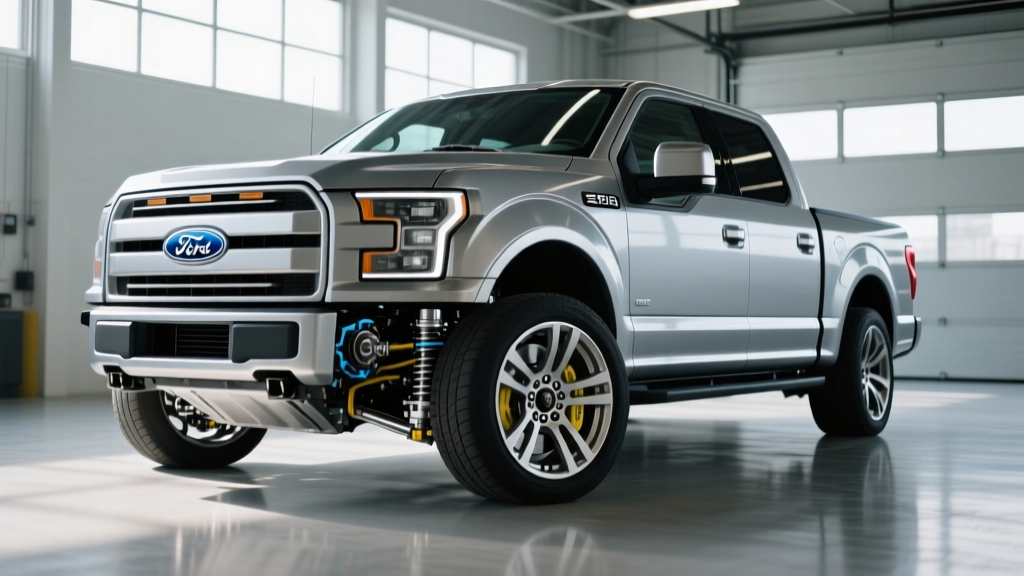
If you've landed here searching for the 2016 Ford F-150 bolt pattern, you're likely sizing up wheels for a restoration, an electric-vehicle swap, or a custom build. The answer is straightforward: the 2016 F-150 uses a 6-lug, 135 mm bolt circle (written as 6×135 or 6×5.3 inches). But when you're adapting a legacy truck chassis for an EV powertrain, bolt-pattern knowledge is just the starting line. Hub bore, offset, load rating, and brake clearance all intersect with your motor and suspension choices.
This guide walks through the hard numbers, then connects them to the real-world decisions EV converters and wheel upgraders face in 2026.
2016 Ford F-150 Wheel & Bolt Specifications at a Glance
| Specification | Value |
|---|---|
| Bolt Pattern (PCD) | 6×135 mm (6×5.31 in) |
| Center Bore | 87.1 mm |
| Thread Size | M14 × 1.5 |
| Lug Nut Torque | 150 lb-ft (203 Nm) |
| Stock Wheel Sizes | 17" / 18" / 20" / 22" (trim-dependent) |
| Typical Offset (ET) | +40 to +44 mm (stock) |
| Stock Tire Sizes | 245/70R17 – 275/55R20 (trim-dependent) |
| Gross Axle Weight Rating (front) | ~3,525 – 3,850 lbs (varies by config) |
Source: Ford F-150 official specs and owner's manual documentation for the 13th-generation F-150 (2015–2020 aluminum-body platform).
Why Bolt Pattern Matters More in an EV Conversion
When you're dropping an electric crate motor — say a NetGain Hyper9 or a salvaged Tesla drive unit — into a 2016 F-150 chassis, the bolt pattern determines which wheels you can physically mount. But the EV-specific concerns go deeper:
- Added weight: A typical EV swap adds 800–1,500 lbs of battery mass. Your wheels must carry a load rating that exceeds the new gross vehicle weight. Stock F-150 wheels are rated around 2,200–2,500 lbs each; verify aftermarket ratings carefully.
- Instant torque: Electric motors deliver peak torque at 0 RPM. This stresses lug nuts and wheel studs differently than an ICE drivetrain. Re-torque after the first 50 miles and every 500 miles thereafter.
- Regenerative braking: Aggressive regen puts reverse-loading forces on the hub assembly. Ensure your wheel studs are grade 10.9 or better.
- Brake clearance: If you've upgraded to larger rotors for the added mass, confirm your chosen wheel's barrel profile clears the caliper. Many 17" wheels won't fit over aftermarket 14" rotors.
Wheel Compatibility: What Fits the 6×135 Pattern?
The 6×135 bolt pattern is shared across several Ford trucks and SUVs from the same era, which helps when sourcing replacement or upgrade wheels:
| Vehicle | Bolt Pattern | Center Bore | Notes |
|---|---|---|---|
| 2015–2020 Ford F-150 | 6×135 | 87.1 mm | Direct fit |
| 2015–2020 Ford Expedition | 6×135 | 87.1 mm | Direct fit (verify offset) |
| 2019–2025 Ford Ranger | 6×139.7 (6×5.5) | 93.1 mm | NOT compatible — different PCD |
| 2022–2026 Ford F-150 Lightning | 6×135 | 87.1 mm | Same pattern; higher load rating required |
| Chevy/GM 6-lug trucks | 6×139.7 (6×5.5) | 78.1 mm | NOT compatible |
Critical note: 6×135 and 6×5.5 (6×139.7) are not interchangeable. The 4.7 mm difference per lug will cause stud binding and potential wheel separation. Always measure with a bolt-pattern gauge or caliper, not by eye.
EV Conversion Considerations: Hub, Offset, and Load
When selecting wheels for your EV-converted 2016 F-150, address these four variables:
- Load rating: Look for wheels rated ≥2,800 lbs each. Many "light truck" (LT) wheels meet this; passenger-car wheels typically do not.
- Offset (ET): The stock +40 to +44 mm offset keeps the wheel centered in the fender. Going lower (e.g., +20 mm) pushes the wheel outward, which can cause fender rub with larger tires and increases scrub radius — worsening steering feel under regen braking.
- Center bore: The 87.1 mm hub bore must match exactly, or you need hub-centric rings. Lug-centric wheels (relying on lug nuts for centering) can cause vibration at highway speeds — especially noticeable in an EV where there's no engine noise to mask it.
- Tire choice: EV-specific tires (e.g., Michelin Pilot Sport EV, Hankook iON) reduce rolling resistance and handle the added weight. Expect 5–10% more range from low-rolling-resistance tires versus all-terrain rubber.
Lightning Comparison: What Ford's Factory EV Truck Does Differently
If you're weighing a DIY conversion against buying a factory electric truck, here's how the F-150 Lightning (the 2016 F-150's electric descendant) compares on wheel and chassis specs:
| Spec | 2016 F-150 (ICE, stock) | 2025 F-150 Lightning (Extended Range) |
|---|---|---|
| Bolt Pattern | 6×135 | 6×135 |
| Curb Weight | ~4,500–5,200 lbs | ~6,171 lbs |
| EPA Range | N/A (ICE) | 320 miles |
| Battery | N/A | 131 kWh usable (NMC) |
| Max DC Fast Charge | N/A | 150 kW (10–80% in ~41 min) |
| 0–60 mph | ~6.5–8.0 sec (varies by engine) | ~3.8 sec |
| Horsepower | 282–385 hp | 580 hp |
| Starting MSRP | ~$26,500 (2016 new) | $54,995 (2025 Pro trim) |
Source: fueleconomy.gov for EPA data; Ford press room for MSRP and powertrain specs.
Tax Credits, Cost, and the Conversion vs. Factory Decision
A common question: does converting a 2016 F-150 to electric qualify for the federal §30D EV tax credit? The short answer is no. The IRS §30D credit applies only to new, qualifying electric vehicles purchased from a manufacturer — not to aftermarket conversions. Here's a cost comparison framework:
| Scenario | Estimated Cost | Federal Tax Credit | Net Cost |
|---|---|---|---|
| DIY EV conversion (2016 F-150 donor + 100 kWh pack + motor) | $35,000–$60,000 | $0 | $35,000–$60,000 |
| Professional EV conversion shop | $70,000–$120,000 | $0 | $70,000–$120,000 |
| 2025 F-150 Lightning Pro (new) | $54,995 | Up to $7,500 (§30D, if eligible) | ~$47,495 |
| Used 2023 F-150 Lightning (qualified used EV credit) | $38,000–$48,000 | Up to $4,000 (§25E) | ~$34,000–$44,000 |
- Vehicle MSRP cap: $80,000 for trucks/SUVs/vans
- Buyer AGI cap: $150,000 (single) / $300,000 (joint)
- Battery critical-mineral and component sourcing thresholds must be met
- Point-of-sale transfer available — reduces purchase price directly
- Does NOT apply to conversions, kit cars, or non-OEM builds
Verify current eligibility at IRS.gov §30D page — rules update annually.
Pros and Cons: 2016 F-150 as an EV Conversion Platform
- Aluminum body (2015+ generation) saves ~700 lbs vs steel — helps offset battery weight
- Abundant donor trucks at low cost ($8,000–$18,000 used)
- Large engine bay accommodates most EV motors and controllers
- Frame-rail design provides battery mounting points
- 6×135 bolt pattern shared with F-150 Lightning — aftermarket wheel options expanding
- No federal tax credit for conversions
- Stock suspension not rated for EV-level curb weight without upgrades
- 12V electrical system needs DC-DC converter integration
- Steering and brake boost require electric pump/vacuum solutions
- Insurance and registration vary by state — some states restrict converted vehicles
Frequently Asked Questions
What is the bolt pattern on a 2016 Ford F-150?
The 2016 Ford F-150 uses a 6×135 mm bolt pattern (also expressed as 6×5.31 inches). This means six lug nuts arranged on a 135 mm diameter circle. The center bore is 87.1 mm, and lug nuts are M14 × 1.5 thread, torqued to 150 lb-ft.
Will F-150 Lightning wheels fit a 2016 F-150?
Yes — the Lightning uses the same 6×135 bolt pattern and 87.1 mm center bore. However, Lightning wheels are rated for the EV's higher curb weight (~6,171 lbs). If you're putting Lightning wheels on a stock 2016 ICE F-150, they'll fit and offer extra load capacity. The reverse (stock ICE wheels on a Lightning) is not recommended due to load-rating shortfalls.
Can I use Chevy 6-lug wheels on my 2016 F-150?
No. Chevy/GM 6-lug trucks use a 6×139.7 mm (6×5.5") bolt pattern — a different pitch circle diameter. Forcing them on will misalign the studs and risk wheel separation. Always match the exact PCD.
Does an EV conversion of a 2016 F-150 qualify for any tax credits?
No. The federal §30D new clean vehicle credit and the §25E used EV credit both require a qualifying OEM-manufactured vehicle. Aftermarket EV conversions do not meet eligibility criteria. Some states offer separate incentives for alternative-fuel conversions — check your state's energy or DMV office.
What wheel load rating do I need for an EV-converted F-150?
Target a minimum of 2,800 lbs per wheel. A converted F-150 with a 100+ kWh battery pack can reach 6,500+ lbs curb weight. Dynamic loads during braking and cornering add 30–50% to static load per wheel. Look for "LT" (light truck) rated wheels with published load ratings — not just cosmetic aftermarket wheels.
How do I measure the bolt pattern to confirm?
For a 6-lug wheel, measure center-to-center between two lug holes directly across from each other. That distance is your bolt circle diameter. For 6×135, you should measure 135 mm (or 5.31 inches). Use a digital caliper for accuracy — eyeballing with a tape measure is unreliable for the 4.7 mm difference between Ford and GM patterns.