2016 Ford F-150 Bolt Pattern: The Essential Specs
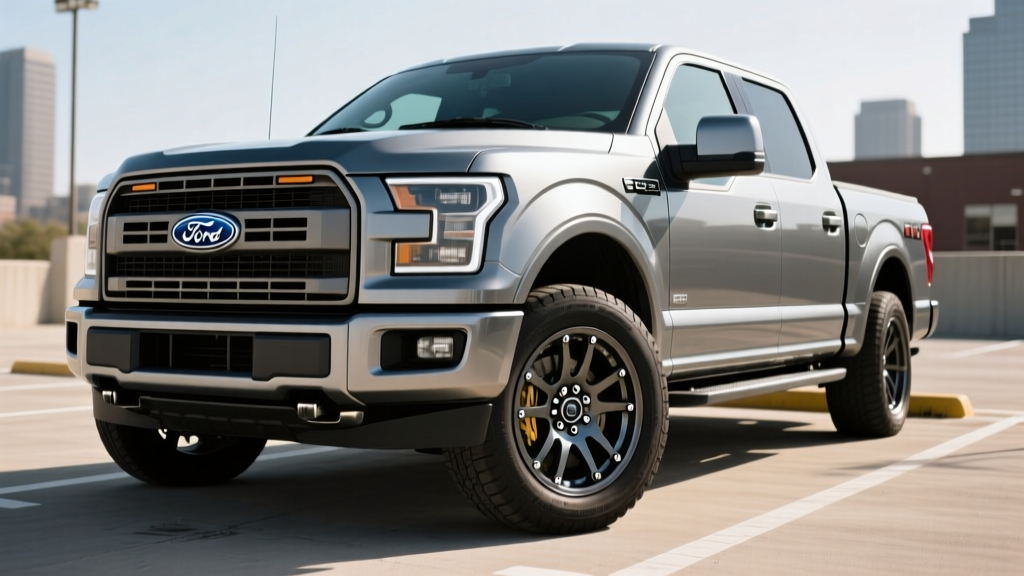
The 2016 Ford F-150 uses a 6x135mm bolt pattern (also written as 6x5.3 inches). This means the wheel has six lug holes arranged on a circle with a diameter of 135 millimeters. This bolt pattern has been standard on the F-150 since the 2004 model year and continues through current generations, making it one of the most consistent wheel-fitment specifications in Ford's truck lineup.
| Specification | Value |
|---|---|
| Bolt Pattern | 6x135mm (6x5.3") |
| Center Bore | 87.1mm |
| Lug Nut Thread Size | M14 x 1.5 |
| Lug Nut Torque Spec | 150 lb-ft (203 Nm) |
| Stock Wheel Sizes | 17" / 18" / 20" / 22" (trim-dependent) |
| Stock Offset Range | +40mm to +44mm (varies by wheel) |
| Typical Stock Tire Sizes | 245/70R17, 265/70R17, 275/65R18, 275/55R20 |
Whether you're rotating to a winter set, planning an EV powertrain swap, or sourcing aftermarket wheels for a project truck, understanding these dimensions prevents costly fitment mistakes. A wheel with the wrong bolt pattern simply will not mount. A wrong center bore causes vibration. Incorrect offset alters scrub radius, bearing load, and suspension geometry — all critical factors if you're adding the weight of a battery pack in an electric conversion.
How to Measure and Verify the 6x135mm Pattern
On a six-lug wheel, the bolt pattern is measured from the center of one lug hole to the center of the lug hole directly across from it. This gives you the bolt-circle diameter. For the F-150, that measurement should be exactly 135mm (5.315 inches).
Here's a reliable verification process:
- Count the lugs: The 2016 F-150 has six lug nuts per wheel. This immediately narrows the pattern family — five-lug and eight-lug trucks use entirely different measurements.
- Measure center-to-center: Using calipers or a precision ruler, measure from the center of one stud to the center of the stud directly opposite (three positions away on a six-lug circle).
- Confirm with a bolt-pattern gauge: A dedicated 6x135mm gauge template slides over the studs. If all six holes align without binding, the pattern is confirmed.
- Check the center bore: Use calipers to measure the hub-centric ring diameter on the wheel. The F-150 requires 87.1mm. Many aftermarket wheels use a larger bore (e.g., 106.1mm or 110mm) and require hub-centric rings to eliminate vibration.
Why Bolt Pattern Matters for EV Conversions
The 2016 F-150 is the aluminum-body generation (introduced for 2015), which makes it an increasingly popular candidate for electric-vehicle conversions. The weight savings from the aluminum body — roughly 700 pounds lighter than the prior steel generation — partially offsets the added mass of battery packs in a custom EV swap.
When planning an EV conversion on this chassis, wheel and bolt-pattern specs take on added importance for several reasons:
Weight and Load Rating
EV conversions add significant mass, often 500 to 1,500 pounds depending on battery capacity. A 100 kWh pack alone weighs roughly 1,000 to 1,200 pounds. Stock F-150 wheels carry specific load ratings — typically 1,800 to 2,300 lbs per wheel depending on size and construction. If your conversion pushes gross vehicle weight higher, you need wheels rated for the increased load. The 6x135mm bolt pattern is shared with heavy-duty aftermarket wheels designed for higher load ratings, but you must verify per-wheel capacity, not just bolt compatibility.
Offset and Suspension Geometry
Stock 2016 F-150 wheel offset ranges from approximately +40mm to +44mm. Changing offset moves the wheel's mounting face relative to its centerline, which alters:
- Scrub radius: Affects steering feel and braking stability — especially important when regenerative braking adds deceleration force through the wheels.
- Bearing load: More negative offset (pushing wheels outward) increases the moment arm on wheel bearings, accelerating wear under the heavier loads of an EV conversion.
- Clearance: Larger brake calipers (common in EV conversions to handle increased mass) may require specific offset or spoke-profile wheels.
Regenerative Braking Compatibility
EV powertrains apply regenerative braking torque through the wheel hubs. The 2016 F-150's M14 x 1.5 lug nuts torqued to 150 lb-ft are robust, but repeated high-torque regen cycles (especially with a high-power motor like a Tesla Large Drive Unit or Cascadia Motion system) warrant periodic re-torque checks during the first 500 miles after conversion.
Wheel Compatibility: What Fits the 2016 F-150?
The 6x135mm bolt pattern is shared across multiple Ford truck and SUV platforms, which expands your sourcing options for both OEM and aftermarket wheels.
| Vehicle | Model Years | Center Bore | Notes |
|---|---|---|---|
| Ford F-150 | 2004–2026 | 87.1mm | Direct fit across all trims |
| Ford Expedition | 2007–2026 | 87.1mm | Same bore, direct swap |
| Lincoln Navigator | 2007–2026 | 87.1mm | Same bore, direct swap |
| Ford F-150 Lightning (EV) | 2022–2026 | 87.1mm | Same pattern, higher load rating on some wheels |
| Ford Ranger (some markets) | Varies | Varies | Verify center bore — not all Rangers share 87.1mm |
Key caveat: Even when bolt pattern and center bore match, you must verify offset, wheel diameter, width, and load rating for your specific application. A Lincoln Navigator 22" wheel with +44mm offset will physically mount on a 2016 F-150, but tire-size clearance and speedometer calibration need separate verification.
Aftermarket Wheel Considerations
Many aftermarket wheel manufacturers produce 6x135mm options specifically for the F-150 platform. Popular brands include Fuel, Method, Black Rhino, and American Force. When selecting aftermarket wheels for an EV-converted F-150, prioritize:
- Load rating: Minimum 2,500 lbs per wheel for conversions adding 1,000+ lbs of battery.
- Hub-centric fitment: If the wheel's center bore is larger than 87.1mm, use precision hub-centric rings (aluminum or polycarbonate) to eliminate high-speed vibration.
- Construction: Forged wheels handle the sustained torque of EV drivetrains better than cast wheels, though they cost more ($400–$1,200 per wheel vs. $150–$400 for cast).
EV Conversion Case Study: 2016 F-150 Electric Swap
To put the bolt-pattern discussion into a real-world EV context, consider what a typical 2016 F-150 electric conversion looks like in 2026. Several shops now offer turnkey or semi-turnkey EV swap kits for the aluminum-body F-150 generation.
| Parameter | Typical Value |
|---|---|
| Battery Capacity | 80–120 kWh (NMC or LFP modules) |
| Estimated Range | 150–250 miles (depending on pack size and driving) |
| Motor Output | 250–500 HP (single or dual motor) |
| Added Weight (vs. stock) | +800 to +1,500 lbs |
| Estimated Cost | $35,000–$80,000 (parts + labor) |
| Charging (if equipped) | CCS or NACS, 50–150 kW DC capable |
| Wheel Requirements | 6x135mm, 87.1mm bore, load-rated for increased GVW |
The stock 6x135mm bolt pattern remains compatible throughout the conversion — Ford's hub and axle design doesn't change when you swap the powertrain. However, the increased gross vehicle weight means stock 17" wheels (often rated around 1,800 lbs each) may be underspec'd. Most conversion shops recommend upgrading to 18" or 20" aftermarket wheels with a 2,500+ lb per-wheel load rating.
Lug Nut Torque, Maintenance, and Safety
Whether your 2016 F-150 is stock or converted to electric, proper lug-nut maintenance is non-negotiable. The factory specification is 150 lb-ft (203 Nm) for the M14 x 1.5 lug nuts.
Follow this maintenance protocol:
- After any wheel removal: Torque to 150 lb-ft in a star pattern (not sequential). Re-torque after 50 miles of driving.
- Seasonal rotation: If swapping between summer and winter wheel sets, re-check torque after the first 50 miles on each set.
- EV conversion note: The instant torque delivery of electric motors places different stress patterns on lug hardware than a gasoline engine. Check lug torque at 100, 500, and 1,000 miles post-conversion, then at standard service intervals.
- Never use impact wrenches for final torque: An impact gun can over-torque or unevenly seat lug nuts. Always finish with a calibrated torque wrench.
For reference, the National Highway Traffic Safety Administration (NHTSA) has issued guidance on wheel-separation incidents linked to improper lug-nut torque — a risk that increases with vehicle weight, making it especially relevant for EV conversions.
Frequently Asked Questions
Is the 2016 F-150 bolt pattern the same as the 2026 F-150?
Yes. Ford has used the 6x135mm bolt pattern on the F-150 continuously since 2004. The 2016, 2020, 2024, and 2026 F-150 all share the same 6x135mm pattern and 87.1mm center bore. Wheels from any of these model years will physically bolt on, though offset, width, and tire-size compatibility should be verified per application.
Will F-150 Lightning wheels fit a 2016 F-150?
Yes, the F-150 Lightning (2022–2026) uses the same 6x135mm bolt pattern and 87.1mm center bore. Lightning wheels are a direct physical fit. However, some Lightning wheels are optimized for the EV's higher weight and may have different load ratings or offsets than your 2016 model's stock setup. Verify the specific wheel's offset and load rating before purchasing.
Can I use 6x5.5" (6x139.7mm) wheels on my 2016 F-150?
No. While 6x5.5" is close numerically, it is 4.7mm larger in bolt-circle diameter than 6x135mm. The studs will not align with the wheel holes. Attempting to force or modify fitment is dangerous. If you have wheels with a 6x139.7mm pattern (common on Toyota Tacoma/Tundra, older Dodge Rams, and some Chevrolet trucks), they will not fit your F-150.
Do I need hub-centric rings for aftermarket wheels?
If the aftermarket wheel's center bore is larger than 87.1mm (which is common — many universal-fit wheels use 106.1mm or 110mm bores), then yes. Hub-centric rings fill the gap between the vehicle's hub and the wheel's center bore, ensuring the wheel is centered by the hub rather than by the lug nuts alone. Without them, you may experience steering-wheel vibration at 55–75 mph. Aluminum rings ($20–$40 per set) are preferred over plastic for durability.
What's the best wheel size for an F-150 EV conversion?
Most EV conversion specialists recommend 18" or 20" wheels for a converted F-150. An 18" wheel offers more tire sidewall (better ride quality and more tire options for higher load ratings), while a 20" wheel provides clearance for larger brake calipers — useful if you're upgrading brakes to handle the added mass of batteries. Either size maintains the 6x135mm bolt pattern. Prioritize load rating over aesthetics: minimum 2,500 lbs per wheel for conversions adding 1,000+ lbs.
Where can I verify my specific wheel's load rating?
The wheel's load rating is typically stamped on the back of the wheel (visible when the wheel is off the vehicle). It may say "MAX LOAD" followed by a number in pounds or kilograms. If the stamping is worn or unclear, contact the wheel manufacturer with the model number. For OEM Ford wheels, Ford's parts catalog or a dealer parts department can look up the rating by part number.
- Aluminum body saves ~700 lbs vs. prior generation
- 6x135mm pattern has massive aftermarket wheel selection
- Abundant donor vehicles at salvage yards ($5,000–$15,000)
- Strong frame and suspension handles added battery weight
- Shared bolt pattern with F-150 Lightning simplifies wheel sourcing
- No factory EV thermal management — must be custom-built
- Conversion cost ($35K–$80K) exceeds used Lightning price
- No federal EV tax credit for aftermarket conversions
- Range typically 150–250 mi, less than factory Lightning
- Insurance and registration vary by state for converted vehicles
The 2016 Ford F-150's 6x135mm bolt pattern is one of the most well-supported fitment specs in the truck world. Whether you're maintaining a stock truck, sourcing winter wheels, or planning an ambitious EV conversion, the six-lug, 135mm circle with an 87.1mm center bore is your starting point. Get this right, verify load ratings for your application, and torque to 150 lb-ft — the rest is tire selection and driving.