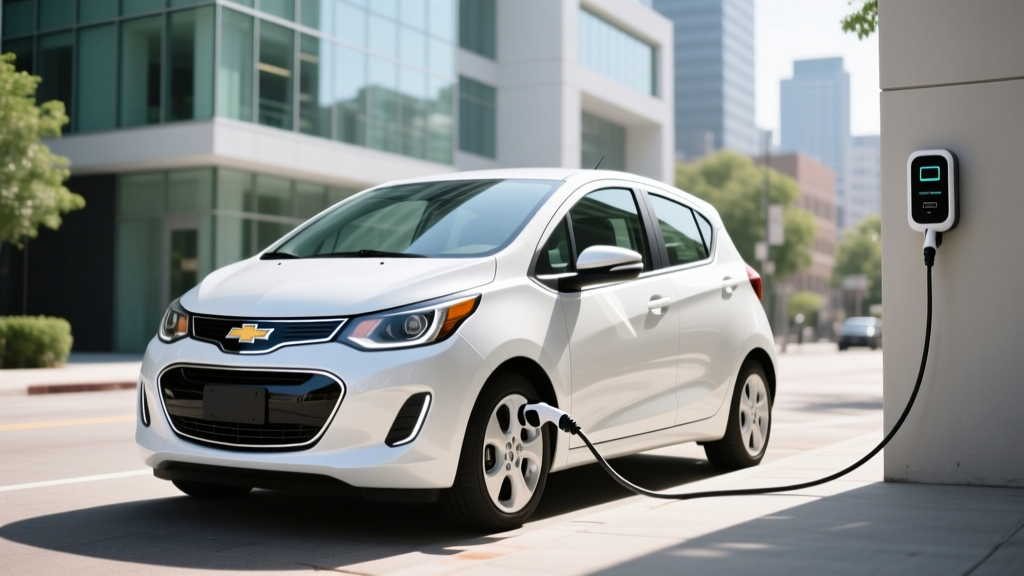
The 2016 Chevrolet Spark EV is a discontinued, compact, all-electric hatchback that General Motors sold primarily in California, Oregon, and Maryland as a compliance car. If you are considering one on the used market today, here is the bottom line: the Spark EV delivers 82 miles of EPA-rated range from a 19 kWh (usable) lithium-ion battery, charges from empty to full on Level 2 in roughly 6–7 hours, and lacks DC fast charging entirely. It remains a viable second car or city commuter for drivers with home charging access and short daily routes, but its short range, cold-weather losses, and aging battery make it a poor primary vehicle for most households in 2026.
Quick Verdict: Should You Buy a Used 2016 Spark EV?
Yes, if: you need a cheap, around-town commuter; have Level 2 home charging; drive under 50 miles round-trip daily; and live in a mild climate.
No, if: you lack reliable home charging, regularly drive in freezing temperatures, need highway range, or require modern ADAS features. A used Nissan Leaf (30 kWh), Hyundai Kona Electric, or newer Chevrolet Bolt EV will serve most buyers better.
Range, Battery, and Efficiency: What the Numbers Actually Mean
The 2016 Spark EV carries a 19 kWh usable battery pack (21.3 kWh gross) using lithium-ion cells supplied by LG Chem. The EPA rated it at 82 miles of combined range and 119 MPGe (28 kWh/100 miles). These figures made it one of the most efficient EVs of its era — but 82 miles is tight by any modern standard.
EPA Range vs. Real-World Expectations
EPA sticker: 82 miles
Real-world city driving (mild weather): 75–85 miles
Highway driving at 70 mph: 60–70 miles
Cold weather (below 30°F / -1°C): 50–60 miles (30–40% loss)
The Spark EV lacks a heat pump, relying on a resistive cabin heater that draws heavily from the small pack. Winter range loss is significant. The car does support battery preconditioning while plugged in, which helps preserve range when departing from a charger.
| Spec | Value |
|---|---|
| EPA Range | 82 miles |
| Battery (usable / gross) | 19 kWh / 21.3 kWh |
| Battery Chemistry | NMC (Lithium-Ion, LG Chem) |
| MPGe (combined) | 119 MPGe |
| Efficiency | 28 kWh/100 mi |
| Motor Output | 104 kW (140 hp), 327 lb-ft torque |
| 0–60 mph | ~7.2 seconds |
| Level 1 Charging (120V / 1.4 kW) | ~13–14 hours (0–100%) |
| Level 2 Charging (240V / 3.3 kW) | ~6–7 hours (0–100%) |
| DC Fast Charging | Not available (no CCS or CHAdeMO port) |
| Connector | SAE J1772 (Level 1 & 2 only) |
| Battery Warranty (original) | 8 years / 100,000 miles (expired on most by 2024) |
| Original MSRP (before incentives) | $25,995 (1LT) – $26,695 (2LT) |
| Used Price Range (2026 est.) | $5,000 – $8,500 |
One bright spot: the Spark EV's 140-hp electric motor and 327 lb-ft of torque make it genuinely quick off the line. The 0–60 mph time of approximately 7.2 seconds was impressive for a subcompact in 2016, and it still feels punchy in urban traffic. Regenerative braking is strong, though not true one-pedal driving — you will still use the friction brakes to come to a complete stop.
Charging Reality: Slow by Design
The Spark EV's biggest limitation for modern buyers is its charging setup. The onboard charger maxes out at 3.3 kW on Level 2 (240V). There is no DC fast charging capability — the car was never equipped with a CCS or CHAdeMO port. This means you cannot use highway fast chargers to top up on road trips.
| Charging Level | Power (kW) | Miles of Range Added per Hour | Full Charge Time (0–100%) |
|---|---|---|---|
| Level 1 (120V household outlet) | ~1.4 kW | ~5–6 miles/hr | ~13–14 hours |
| Level 2 (240V, 16A) | 3.3 kW | ~13–14 miles/hr | ~6–7 hours |
| DC Fast Charge | N/A | N/A | Not supported |
For context, a modern Chevrolet Bolt EV charges at up to 11.5 kW on Level 2 and 55 kW on DC fast charge. The Spark EV's 3.3 kW ceiling means overnight charging is mandatory — you cannot rely on quick top-ups. If your daily commute is under 40 miles round-trip and you plug in every night at home, this is manageable. If you need flexibility, it is a dealbreaker.
Home charging setup: You will want a dedicated 240V Level 2 station installed on a 20-amp circuit. A quality Level 2 charger (such as a ChargePoint Home Flex or Emporia Vue) costs $300–$500 for the unit. Professional electrical installation typically runs $500–$1,500 depending on panel proximity and local permitting, bringing total home-charging setup to roughly $800–$2,000. Since the Spark EV's onboard charger caps at 3.3 kW, you do not need a 48-amp circuit — a basic 16-amp Level 2 unit is sufficient.
Used Spark EV vs. Gas Car: The Cost Breakdown
Buying a used Spark EV in 2026 means comparing it against used gas-powered subcompacts like the gasoline Chevrolet Spark (discontinued after 2022), Honda Fit, or Toyota Yaris. Here is how the economics stack up over a typical 5-year ownership period assuming 10,000 miles per year.
| Cost Category | 2016 Spark EV (Used) | Used Gas Subcompact (e.g., Honda Fit) |
|---|---|---|
| Purchase Price (avg.) | $6,500 | $9,000 |
| Fuel / Electricity (5 yrs, 50k mi) | $1,750 (at $0.13/kWh national avg.) | $4,700 (at $3.40/gal, 33 MPG combined) |
| Maintenance (5 yrs) | $800 (tires, cabin filter, brake fluid) | $2,800 (oil, filters, brakes, spark plugs, transmission fluid) |
| Insurance (5 yrs, avg.) | $5,500 | $5,000 |
| Estimated Battery Replacement Risk | $3,000–$5,000 (if needed) | $0 |
| Federal / State EV Tax Credits | None (used EV credit expired; §30D was new-vehicle only) | None |
| Total Estimated 5-Year Cost | $14,550 – $19,550 | $21,500 |
The Spark EV wins on fuel and maintenance costs. Electricity at the national average of $0.13/kWh costs roughly $3.64 per 100 miles in the Spark EV (28 kWh/100 mi × $0.13), compared to $10.30 per 100 miles in a 33 MPG gas car at $3.40/gallon. That is nearly a 65% fuel-cost reduction. Maintenance is also dramatically lower: no oil changes, no spark plugs, no transmission fluid, and regenerative braking extends brake pad life significantly.
However, the Spark EV carries a risk the gas car does not: battery degradation and potential replacement. More on that below.
Battery Health: The Critical Used-EV Question
The 2016 Spark EV's battery is now roughly 10 years old. GM's original 8-year/100,000-mile battery warranty has expired for virtually all examples on the road. This makes pre-purchase battery health assessment essential.
NMC (nickel-manganese-cobalt) chemistry, which the Spark EV uses, typically retains 70–85% of original capacity after 8–10 years depending on climate, charging habits, and mileage. Real-world reports from Spark EV owners suggest most 2016 models retain approximately 75–85% state of health (SoH) at this age, translating to roughly 60–70 miles of usable range in mild conditions. Cars in hot climates (Arizona, Southern California) or those frequently charged to 100% and left sitting at high SoC may show more degradation.
Before buying, take these steps:
- Ask the seller for a battery health report. Some OBD-II apps (like Leaf Spy for Nissan, or Torque Pro with appropriate PIDs for GM) can read SoH data — though Spark EV support is limited compared to Leaf or Bolt.
- Perform a full-charge range test: charge to 100% and note the estimated range displayed. If it shows under 60 miles, expect significant degradation.
- Check for any outstanding recalls via NHTSA's recall lookup.
- Budget for a potential battery replacement: a refurbished or aftermarket pack for the Spark EV costs roughly $3,000–$5,000 installed, though availability is limited given the car's low production volume.
Common Misconceptions About the Spark EV
| Myth | Fact |
|---|---|
| "It can fast charge at DC stations." | False. The Spark EV has no DC fast charging port. It supports only Level 1 and Level 2 (J1772). |
| "The battery will need replacing soon." | Not necessarily. NMC packs from this era typically retain 75–85% SoH at 10 years. Capacity loss is gradual, not sudden. |
| "It qualifies for the federal EV tax credit." | No. The IRS §30D credit applies to new clean vehicles only. Used EVs qualified for a separate up-to-$4,000 credit (§25E) from 2023–2025, but that program has since been modified. Check current IRS guidance. |
| "It's too slow for highway merging." | With 140 hp and 327 lb-ft of instant torque, the Spark EV accelerates to 60 mph in ~7.2 seconds — quicker than most gas subcompacts of its era. |
| "It gets 82 miles no matter what." | The 82-mile EPA rating assumes mixed driving in moderate temperatures. Highway driving, cold weather, and battery age all reduce real-world range significantly. |
Decision Framework: Is the 2016 Spark EV Right for You?
If / Then Buying Guide
- If your daily round-trip commute is under 40 miles and you can charge at home every night → The Spark EV is a strong, cheap commuter option.
- If you need a primary vehicle for a household with no other car → Look at a used Chevrolet Bolt EV (238-mile range) or Hyundai Kona Electric instead.
- If you live in a cold climate (consistently below 30°F in winter) → Avoid the Spark EV or budget for 50 miles of winter range. Consider a PHEV instead.
- If you have no access to Level 2 charging at home or work → The Spark EV is impractical. Its 3.3 kW Level 2 rate and lack of DC fast charging make public-only charging painful.
- If you want a cheap EV to learn on before committing to a newer model → The Spark EV is a reasonable entry point at $5,000–$8,500, but plan your exit strategy for when range needs grow.
- If you regularly drive more than 60 miles in a day → The Spark EV cannot reliably serve this use case, especially with battery degradation factored in.
Ownership Practicalities: What First-Time EV Buyers Should Know
Registration and insurance: EV insurance premiums tend to run 10–20% higher than comparable gas cars, though the Spark EV's low value partially offsets this. Expect roughly $90–$110/month depending on your state and driving record.
Maintenance: The Spark EV requires minimal scheduled maintenance — cabin air filter replacement, tire rotation, brake fluid flush every 2–3 years, and windshield washer fluid. There are no oil changes, no exhaust system, no timing belt, and no transmission fluid to worry about. Budget approximately $150–$200 per year for routine upkeep.
Tires: EVs are heavier than their gas counterparts (the Spark EV weighs approximately 2,989 lbs vs. ~2,200 lbs for the gas Spark), which accelerates tire wear. Expect to replace tires every 35,000–45,000 miles. Use tires rated for the vehicle's weight and torque characteristics.
Safety: The 2016 Spark EV received a 4-star overall rating from NHTSA. It lacks modern ADAS features — no automatic emergency braking, no lane-keeping assist, no adaptive cruise control. If advanced safety tech is a priority, this car will not provide it.
Frequently Asked Questions
Can the 2016 Spark EV use Tesla Superchargers or Electrify America stations?
No. The Spark EV has no DC fast charging capability at all. It can only charge via Level 1 (120V) or Level 2 (240V) using the standard J1772 connector. Even with an adapter, the car's hardware cannot accept DC fast charge current.
How much does it cost to charge a Spark EV at home?
Charging from empty to full (19 kWh) at the national average electricity rate of $0.13/kWh costs approximately $2.47. If you drive 40 miles per day (consuming about 11.2 kWh), daily charging costs roughly $1.46 — or about $44/month for 1,200 miles of driving.
Does the Spark EV qualify for any tax credits in 2026?
The federal §30D new clean vehicle credit does not apply to used purchases. The §25E used clean vehicle credit (up to $4,000 or 30% of sale price, whichever is less) was available for qualifying used EVs from 2023, but eligibility rules and program status have changed. Consult the IRS §25E page and a tax professional for current-year eligibility.
What should I look for when inspecting a used Spark EV?
Prioritize battery health (ask for an SoH reading or do a full-charge range test), check for any open recalls on NHTSA.gov, inspect the charge port and J1772 inlet for damage or corrosion, verify that the Level 1 charging cord is included (replacements cost $200–$350), and confirm the 12V auxiliary battery is in good condition — EVs still use a 12V battery for accessories, and a dead 12V battery can prevent the car from starting even with a full traction pack.
How does the Spark EV compare to a used Nissan Leaf from the same era?
The 2016 Nissan Leaf (30 kWh pack) offers 107 miles of EPA range — about 25 miles more than the Spark EV. The Leaf also supports CHAdeMO DC fast charging (up to ~50 kW), making road trips possible. However, the Leaf's air-cooled battery degrades faster in hot climates. The Spark EV's liquid-cooled battery generally holds up better thermally, but its lack of DC fast charging is a significant disadvantage. If you need fast-charge capability, the Leaf is the better choice; if battery longevity in hot weather matters more, the Spark EV has an edge.