Quick Answer: Is the 2016 Chevy Spark EV Still Worth It?
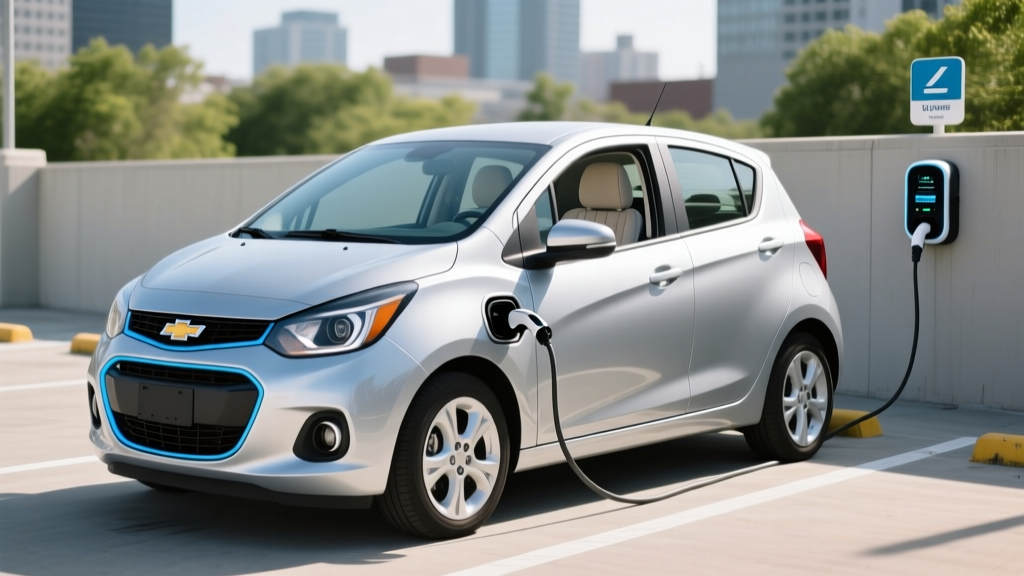
The 2016 Chevrolet Spark EV is a discontinued, compliance-style electric hatchback with an EPA-rated 82 miles of range and a 19 kWh lithium-ion battery. In the 2026 used market, expect to pay $6,000–$9,500 depending on mileage and condition. It works as a budget-friendly city commuter if you can charge at home and your daily round-trip is under 60 miles. However, it lacks DC fast charging (CCS/NACS), modern driver-assist features, and any federal tax credit eligibility on the used market. For highway driving, road trips, or cold climates, a newer used EV like the Chevy Bolt EUV or Nissan Leaf (62 kWh) is a significantly better investment.
2016 Chevy Spark EV: Specs at a Glance
| Specification | 2016 Chevy Spark EV |
|---|---|
| EPA Range | 82 miles |
| Battery Capacity (usable) | ~19 kWh (NMC chemistry) |
| Motor Output | 143 hp / 327 lb-ft torque |
| 0–60 mph | ~7.2 seconds |
| Level 1 Charging (120V) | ~1.4 kW (~5 mi/hr) |
| Level 2 Charging (240V) | ~3.3 kW (~13 mi/hr, ~6 hrs 10–100%) |
| DC Fast Charging | SAE Combo (CCS1) optional — up to ~50 kW |
| EPA Efficiency | 119 MPGe combined |
| EPA Energy Consumption | 28 kWh/100 mi |
| Battery Warranty (original) | 8 yr / 100,000 mi (expired by 2024) |
| Cargo Volume | 9.6 cu ft (rear seats up) |
| Original MSRP (2LT) | ~$26,000 (before incentives) |
| 2026 Used Price Range | $6,000–$9,500 |
Real-World Range: What 82 EPA Miles Actually Means
EPA Sticker: 82 miles
Real-World Expectation: 65–78 miles in mixed driving; 50–60 miles in freezing temperatures or sustained highway speeds above 65 mph.
The Spark EV's 82-mile EPA rating was respectable for a 2016 subcompact, but that number assumes moderate temperatures, city-heavy driving, and gentle acceleration. According to fueleconomy.gov, the Spark EV achieves 119 MPGe combined — efficient for its era — but the small 19 kWh battery leaves almost no margin for real-world variables.
Here's what actually eats into range:
- Cold weather (below 32°F): Expect 25–35% range loss. The Spark EV uses resistive cabin heating rather than a heat pump, which draws heavily from the traction battery. A 40-mile commute in January could leave you with single-digit range remaining.
- Highway speeds (70+ mph): Aerodynamic drag on this tall, boxy hatchback is punishing. Sustained 70 mph driving may drop effective range to 55–65 miles.
- Battery degradation: A 10-year-old NMC battery will have lost some capacity. Budget 8–15% degradation depending on charge history and climate exposure. A Spark EV that originally delivered 82 miles may now realistically offer 70–75 miles when new-old-stock fresh, less if the pack was frequently charged to 100% in hot climates.
Before buying, ask the seller for a State of Health (SoH) reading. Some OBD-II apps like LeafSpy (adapted for GM) or a dealer diagnostic scan can reveal remaining battery capacity. If SoH is below 85%, negotiate the price down significantly — a replacement pack would cost $4,000–$7,000, exceeding the car's value.
Charging the Spark EV: Speeds, Connectors, and Limitations
| Charging Level | Power (kW) | Miles Added per Hour | Full Charge Time |
|---|---|---|---|
| Level 1 (120V household) | ~1.4 kW | ~5 mi/hr | ~14–16 hours |
| Level 2 (240V, 16A) | ~3.3 kW | ~13 mi/hr | ~6 hours (10–100%) |
| DC Fast (CCS1, optional) | ~50 kW peak | N/A | ~30 min (10–80%) |
The Spark EV's onboard charger maxes out at 3.3 kW on Level 2 — meaning even if you plug into a 7.2 kW or 11.5 kW home charger, the car can only accept 3.3 kW. This is a hard hardware limitation, not a software issue.
DC fast charging was available only as a $750 option when new, and not all 2016 Spark EVs have it. Look for the CCS1 (SAE Combo) port below the standard J1772 inlet. If the car only has J1772, it cannot DC fast-charge at all — you're limited to Level 1 and Level 2 AC charging. This is a critical inspection point for any used purchase.
Even with CCS1, 50 kW peak charging is slow by 2026 standards. Modern EVs like the Hyundai Ioniq 5 or Chevy Equinox EV accept 150–240+ kW. A 50 kW charge on the Spark EV's small 19 kWh pack does add range relatively quickly (~30 minutes for 10–80%), but you'll rarely find 50 kW CCS1 chargers at modern DC fast-charging stations optimized for 150+ kW vehicles.
Home charging reality: If you have access to a standard 120V outlet and drive under 40 miles daily, Level 1 charging (adding ~5 miles per hour, or ~50 miles overnight) is technically sufficient. However, a 240V Level 2 installation ($500–$1,500 depending on panel capacity and run length, per energy.gov) makes ownership far more convenient and allows you to wake up to a full battery every morning.
Cost of Ownership: Spark EV vs. a Comparable Gas Car
The strongest argument for a used Spark EV is operating cost. Let's compare it against a 2016 Chevy Spark gasoline model (the most direct comparison) over a 5-year, 60,000-mile ownership period.
| Cost Category | 2016 Spark EV (Used) | 2016 Spark Gas (Used) |
|---|---|---|
| Purchase Price (avg.) | $7,500 | $8,000 |
| Fuel/Energy (60k mi) | $2,100 (at $0.13/kWh avg.) | $5,700 (at $3.40/gal, 30 MPG avg.) |
| Maintenance (5 yr) | $800 (tires, cabin filter, brake fluid) | $3,200 (oil, filters, spark plugs, brakes) |
| Insurance (5 yr avg.) | $6,500 | $5,800 |
| Estimated Repairs | $1,500 (age-related, no battery warranty) | $2,000 (transmission, exhaust, engine) |
| 5-Year Total | $18,400 | $24,700 |
| Cost per mile | $0.31/mi | $0.41/mi |
The Spark EV saves roughly $6,300 over 5 years despite a comparable purchase price, primarily through dramatically lower energy and maintenance costs. Electric motors have no oil changes, no spark plugs, no timing belts, and regenerative braking extends brake pad life significantly.
However, there's a major caveat: battery replacement risk. The original 8-year/100,000-mile battery warranty expired in 2024. If the battery fails or degrades below usable capacity, a replacement pack costs $4,000–$7,000 — potentially totaling the car. This risk is unique to older EVs and doesn't apply to the gas Spark.
Federal tax credit note: The Spark EV does not qualify for the §30D used EV tax credit (up to $4,000 or 30% of sale price, whichever is less) because that credit applies only to vehicles with a sale price of $25,000 or less sold by a licensed dealer — and the Spark EV's used market price often falls in range, but the credit also requires the vehicle to be at least two model years old and sold through a qualifying dealer. Check current IRS §25E rules and confirm eligibility with a tax professional before counting on this credit.
Common Misconceptions About the Spark EV
| Myth | Fact |
|---|---|
| "It qualifies for the $7,500 federal EV tax credit." | No. The new-vehicle §30D credit ended for the Spark EV when it was discontinued. The used-vehicle §25E credit (up to $4,000) may apply if purchased from a dealer under $25,000, but income caps and dealer reporting requirements apply. Verify with the IRS. |
| "82 miles of range is enough for anyone's commute." | Only if your round-trip is under 60 miles, you charge at home nightly, and you live in a mild climate. Cold weather and highway driving can cut range by 30–35%. |
| "All Spark EVs have fast charging." | DC fast charging (CCS1) was a $750 factory option. Many 2016 models lack it entirely. Always verify the charge port before purchasing. |
| "The battery will need replacing soon." | GM's NMC packs have proven reasonably durable. Many 2014–2016 Spark EVs still show 85–92% State of Health at 80,000+ miles. However, degradation is real and irreversible — always get a SoH reading before buying. |
| "It's basically the same as a Chevy Bolt." | The Bolt EV (2017+) has 238 miles of EPA range, a 60 kWh battery, 200 hp, and CCS1 fast charging standard. They share the Chevy badge but are entirely different vehicles in capability. |
Who Should (and Shouldn't) Buy a Used 2016 Spark EV
Decision Framework
Buy the 2016 Spark EV if:
- Your daily round-trip commute is under 55 miles
- You have reliable home charging access (garage or driveway with a 120V or 240V outlet)
- You live in a mild climate (rarely below freezing)
- You want the cheapest possible entry into EV ownership
- This is a second car used exclusively for city errands
- You can inspect the battery SoH before purchase and it reads above 85%
Do NOT buy the 2016 Spark EV if:
- You need to drive more than 65 miles between charges regularly
- You rely on public DC fast charging for road trips
- You live in a cold climate with extended sub-freezing winters
- You need modern safety features (automatic emergency braking, lane-keeping assist — the Spark EV has none of these)
- You cannot afford a potential $5,000+ battery replacement
- This will be your only vehicle
If the Spark EV doesn't fit your needs, consider these alternatives in the $8,000–$15,000 used EV market:
- 2017–2019 Chevy Bolt EV: 238 miles EPA, 60 kWh battery, standard CCS1 fast charging at 55 kW. A dramatically more capable vehicle for $10,000–$14,000 used.
- 2018–2020 Nissan Leaf (62 kWh): 226 miles EPA, but uses CHAdeMO DC fast charging (a shrinking network). Good value at $10,000–$13,000.
- 2020–2022 Hyundai Kona Electric: 258 miles EPA, 64 kWh battery, CCS1 standard. A newer, more refined option at $14,000–$18,000.
Pre-Purchase Inspection Checklist
Before handing over cash for a used 2016 Spark EV, verify these items:
- Battery State of Health (SoH): Request a GM dealer diagnostic or use an OBD-II reader to check remaining capacity. Below 85% SoH = walk away or negotiate hard.
- DC fast charge port: Open the charge door and look for the CCS1 combo port (two additional DC pins below the J1772 connector). If it's J1772 only, you'll never fast-charge.
- Charging cable: The Spark EV came with a portable Level 1 cord. Confirm it's included — a replacement costs $200–$300.
- Service history: Check for any battery-related service bulletins or recalls. GM issued a recall for certain 2014 Spark EVs related to battery cell voltage — confirm any applicable recalls were completed.
- Tires: The Spark EV uses low-rolling-resistance 185/55R18 tires, which are uncommon and cost $150–$200 each. Check tread depth.
- 12V battery: Like all EVs, the Spark EV has a conventional 12V auxiliary battery that powers lights, infotainment, and computers. These typically last 3–5 years. Budget $150–$200 for a replacement if it's original.
Frequently Asked Questions
How long does the 2016 Spark EV battery last?
GM's NMC lithium-ion pack was engineered for long-term durability. Real-world data from owner forums and fleet usage suggests 85–92% State of Health at 80,000–100,000 miles is typical for vehicles that weren't repeatedly DC fast-charged or stored at 100% SoC in extreme heat. However, at 10 years old, some calendar degradation is unavoidable regardless of mileage.
Can I take the Spark EV on a road trip?
Technically yes, but it's impractical. With 82 miles of range (less at highway speed), you'd need to stop every 50–60 miles to charge. If the car has the optional CCS1 port, a 30-minute DC fast-charge session adds roughly 50 miles. Without CCS1, a Level 2 stop takes 2+ hours per charge. Modern EVs with 250+ miles of range have made this kind of short-range EV road-tripping largely obsolete.
Does the 2016 Spark EV qualify for any tax credits in 2026?
The new-vehicle §30D credit is no longer available (the car is discontinued). The used-vehicle §25E credit offers up to $4,000 or 30% of the sale price (whichever is less) for EVs purchased from a licensed dealer for $25,000 or less, subject to buyer income caps ($75,000 single / $150,000 joint). The vehicle must be at least two model years old. Confirm current eligibility rules at irs.gov and consult a tax professional.
Is the Spark EV safe?
The 2016 Spark EV received a 4-star overall rating from NHTSA, with 4 stars for frontal crash and 3 stars for side crash. It lacks modern ADAS features like automatic emergency braking, blind-spot monitoring, or lane-departure warning that are standard on most 2026 vehicles. It's adequate for low-speed city driving but offers less protection than a modern subcompact.
How much does it cost to charge the Spark EV at home?
A full charge from empty to 100% uses roughly 19 kWh. At the US average residential electricity rate of ~$0.16/kWh (per EIA data), that's approximately $3.04 per full charge, or about $0.037 per mile. Compare that to the gas Spark at 30 MPG combined and $3.40/gallon: $0.113 per mile. You'll save roughly $0.076 per mile on energy — about $4,560 over 60,000 miles.
Should I buy a Spark EV or a used Chevy Bolt?
If your budget allows, the Bolt is the clear winner. For roughly $3,000–$6,000 more, you get 238 miles of range (vs. 82), a 60 kWh battery (vs. 19 kWh), standard CCS1 fast charging, more cargo space, and a vehicle that's 5–8 years newer with more remaining battery life. The Spark EV only makes sense if your budget is strictly under $8,000 and your driving needs are minimal.