Why 2016 Malibu Hybrid Owners Are Researching Wheel Specs Now
If you own a 2016 Chevrolet Malibu Hybrid and you're researching the 2016 Chevy Malibu wheel bolt pattern, you're likely at a crossroads: maintaining your current midsize hybrid or preparing to upgrade your wheels — or the entire car — as the EV market matures. The 2016 Malibu Hybrid was a solid introduction to electrified commuting for many drivers, but a decade later, battery degradation, dated infotainment, and the lure of modern BEVs with 300+ miles of range are pushing owners toward their next move.
This guide covers the exact wheel bolt pattern for the 2016 Malibu, then pivots to what matters most for forward-looking hybrid owners: which modern EVs actually make sense as an upgrade, what you'll pay after federal tax credits, and how charging, range, and ownership economics compare to the Malibu Hybrid you know today.
2016 Chevy Malibu Wheel Bolt Pattern: The Exact Specs
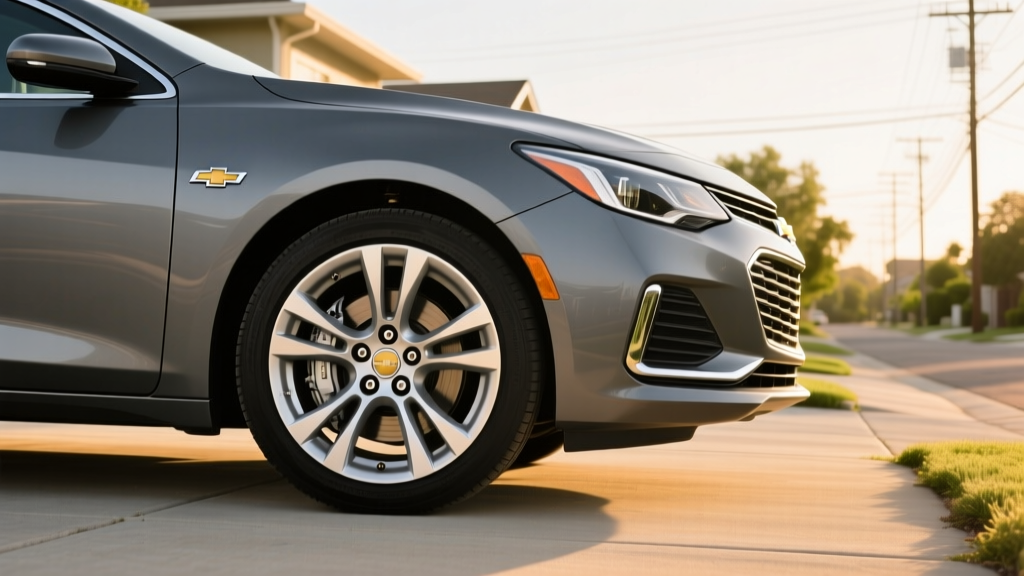
The 2016 Chevrolet Malibu — including the Hybrid trim — uses a 5x115 mm bolt pattern (also written as 5x4.53 inches). This is a General Motors standard shared with several other GM sedans and crossovers from the same era. Here are the full wheel specifications:
| Specification | Value |
|---|---|
| Bolt Pattern | 5x115 mm (5x4.53") |
| Center Bore | 70.3 mm |
| Thread Size | M12 x 1.5 |
| Wheel Size (Hybrid) | 18" x 8.5" aluminum alloy |
| Tire Size (Hybrid) | 245/45R18 |
| Offset | ~41 mm (ET41) |
If you're replacing wheels or upgrading to aftermarket alloys on your 2016 Malibu Hybrid, ensure any replacement matches all of these parameters — not just the bolt pattern. Incorrect center bore or offset can cause vibration, bearing wear, or clearance issues with the brake calipers.
2016 Malibu Hybrid: What You're Coming From
The 2016 Malibu Hybrid paired a 1.8L direct-injected four-cylinder with a two-motor electric drive unit, producing a combined 182 horsepower. It delivered an EPA-estimated 47 MPG combined (49 city / 43 highway) — impressive for a midsize sedan at the time. The 1.5 kWh lithium-ion battery pack provided brief electric-only assists but was not a plug-in hybrid; it operated strictly as a conventional HEV.
After ten years of service, owners are seeing:
- Hybrid battery capacity loss (typically 10-20% degradation on GM's NiMH/Li-ion packs of this era)
- Outdated infotainment (the 2016 MyLink system lacks wireless Apple CarPlay/Android Auto and modern OTA updates)
- No DC fast-charging capability (HEV, not PHEV or BEV)
- Limited driver-assistance features compared to today's SAE Level 2 systems
These pain points are exactly what's driving 2016 Malibu Hybrid owners to research modern EVs.
Best EV Upgrades for 2016 Malibu Hybrid Owners
If you're ready to move from a 10-year-old hybrid to a modern battery-electric vehicle, three models stand out as logical successors — matching the Malibu's midsize sedan footprint while delivering dramatically better range, tech, and efficiency.
2026 Hyundai Ioniq 6: The Direct Sedan Successor
| Spec | Value |
|---|---|
| EPA Range | 361 miles |
| Battery | 77.4 kWh usable (NMC) |
| DC Fast Charge (peak) | 240 kW (10-80% in ~18 min) |
| Level 2 Home Charge | 10.9 kW (~44 mi/hr) |
| 0-60 mph | 5.1 seconds |
| Horsepower | 225 hp (RWD single motor) |
| MPGe | 140 MPGe combined |
| Efficiency | 24 kWh/100 mi |
| Cargo Volume | 12.3 cu ft trunk + 0.5 cu ft frunk |
| Rear Legroom | 37.2 inches |
| Base MSRP | $38,650 |
| Battery Warranty | 10 yr / 100,000 mi |
Real-World Range Expectation: The Ioniq 6's EPA 361-mile rating is among the most achievable in the segment thanks to its 0.21 Cd aerodynamic drag coefficient. Expect 310-340 miles on mixed highway driving at 70 mph. In freezing temperatures (below 32°F), plan for 250-280 miles — the heat pump helps, but cold still saps 20-25% of capacity. Source: fueleconomy.gov.
2026 Tesla Model 3 Long Range: The Tech-Forward Choice
| Spec | Value |
|---|---|
| EPA Range | 341 miles |
| Battery | ~79 kWh usable (NMC) |
| DC Fast Charge (peak) | 250 kW (10-80% in ~20 min) |
| Level 2 Home Charge | 11.5 kW (~46 mi/hr) |
| 0-60 mph | 4.2 seconds |
| Horsepower | 346 hp (dual motor AWD) |
| MPGe | 132 MPGe combined |
| Cargo Volume | 23.1 cu ft (rear hatch + frunk) |
| Rear Legroom | 35.3 inches |
| Base MSRP | $42,130 |
| Battery Warranty | 8 yr / 120,000 mi |
2026 Chevrolet Bolt EUV: The Budget-Friendly Brand-Loyal Pick
If you want to stay within the Chevrolet ecosystem and keep costs low, the refreshed Bolt EUV offers practical commuting at a fraction of the price:
| Spec | Value |
|---|---|
| EPA Range | 247 miles |
| Battery | 65 kWh usable (NMC) |
| DC Fast Charge (peak) | 115 kW (10-80% in ~30 min) |
| Level 2 Home Charge | 11.5 kW (~46 mi/hr) |
| 0-60 mph | 7.0 seconds |
| Horsepower | 200 hp (FWD single motor) |
| MPGe | 115 MPGe combined |
| Cargo Volume | 27.0 cu ft (rear seats up) |
| Rear Legroom | 38.9 inches |
| Base MSRP | $28,995 |
| Battery Warranty | 8 yr / 100,000 mi |
Charging Speed Compared: What You'll Actually Experience
Coming from a hybrid that never plugs in, the charging learning curve is real. Here's how these three upgrades compare at home and on the road:
| Scenario | Ioniq 6 | Model 3 LR | Bolt EUV |
|---|---|---|---|
| Level 1 (120V, 1.4 kW) | ~6 mi/hr | ~6 mi/hr | ~6 mi/hr |
| Level 2 (240V, home) | 44 mi/hr | 46 mi/hr | 46 mi/hr |
| DC Fast (peak kW) | 240 kW | 250 kW | 115 kW |
| DC 10-80% time | ~18 min | ~20 min | ~30 min |
| Miles added in 15 min DC | ~200 mi | ~185 mi | ~100 mi |
Charging curve reality check: Peak kW is not sustained kW. The Ioniq 6's 240 kW peak occurs between roughly 10-45% state of charge, then tapers to ~150 kW through 65%, and drops sharply above 80%. That's why the 10-80% metric matters more than the headline number. The Bolt EUV's lower 115 kW peak means road trips require more patience — plan for 30-minute stops instead of 18-minute ones.
Pricing & Federal Tax Credit: What You'll Actually Pay
Under current IRS §30D Clean Vehicle Credit rules, the maximum federal tax credit is $7,500 — but eligibility depends on MSRP caps, buyer income limits, battery critical-mineral sourcing, and whether you elect a point-of-sale transfer. Here's how the three models stack up:
| Model | Base MSRP | MSRP Cap (§30D) | Est. Credit | Net Price (after credit) |
|---|---|---|---|---|
| Ioniq 6 SE | $38,650 | $55,000 (sedans) | $3,750–$7,500* | ~$31,150–$34,900 |
| Model 3 LR AWD | $42,130 | $55,000 (sedans) | $3,750–$7,500* | ~$34,630–$38,380 |
| Bolt EUV 2LT | $28,995 | $55,000 (sedans/SUVs) | $3,750–$7,500* | ~$21,495–$25,245 |
*Credit amount depends on battery sourcing compliance (critical minerals + battery components). Partial $3,750 credit applies if only one of two sourcing requirements is met. Full $7,500 requires both. Check current-year IRS guidance before purchasing.
§30D Eligibility Requirements (2026):
- Income caps: Modified AGI ≤ $150,000 (single) / $300,000 (married filing jointly) / $225,000 (head of household)
- MSRP caps: $55,000 for sedans; $80,000 for SUVs/pickups/vans
- Battery sourcing: Critical minerals and battery components must meet escalating domestic/free-trade-agreement thresholds
- Point-of-sale transfer: You can elect to transfer the credit to the dealer at purchase, reducing your out-of-pocket cost immediately
- One credit per taxpayer per year: You can claim one new clean vehicle credit per calendar year
Pros & Cons: Honest Ownership Assessment
✅ Why Upgrade from the 2016 Malibu Hybrid
- 3-7x more electric range: 247-361 miles vs. brief hybrid assist
- Dramatically lower fuel cost: ~$0.04-0.06/mile on electricity vs. ~$0.10-0.12/mile on gas (Malibu Hybrid at 47 MPG)
- Modern ADAS: SAE Level 2 systems (BlueCruise, Autopilot, Highway Driving Assist) with lane-centering and adaptive cruise
- OTA updates: Features improve over time without dealer visits
- Tax credit savings: $3,750-$7,500 federal credit offsets higher purchase price
- Minimal maintenance: No oil changes, no transmission fluid, far fewer moving parts
⚠️ Trade-offs to Consider
- Home charging required: Level 2 installation costs $500-$2,500+ depending on panel capacity and run length
- Road trip planning: DC fast charging adds stops on 300+ mile trips; Bolt EUV's 115 kW peak means longer waits
- Cold-weather range loss: All BEVs lose 20-30% range below freezing; the Malibu Hybrid had no such penalty
- Higher insurance premiums: EVs typically cost 15-25% more to insure than equivalent ICE/hybrid vehicles
- Upfront cost: Even with tax credits, BEVs carry a higher purchase price than a used Malibu Hybrid
- Depreciation uncertainty: EV resale values remain more volatile than established hybrids
Who Should Upgrade — And Who Should Hold On
Choose to upgrade to a BEV if:
- You have reliable home charging (garage or driveway with 240V access)
- Your daily commute is under 100 miles round-trip (covers all three models easily)
- You qualify for the full or partial §30D tax credit based on income and sourcing
- You take road trips fewer than 4-5 times per year (or don't mind planning DC stops)
- Your Malibu Hybrid is showing battery degradation or costly maintenance needs
Hold on to your 2016 Malibu Hybrid if:
- You live in an apartment or lack home charging access and rely on limited public infrastructure
- You regularly drive 400+ mile trips in regions with sparse DC fast-charging coverage
- Your income exceeds §30D caps and the full purchase price is prohibitive
- Your Malibu Hybrid is running well and maintenance costs remain low
Frequently Asked Questions
What is the real-world range of the Ioniq 6, Model 3, and Bolt EUV?
The Ioniq 6's EPA 361 miles translates to roughly 310-340 miles in real-world highway driving and 250-280 miles in freezing weather. The Model 3 LR delivers ~290-320 miles highway, ~240-270 in cold. The Bolt EUV manages ~210-230 miles highway, ~170-200 in cold. All figures assume 70 mph highway speeds; city driving at lower speeds typically exceeds EPA estimates.
How fast do these EVs charge at home?
All three vehicles charge at roughly 44-46 miles of range per hour on a Level 2 (240V) home charger. A full overnight charge (8-10 hours) easily replenishes a day's driving and then some. Level 2 charger installation typically costs $500-$2,500 including equipment and electrician labor, depending on your electrical panel capacity and distance from the panel to the charger location.
How much do these EVs cost after federal tax credits?
With the §30D credit, the Bolt EUV can drop to ~$21,500-$25,200, the Ioniq 6 to ~$31,150-$34,900, and the Model 3 LR to ~$34,600-$38,400. Actual credit amounts depend on battery sourcing compliance, your income, and the vehicle's MSRP relative to caps. Always verify current-year eligibility on IRS.gov before purchasing.
Is upgrading worth it versus keeping my 2016 Malibu Hybrid?
If your Malibu Hybrid is reliable and you lack home charging, holding on makes financial sense — a paid-off 47 MPG hybrid is hard to beat on pure cost-per-mile. But if you're facing battery replacement ($2,000-$4,000), want modern safety tech, and have home charging access, a BEV upgrade with tax credit savings delivers dramatically lower operating costs and a far better driving experience.
Does the 2016 Malibu Hybrid wheel bolt pattern match any current EVs?
The 5x115 bolt pattern does not directly carry over to current GM EVs. The Bolt EUV uses a 5x10⁵ pattern. Most Hyundai/Kia EVs use 5x114.3. Tesla uses 5x120 (Model 3) or 5x114.3 (some configurations). Wheel compatibility between your Malibu and a new EV is unlikely — plan on vehicle-specific wheels and tires.
What's the biggest mistake 2016 Malibu Hybrid owners make when switching to an EV?
Skipping a Level 2 home charger installation. Relying solely on Level 1 (120V) charging adds only ~4-6 miles of range per hour — adequate for very light commuters but frustrating for anyone driving 40+ miles daily. Budget for a proper 240V/48A circuit and charger before taking delivery of your EV. Also: precondition your battery before DC fast charging in cold weather to avoid painfully slow charge speeds.