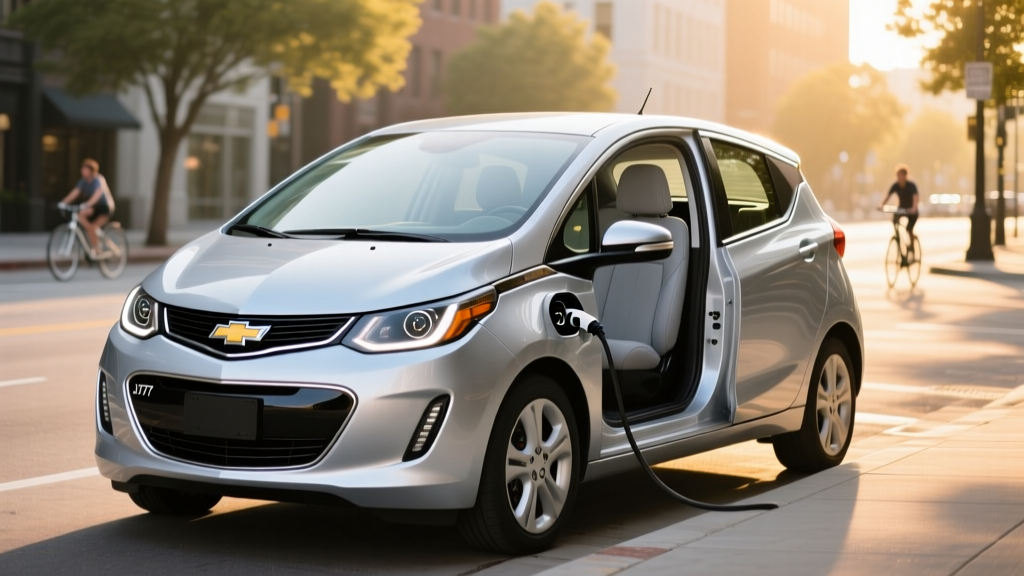
The 2016 Chevrolet Spark EV: Quick Verdict for Used Buyers
Bottom line: The 2016 Chevrolet Spark EV is a discontinued, short-range city commuter with an EPA-estimated 82 miles of range, an 18.4 kWh (usable) battery, and CCS DC fast charging that tops out around 50 kW. In 2026, used examples typically sell for $6,000–$9,500 depending on mileage and battery health. It's a viable second car for urban errands and short commutes if you have home charging, but its limited highway range and small cargo area rule it out as a primary vehicle for most buyers. No federal tax credit applies to this used purchase under current §30D rules.
Chevrolet built the Spark EV for three model years (2014–2016) as a compliance-oriented electric subcompact. The 2016 model year is the final and most refined version, carrying over the LG Chem lithium-ion battery pack and a 143-hp (107 kW) permanent-magnet electric motor. It was sold only in California, Oregon, and Maryland, which means most surviving examples cluster in those states. With production long ended and Chevrolet having moved on to the Bolt EV (and subsequently the 2026 Equinox EV and Blazer EV), the Spark EV now lives entirely in the used market.
This guide covers what you need to know before buying one in 2026: real-world range, battery degradation risks, charging logistics, ownership costs compared to a gas equivalent, and a decision framework to determine if it fits your life.
Range, Battery, and Efficiency: The Numbers That Matter
| Spec | 2016 Spark EV |
|---|---|
| EPA Range | 82 miles |
| Battery (usable) | 18.4 kWh, LG Chem NMC lithium-ion |
| EPA Efficiency | 119 MPGe combined (28 kWh/100 mi) |
| Motor Output | 143 hp (107 kW) / 327 lb-ft torque |
| 0–60 mph | ~7.2 seconds |
| DC Fast Charge (max) | ~50 kW (CCS Combo) |
| DC 0–80% (est.) | ~25–30 minutes |
| Level 2 Charge (max) | 3.3 kW (SAE J1772) |
| Level 2 Full Charge Time | ~6–7 hours |
| Original MSRP (2016) | $25,995 (before incentives) |
| Used Price Range (2026) | $6,000–$9,500 |
EPA Range: 82 miles | Real-World Expectation: In mild weather with city driving, expect 75–85 miles. On the highway at 70 mph, range drops to roughly 60–70 miles. In freezing temperatures (below 32°F), plan on 50–60 miles due to cabin heating load and reduced battery chemistry efficiency. The Spark EV lacks a heat pump — it uses resistive heating, which is a significant energy draw in winter.
The 18.4 kWh usable capacity was competitive for a city car in 2016 but is small by 2026 standards, where even affordable models like the base Nissan LEAF offer 40 kWh and the Chevrolet Equinox EV starts at 85 kWh. That said, the Spark EV's efficiency is excellent: at 28 kWh per 100 miles, it sips electrons. For a 30-mile round-trip commute, you'll use roughly 8.4 kWh — easily replenished overnight on a standard 120V outlet (Level 1) adding about 3–4 miles per hour of charging.
Battery Degradation: What to Expect at 10 Years
The Spark EV's LG Chem NMC pack is now a decade old. Based on fleet data and owner reports from similar-era packs (Nissan LEAF, early BMW i3), expect 10–20% capacity loss depending on climate and charging habits. A Spark EV that originally delivered 82 miles may now deliver 65–74 miles on a full charge. Hot-climate cars (inland California) tend to degrade faster than Pacific Northwest examples.
Before buying: Request a battery state-of-health (SoH) reading. The Spark EV's onboard diagnostics don't expose SoH as easily as a Leaf's, but a Chevrolet dealer with GDS2 scan tools can pull capacity data. Alternatively, fully charge the car, reset the trip meter, and drive until the battery is nearly depleted to gauge actual usable capacity. An OBD-II reader paired with third-party apps can also pull voltage and capacity estimates.
Charging in 2026: Connector Compatibility and Speed
The 2016 Spark EV uses a CCS Combo 1 connector for DC fast charging and a SAE J1772 inlet for Level 1 and Level 2 AC charging. It does not have a NACS (Tesla) port.
| Charging Type | Connector | Max Rate | Notes |
|---|---|---|---|
| Level 1 (120V) | J1772 | ~1.4 kW | ~4 miles/hr; full charge in ~14 hrs |
| Level 2 (240V) | J1772 | 3.3 kW | ~12 miles/hr; full charge in ~6-7 hrs |
| DC Fast Charge | CCS1 | ~50 kW | 0–80% in ~25-30 min; tapers sharply above 80% |
Network compatibility note: As of 2026, most public DC fast-charging networks (Electrify America, EVgo, ChargePoint) still support CCS1 natively. However, with the industry's shift toward NACS, some newer stations have fewer CCS stalls. Carry a PlugShare or ABRP app to verify CCS availability on your routes. Tesla Superchargers with Magic Dock adapters can serve CCS vehicles at select locations, but availability remains limited.
The 50 kW DC fast-charge ceiling is the Spark EV's biggest road-trip limitation. Even at peak rate, charging from 10–80% takes roughly 25–30 minutes — and the charge curve tapers significantly above 60% SoC. On a 200-mile trip, you'd need at least two charging stops, each lasting 30+ minutes. This car was designed for city use, not corridor travel.
Home Charging Setup
Because the Spark EV's onboard charger maxes out at 3.3 kW, you do not need a 48-amp Level 2 home charger. A basic 16-amp, 240V Level 2 EVSE (roughly $250–$400 for the hardware) will deliver the car's maximum 3.3 kW rate. Installation by a licensed electrician typically runs $400–$1,200 if your electrical panel has capacity, or $1,500–$3,000+ if a panel upgrade (to 200A) is needed. Given the car's small battery, many owners find Level 1 (120V) charging sufficient — a full overnight charge (10–12 hours) replenishes a day's worth of city driving.
Spark EV vs. Gas Car: Real Cost Comparison
Let's compare the used Spark EV against a typical gas-powered subcompact you might cross-shop, such as a 2016 Chevrolet Sonic or a used Honda Fit. Both gas cars average around 30 MPG combined.
| Cost Factor | 2016 Spark EV (Used) | 2016 Gas Subcompact (~30 MPG) |
|---|---|---|
| Purchase Price (2026 used) | $6,000–$9,500 | $7,000–$11,000 |
| Fuel/Energy Cost per Mile | $0.03–$0.05 (home charging at $0.13/kWh) | $0.11–$0.14 (gas at $3.30/gal) |
| Annual Fuel (12,000 mi/yr) | $360–$600 | $1,320–$1,680 |
| Annual Maintenance | $200–$400 (no oil, fewer brake jobs) | $600–$900 |
| Insurance (avg. annual) | $1,100–$1,500 | $1,000–$1,400 |
| 5-Year Total Running Costs | $8,300–$14,500 | $14,600–$20,400 |
| Federal Tax Credit (used EV) | Not eligible (new-purchase §30D only) | N/A |
The Spark EV's energy cost advantage is substantial: at $0.13/kWh (national residential average per the EIA), a full 18.4 kWh charge costs about $2.39 and yields roughly 75 real-world miles. That's approximately $0.032 per mile, versus $0.11–$0.14 per mile for gasoline. Over 12,000 miles annually, you save $800–$1,100 on fuel alone.
Maintenance savings add up further. The Spark EV has no engine oil, transmission fluid, spark plugs, or timing belt. Regenerative braking reduces pad wear — many owners report original brake pads at 80,000+ miles. The main maintenance items are cabin air filter, windshield washer fluid, tire rotation, and coolant checks on the battery thermal management loop.
Insurance tends to run slightly higher on the Spark EV than on a comparable gas subcompact, typically by $50–$150 per year, due to specialized repair training and parts sourcing for a discontinued model. Get a quote before buying.
The Used EV Tax Credit Question
Under current IRS §30D and §25E rules, the federal used-EV credit (§25E) offers up to $4,000 or 30% of the sale price (whichever is lower) for qualified used electric vehicles purchased from a dealer. However, eligibility requirements are strict: the vehicle must have a sale price of $25,000 or less, the buyer must meet income caps ($75,000 single / $150,000 joint), and the vehicle must be at least two model years old. The Spark EV qualifies on price and age, but you must purchase through a licensed dealer (not a private party) and the dealer must report the sale through the IRS Energy Credits Online system. Confirm eligibility at irs.gov before finalizing your purchase.
Common Misconceptions About the Spark EV
| Myth | Fact |
|---|---|
| "It can't go on the highway." | It can, but range drops to 60–70 miles at 70 mph. It's best suited for speeds under 55 mph where efficiency peaks. |
| "The battery will need a $15,000 replacement." | Full pack replacement is rare and typically costs $4,000–$7,000 at independent EV shops. Many packs retain 80%+ capacity at 10 years with moderate use. |
| "I can use a Tesla Supercharger." | Not directly. The Spark EV uses CCS1. Some Supercharger stations have Magic Dock CCS adapters, but coverage is very limited as of 2026. |
| "It's too slow for real traffic." | At 143 hp and 327 lb-ft of instant torque, the Spark EV does 0–60 in ~7.2 seconds — quicker than most gas subcompacts. It's genuinely punchy off the line. |
| "Parts are impossible to find." | Mechanical and body parts overlap with the gas Spark (shared platform). EV-specific components (motor, inverter) are dealer-only and may require ordering, but failure rates are low. |
Real-World Ownership: Who Should (and Shouldn't) Buy One
The Spark EV thrives in a specific niche. Here's what ownership actually looks like day to day:
Home charging is nearly essential. With only 82 miles of range, relying on public charging is impractical and expensive. If you can install a Level 2 charger at home (or even use a dedicated 120V outlet in a garage or carport), the Spark EV is a plug-in-and-forget commuter. If you live in an apartment without charging access, this car will be a constant logistical headache.
Cold weather is a real limitation. The resistive cabin heater draws 2–4 kW in freezing conditions, which can cut range by 25–35%. If you live in a climate where winters regularly drop below freezing, plan on 50–60 miles of usable range in January. Preconditioning while plugged in (using the car's timer or OnStar app, if still active) helps mitigate this by warming the cabin on grid power before you depart.
Cargo space is tight. The battery pack sits under the rear seat and cargo floor, eliminating the gas Spark's already-modest 11.4 cu ft trunk. You get roughly 9.6 cu ft behind the rear seats — enough for groceries, not enough for a week's luggage for a family. Fold the rear seats and you gain about 23 cu ft.
It's a surprisingly fun city car. The 327 lb-ft of torque delivered at 0 RPM makes the Spark EV genuinely quick in stop-and-go traffic. It merges onto highways with confidence, and the low center of gravity (battery under the floor) gives it surprisingly flat cornering for a subcompact. Owners consistently report that the driving experience is the car's most underrated attribute.
Decision Framework: Is the Spark EV Right for You?
Buy the 2016 Spark EV if:
- Your daily driving is under 50 miles round-trip
- You have reliable home charging (Level 1 or Level 2)
- You need an affordable second car for commuting and errands
- You live in a mild climate (rarely below 30°F)
- You value low running costs over range and cargo space
Look elsewhere if:
- You regularly drive more than 70 miles in a day
- You lack home or workplace charging
- You need a primary/only vehicle for a household
- You live in a region with harsh winters and no garage
- You need to carry more than two passengers or significant cargo
If the Spark EV doesn't fit, consider a used 2017–2019 Chevrolet Bolt EV (238-mile EPA range, 60 kWh battery, typically $12,000–$17,000 used) or a 2018+ Nissan LEAF Plus (226-mile range, 62 kWh, $11,000–$15,000 used). Both offer dramatically more range while keeping used-EV pricing accessible.
Pre-Purchase Checklist: What to Inspect
Before handing over cash for a 10-year-old EV, verify these items:
- Battery state of health: Get an SoH reading via dealer scan tool or OBD-II app. Acceptable: 80%+ capacity. Walk away below 70% unless the price reflects a pending $4,000–$7,000 battery replacement.
- DC fast-charge test: Visit a CCS station and confirm the car actually pulls 40–50 kW. A charge rate stuck below 20 kW may indicate a degraded cell or faulty charge controller.
- Coolant level and condition: The Spark EV uses a liquid-cooled battery pack. Check the coolant reservoir and look for signs of leaks around the battery enclosure.
- Tire age: EVs are heavier than their gas counterparts and wear tires faster. Check DOT date codes — tires over 6 years old should be replaced regardless of tread.
- Recall status: Check the VIN at nhtsa.gov/recalls. The Spark EV had recalls related to the charge cord and 12V battery cable — confirm these were addressed.
- 12V battery: Like all EVs, the Spark EV has a conventional 12V lead-accent battery that powers accessories. These typically last 3–5 years. If it's original, budget $150–$200 for replacement.
Frequently Asked Questions
Can I still get the Spark EV serviced at a Chevrolet dealer?
Yes. Chevrolet dealers with EV-trained technicians can service the Spark EV, though parts availability for EV-specific components (inverter, charge port) may require special orders. Routine maintenance (brakes, suspension, tires) can be done at any shop since the chassis shares components with the gas Spark.
Does the 2016 Spark EV qualify for any tax credits in 2026?
It does not qualify for the new-vehicle §30D credit (obviously, as it's a used car). It may qualify for the §25E used clean vehicle credit of up to $4,000 if purchased from a licensed dealer, the sale price is $25,000 or less, and you meet income requirements ($75K single / $150K joint). Verify current rules at irs.gov and confirm the dealer participates in the IRS Energy Credits Online reporting system.
What's the most I should pay for a used 2016 Spark EV?
In the 2026 market, $9,500 is the upper bound for a clean, low-mileage example (under 40,000 miles) with verified 85%+ battery SoH. Average examples (50,000–80,000 miles, 80% SoH) typically trade for $6,500–$8,000. Anything over $10,000 is overpriced — you're entering used Bolt EV territory at that point, which offers three times the range.
How long will the battery last before needing replacement?
Based on data from similar-era NMC packs, the Spark EV battery should retain 70–80% capacity at 100,000 miles or 10–12 years. Full failure requiring replacement is uncommon but not unheard of. Budget $4,000–$7,000 if a replacement is needed, sourced from an independent EV repair shop or salvaged pack. Chevrolet's original 8-year/100,000-mile battery warranty has expired on all 2016 models.
Is the Spark EV safe?
The Spark EV was not crash-tested by IIHS or NHTSA in its electric variant (the gas Spark received marginal IIHS ratings). It includes standard stability control, four airbags, and anti-lock brakes. Its small size and weight put it at a physics disadvantage in collisions with larger vehicles. It's best suited as a city and suburban car, not a highway commuter in heavy truck traffic.
Can I tow or install a roof rack on the Spark EV?
No. The Spark EV has no factory towing rating and no roof rail mounting points for crossbars. Cargo capacity is limited to the interior and the small hatch area.