The Quick Answer: Who Should Buy a 2016 BMW i3?
Bottom line: The 2016 BMW i3 (BEV) delivers an EPA-estimated 81 miles of range from its 33 kWh (22 kWh usable) battery. In 2026, expect to pay between $7,000 and $12,000 on the used market depending on mileage and condition. It's a compelling second car or city commuter if you have reliable home Level 2 charging and a short daily drive. It is not a road-trip EV, and its DC fast-charging ceiling of 50 kW means highway stops are slow by modern standards.
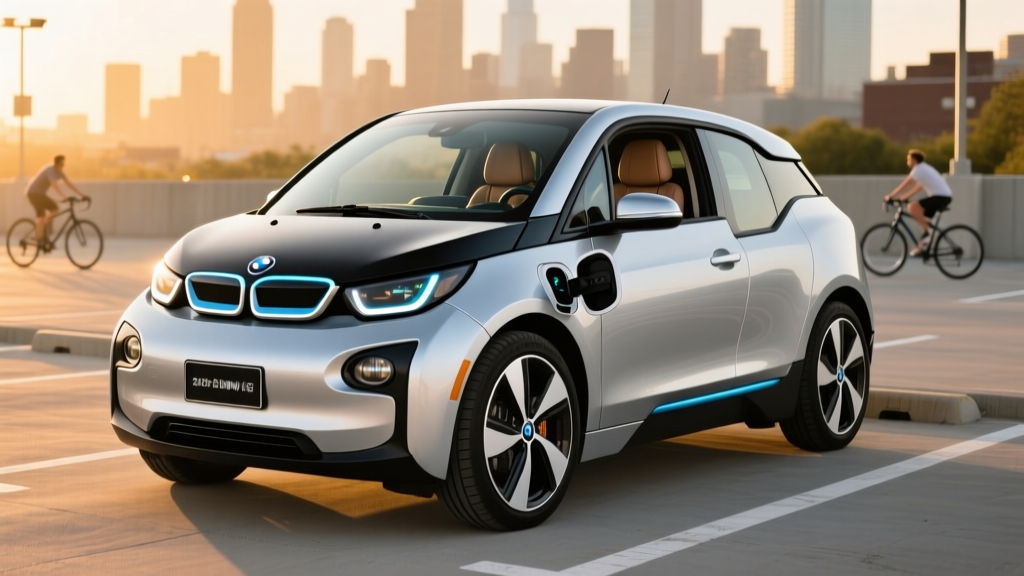
If you're searching for a 2016 electric BMW, you're almost certainly looking at the i3 — BMW's carbon-fiber-reinforced-plastic (CFRP) hatchback that was the brand's first mass-production battery-electric vehicle. The 2016 model year introduced the upgraded 94 Ah (33 kWh gross) battery, a meaningful step up from the original 60 Ah (22 kWh) pack found in 2014–2015 models. There was also a Range Extender (REx) variant with a small two-cylinder gasoline engine, which we'll address below.
This guide covers what you need to know before purchasing one in 2026: realistic range, charging infrastructure compatibility, battery health expectations, total cost of ownership, and how it compares to both modern EVs and gas-powered alternatives.
Range, Battery, and Real-World Efficiency
The 2016 BMW i3 BEV carries a 33 kWh gross battery pack (approximately 22 kWh usable, with the rest reserved as a buffer to protect longevity). BMW uses Samsung SDI NMC (nickel-manganese-cobalt) cells in a prismatic format. The EPA rated this configuration at 81 miles of combined range with an efficiency of 124 MPGe (27 kWh/100 miles), per fueleconomy.gov.
EPA Sticker: 81 miles combined
Real-World Expectation: 65–75 miles on the highway at 70 mph; 75–85 miles in mixed city driving. In cold weather (below 32°F / 0°C), expect a 20–30% reduction, dropping effective range to 50–65 miles unless you precondition the cabin while plugged in. The i3 lacks a heat pump — it uses resistive electric heating, which draws heavily from the traction battery.
| Spec | Value |
|---|---|
| EPA Range | 81 miles (combined) |
| Battery (gross / usable) | 33 kWh / ~22 kWh |
| Chemistry | NMC (Samsung SDI prismatic) |
| Motor Output | 170 hp / 184 lb-ft torque |
| 0–60 mph | 7.0 seconds |
| EPA Efficiency | 124 MPGe (27 kWh/100 mi) |
| Max DC Fast Charge | 50 kW (CCS Combo 1) |
| Level 2 Charge Rate | 7.4 kW (240V, 32A) |
| DC 0–80% Time | ~28 minutes (at 50 kW) |
| Level 2 Full Charge Time | ~3.5 hours (from empty) |
| Curb Weight | ~2,746 lbs |
| Cargo Volume | 15.1 cu ft (rear seats up) |
A critical ownership note: the i3's DC fast-charging port uses the CCS1 (Combo 1) connector. As of 2026, the North American charging landscape is rapidly shifting toward NACS (Tesla's connector, now adopted by Ford, GM, Rivian, and others). CCS1 stations remain widely available on Electrify America, EVgo, and ChargePoint networks, but long-term infrastructure trends favor NACS. This won't strand you today, but it's worth monitoring as CCS1 stall deployment slows relative to NACS.
Charging Setup: What a 2016 i3 Owner Needs
Because the i3's range is limited, home charging is essentially mandatory for practical daily ownership. Relying solely on public DC fast charging is both inconvenient (50 kW is slow by 2026 standards) and expensive (typically $0.35–$0.55/kWh at public chargers vs. $0.10–$0.18/kWh at home).
| Level | Power (kW) | Miles Added per Hour | Typical Use |
|---|---|---|---|
| Level 1 (120V, 12A) | ~1.4 kW | ~5 mi/hr | Emergency / overnight trickle |
| Level 2 (240V, 32A) | 7.4 kW | ~25 mi/hr | Daily home charging (recommended) |
| DC Fast (CCS1) | 50 kW peak | ~150 mi/hr (peak) | Road trips; 0–80% in ~28 min |
Level 1 charging from a standard 120V outlet will add roughly 5 miles of range per hour — enough to replenish a 40-mile daily commute in about 8 hours, but barely adequate if you drive more. A Level 2 home charger is strongly recommended. Installation costs vary widely:
| Component | Low Estimate | High Estimate |
|---|---|---|
| Level 2 EVSE hardware (e.g., ChargePoint Home Flex, Emporia Level 2) | $300 | $700 |
| Electrician labor (240V/40A circuit run) | $500 | $2,000 |
| Electrical panel upgrade (if needed, 100A → 200A) | $1,500 | $4,000 |
| Permit and inspection | $50 | $300 |
| Total (no panel upgrade) | $850 | $3,000 |
| Total (with panel upgrade) | $2,350 | $7,000 |
The i3's onboard charger maxes out at 7.4 kW, so even if you install a 48A or 80A EVSE, you won't charge faster than 32A. A 40A circuit with a 32A charger is the sweet spot — no need to overspend on high-amperage hardware.
Cost of Ownership: 2016 i3 vs. a Comparable Gas Car
One of the strongest arguments for a used 2016 i3 is its low operating cost. Let's compare it against a reasonable gas alternative — a 2016 BMW 2 Series (228i), which gets roughly 27 MPG combined per the EPA.
| Cost Category | 2016 i3 BEV | 2016 BMW 228i (Gas) |
|---|---|---|
| Fuel / Electricity | $430 (home charging at $0.15/kWh) | $1,555 (at $3.50/gal, 27 MPG) |
| Oil Changes | $0 | $300–$500 |
| Brake Wear (regen extends pad life) | ~$0 (pads last 80k+ mi) | $200–$400/yr avg |
| Insurance (avg) | $1,200–$1,600 | $1,200–$1,600 |
| Estimated Annual Maintenance | $200–$400 | $600–$1,000 |
| Total Annual Operating Cost | ~$1,830–$2,430 | ~$3,855–$5,055 |
The i3 saves roughly $1,500–$2,600 per year in fuel and maintenance over the gas equivalent. Over five years of ownership, that's $7,500–$13,000 in savings — potentially covering the entire purchase price of the used vehicle.
Federal tax credit note: The §30D federal tax credit does not apply to used EVs purchased in private-party sales or at dealerships in the same way it does for new vehicles. However, the Used Clean Vehicle Credit (§25E) offers up to $4,000 or 30% of the sale price (whichever is less) for qualifying used EVs. For a 2016 i3 selling at $9,000, the credit would be $2,700 (30% of $9,000). Eligibility requires: the buyer's income below $75,000 (single) / $150,000 (joint), purchase from a licensed dealer, and the vehicle's MSRP when new was under $25,000 — a requirement the i3 fails, as its original MSRP was approximately $42,400. The 2016 i3 does not qualify for the used EV tax credit due to the original MSRP cap. See IRS §25E guidelines for full details.
Battery Health and Longevity: What to Check Before Buying
The 2016 i3's Samsung SDI NMC pack has proven reasonably durable, but after 9–10 years of service, some degradation is expected. Most owners report 85–92% State of Health (SoH) at 60,000–80,000 miles. A pack at 88% SoH effectively delivers around 71 miles of EPA range instead of 81.
BMW's original battery warranty was 8 years / 100,000 miles against defects and excessive capacity loss (defined as dropping below 70% of original capacity). For a 2016 model, this warranty expires in 2024 — meaning most 2016 i3s are now out of battery warranty as of 2026. This is a critical buying consideration.
Before purchasing, insist on:
- A battery health report from a BMW dealer or a qualified EV technician (read SoH via OBD-II tools like BimmerCode or LeafSpy-compatible adapters)
- Charging history — frequent DC fast charging to 100% accelerates NMC degradation; consistent Level 2 charging to 80–90% is ideal
- Visual inspection of the battery case underside for impact damage (the i3 sits low)
- Confirmation that the battery cooling system (liquid-cooled) has been serviced and shows no fault codes
Battery replacement cost: If the pack fails outside warranty, a replacement from BMW runs approximately $12,000–$16,000 (parts and labor). Third-party refurbished packs are emerging at $6,000–$9,000 but availability is limited. At current used i3 prices, a battery replacement can exceed the car's value — making pre-purchase SoH verification essential.
The Range Extender (REx) Variant: A Compromise Worth Considering
BMW also sold the i3 with a Range Extender — a 647cc two-cylinder gasoline engine that acts as a generator, not a direct drive mechanism (making it a series hybrid or EREV). The REx adds roughly 65–80 miles of gasoline-generated range after the battery is depleted, bringing total range to approximately 150–160 miles.
The REx eliminates range anxiety for longer trips but introduces gasoline maintenance (oil changes, fuel filter, emissions checks) and reduces cargo space slightly. Fuel economy in REx mode is roughly 39 MPG combined. If your commute is under 50 miles but you occasionally need 120+ mile range without charging stops, the REx is a pragmatic choice. Expect to pay a $500–$1,500 premium over the BEV on the used market.
Myths vs. Facts About the 2016 Electric BMW i3
| Myth | Fact |
|---|---|
| "The carbon-fiber body is unrepairable after a crash." | BMW certified a network of collision centers trained in CFRP repair. Moderate damage is repairable; total-loss thresholds are similar to aluminum-bodied vehicles. |
| "The battery will need replacement by 100,000 miles." | NMC packs in the i3 have shown 85–92% SoH at 80,000 miles. Many are exceeding 120,000 miles with 75–85% SoH. Catastrophic failure is rare. |
| "You can't drive it in winter." | You can, but range drops 20–30% in freezing temps. Preconditioning while plugged in mitigates this. Winter tires are strongly recommended — the i3's narrow 155/70R19 tires struggle on ice. |
| "The i3 is too slow for highway merging." | With 170 hp and 184 lb-ft of instant torque, the i3 hits 60 mph in 7.0 seconds. Highway merging is confident; the car's light weight (2,746 lbs) helps. |
| "CCS1 charging stations are disappearing." | CCS1 remains widely available on Electrify America, EVgo, and ChargePoint. While new deployments increasingly include NACS, CCS1 is not being removed — it's a legacy standard that will persist for years. |
Decision Framework: Should You Buy a 2016 BMW i3?
Buy the 2016 i3 BEV if:
- Your daily round-trip commute is under 50 miles (leaving a comfortable buffer on the 81-mile range)
- You have access to Level 2 home charging (garage or driveway with a 240V circuit)
- This will be a second vehicle, not your only car
- You value a premium interior, unique design, and BMW driving dynamics at a budget price
- You can verify battery SoH above 85% before purchase
Buy the i3 REx (Range Extender) if:
- Your commute is under 50 miles but you need occasional 100+ mile trips without planning DC fast-charge stops
- You live in an area with sparse public charging infrastructure
- You don't mind maintaining a small gasoline engine alongside the electric drivetrain
Look elsewhere if:
- You need 200+ miles of range for a single-vehicle household
- You lack home charging access and would rely on public infrastructure
- You live in extreme cold (regular sub-10°F winters) and need reliable range — consider a modern EV with a heat pump and 250+ mile EPA rating
- You need more than 15.1 cu ft of cargo space
Frequently Asked Questions
How long does a 2016 BMW i3 battery last?
Based on real-world owner data, most 2016 i3 battery packs retain 75–90% of original capacity at 100,000 miles. With proper care (avoiding frequent 100% charges and extreme DC fast-charging heat), the pack should remain functional well beyond 120,000 miles. The limiting factor is gradual range reduction, not sudden failure.
Can I charge a 2016 i3 at a Tesla Supercharger?
Not natively. The 2016 i3 uses a CCS1 connector, and Tesla Superchargers use NACS. As of 2026, Tesla has opened some Supercharger stations to non-Tesla CCS vehicles via the Magic Dock adapter (built into the stall), but availability is limited to select locations. Check the Tesla app for CCS-compatible Superchargers near you. For reliable DC fast charging, use Electrify America or EVgo CCS1 stations.
What's the difference between the 2016 i3 and the 2014–2015 i3?
The critical difference is battery size. The 2014–2015 i3 has a 22 kWh gross (60 Ah) pack rated at 81 miles EPA. Wait — the 2016 i3 with the 33 kWh (94 Ah) pack is also rated at 81 miles? That's because BMW introduced the 94 Ah battery mid-2016, and some early 2016 models still carry the 60 Ah pack. The 94 Ah version is EPA-rated at 114 miles of range. Always verify which battery a specific 2016 i3 has — the 94 Ah version is significantly more desirable.
Is the 2016 BMW i3 safe?
The i3 earned a 4-star overall rating from NHTSA and was an IIHS Top Safety Pick in its class. Its CFRP passenger cell is extremely rigid. Standard safety features include stability control, six airbags, and BMW's Dynamic Stability Control. It lacks modern ADAS features like automatic emergency braking or lane-keeping assist that are common on 2026 vehicles.
What should I budget for insurance on a used 2016 i3?
Insurance costs are comparable to a gas-powered BMW 2 Series — typically $1,200–$1,600 per year depending on your state, driving record, and coverage level. Some insurers offer green-vehicle discounts. Get quotes before purchasing, as EV insurance premiums vary significantly by carrier.
Does the 2016 i3 support over-the-air (OTA) software updates?
Limited OTA capability exists for navigation maps and minor iDrive updates, but the 2016 i3 does not receive the kind of substantial feature-adding OTA updates common in Teslas or modern EVs. Firmware updates for the battery management system require a dealer visit.