Quick Verdict: A Quirky Urban EV With a Gasoline Safety Net
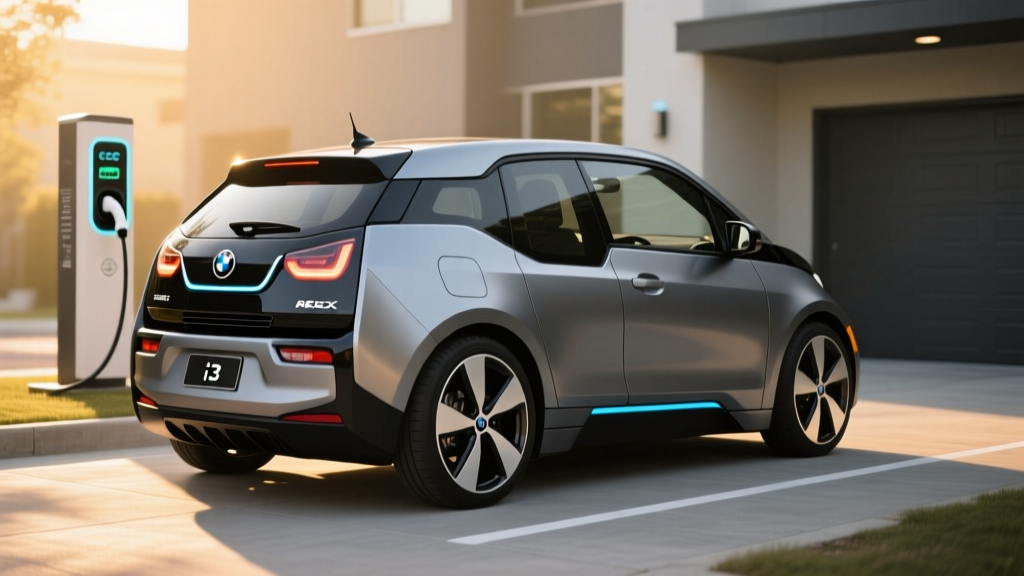
The 2016 BMW i3 REx (Range Extender) occupies a unique space in the used EV market. It pairs a small 22 kWh lithium-ion battery with a 650cc two-cylinder gasoline generator that kicks in when the battery depletes, giving you roughly 72 miles of pure electric driving before the engine fires up to extend your range by another ~78 miles. For city commuters who want electric daily driving but fear being stranded on longer trips, the REx concept was ahead of its time — essentially a series hybrid before plug-in hybrids became mainstream.
In 2026, the i3 REx remains a compelling used-EV proposition, especially given its eligibility for the Used Clean Vehicle Credit (IRS §25E) — up to $4,000 off for qualifying buyers. But its small battery, quirky styling, and aging tech mean it suits a very specific buyer. Let's break down the numbers.
| Spec | Value |
|---|---|
| EV-Only Range (EPA) | 72 miles |
| Total Range (EV + REx) | ~150 miles |
| Battery Capacity | 22 kWh gross / ~18.8 kWh usable |
| Battery Chemistry | NMC (Nickel Manganese Cobalt) — Samsung SDI cells |
| DC Fast Charge (Peak) | 50 kW (CCS Combo 1) |
| 10–80% DC Charge Time | ~25 minutes |
| Level 2 Charge Rate | 7.4 kW (onboard charger) |
| 0–60 mph | 7.0 seconds |
| Horsepower | 170 hp (electric motor) |
| Drivetrain | Rear-wheel drive (single motor) |
| MPGe (EV mode, combined) | 117 MPGe |
| REx Fuel Economy | 39 MPG combined (gasoline) |
| Cargo Volume | 15.1 cu ft (rear seats up) |
| Original MSRP (base) | $46,250 (before incentives) |
| Battery/Powertrain Warranty | 8 years / 100,000 miles (from original sale) |
Real-World Range: What 72 EPA Miles Actually Means
EPA EV-Only Range: 72 miles
Real-World Expectation: Expect 55–65 miles of usable EV range in mixed driving. Highway speeds above 70 mph and cold weather (below 40°F) can reduce this to 45–55 miles. The range extender adds roughly 70–80 additional miles on its 1.9-gallon fuel tank, bringing total practical range to ~125–145 miles before needing any plug or gas station.
The 2016 i3 REx's 22 kWh battery pack (18.8 kWh usable due to BMW's conservative buffer strategy) was modest even at launch. By 2026 standards, it's tiny — a fraction of what modern EVs carry. But for a lightweight carbon-fiber-reinforced plastic (CFRP) city car, it delivers adequate urban range.
Cold weather is the i3 REx's Achilles heel. Without a heat pump (the 2016 model uses resistive cabin heating), winter range loss can hit 25–35%. BMW addressed this partially with an optional heated seat and steering wheel package, which helps reduce HVAC energy draw. If you live in a cold climate, plan for ~50 EV-only miles in January.
According to fueleconomy.gov, the 2016 i3 REx achieves 117 MPGe in combined city/highway driving in EV mode and 39 MPG combined when the range extender is active. Real-world highway efficiency drops noticeably — expect closer to 100 MPGe on freeway commutes and 35 MPG from the REx at sustained high speeds.
Charging Speed: DC Fast, Level 2, and the 50 kW Ceiling
The 2016 i3 REx supports DC fast charging via CCS Combo 1 at a peak rate of 50 kW. That's slow by 2026 standards — modern EVs routinely accept 150–350 kW — but with such a small battery, 50 kW is actually a reasonable C-rate (roughly 2.5C). Here's the charging breakdown:
| Charge Level | Power | Time / Rate | Notes |
|---|---|---|---|
| Level 1 (120V outlet) | ~1.4 kW | ~14–16 hours (0–100%) | Emergency/top-up only |
| Level 2 (240V, 32A) | 7.4 kW | ~3 hours (0–100%) | Home charger, full overnight fill |
| DC Fast (CCS) | 50 kW peak | ~25 min (10–80%) | Tapers significantly above 80% |
The 50 kW DC fast-charge peak is sustained only between roughly 10–60% state of charge. Above 70%, the charge curve tapers sharply — you'll see rates drop to 20–25 kW as the battery management system protects the NMC cells. This means a 10–90% session takes closer to 40 minutes, not the 25 minutes BMW quoted for 10–80%.
At home on a Level 2 charger (240V, 32-amp circuit), the i3 REx refills in about 3 hours. That's fast enough for any overnight charging routine. The 7.4 kW onboard charger is the limiting factor — even if your home charger delivers 11.5 kW (48-amp), the car won't accept more than 7.4 kW.
One practical note: the 2016 i3 REx uses the CCS1 connector standard, which is now the dominant public charging connector in North America alongside Tesla's NACS (with adapters widely available as of 2025–2026). You won't have trouble finding compatible public chargers.
Performance and Driving Dynamics
Despite its eco-friendly image, the i3 REx is genuinely fun to drive. The 170-hp electric motor delivers 184 lb-ft of instant torque to the rear wheels, pushing the lightweight (~3,000 lb) hatchback from 0–60 mph in 7.0 seconds. That's brisk for a 2016 compact car and feels even quicker in city traffic thanks to the electric motor's linear power delivery.
The carbon-fiber passenger cell (BMW calls it "LifeDrive" architecture) keeps weight low and gives the i3 a remarkably rigid chassis. The skinny 155/70R19 tires are designed for low rolling resistance, not grip — so cornering feels more go-kart than sports car. But the tight 32.8-foot turning radius and instant torque make the i3 REx one of the most agile urban EVs ever built.
When the battery depletes to roughly 5–7% state of charge, the 650cc twin-cylinder range extender engine fires up. It's a motorcycle-derived engine (from BMW's scooter division) producing 34 hp — enough to maintain highway speed on flat terrain but noticeably strained on steep grades. You'll hear it. The transition from EV to REx is audible and introduces vibration that reminds you this isn't a pure EV anymore.
Interior, Tech, and Practicality
The i3's interior was radical in 2014 and still looks distinctive in 2026. BMW used sustainable materials throughout: eucalyptus wood trim, recycled-plastic dashboard surfaces, and wool-blend upholstery on higher trims. The result is a cabin that feels more Scandinavian-modern than typical German luxury.
The infotainment system runs BMW's iDrive (circa 2016), with a 6.5-inch display, rotary controller, and basic navigation. It lacks Apple CarPlay and Android Auto — a significant omission by modern standards. Bluetooth audio and USB connectivity are present, but streaming apps and over-the-air updates are not.
Driver-assistance features are minimal by 2026 standards: you get basic cruise control, parking sensors, and a rearview camera (optional on base, standard on Tera World and Mega World trims). There is no adaptive cruise control, lane-keeping assist, or automatic emergency braking. The i3 predates BMW's current suite of Level 2 driver-assist systems.
Practicality is a mixed bag:
- Cargo: 15.1 cu ft behind the rear seats — adequate for groceries but tight for luggage. The rear seats fold flat for longer items.
- Rear seat space: 31.9 inches of legroom — cramped for adults on longer trips. Children fit fine.
- Front seats: Surprisingly spacious, with excellent headroom thanks to the tall roofline.
- Frunk: Small front trunk holds the charge cable and a few soft bags — roughly 2 cu ft.
Used Pricing and the §25E Tax Credit
The 2016 BMW i3 REx originally stickered at $46,250 (including destination) before the $7,500 federal tax credit that was available at the time. Well-equipped Tera World models pushed past $52,000.
In the 2026 used market, expect to pay:
- $10,000–$14,000 for a base i3 REx with 60,000–90,000 miles
- $14,000–$18,000 for a low-mileage Tera World or Mega World with under 50,000 miles
Here's where the used-EV tax credit matters. Under IRS §25E, qualifying buyers can claim up to $4,000 (or 30% of the sale price, whichever is lower) on a used EV purchased from a licensed dealer. The rules:
- Sale price cap: Vehicle must sell for $25,000 or less (the i3 REx qualifies easily)
- Income limits: AGI ≤ $75,000 (single), $112,500 (head of household), $150,000 (joint filers)
- Vehicle age: Must be at least 2 model years old (2016 qualifies in 2026)
- Dealer sale: Must purchase from a licensed dealer, not a private party
- Battery capacity: Must have at least 7 kWh (i3 REx's 22 kWh qualifies)
- First use: Credit can only be claimed once per vehicle VIN after August 16, 2022
At a $14,000 purchase price, 30% equals $4,200 — but the credit caps at $4,000. So a qualifying buyer could reduce their effective cost to roughly $10,000–$14,000 after the credit, making the i3 REx one of the most affordable ways into a plug-in vehicle with a gasoline backup.
Important caveat: The §25E credit rules and income thresholds are subject to legislative change. Always verify current eligibility on irs.gov or consult a tax professional before purchasing.
Pros and Cons
Pros
- Lightweight CFRP construction delivers engaging, nimble driving dynamics
- Range extender eliminates range anxiety for occasional longer trips
- Extremely low operating costs on EV-only daily commutes (~3–4 cents/mile on average electricity rates)
- Eligible for up to $4,000 used-EV tax credit (§25E)
- Unique, sustainable interior materials that have aged well
- Tight turning radius and compact dimensions ideal for city parking
- Strong community and enthusiast following for parts and knowledge sharing
Cons
- 72-mile EV range is very limited by 2026 standards
- DC fast charging capped at 50 kW — slow for road trips
- No Apple CarPlay or Android Auto
- Rear seat is cramped for adults
- Range extender engine is noisy and underpowered on hills
- Cold-weather range loss of 25–35% without a heat pump
- Tall, narrow tires are expensive and limit handling grip
- Minimal driver-assist technology compared to modern EVs
Who Should Buy the 2016 BMW i3 REx?
Choose the i3 REx if:
- You commute under 50 miles round-trip and can charge at home nightly
- You want a fun, lightweight city car with occasional road-trip flexibility
- You qualify for the §25E used-EV credit and want an affordable plug-in vehicle
- You value unique design and sustainable materials over mainstream styling
Look elsewhere if:
- You need 200+ miles of EV range for long highway commutes
- You regularly carry adult passengers in the rear seat
- You want modern infotainment (CarPlay/Android Auto) or advanced driver assists
- You live in a very cold climate and need reliable winter EV range
Frequently Asked Questions
What is the real-world range of the 2016 BMW i3 REx?
In EV-only mode, expect 55–65 miles in mild weather with mixed city/highway driving. Cold weather can drop this to 45–55 miles. The range extender adds approximately 70–80 miles on gasoline, for a total practical range of 125–145 miles.
How fast does the 2016 i3 REx charge?
On a 50 kW DC fast charger, the i3 REx reaches 10–80% in about 25 minutes, though the charge curve tapers sharply above 70%. At home on Level 2 (240V, 7.4 kW), a full charge takes roughly 3 hours.
Does the 2016 i3 REx qualify for the federal EV tax credit?
Not the new-vehicle §30D credit (that expired for the original buyer). However, it qualifies for the §25E Used Clean Vehicle Credit — up to $4,000 for buyers who meet income limits ($75K single / $150K joint), purchase from a licensed dealer for $25,000 or less, and haven't claimed the credit on the same VIN before.
Is the i3 REx worth buying vs. a used Chevrolet Volt or Toyota Prius Prime?
It depends on your priorities. The 2016–2017 Chevy Volt offers 53 miles of EV range plus a larger gas tank for ~200+ total miles, with a more conventional sedan shape and better rear-seat space. The i3 REx gives you more EV range (72 miles), a lighter and more engaging drive, and a more distinctive interior — but less total range and cargo room. If your daily commute is under 60 miles, the i3 REx's longer EV-only range means you'll burn less gasoline overall.
How much does it cost to maintain the range extender engine?
The 650cc twin-cylinder engine requires standard small-engine maintenance: oil changes (every ~10,000 miles or annually), spark plugs, and an air filter. Because it runs infrequently (only when the battery depletes), many owners report minimal maintenance costs. However, BMW recommends running the REx periodically to keep the engine and fuel system healthy — stale gasoline can cause issues if the car sits on electric-only mode for months.
What is the battery warranty status in 2026?
The original 8-year/100,000-mile battery warranty has expired for most 2016 i3 REx vehicles (it covered through 2024 at the latest). Battery degradation on the 22 kWh pack typically results in 10–15% capacity loss by 80,000–100,000 miles, meaning you might see 60–65 miles of EV range instead of the original 72. A full battery replacement costs approximately $10,000–$14,000, though individual module replacement is possible for less.