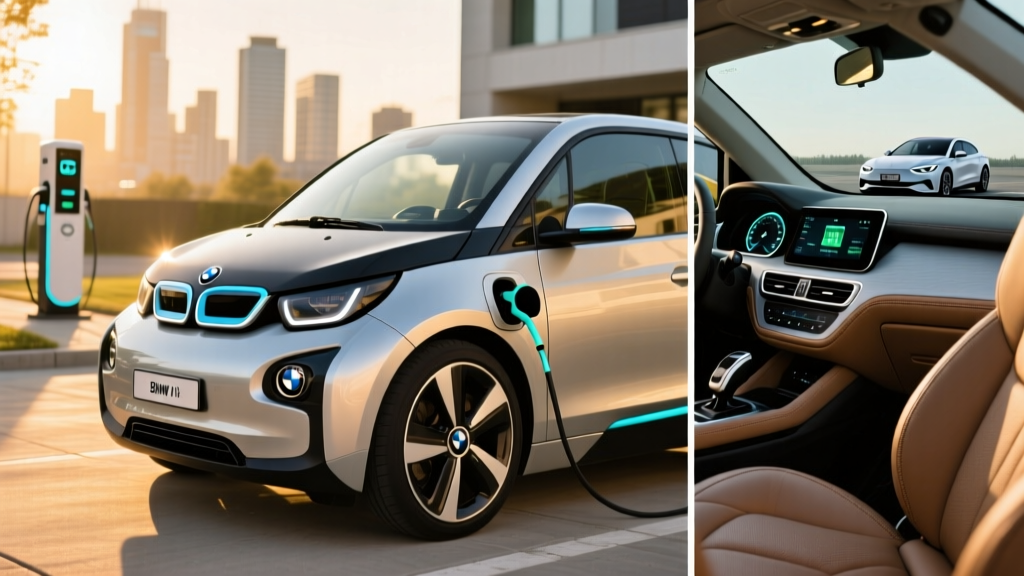
The 2016 BMW i3 at a Glance: A City EV That Defined an Era
The 2016 BMW i3 was never designed to be everything to everyone. BMW engineered it as a lightweight, carbon-fiber-reinforced plastic (CFRP) urban commuter with a uniquely premium interior and a philosophy centered on efficiency over range. A decade later, it remains one of the most distinctive EVs on the used market — and at 2026 used-car prices, it's become an accessible entry point into electric driving for the right buyer.
This review covers the 2016 model year specifically. BMW refreshed the i3 for 2017 with a larger 33 kWh battery, and again for 2019 with a 42.2 kWh pack. If you're shopping for a used i3, knowing which battery generation you're looking at is the single most important factor in your purchase decision.
| Specification | Value |
|---|---|
| EPA Range (BEV) | 81 miles |
| Battery Capacity (gross / usable) | 22 kWh gross / ~18.8 kWh usable |
| Battery Chemistry | NMC (Nickel Manganese Cobalt) — Samsung SDI cells |
| DC Fast Charge (CCS Combo) | 50 kW peak |
| 10–80% DC Fast Charge Time | ~25–30 minutes |
| Level 2 AC Charge Rate | 7.4 kW (onboard charger) |
| Level 2 Charge Time (0–100%) | ~3 hours |
| Motor Output | 170 hp / 184 lb-ft torque |
| 0–60 mph | 7.0 seconds |
| Drivetrain | Rear-wheel drive (single motor) |
| EPA Efficiency | 137 MPGe combined / 27 kWh/100 mi |
| Cargo Volume (rear seats up / folded) | 15.1 cu ft / 39.2 cu ft |
| Curb Weight | 2,961 lbs (BEV) |
| Battery Warranty (original) | 8 years / 100,000 miles (70% capacity retention) |
| Original Base MSRP | $43,395 (incl. destination) |
Real-World Range: What 81 EPA Miles Actually Means on the Road
Real-World Expectation: 65–75 miles in mixed driving; 55–65 miles sustained highway (70+ mph); 50–60 miles in freezing weather with cabin heat.
The 2016 BMW i3's 81-mile EPA rating was competitive for a city-focused EV in its day — the Nissan Leaf offered 84 miles, the Fiat 500e managed 87 — but by 2026 standards, it's firmly a short-commute vehicle. According to fueleconomy.gov, the i3 BEV achieves 137 MPGe combined, which translates to an impressive 27 kWh per 100 miles. That efficiency is a direct result of the i3's ultra-light CFRP construction and narrow, low-rolling-resistance tires.
Here's what the EPA number doesn't tell you: the i3's small 18.8 kWh usable battery means there's very little buffer for real-world variables. In our experience and consistent with owner reports, expect about 70 miles of practical range in moderate temperatures with mixed city/highway driving. Sustained highway speeds above 70 mph push consumption up noticeably — the i3's boxy shape and tall stance create more aerodynamic drag than its low weight might suggest.
Cold weather is the bigger concern. At 30°F and below, battery chemistry resistance increases and cabin heating draws significant power (the 2016 i3 uses a resistive PTC heater, not a heat pump). Owners in northern climates consistently report 30–40% range reduction in winter, bringing real-world range down to roughly 50–60 miles. If your round-trip commute exceeds 45 miles in a cold climate, the 2016 i3 will require careful planning or midday charging.
REX note: The 2016 i3 was also available with a Range Extender (REX) — a 647cc two-cylinder gasoline engine that acts as a generator. The REX adds approximately 70–80 miles of gasoline-powered range once the battery depletes, but it adds weight, complexity, and maintenance. The REX model's EPA electric-only range drops to 72 miles due to the extra mass.
Charging Speed: 50 kW DC Fast Charging and Home Setup
The 2016 i3 supports DC fast charging via the CCS Combo 1 connector — but only if equipped with the optional DC Fast Charging package (a $750 option when new). Verify this option is present on any used i3 you consider. Without it, you're limited to Level 2 AC charging only, which significantly reduces the car's road-trip viability.
| Charging Level | Power | Connector | Time / Rate |
|---|---|---|---|
| Level 1 (120V household) | ~1.4 kW | J1772 | ~13–15 hours (0–100%); ~4 mi/hr |
| Level 2 (240V home/public) | 7.4 kW | J1772 | ~3 hours (0–100%); ~25 mi/hr |
| DC Fast Charge | 50 kW peak | CCS Combo 1 | 10–80% in ~25–30 min; ~80 mi/hr |
The 50 kW peak DC charge rate was standard for the era, but the i3's small battery means the absolute charging time is still reasonable. A 10–80% session takes roughly 25 to 30 minutes at a properly functioning 50 kW station. The charge curve is relatively flat up to about 70% state of charge, then tapers significantly — charging from 80% to 100% on DC can add another 15–20 minutes. For practical road-trip use, plan to charge to 80% and move on.
At home on a 240V Level 2 charger, the 7.4 kW onboard charger replenishes the battery in about 3 hours. This is actually one of the i3's strengths for a used EV: the small battery means even a modest home charger delivers a full overnight top-up with time to spare. A basic 32-amp Level 2 home station (such as a ChargePoint Home Flex or Emporia Level 2) installed by a licensed electrician typically costs $500–$1,200 for equipment and labor, assuming your electrical panel has capacity. The i3's modest power draw means you're unlikely to need a panel upgrade solely for this vehicle.
Connector note for 2026: The i3 uses CCS1 for DC fast charging and J1772 for Level 2. As the industry shifts toward NACS (Tesla's connector standard), CCS1 stations remain widely available through Electrify America, EVgo, and ChargePoint networks. If you plan to use Tesla Superchargers (which have opened to non-Tesla vehicles via Magic Dock adapters at select locations), confirm adapter compatibility with BMW's CCS inlet before relying on this as a primary charging option.
Performance and Driving Dynamics
The 2016 i3's 170-horsepower electric motor drives the rear wheels through a single-speed reduction gear. The 0–60 mph time of 7.0 seconds doesn't sound thrilling on paper, but the i3's instant torque delivery and featherweight 2,961-pound curb weight make it feel considerably quicker in urban driving. The 184 lb-ft of torque is available from 0 RPM, giving the i3 a punchy, responsive character up to about 45 mph.
Where the i3 truly distinguishes itself is handling. The carbon-fiber passenger cell, aluminum chassis, and battery pack mounted low in the floor give it a remarkably low center of gravity for a tall hatchback. The steering is quick and direct — classic BMW tuning — and the turning circle is tight at 32.8 feet, making it an excellent urban maneuverer. The narrow 155/70R19 tires prioritize efficiency over grip, so cornering limits are modest, but the i3 feels agile and planted in a way that few EVs at any price point can match.
One-pedal driving is well-implemented. The i3's regenerative braking is strong enough to bring the car to a complete stop in normal traffic, and BMW's implementation was one of the best in the early EV era. Lift off the accelerator and the car decelerates briskly — most owners rarely touch the brake pedal in city driving.
Interior, Technology, and Practicality
The i3's interior was genuinely innovative for 2016 and still holds up today. BMW used sustainable materials throughout: eucalyptus wood trim, recycled plastic textiles, and natural-fiber door panels. The result is an airy, loft-like cabin that feels nothing like a conventional economy car. Build quality is excellent — BMW didn't cut corners on fit and finish despite the i3's compact dimensions.
Infotainment: The 2016 model uses BMW's iDrive system with a 6.5-inch display (upgradable to 8.8 inches with the Navigation Professional package). It includes Bluetooth, USB, and BMW's ConnectedDrive services. Apple CarPlay was not available on the 2016 i3 — BMW added it for the 2017 model year. Android Auto was never offered on the i3 platform. If smartphone integration is a priority, you'll be relying on Bluetooth audio and a phone mount.
Driver assistance: The 2016 i3 offers basic features: cruise control, park distance control (front and rear sensors), and a rear-view camera (optional). It does not offer adaptive cruise control, lane-keeping assist, or any Level 2 driver-assistance system. This is a SAE Level 0/1 vehicle in terms of automation — you're driving it, full stop.
Space: The i3 seats four adults, though rear legroom is tight at 31.9 inches — adequate for children or short trips but cramped for tall adults on longer rides. Front legroom is generous at 40.5 inches. Cargo space behind the rear seats is 15.1 cubic feet, expanding to 39.2 cubic feet with the rear seats folded. The rear doors are rear-hinged "coach doors" that open opposite to the front doors — they provide excellent access but require the front door to be open first, which can be awkward in tight parking spaces.
Notable drawback: There is no front trunk (frunk). The space under the hood houses the power electronics and, on REX models, the range-extender engine. All cargo must go in the rear hatch area.
Pricing, Used Market Value, and Tax Credit Eligibility
The 2016 BMW i3 originally started at $43,395 for the BEV model and $47,195 for the REX. Well-equipped examples with the Technology + Driving Assist package, DC Fast Charging, and premium interior trim could push past $52,000.
In the 2026 used market, expect to pay roughly:
- $10,000–$13,000 for a 2016 i3 BEV with average mileage (60,000–90,000 miles)
- $12,000–$16,000 for a low-mileage example (under 40,000 miles) or REX model
- $8,000–$10,000 for higher-mileage examples or those with cosmetic wear
| Scenario | Estimated Cost |
|---|---|
| Used 2016 i3 BEV (avg. mileage, private party) | $11,000–$13,000 |
| Federal Used EV Credit (§25E, if eligible) | Up to $4,000 (30% of sale price, max $4,000) |
| Effective cost after credit | $7,000–$9,000 |
| New EV §30D Credit ($7,500) | Not applicable — vehicle discontinued, no longer sold new |
Critical tax credit distinction: Because the BMW i3 is discontinued and only available as a used vehicle, the new-vehicle §30D federal tax credit (up to $7,500) does not apply. However, the §25E Used Clean Vehicle Credit may apply if you meet all requirements. Per IRS guidelines, the §25E credit provides 30% of the sale price, up to a maximum of $4,000, subject to these conditions:
- The vehicle must be purchased from a licensed dealer (not a private party)
- The sale price must be $25,000 or less (easily met by the used i3)
- Buyer adjusted gross income must not exceed $75,000 (single), $112,500 (head of household), or $150,000 (married filing jointly)
- The credit is non-refundable — you must have sufficient tax liability to claim it
- The vehicle must be for personal use, primarily in the United States
- You cannot have claimed the used EV credit for another vehicle in the prior 3 years
At typical used i3 prices, the §25E credit can effectively reduce your purchase price by $3,000–$4,000, making this one of the most affordable ways into EV ownership in 2026. Consult a tax professional to confirm your eligibility before relying on this credit.
Battery Health, Warranty, and Long-Term Ownership
The 2016 i3's 22 kWh Samsung SDI NMC battery pack was well-engineered for its time, but it's now approaching or exceeding the original 8-year/100,000-mile battery warranty period. BMW's warranty guaranteed at least 70% capacity retention (approximately 13.2 kWh usable) within that window.
Real-world degradation data from owner communities and fleet analyses suggests the 22 kWh pack typically retains 75–85% of its original capacity at 80,000–100,000 miles. That translates to roughly 55–65 miles of real-world range for a degraded pack — still functional for short commutes, but noticeably less than the original 70–75 miles.
Battery replacement cost: If the battery falls below acceptable capacity, a replacement pack from BMW costs approximately $10,000–$14,000 (parts and labor). Third-party refurbishment services have emerged offering cell-level repairs for $4,000–$7,000. Given that a used 2016 i3 might cost $12,000, a full OEM battery replacement can approach or exceed the vehicle's value — a critical factor in your purchase decision.
Pre-purchase recommendation: Before buying any used 2016 i3, request a battery state-of-health (SoH) reading from a BMW dealer or use an OBD-II diagnostic tool with BMW-specific software (such as BimmerCode or ENCODING tools) to check the actual capacity. An SoH below 80% should factor into your price negotiation or be a walk-away point.
How the 2016 BMW i3 Compares to Key Used EV Competitors
| Spec | 2016 BMW i3 BEV | 2016 Nissan Leaf | 2016 Fiat 500e | 2016 VW e-Golf |
|---|---|---|---|---|
| EPA Range | 81 mi | 84 mi (24 kWh) / 107 mi (30 kWh) | 87 mi | 83 mi |
| Battery (usable) | 18.8 kWh | 22 kWh / 28 kWh | 24 kWh | 24.2 kWh |
| DC Fast Charge | 50 kW (CCS) | 50 kW (CHAdeMO) | None | 50 kW (CCS) |
| 0–60 mph | 7.0 sec | 9.9 sec | 8.7 sec | 9.2 sec |
| Horsepower | 170 hp | 107 hp | 111 hp | 134 hp |
| EPA Efficiency | 137 MPGe | 114 MPGe | 112 MPGe | 116 MPGe |
| Cargo (rear up) | 15.1 cu ft | 24.0 cu ft | 7.0 cu ft | 22.8 cu ft |
| Typical Used Price (2026) | $10K–$13K | $7K–$10K | $8K–$11K | $9K–$12K |
The i3 wins on performance (quickest by a wide margin), efficiency (highest MPGe), and build quality. It loses on cargo space (the Leaf and e-Golf are significantly more practical hatchbacks) and on DC charging availability (the Fiat 500e lacks DC fast charging entirely, but the Leaf's CHAdeMO network has shrunk in 2026 as CCS/NACS dominate).
If you need a practical family hatchback with more range and cargo room, the 2016 Leaf or e-Golf are more sensible choices. If you want a premium, fun-to-drive city car with distinctive design and don't mind the range limitation, the i3 has no direct rival.
Who Should Buy the 2016 BMW i3 — And Who Shouldn't
Pros
- Exceptional efficiency — 137 MPGe is among the highest of any EV ever sold
- Quick and engaging to drive — 170 hp in a 2,961-lb car is genuinely fun
- Premium interior with sustainable materials — feels far more expensive than its used price
- Ultra-tight turning circle and compact dimensions — ideal for urban parking
- Strong regenerative braking enables true one-pedal driving
- CFRP construction means no rust concerns on the passenger cell
- §25E used EV credit can reduce effective price to under $9,000
Cons
- 81-mile EPA range is limiting — not viable as a sole vehicle for most households
- Battery degradation risk at age 10; replacement cost can exceed vehicle value
- Rear coach doors are impractical in tight parking spaces
- No Apple CarPlay, Android Auto, or modern driver-assistance features
- Tiny rear seat — adults will be uncomfortable on longer rides
- No frunk; limited total cargo capacity
- Narrow tires and tall body limit high-speed stability in crosswinds
- CCS DC fast charging was optional — not all used examples have it
The 2016 BMW i3 is the right used EV for you if:
- Your daily round-trip commute is under 45 miles and you have reliable home charging
- You want a second car for city errands, not a primary family vehicle
- You value driving dynamics, premium materials, and distinctive design over range and cargo space
- You live in a moderate climate (cold-weather range loss is significant with this small battery)
- You can verify battery SoH before purchase and are comfortable with potential degradation
Look elsewhere if:
- You need more than 80 miles of range for your daily driving
- You regularly carry rear-seat passengers or haul cargo
- You want modern infotainment (CarPlay/Android Auto) or driver-assistance technology
- You live in a very cold climate and can't charge midday
- The prospect of a $10,000+ battery replacement on a $12,000 car makes you uneasy
Frequently Asked Questions
What is the real-world range of the 2016 BMW i3?
Expect 65–75 miles in moderate temperatures with mixed driving, 55–65 miles at sustained highway speeds, and as low as 50–60 miles in freezing weather. The 81-mile EPA estimate assumes ideal conditions; the small battery leaves little margin for real-world variables.
How fast does the 2016 i3 charge at home and on DC fast chargers?
On a 240V Level 2 home charger at 7.4 kW, the i3 charges from empty to full in about 3 hours. On a 50 kW DC fast charger (CCS1 connector, if equipped), a 10–80% charge takes roughly 25–30 minutes. Level 1 (120V) charging adds about 4 miles per hour and is only practical for overnight top-ups.
Does the 2016 BMW i3 qualify for any federal EV tax credit?
Not the new-vehicle §30D credit — the i3 is discontinued. However, it may qualify for the §25E Used Clean Vehicle Credit, which provides 30% of the sale price up to $4,000, subject to income limits ($75K single / $150K married), a $25,000 maximum sale price, dealer purchase requirement, and other conditions. See IRS §25E guidelines and consult a tax professional.
Is the 2016 BMW i3 worth buying in 2026?
For the right use case — a short urban commute with home charging, as a second car — the i3 offers exceptional value at $10,000–$13,000 before the used EV credit. Its driving dynamics, efficiency, and interior quality are outstanding for the price. However, battery age and degradation risk are real concerns, and the 81-mile range limits its versatility. Get a battery SoH check before committing.
What's the difference between the 2016 i3 BEV and the REX model?
The REX (Range Extender) model includes a 647cc two-cylinder gasoline engine that generates electricity once the battery is depleted, adding roughly 70–80 miles of gas-powered range. The REX is heavier (reducing electric-only range to 72 miles EPA), requires gasoline and oil changes, and adds mechanical complexity. It makes sense only if you occasionally need to drive beyond 80 miles and lack access to charging en route.
Should I be concerned about the i3's battery at this age?
Yes — the 22 kWh NMC pack is now 10 years old. Typical degradation is 15–25% at this age, meaning real-world range may be 55–65 miles. A BMW dealer or independent shop with BMW diagnostic tools can read the battery's State of Health. If SoH is below 80%, factor the cost of repair or replacement into your decision. OEM replacement runs $10,000–$14,000; third-party cell repair costs $4,000–$7,000.
Does the 2016 i3 support Apple CarPlay or Android Auto?
No. Apple CarPlay was introduced on the i3 for the 2017 model year, and Android Auto was never offered on the i3 platform. You'll rely on Bluetooth for audio streaming and hands-free calls. Many owners use a phone mount and run navigation from their smartphone.