Quick Verdict: A Quirky City EV With Honest Limits
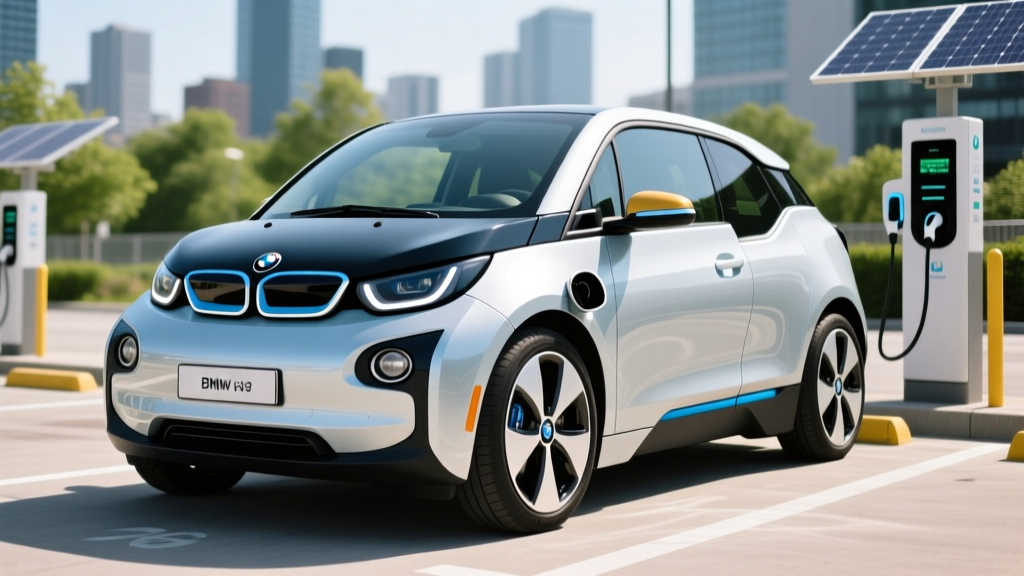
The 2016 BMW i3 electric was one of the most unconventional EVs of its era — a carbon-fiber-reinforced plastic (CFRP) pod car with a 22 kWh battery, rear-wheel drive, and an optional range-extender gasoline engine. In 2026, it exists exclusively on the used market, and its value proposition has shifted dramatically. With used prices often falling between $8,000 and $14,000 depending on mileage and condition, the 2016 i3 is now one of the most affordable entry points into EV ownership — provided you understand its range ceiling.
This is not a road-trip car. It is a purpose-built urban commuter with exceptional visibility, a tight turning circle, and a cabin made from recycled and renewable materials that still feels premium. If your daily drive is under 50 miles round-trip and you have home charging access, the 2016 i3 remains a compelling, efficient, and genuinely fun second car or city runabout.
Range & Efficiency: What the EPA Says vs. Real-World Driving
Real-World Expectation: 60–75 miles on the highway at 70 mph; 75–90 miles in mixed city driving. In cold weather (below 30°F), expect a 20–30% reduction, dropping effective range to roughly 50–65 miles without preconditioning.
The 2016 i3 BEV carries an EPA rating of 81 miles from its 22 kWh lithium-ion battery pack (18.8 kWh usable). That number was modest in 2016 and is short by 2026 standards, but for a dedicated city commuter, it remains workable. The i3's efficiency is genuinely impressive: the EPA rates it at 124 MPGe combined, which translates to roughly 27 kWh per 100 miles — one of the most efficient EVs ever sold in the United States.
That efficiency comes from the i3's radical lightweighting. The passenger cell is CFRP (the same material used in F1 monocoques), and the curb weight sits around 2,799 lbs for the BEV. Less mass means less energy consumed, and the i3 exploits this advantage fully. In city driving with frequent regenerative braking opportunities, owners routinely report exceeding the EPA range estimate. Highway driving at sustained speeds above 65 mph, however, erodes range quickly — the i3's tall, narrow profile creates more aerodynamic drag than sleeker competitors.
The 2016 i3 was also available with a Range Extender (REx) — a 647cc two-cylinder gasoline engine that acts as a generator to maintain battery charge once it drops to approximately 6.5%. The REx adds roughly 60–70 miles of extended range but does not drive the wheels directly. The REx model carries a slightly lower EPA electric-only range of 72 miles.
Battery, Charging & What to Expect at the Plug
The 2016 i3 uses a Samsung SDI-supplied lithium-ion battery pack with NMC (nickel manganese cobalt) chemistry. The gross capacity is 22 kWh, with approximately 18.8 kWh usable — BMW reserves a buffer at the top and bottom of the pack to protect long-term health.
| Charging Level | Power / Rate | Time / Miles Added |
|---|---|---|
| Level 1 (120V AC) | ~1.3 kW | ~5 miles per hour of charging |
| Level 2 (240V AC, 32A) | 7.4 kW | 0–100% in approximately 3.5 hours; ~25 miles per hour |
| DC Fast Charge (CCS Combo 2) | Up to 50 kW peak | 10–80% in approximately 25–30 minutes |
The i3's DC fast-charging capability is its weakest link by modern standards. Peak charge rate tops out at approximately 50 kW, and that peak is not sustained — the charge curve tapers noticeably above 60% state of charge (SoC). A typical 10–80% session takes 25 to 30 minutes at a properly functioning 50 kW CCS station. On Electrify America or EVgo networks, expect to add roughly 50–60 miles of range in a half-hour session.
For home charging, the i3's onboard charger accepts up to 7.4 kW on Level 2 (240V, 32 amps). This is adequate for overnight replenishment — a full charge from near-empty takes about 3.5 hours on a dedicated Level 2 wallbox. On a standard 120V household outlet (Level 1), a full charge requires roughly 14–16 hours, which is impractical for daily use if you deplete the battery significantly.
Cold-weather charging note: The 2016 i3 lacks active battery thermal management for heating during DC fast charging. In freezing temperatures, the battery must precondition — and even then, charge speeds may be reduced. Plan for longer stop times in winter.
Performance & Driving Dynamics
| Specification | BEV Model | REx Model |
|---|---|---|
| Horsepower | 170 hp | 170 hp (electric motor) |
| Torque | 184 lb-ft | 184 lb-ft |
| 0–60 mph | 7.0 seconds | 7.5 seconds |
| Drivetrain | Rear-Wheel Drive (RWD) | Rear-Wheel Drive (RWD) |
| Curb Weight | ~2,799 lbs | ~3,130 lbs |
The i3's 170-hp synchronous electric motor delivers instant torque to the rear wheels, and the lightweight chassis makes it feel punchy well beyond what the numbers suggest. The 0–60 mph time of 7.0 seconds is brisk for a city car, and the i3's single-speed transmission means acceleration is linear and uninterrupted. Around town, the i3 darts through traffic with genuine agility — the thin, tall 19-inch tires (155/70R19) are optimized for low rolling resistance, but the short wheelbase and quick steering make it surprisingly nimble.
One characteristic that catches new i3 drivers off guard is the aggressive regenerative braking. Lifting off the accelerator produces strong deceleration — enough to bring the car to a complete stop without touching the brake pedal. This one-pedal driving capability is one of the i3's best features for urban commuting and reduces brake wear significantly.
Interior, Cargo & Technology
The i3's cabin is unlike anything else in the BMW lineup. The dashboard is crafted from eucalyptus wood and recycled materials, the seats use a wool-blend fabric (or optional leather), and the overall aesthetic is minimalist and airy. The rear-hinged half-doors ("coach doors") open wide to reveal a surprisingly accessible rear seat, though the rear bench is best suited for children or short-trip adults — legroom is 31.9 inches in the rear.
| Measurement | Dimension |
|---|---|
| Front Legroom | 40.5 inches |
| Rear Legroom | 31.9 inches |
| Cargo Volume (rear seats up) | 15.1 cu ft |
| Cargo Volume (rear seats folded) | 36.9 cu ft |
| Seating Capacity | 4 passengers |
The infotainment system uses BMW's iDrive controller with a 6.5-inch display (10.2-inch with the optional Technology + Driving Assistant package). Navigation, Bluetooth, and USB connectivity are standard. The available Driving Assistant Plus package adds forward collision warning, pedestrian detection, and traffic jam assistant — a rudimentary Level 2 system that can maintain speed and lane position at low speeds, though it requires constant driver supervision and is far less capable than modern systems like BlueCruise or Super Cruise.
Notable drawbacks include the lack of Android Auto (Apple CarPlay was not available on the 2016 model year either — it arrived in the 2017 refresh), limited rear cargo height due to the battery floor, and the absence of a frunk (front trunk). The hood covers the power electronics and, on REx models, the gasoline engine.
Used Pricing, Tax Credits & Ownership Costs
| Item | Details |
|---|---|
| Original Base MSRP (2016) | $43,395 (BEV Mega World trim) |
| Original As-Tested (well-equipped) | $48,000–$52,000 |
| Typical Used Price (2026) | $8,000–$14,000 depending on mileage and condition |
| Federal Used EV Tax Credit (§25E) | Up to $4,000 or 30% of sale price (whichever is lower) for vehicles priced at $25,000 or below, subject to buyer income caps |
| Federal New EV Tax Credit (§30D) | Not applicable — the i3 is no longer sold new and does not meet current battery-sourcing or MSRP requirements |
The 2016 i3 has depreciated heavily from its original $43,395 starting price, which actually makes it an attractive used-EV buy. Most examples on the market in 2026 fall well under the $25,000 price cap for the IRS §25E used clean vehicle credit. This credit provides up to $4,000 or 30% of the purchase price (whichever is lower), subject to buyer income limits ($75,000 single / $112,500 head of household / $150,000 joint filers) and applied as a point-of-sale transfer through a registered dealer.
A $10,000 i3 purchased through a participating dealer could net a $3,000 credit (30% of $10,000), bringing the effective cost to $7,000. This makes the i3 one of the cheapest ways to get into a premium-branded EV with a carbon-fiber chassis. However, the §25E credit requires purchase from a licensed dealer — private-party sales do not qualify. Verify your eligibility with a tax professional before relying on the credit.
Insurance costs for the i3 are moderate — typically $900–$1,400 annually depending on your location and driving record. Maintenance is minimal: no oil changes, no transmission fluid, and the regenerative braking system extends pad and rotor life substantially. The cabin air filter and brake fluid are the primary service items.
Battery Health, Warranty & Longevity
BMW warranted the 2016 i3's high-voltage battery for 8 years or 100,000 miles against defects and excessive capacity loss (defined as dropping below 70% of original capacity). In 2026, most 2016 i3 examples are at or beyond the 8-year mark, meaning the original battery warranty has likely expired unless the vehicle was first registered late in the model year and has low mileage.
NMC battery degradation on the i3 has been well-documented by the owner community. Real-world data from i3 forums and fueleconomy.gov owner reports suggest typical capacity retention of 80–88% after 8 years and 60,000–80,000 miles. A 2016 i3 with 85% battery health would deliver roughly 69 miles of effective EPA range — still adequate for city commuting but noticeably reduced.
Before purchasing a used 2016 i3, request a battery state-of-health (SoH) reading from a BMW dealer or use an OBD-II dongle with an app like BimmerCode or LeafLog to check capacity retention. Avoid examples showing below 75% SoH unless priced accordingly, as a battery replacement costs approximately $10,000–$15,000 — more than the car's value in many cases.
Who Should Buy the 2016 BMW i3 Electric?
- Your daily commute is under 50 miles round-trip
- You have reliable home Level 2 charging
- You want an affordable, premium-feel EV as a second car or city runabout
- You value unique design, lightweight construction, and one-pedal driving
- You can access the §25E used EV credit through a dealer purchase
- You need more than 80 miles of range regularly
- You frequently drive in extreme cold without garage parking
- You need seating for more than four or substantial cargo space
- You rely on public DC fast charging for daily needs (50 kW is slow by 2026 standards)
- You want modern infotainment with wireless CarPlay or Android Auto
2016 BMW i3 vs. Key Used-EV Competitors
| Spec | 2016 BMW i3 (BEV) | 2016 Nissan Leaf (30 kWh) | 2017 Chevrolet Bolt EV |
|---|---|---|---|
| EPA Range | 81 miles | 107 miles | 238 miles |
| Battery (usable) | 18.8 kWh | ~28 kWh | ~57 kWh |
| DC Fast Charge Peak | 50 kW (CCS) | 50 kW (CHAdeMO) | 55 kW (CCS) |
| 0–60 mph | 7.0 sec | ~10.0 sec | 6.5 sec |
| Typical Used Price (2026) | $8,000–$14,000 | $7,000–$11,000 | $12,000–$17,000 |
| Cargo (seats up) | 15.1 cu ft | 24.0 cu ft | 16.9 cu ft |
The Leaf offers more range and cargo space but feels less premium and uses CHAdeMO connectors (a shrinking network in the US as CCS and NACS dominate). The Bolt EV is the range champion of this group and a far more versatile daily driver, but it costs more on the used market. The i3 wins on driving dynamics, build quality, and efficiency — but loses decisively on range and practicality.
Pros, Cons & Final Assessment
- Exceptional efficiency (124 MPGe / 27 kWh/100mi)
- Carbon-fiber chassis — lightweight, rigid, corrosion-resistant
- Quick, fun-to-drive character with one-pedal regenerative braking
- Premium, unique interior with sustainable materials
- Very affordable on the used market; eligible for §25E credit
- Tight turning circle (32.3 ft) — ideal for city parking
- 81-mile EPA range is limiting even for a city car
- 50 kW DC fast charging is slow by 2026 standards
- No active battery heating — cold-weather range and charging suffer
- Rear seats are cramped; only seats four
- Original battery warranty has likely expired on most examples
- No Apple CarPlay or Android Auto
- Expensive battery replacement if degradation is severe
The 2016 BMW i3 electric is a car you buy with your eyes open. It will not do everything, and it will not replace a primary vehicle for most households. But as an affordable, efficient, and genuinely distinctive city EV — especially at post-depreciation used prices with the §25E credit applied — it offers an experience that no other used EV at this price point can match.
Frequently Asked Questions
What is the real-world range of the 2016 BMW i3?
The EPA rates the 2016 i3 BEV at 81 miles. In real-world mixed city driving, expect 75–90 miles. Highway driving at 70 mph drops this to approximately 60–75 miles. In cold weather below 30°F, plan for 50–65 miles without preconditioning. The REx model extends total range to approximately 140–150 miles with the gasoline generator running.
How fast does the 2016 i3 charge at home and on DC fast chargers?
On a Level 2 home charger (240V, 7.4 kW), a full charge takes approximately 3.5 hours. On a 50 kW DC fast charger (CCS), a 10–80% session takes roughly 25–30 minutes. The charge rate tapers above 60% SoC, so the last 20% is significantly slower. Level 1 (120V) charging takes 14–16 hours for a full charge and is best used only as a backup.
Does the 2016 BMW i3 qualify for any federal EV tax credit?
The §30D new EV credit does not apply — the i3 is discontinued. However, the §25E used clean vehicle credit may provide up to $4,000 (or 30% of the sale price, whichever is lower) if purchased from a registered dealer for $25,000 or less. Buyer income caps apply ($75K single / $150K joint). Consult a tax professional and verify dealer registration with the IRS before relying on this credit.
Is the 2016 i3 worth buying compared to a used Nissan Leaf or Chevy Bolt?
It depends on your priorities. The i3 offers superior build quality, driving dynamics, and efficiency, but significantly less range than both the Leaf (107 mi) and Bolt (238 mi). If range is your primary concern, the Bolt is the clear winner. If you want a premium, fun, efficient city car and can live with 81 miles, the i3 is a strong choice — especially at its current used pricing.
What should I check before buying a used 2016 i3?
The most critical item is battery state of health (SoH). Request a capacity test from a BMW dealer or use an OBD-II reader to check degradation. Aim for 80%+ SoH. Also verify whether the original 8-year/100,000-mile battery warranty is still active (unlikely for most 2016 examples in 2026). Check for service records, tire condition (the unique 19-inch tires are expensive to replace at ~$250+ each), and confirm whether the car is a BEV or REx model.
Can I install a home charger for the 2016 i3?
Yes. The i3 uses a standard J1772 connector for Level 1 and Level 2 AC charging. Any Level 2 home wallbox (ChargePoint, Emporia, Wallbox, etc.) with a J1772 plug will work. For optimal charging speed, ensure your electrician installs a 240V/40A circuit to support the i3's 7.4 kW onboard charger. Installation costs typically range from $500 to $2,000 depending on panel proximity and local permit requirements.